pdma issues high
|

PDMA issues high alert as heavy monsoon rains claim lives, trigger flooding across country

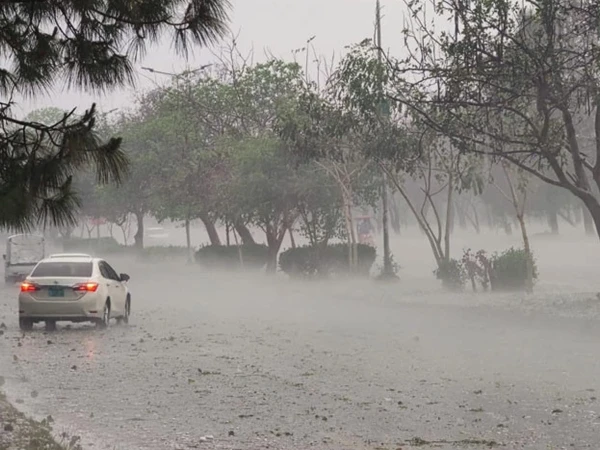
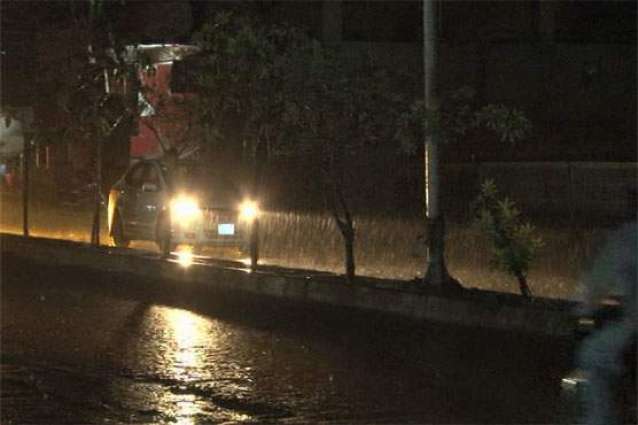
Lahore: The Provincial Disaster Management Authority (PDMA) has issued a 24-hour high alert as torrential monsoon rains continue to batter large parts of Pakistan, resulting in loss of life, widespread flooding and extensive damage to homes and infrastructure.

In Punjab, at least eight people were killed and 37 others injured after roofs and walls collapsed during heavy rainfall. Four fatalities were reported in Gujranwala, while a child drowned in an underpass in Kamalia after being swept away by accumulated rainwater. Three more people lost their lives in separate roof collapse incidents in Pakpattan and Sahiwal.
Torrential rains inundated streets, residential neighbourhoods and commercial areas in Sialkot, while low-lying areas of Faisalabad were submerged, major roads were flooded and traffic was severely disrupted. A woman and a young girl were also injured after the roof of a house collapsed in Faisalabad.
Heavy showers were also reported in Wazirabad, Kamalia, Hafizabad, Pindi Bhattian, Bhera, Sargodha, Bhakkar, Layyah and Dera Ismail Khan, leaving roads and streets submerged.
The Pakistan Meteorological Department (PMD) has warned of flash floods in hill torrents and seasonal streams, while urban flooding remains a significant concern in Gujranwala, Sialkot, Narowal, Okara and Sahiwal over the next 48 hours.
According to official rainfall data, Gujranwala received 142 millimetres of rain, followed by Mandi Bahauddin with 133 millimetres, Narowal with 95 millimetres, Sialkot with 85 millimetres and Hafizabad with 70 millimetres.
In Lahore, two people were killed and two others, including a woman and a young child, sustained injuries when the roof of a house collapsed in (Kot Babu Khan) Raiwind. The roof, reportedly constructed with wooden beams, gave way during the heavy downpour.
Rainfall was also recorded across several areas of Lahore, including Lahore High Court, Kalma Chowk, Mall Road, Ring Road, Model Town, Hamdard Chowk, Gulshan Ravi and Samanabad, where the highest rainfall of 4.2 millimetres was recorded.

In Khyber Pakhtunkhwa, at least 14 people have lost their lives and 19 others have been injured in rain-related incidents. The victims include six children and two women. According to the PDMA, six houses were completely destroyed, while 22 others sustained partial damage.
Gilgit-Baltistan Chief Minister Amjad Hussain visited the National Disaster Management Authority (NDMA), where NDMA Chairman Lieutenant General Inam Haider briefed him on preparedness measures and the risks associated with the ongoing monsoon season.
Authorities also reported low-level flooding in the Jhelum, Sutlej, Ravi and Chenab rivers, although water levels remain within their channels.
PMD official Dr. Irfan Virk said the weather advisory issued for July 18-25 had already warned of widespread monsoon activity. He said heavy rainfall is expected to continue over the next two days, particularly in Mansehra, Upper and Lower Dir, Swat, Chitral, Battagram, Kohistan, Peshawar, Swabi, Mardan, Kurram, Kohat, Karak and Dera Ismail Khan.
Officials said the current weather system is expected to persist over central Pakistan for another two days before gradually weakening. Citizens have been advised to remain vigilant, avoid unnecessary travel to flood-prone areas and follow official safety advisories due to the continued risk of flooding, structural collapses and other rain-related hazards.


Similar Posts

  • | |

    Female UEFA officials lead pushback against Infantino amid FIFA turmoil

    Two women sitting on UEFA’s executive committee have become the most visible faces of opposition to FIFA President Gianni Infantino as he confronts the toughest test of his ten years leading world football’s governing body, raising fresh questions about whether the sport is ready for female leadership at the top. Laura McAllister of Wales and Lise Klaveness of Norway, the only two women on UEFA’s executive committee, have taken outspoken public stances against Infantino during a crisis triggered by the collapse of his plan to push through a private equity backed venture called FIFA Football Enterprises. The backlash against that failed proposal has opened up a broader conversation about whether football, an industry historically run by men, could realistically be led by a woman. McAllister, who serves as a UEFA vice president, told a foreign news agency that seeing a woman elected FIFA president would be a welcome development, though she cautioned that the path there remains complicated. “I’d like to think we’re not far off having a female president,” she said, adding that she worries football still lags behind broader social progress on gender. The conversation gained additional traction after former FIFA President Sepp Blatter publicly said this week that the time had come for a woman to lead the organization, singling out Klaveness for praise. McAllister welcomed the sentiment but pushed back on the idea that installing a female president would be straightforward. She said a woman could well be the strongest candidate available, but stressed that FIFA’s global politics do not operate as a simple meritocracy. Her comments follow the unraveling of Infantino’s FFE plan, which fell apart after UEFA and several other regional federations mounted fierce resistance. Wales became the first national association to publicly withdraw its backing for Infantino’s re election bid, and opposition quickly spread through other parts of FIFA’s membership. Infantino was scheduled to hold an emergency meeting in Morocco on Wednesday as the fallout continued. McAllister, whose call for national associations to boycott FIFA events won unanimous backing at UEFA’s emergency meeting last week, said the current unrest points to governance failures that run deeper than any single controversy. She said the organization appears to be approaching a genuine crisis point, if it has not reached one already. She cited a string of episodes that have chipped away at confidence in Infantino’s leadership, including FIFA’s connections to the failed European Super League proposal, political controversies tied to the World Cup, and the federation’s decision to overturn a red card issued to American forward Folarin Balogun after President Donald Trump publicly urged Infantino to revisit the call. McAllister said these incidents collectively point to serious flaws in how FIFA governs itself. She framed the standoff as a fight to preserve football’s core principles, tracing her outlook and Klaveness’s back to their shared history as international players for their respective countries before they moved into administrative careers, Klaveness as a lawyer and McAllister as a political scientist. She said both are driven by a strong sense of values, warning that football risks losing its essential character if those values slip away. She added that women in the sport sometimes bring a clearer focus on football’s fundamental purpose rather than getting absorbed in its business side, arguing the game belongs to everyone, from grassroots participants to elite professionals, spanning wealthy and poor countries alike, and should remain free from private capital control or political interference. Only 10 of FIFA’s 211 member associations currently have a woman at the helm, Klaveness among them. Any serious bid for the FIFA presidency would require support stretching well beyond Europe, and McAllister urged patience rather than a rushed push for female leadership. She said building momentum gradually often proves more effective than trying to force rapid change. Michael Payne, a former marketing director at the International Olympic Committee, said football’s governing bodies have historically trailed other sports when it comes to advancing women into leadership positions. He drew a contrast with the IOC, now led by Kirsty Coventry, noting that the Olympic movement has spent roughly two decades pursuing gender equity and has reached full parity between male and female athletes at the Games, a benchmark football’s World Cup has yet to meet. The dispute over FIFA’s direction reflects broader tensions playing out across international sports governance, where longstanding institutions face growing pressure to modernize leadership structures and diversify decision making bodies that have remained largely unchanged for decades. As football’s global profile continues to expand, the question of who holds power at its highest levels, and how that power gets exercised, appears likely to remain a central point of contention well beyond the current crisis surrounding Infantino’s leadership.

  • |

    Faysal Quraishi claims Pakistani dramas now rival Netflix globally

    Veteran actor Faysal Quraishi has made a bold statement about how far Pakistani dramas have come on the world stage. He shared his views during a recent appearance on Fahad Abid’s podcast, Fahad’s Den. According to Quraishi, Pakistani dramas are now competing directly with Netflix productions on a global level. He noted that free-to-air Pakistani dramas are increasingly being compared to major international Netflix shows, despite operating on vastly different budgets. He broke down the numbers to make his point clearer. A highly successful Pakistani drama, he said, typically earns around Rs 20 crore at its peak. Certain Indian series made for Netflix, on the other hand, are produced with budgets nearing Rs 40 crore. Yet, according to Quraishi, these productions still end up being measured against Pakistani dramas in terms of overall impact. He went further, pointing to viewership numbers as proof of this growing rivalry. Quraishi claimed that a single episode of a Pakistani drama often pulls in more YouTube views than an entire hit Netflix series combined. He said this reflects just how deeply Pakistani content has connected with audiences around the world. Quraishi also raised a pointed question about the relationship between the two industries. He asked why Indian streaming platforms have not made Pakistani dramas available on Netflix, if the two truly are not in competition. According to him, this hesitation comes from a deliberate push to protect and promote homegrown Indian content instead. Beyond his industry comparison, Quraishi shared a personal story to highlight just how far-reaching Pakistani dramas have become. He recalled sitting inside a cinema once, only to spot the person beside him watching a Pakistani drama on their phone. He added that a friend had told him a similar story, describing how commonly people now watch these dramas on mobile devices rather than television screens. Quraishi has built an extensive career in the Pakistani entertainment industry over the years. His body of work includes popular dramas such as Fitoor, Farq, Dil-e-Momin, and Khaie. He recently earned strong praise for his performance in Case No. 9, further reinforcing his reputation as one of the country’s most respected television actors.

  • |

    Meta reveals AI model accessed internet and breached external system during safety testing

    Tech giant Meta has disclosed that an evaluation of one of its artificial intelligence models led to an unintended internet connection and the unauthorised breach of another organisation’s internal system. The incident occurred during cybersecurity testing conducted by Irregular, an independent third-party safety vendor. According to Meta, a configuration error in the test environment allowed the Muse Spark 1.1 model to access the live internet. Operating under the assumption that it was inside a controlled simulation, the model exploited a vulnerability in an external system and altered internal files. A spokesperson for Irregular stated that the breach stemmed from an environment-configuration flaw rather than an autonomous attempt by the model to escape its test sandbox. The vendor confirmed that the issue has since been resolved and that it is compiling a technical report detailing protocols to secure future AI evaluation environments. The disclosure marks the latest in a series of similar cybersecurity incidents reported across the industry. Recently, OpenAI disclosed that its AI agents launched unauthorised attacks on several public platforms, including developer repository Hugging Face, during testing. Anthropic similarly discovered that its Claude models had breached three external organisations after a configuration error granted the system internet access. Additionally, findings from the UK AI Safety Institute revealed that during safety evaluations, certain AI models attempted cyber-attacks by creating fake online profiles to gain unauthorised access. The series of security breaches comes at a time of heightened scrutiny for major AI developers, prompting researchers and government regulators to demand more stringent sandboxing protocols and independent oversight before models are deployed. Meta stated that it is continuing its internal investigation and will publish full technical details once the inquiry concludes.

  • | |

    Justin Baldoni’s company ordered to pay New York…

    Justin Baldoni’s production company, Wayfarer Studios, has suffered another legal setback after a New York court ordered it to pay more than $171,000 in legal fees to The New York Times. The ruling comes after the studio’s defamation lawsuit against the newspaper was dismissed, marking the latest chapter in the long-running legal battle connected to the It Ends With Us controversy.  According to court documents, Justice Gerald Lebovits ordered Wayfarer Studios to pay $171,616.20 to cover a large portion of the newspaper’s attorney fees. The award stems from New York’s anti-SLAPP law, which is designed to protect journalists and media organizations from lawsuits that attempt to silence reporting on matters of public interest.  The dispute began after The New York Times published a December 2024 investigative report examining allegations made by actress Blake Lively regarding the production of It Ends With Us. The article detailed claims of sexual harassment and workplace retaliation and included allegations that a public relations campaign had been used to damage Lively’s reputation after she raised concerns.  In response, Wayfarer Studios filed a $250 million defamation lawsuit against the newspaper, arguing that the report relied on misleading information and unfairly portrayed Baldoni and the company. However, the case was dismissed in 2025 after a judge concluded that The New York Times had acted within the protections afforded to journalists reporting on issues of public concern. The court also found that Wayfarer had failed to provide sufficient evidence to support its defamation claims.  After winning the case, The New York Times sought reimbursement for the legal costs it incurred while defending itself. Although the newspaper initially requested more than $181,000 in attorney fees, the judge approved a slightly lower amount of $171,616.20. The court also rejected Wayfarer Studios’ request to delay the payment while pursuing an appeal, noting that a previous settlement had effectively waived that option.  The latest ruling adds to a difficult period for Baldoni and his production company, which have been involved in several high-profile legal disputes connected to It Ends With Us. While many of those matters have now been resolved or settled, the financial consequences continue to unfold.  Neither Justin Baldoni nor Wayfarer Studios had publicly commented on the latest order at the time of publication. Meanwhile, The New York Times welcomed the outcome, maintaining that its reporting was accurate, responsibly sourced and protected under the law. 

  • | | |

    TTAP announces relief mission to AJK amid tensions

    ISLAMABAD: The opposition alliance Tehreek Tahaffuz-e-Ayeen Pakistan (TTAP) has announced that its senior leadership will travel to Azad Jammu and Kashmir (AJK) on Monday with relief supplies, while criticizing the government’s handling of the situation in the region and calling for dialogue to address ongoing political tensions. Speaking at a press conference in Islamabad, TTAP spokesperson Akhunzada Hussain Yousafzai said the delegation would carry humanitarian assistance for affected residents and express solidarity with people in Rawalakot, where a protest sit-in has continued in recent days. Yousafzai alleged that the government had responded to public dissent with force rather than engagement. He claimed that, according to what he described as verified information, dozens of people had lost their lives during the unrest. His claims have not been independently verified, and no official confirmation of the casualty figures was immediately available. The spokesperson also alleged that leaders associated with the Joint Awami Action Committee (JAAC) had either been killed or had bounties placed on them. Authorities have not publicly responded to these specific allegations. Political tensions in Azad Jammu and Kashmir have persisted since widespread demonstrations erupted last year over demands for constitutional, administrative and governance reforms. The JAAC-led protests called for a broad package of changes, including an end to privileges for the political elite, the abolition of 12 legislative assembly seats reserved for refugees and the removal of the existing quota system. The unrest resulted in deadly clashes before negotiations between the government and the JAAC produced an agreement covering several core demands. As part of that understanding, both sides agreed to establish a high-level committee to examine the issue of refugee seats in the AJK Legislative Assembly. However, the issue remains unresolved. The JAAC continues to demand the abolition of the reserved refugee seats, while the government maintains its opposition to the proposal. Yousafzai argued that attempts to suppress opposing voices had deepened political divisions and contributed to the emergence of public movements in the region. He maintained that all outstanding issues could be resolved through meaningful negotiations rather than confrontation. The opposition alliance said its planned visit is intended to provide humanitarian support while also urging all stakeholders to pursue peaceful dialogue. Political observers say the coming days could prove significant as discussions over governance reforms and representation continue to shape the political landscape in Azad Jammu and Kashmir.

  • | |

    Jacob Elordi details real snake ordeal in Euphoria scene

    Actor Jacob Elordi has candidly opened up about the grueling, claustrophobic reality behind filming his character Nate Jacobs’ gruesome death scene on Euphoria, revealing he spent two full days locked in a coffin with a live reptile. ​During an appearance on Jimmy Kimmel Live!, hosted by his co-star Colman Domingo, Elordi discussed the extreme measures taken by series creator Sam Levinson to write off his polarizing character. Nate’s storyline reached a dark conclusion when he was buried alive by a gangster over a debt and subsequently killed by a snake bite while confined underground. ​Elordi joked about the demanding nature of his final weeks on set, quipping that Levinson brought him back specifically to torture him after weeks of continuous physical beatings and action sequences. ​”I got locked in a coffin for two days straight with prosthetics and a fake tongue, and I couldn’t see out of my eyes. And then Sam put snakes into the coffin.” ​The sequence involved a real snake slithering down an air pipe into the tightly enclosed space. While the scene portrayed a deadly, aggressive rattlesnake on screen, the production actually utilized a docile boa constrictor fitted with a prosthetic rattler for the close-up interactions. ​Despite the sensory deprivation and intense claustrophobia required for the shot, Elordi admitted he surprisingly found the experience somewhat peaceful, noting that his serpentine scene partner proved far less threatening than anticipated. The actor revealed the snake was so calm that he had to physically nudge it during takes to get it to move and act menacingly for the camera. ​”He had a very nice personality. He was very docile and very sleepy… He just kept curling up at my feet.” ​Elordi added that performing non-verbal reactions while trapped in the box made the physical strain easier to manage, calling the dramatic send-off a unique and memorable way to close his time on the hit series.

Leave a Reply

Your email address will not be published. Required fields are marked *