rigging mastermind cries
| |

‘Rigging mastermind cries foul’: Maryam’s sh…

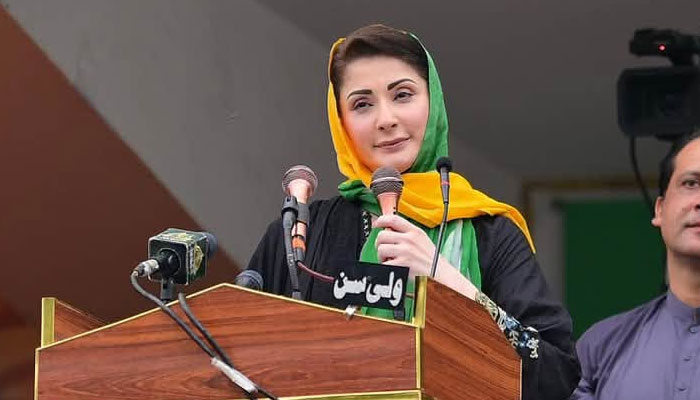
Punjab Chief Minister Maryam Nawaz has strongly criticised the Pakistan Peoples Party (PPP) over its allegations of rigging in the Azad Jammu and Kashmir (AJK) elections.

Maryam responded to criticism from PPP leaders in a social media post on Wednesday. She accused the PPP of being behind what she described as “subtle rigging” and questioned its decision to complain about electoral irregularities.

The mastermind of subtle rigging is crying foul over rigging,” Maryam said in her post. She then added a sarcastic question about when doomsday would arrive.

Her remarks came after PPP Central Punjab General Secretary Hassan Murtaza accused the Pakistan Muslim League-Nawaz (PML-N) of manipulating the AJK election process.

Speaking at a press conference in Lahore, Murtaza alleged that electoral rules had been repeatedly violated during the polls.

He also criticised the role of the Election Commission. He claimed that the commission had acted like an election agent instead of performing its constitutional responsibilities.

Murtaza accused the PML-N of setting a new example of electoral rigging. He said his party had been treated unfairly during the elections.

The PPP leader also criticised the political activities of the PML-N leadership in AJK.

Without directly naming Maryam Nawaz, Murtaza referred to her father, Nawaz Sharif. He said Sharif had gone to Kashmir and expressed a desire to become prime minister.

Murtaza argued that if the PML-N leadership was now seeking the AJK premiership, it was only possible because of the PPP’s political role.

He also defended Nawaz Sharif and said the PPP respected the former prime minister. Murtaza claimed that the PML-N had itself reduced Sharif’s political standing by offering him a position as chairman of an institution in Lahore while he was seeking the AJK premiership.

The PPP leader then shifted his criticism to Punjab’s governance and public services.

He claimed that thousands of acres of farmland between Shahdara and Muridke had been inundated. According to Murtaza, water had reached several feet in some agricultural areas.

He said the damage was not caused by a major flood. Instead, he blamed a breach in a drain embankment.

Murtaza also criticised the Punjab government’s claims about Lahore’s development. He argued that the city’s infrastructure remained vulnerable to heavy rainfall.

He said several roads turned into what he described as drainage channels after only a few hours of rain.

The PPP leader blamed government decisions for creating difficulties for citizens. He also criticised the import of one million metric tonnes of wheat.

Murtaza claimed that the imported wheat was worth around Rs1 trillion. He questioned the government’s economic decisions and argued that citizens deserved better public services.

He said taxes collected from the public should be used to provide essential facilities. He also called on the government to fulfil its responsibility toward citizens.

The political dispute comes amid growing tensions between the PPP and PML-N over the AJK elections.

PPP Chairman Bilawal Bhutto Zardari has also alleged irregularities in the first phase of the AJK elections.

The PML-N, however, has rejected allegations of rigging and defended the election results. Maryam Nawaz has previously urged political opponents to accept defeat rather than make allegations of electoral manipulation

Similar Posts

  • | |

    Transport crisis threatens to disrupt economic act…

    The economists and business experts have warned that the nationwide suspension of goods and oil transportation could create serious disruptions across Pakistan’s supply chains if the dispute is not resolved quickly, adding that prolonged interruption in cargo movement would increase operating costs, disrupt industrial production and put further pressure on exports. Experts said the ongoing situation should not be viewed merely as a dispute between transporters and the government, as the uninterrupted movement of goods is essential for manufacturing, agriculture, wholesale and retail trade, imports, exports and the distribution of essential commodities. They said the suspension of a large portion of the country’s freight fleet could create a chain reaction across the economy. Factories dependent on regular supplies of imported and locally produced raw materials could face interruptions, while manufacturers with completed consignments could experience difficulties in moving goods to ports, warehouses and domestic markets. According to economic experts, any prolonged disruption in freight movement could raise costs at multiple stages of the supply chain, ultimately increasing prices for businesses and consumers. They urged the government to give immediate priority to negotiations with transport representatives and ensure restoration of normal cargo movement, while simultaneously addressing the structural issues that have contributed to growing tensions in the transport sector. Experts said the introduction of daily petroleum price adjustments had added another layer of uncertainty to an already difficult operating environment. Fuel represents a major component of freight costs, and daily changes make it difficult for transport operators to determine charges for journeys that may take several days. The resulting uncertainty also affects manufacturers and traders because businesses cannot accurately forecast the cost of moving raw materials and finished products. For exporters, the issue is particularly significant as freight costs are often incorporated into orders and contracts agreed weeks or months before shipment. Economists said Pakistan needed a petroleum pricing framework that reflected international market movements while providing sufficient predictability for businesses. They noted that frequent changes in fuel prices could complicate production planning, inventory management and commercial contracting. They further cautioned that heavy reliance on petroleum taxes and levies could become counterproductive if it substantially increased transportation and production costs. Higher fuel prices raise the delivered cost of raw materials, machinery, food products and finished goods and also increase the cost of moving agricultural inputs and crops between production areas and markets. According to experts, the current disruption has also exposed weaknesses in Pakistan’s logistics infrastructure. The country needs better freight facilities, rationalised toll charges, adequate parking for heavy vehicles around ports and industrial zones, streamlined licensing procedures and a taxation framework that does not place excessive pressure on formal transport operators. They stressed that logistics costs should be considered an integral part of Pakistan’s export strategy. Export competitiveness depends not only on the cost of manufacturing a product but also on the expense and reliability of moving raw materials to factories and finished goods to ports. Experts said Pakistani exporters already face intense competition from regional economies where supply chains are becoming more efficient and predictable. Any additional increase in domestic transportation costs could further reduce the price competitiveness of Pakistani products in international markets. They recommended establishing a permanent consultation mechanism involving transporters, chambers of commerce, manufacturers, exporters, oil-sector representatives and relevant government agencies. Such a platform could identify emerging problems and develop solutions before individual disputes escalate into economy-wide disruptions. Economists also called for a review of withholding tax arrangements affecting goods transporters, saying the taxation system should encourage formalisation, investment and expansion of the logistics sector rather than create additional working-capital pressures. They said all transport-related taxes, tolls, fees and regulatory charges should be reviewed collectively to determine their overall impact on freight costs.

  • | |

    BTS RM reveals secret behind his success

    BTS leader RM has shared an emotional story about his family, revealing how his parents played different but equally important roles in shaping his life and career. Speaking during a recent interview, the South Korean rapper said his father’s unrealized dream became one of the biggest reasons he received unwavering support to pursue music. RM, whose real name is Kim Nam-joon, explained that his father had once hoped to become a cartoon artist. However, financial hardships prevented him from following that dream, forcing him to choose a more practical path in life. The BTS star said his father understood the pain of giving up a lifelong passion. Because of that experience, he never discouraged RM from pursuing music and instead encouraged him to follow his ambitions. According to RM, his father’s own sacrifices inspired him to chase his dreams without fear. He believes his father wanted him to have the opportunity that he never received. While his father motivated him to dream big, RM said his mother offered a different kind of support by helping him stay grounded and make careful decisions. He shared that his mother always encouraged him to remain practical, avoid unnecessary risks and value stability even while pursuing success. Reflecting on his upbringing, RM said he learned to balance ambition with responsibility because of the different perspectives his parents offered. The 31-year-old artist compared himself to the pendulum of a clock, constantly moving between his father’s encouragement to take chances and his mother’s advice to stay cautious. He said the guidance he received from both parents helped shape his personality and career, allowing him to pursue his goals while remaining focused and balanced. RM also expressed gratitude to his parents, describing them as a major source of strength throughout his journey from an aspiring musician to one of the world’s most successful artists.

  • |

    Amitabh Bachchan opens up about retirement amid busy schedule

    Amitabh Bachchan has once again demonstrated why he remains one of the hardest-working actors in Indian cinema. At 83, the legendary star recently revealed that he completed a demanding 24-hour work shift, leaving fans amazed by his dedication and commitment to his profession. While sharing details of his hectic schedule, Bachchan also hinted at the possibility of retirement, sparking concern among admirers who have followed his remarkable career for decades. The veteran actor shared that he began working at 7 a.m. one day and continued without stopping until 7 a.m. the following morning. Despite the physically exhausting schedule, he explained that the project required timely completion and presentation, making it essential for him to continue working until everything was finished. Even after wrapping up such an intense shift, Bachchan maintained his regular routine by updating his personal blog and interacting with members of his extended fan community. He expressed relief at being able to stay connected despite the demanding workload, highlighting his long-standing commitment to keeping in touch with supporters. His schedule remains particularly busy because of his involvement in the upcoming season of the iconic quiz show Kaun Banega Crorepati (KBC). With the official broadcast date now announced, Bachchan has chosen to continue working without taking any significant breaks. Preparations for the popular television show require long hours of filming, rehearsals, and promotional commitments, adding to his already packed calendar. In his blog, Bachchan also made a remark that immediately caught the attention of fans. He mentioned that he would “retire now” to get something to eat and rest before reporting back to work early the next day. Although the statement appeared to refer to taking a temporary break after an exhausting work schedule, he also noted that missing his professional commitments could result in someone else replacing him. His words suggested that he continues to feel a strong sense of responsibility toward his work, despite his age and decades of achievements in the entertainment industry. Rather than slowing down, the actor appears determined to fulfill every commitment, believing that consistency and discipline remain essential in a highly competitive profession. The mention of retirement naturally sparked discussion among fans, many of whom wondered whether Bachchan was subtly hinting at stepping away from acting in the near future. However, his comments also reflected that now may not be the right time to walk away, especially with ongoing projects demanding his full attention. Throughout his illustrious career spanning more than five decades, Amitabh Bachchan has earned a reputation for professionalism, punctuality, and an unmatched work ethic. Even in his eighties, he continues to headline films, host one of India’s most popular television programs, and engage regularly with millions of fans through his blog and social media platforms. His latest update serves as another reminder of his dedication to his craft. While his comments about retirement have fueled speculation, Bachchan’s actions suggest that he remains focused on delivering his best performances and honoring every professional commitment. For now, the legendary actor shows no signs of slowing down, continuing to inspire audiences with his passion, resilience, and unwavering commitment to his work.

  • |

    Coal drops below half of China’s power mix for first time ever

    China has reached a turning point in its energy story. For the very first time, coal supplied less than half the country’s electricity over a six-month stretch, according to officials who spoke on Thursday. Between January and June, coal made up 49.7 percent of total power generation. That figure came from Xing Yiteng, a senior official at the energy administration’s planning office. It marks a steep fall from 65.5 percent back in 2016, based on earlier government data. Clean energy sources picked up the slack. Renewables reached 41.2 percent of the total mix, crossing the 40 percent line for the first time ever. Wind and solar alone made up nearly a quarter of all power generated, a huge leap from just under 10 percent in 2020. The remaining share came from natural gas and nuclear plants. Despite this progress, experts warn that coal use in raw terms might actually increase this year. Electricity demand across China is rising quickly, driven by more electric vehicles on the road, a boom in AI-related data centers, and steady growth in exports. Beijing has pledged that coal use will peak no later than 2030, with wind and solar expected to reach 30 percent of the power mix by then. Gao Yuhe, who works as a project manager at Greenpeace East Asia, thinks that milestone might actually arrive two years early, by 2028. She credited this to the rapid spread of home solar systems paired with battery storage, along with more flexible electricity markets that make better use of renewable supply. China still burns far more coal than most major economies, mainly because it has large domestic reserves and limited natural gas access. For comparison, coal accounted for just 17 percent of America’s utility-scale power output last year, with natural gas covering 41 percent. China’s coal reliance, though, remains lower than India’s, where coal and lignite made up 69 percent of electricity generation last year. Interestingly, China still imported close to 500 million metric tons of coal last year, even with domestic output reaching 4.83 billion tons, mostly to supply power plants along the coast. If coal consumption keeps falling, major exporters like Indonesia, Mongolia, Australia, and Russia could feel the impact, depending on global price trends. Meanwhile, coal remains central to China’s coal-to-chemicals industry, where many facilities continue relying on cheap, locally produced coal to stay competitive.

  • | |

    Gun attack on PPP office in Karachi leaves two inj…

    A firing incident near a political party office in Karachi’s North Karachi area left two people injured, prompting police to launch an investigation into the attack. According to officials, the incident took place near Qadriya School in Sector 5-B2 of North Karachi, within the limits of Khawaja Ajmer Nagri Police Station. The injured individuals were shifted to Abbasi Shaheed Hospital through an Edhi ambulance service for medical treatment. Edhi officials identified the injured as 25-year-old Sohail Ahmed and 40-year-old Aman Nadeem. Police said both victims sustained injuries during the firing and were provided medical assistance. Station House Officer (SHO) of Ajmer Nagri Police Station Farooq Hashmi said that unidentified individuals riding motorcycles opened fire and escaped from the scene. He added that the initial information suggested the incident may have resulted from a personal dispute, though all possible aspects are being examined. Police officials said eyewitnesses have provided information regarding the suspected shooter, and raids are being conducted to arrest those involved. Authorities stated that the investigation is continuing and evidence is being collected to determine the exact motive behind the attack. Local Pakistan Peoples Party (PPP) representatives have not yet provided a detailed statement regarding the nature or background of the incident. Police officials said further details will emerge as the investigation progresses.

  • | |

    Pakistani celebrities call for peace and justice amid unrest in AJK

    Several Pakistani celebrities have spoken out over the recent unrest in Azad Jammu and Kashmir (AJK), using their social media platforms to express solidarity with residents while urging peace, justice and accountability. Among the first to react was actor Durefishan Saleem, who shared a lengthy Instagram post explaining why she believes speaking about political and social issues is a responsibility rather than a choice. “You’re too political. Of course I am. How could I not be when everything happening around me is connected to the lives we live?” she wrote. The actor added that the decisions made by those in power affect every aspect of daily life. “The prices we pay, the education we receive, the opportunities we get, and the future we are slowly building are all affected by the choices made by people in power. I speak up because I pay attention.” She concluded her message by saying she did not want to remain silent until issues directly affected her. “I don’t want to be the person who only starts caring when an issue finally reaches my doorstep.” Ending the post, she wrote, “Yes, I am political. Because how can I not be, when this is the country I call home.” Several other celebrities, including Hania Aamir, Mahira Khan, Osman Khalid Butt, Minal Khan, Komal Meer, Nadia Afgan, Kinza Hashmi and Hina Afridi, also shared posts highlighting the situation and expressing support for the people of AJK. Television host Anoushey Ashraf voiced concern over reports that Gaza-based activist Mushtaq Ahmed had allegedly been prevented from entering Kashmir while attempting to express solidarity with residents. Sharing her thoughts on Instagram Stories, she wrote, “They behave like they’ve given us such amazing lives that we stop trusting our own people and trust them? Trust your brothers in Pakistan. They’re our families and our sisters. Our children. Not anyone else’s agents.” Actor Mashal Khan also addressed the violence through an emotional video, captioning it, “Human life is HUMAN LIFE.” In the video, she questioned the growing loss of human compassion. “What is happening in the world? Every day on Instagram, there is something happening somewhere. This many people have died, that many people have died. We’ve made human lives worthless, as if the lives of mothers and children are worth money. Sometimes Kashmir, sometimes Iran.” Comedian Tabish Hashmi also shared a video expressing his concerns. “I don’t know what the consequences will be for speaking out about this in this country, but what I have been seeing on social media is very disheartening,” he said. He added, “There is not much I can do besides make this video and share my voice, hoping that it can help bring about change.” Actor Mishi Khan urged more members of Pakistan’s entertainment industry to publicly address the issue instead of remaining silent. “In showbiz, there have been many Gen Z protests that were talked about in India, and now when it comes to Pakistan, Azad Kashmir and Balochistan, why are we not raising our voices?” she asked. She continued, “I am not saying to take up arms or go out onto the streets, but as citizens of Pakistan, it is our right to raise our voices on social media, speak out against what is wrong, and stand with the people of Kashmir.” Actors Samar Jafri and Bilal Qureshi also joined the growing calls for solidarity. Jafri shared an Instagram Story that read, “Sad to see what’s happening in our country. My heart goes out to the people of Azad Kashmir.” Meanwhile, Qureshi criticised the entertainment industry for overlooking the issue. “Disrespect happens in the industry every day. Please, for God’s sake, talk about the national issue affecting our brothers and sisters and raise your voices for them. Kashmir bleeds!” he wrote. As videos and reports from AJK continue to circulate online, public figures across Pakistan’s entertainment industry have increasingly used their platforms to call for peace, justice and support for those affected.

Leave a Reply

Your email address will not be published. Required fields are marked *