president donald trump
|

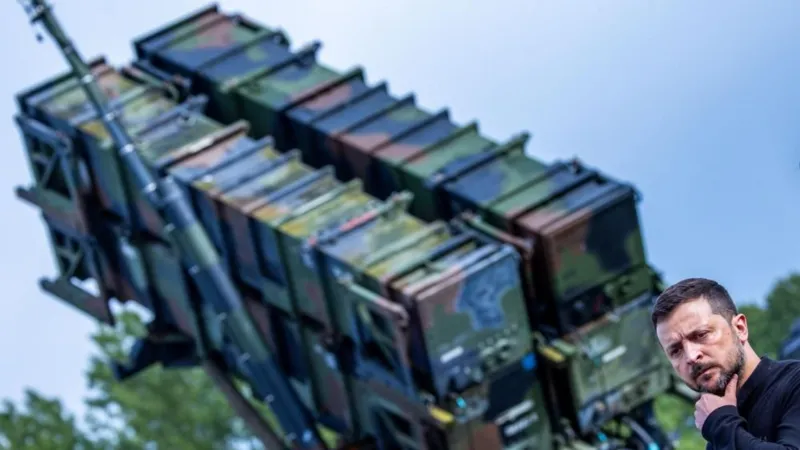
US President Donald Trump backtracks on promise allowing Ukraine to produce Patriot missiles

US President Donald Trump has walked back his previous offer to grant Ukraine a license to domestically produce Patriot interceptor missiles, stating during a Cabinet meeting at Camp David that the United States has “not agreed” to share the technology.

Trump expressed caution over transferring sensitive defense hardware, warning that “they can someday turn on you” and emphasising the need to safeguard advanced military systems.

The reversal comes just three weeks after Trump publicly promised Ukrainian President Volodymyr Zelensky at a NATO summit in Ankara that Washington would grant Kyiv the manufacturing rights to build the air defense interceptors.

Although Zelensky recently stated after a White House visit that the production licensing had been approved, Trump clarified that no final commitment has been made. The decision arrives as Kyiv faces intensified Russian drone and ballistic missile strikes, with Ukrainian military officials warning that critical shortages of Patriot interceptors are severely compromising their air defense capabilities.

Similar Posts

  • |

    ECNEC approves Rs1.15tr development projects amid major cost escalations

    ISLAMABAD: The government has approved 16 development projects with a combined estimated cost of around Rs1.15 trillion, including the controversial Lahore-Sahiwal-Bahawalnagar motorway and the fifth extension of the Tarbela hydropower project, whose cost has surged by nearly 282% from the original estimate. The decisions were taken by the Executive Committee of the National Economic Council (ECNEC), chaired by Deputy Prime Minister Ishaq Dar. Several of the projects had previously been considered by development forums and returned with revised costs following delays, changes in scope and rising construction expenses. Of the total approved amount, approximately Rs320 billion represents additional expenditure linked to cost increases and delays, highlighting the financial pressures facing major public-sector development schemes. The government, however, issued only a brief statement following the ECNEC meeting and did not provide a complete breakdown of all the projects and their financial details. The omission of the Lahore-Sahiwal-Bahawalnagar motorway from the official summary was particularly notable given the political controversy surrounding the scheme. Lahore-Bahawalnagar motorway approved The ECNEC approved the Rs407 billion Lahore-Sahiwal-Bahawalnagar Motorway project, retaining its original 295-kilometre alignment in accordance with a directive issued by Prime Minister Shehbaz Sharif earlier this year. The first package, covering an 18.5-kilometre stretch from the Lahore Ring Road to Raja Jang Interchange, was approved at an estimated cost of Rs49 billion through federal financing. The project has faced opposition from the Pakistan Peoples Party (PPP), which has raised objections to the scheme and its proposed alignment. Given the heavy financial burden on the Public Sector Development Programme (PSDP), the ECNEC directed the National Highway Authority (NHA) to examine public-private partnership options for sections that could attract private investment. For commercially viable portions, the NHA will arrange its contribution through its own revenues in the form of Viability Gap Funding. For sections that are considered financially unviable, alternative arrangements will be explored, including contributions from the Punjab government, loans or financing from international financial institutions and direct federal funding, subject to the availability of resources. Tarbela extension faces major cost increase One of the most significant approvals was the fifth extension of the Tarbela project, which received approval at a revised cost of Rs316 billion. The project’s original estimated cost stood at approximately Rs82 billion, meaning its revised price tag represents an increase of about 282%. The steep escalation has already attracted scrutiny from government officials. During the Central Development Working Party (CDWP) review, Planning Minister Ahsan Iqbal reportedly raised concerns over project management, transparency and oversight. Questions were also raised regarding the technical capacity of personnel associated with the project. The Ministry of Water Resources had previously highlighted shortcomings in an inquiry into problems encountered during project implementation. An inquiry into the failure of the downstream cofferdam reportedly concluded that the structural collapse was linked to design changes, inadequate supervision and delayed administrative action rather than flooding. The findings attributed the failure to the shift from roller-compacted concrete to a rock-fill structure, along with weaknesses in project oversight. The incident resulted in delays and financial losses, adding to concerns over the project’s rising cost. The Ministry of Finance also sought an explanation for the substantial increase in the project’s estimated cost. Since the scheme is being financed through international financial institutions, the ministry asked the Water and Power Development Authority (Wapda) to provide details regarding the mechanism for repayment. Despite the concerns and requests for additional information, the ECNEC ultimately approved the revised project cost. Road and infrastructure schemes The committee also approved the 48-kilometre Khwazakhela-Besham Expressway at a revised cost of Rs116.6 billion. The new estimate is around 47% higher than the original cost. Another interprovincial road scheme aimed at improving connectivity between Gilgit-Baltistan and Azad Jammu and Kashmir was approved at Rs29 billion, representing an increase of approximately Rs10 billion over its initial estimate. The Rathoa Haryam Bridge over the reservoir channel on the Mirpur-Islamgarh Road also received approval at a revised cost of Rs10.8 billion. Its original estimate had been only Rs1.4 billion, reflecting a substantial increase over the initial projection. The ECNEC further approved the Lahore Wastewater Treatment Plant at a cost of Rs56.6 billion, around Rs4.2 billion above the earlier estimate. Poverty alleviation and education initiatives The Southern Punjab Poverty Alleviation Project was approved at Rs29.7 billion and will cover 10 districts: Bahawalnagar, Bahawalpur, Bhakkar, Dera Ghazi Khan, Khushab, Layyah, Mianwali, Muzaffargarh, Rahim Yar Khan and Rajanpur. The scheme includes an additional cost escalation of around Rs6.8 billion and is aimed at improving socioeconomic conditions and livelihood opportunities in some of the region’s less-developed areas. The ECNEC also sanctioned Rs10.6 billion for the Fulbright scholarship programme, under which 816 scholarships are planned. Of these, 550 MS and 141 PhD scholarships will be administered through the United States Educational Foundation in Pakistan (USEFP), while the Higher Education Commission (HEC) will provide funding for another 125 PhD scholarships through the PSDP. Water projects in Sindh and Balochistan The Mazarani Dam project in Qambar Shahdadkot, Sindh, was approved at an estimated cost of Rs16.1 billion. The committee directed the provincial authorities to begin Command Area Development alongside construction of the main dam so that the project’s agricultural and economic benefits could be realised during its second phase. The Winder Dam project was also approved at Rs21.6 billion, with the federal government expected to contribute Rs15.6 billion. Meanwhile, the Mashkel Dam in Washuk, Balochistan, received approval at a cost of Rs41 billion. The project will be financed by the Balochistan government, while an environmental assessment report will be incorporated into the official project documentation.w Power-sector efficiency projects The ECNEC approved several schemes aimed at improving the performance of electricity distribution companies. A Rs24 billion project for the Supply, Installation, Testing and Commissioning of Asset Performance Management Systems at Lahore Electric Supply Company (LESCO) was approved. The committee also sanctioned Rs19 billion for the Electricity Distribution Efficiency Improvement Project of Hyderabad Electric Supply Company (HESCO). A similar initiative for Peshawar Electric Supply Company (PESCO) was approved at Rs30.2 billion. These projects are intended

  • |

    Baked with Pride, Sung with Love

    Karachi: As journalists, we’ve attended countless 14th August celebrations — most of them lost in long speeches, endless queues of guests of honour and chief guests, or simply mismanaged and overcrowded. You leave unable to focus on even a single stage performance, let alone the sequence of events. This year was different. I attended a ceremony that was not only full of joy, but also remarkably well-managed and disciplined — a gathering where everyone truly felt part of the celebration. It was held at KDSP, a centre of excellence for children with Down syndrome. A Lesson in Discipline and Dignity And isn’t it surprising? In a country where we can’t even manage discipline at regular school functions, it took a centre for differently-abled children to show us how it’s done. With sharing. With togetherness. With dignity. I saw real joy and happiness on those children’s faces — and my daughter, Bibi Marium, was among them. The event was full of surprises.   In most gatherings, adults push and shove to get to the main head table and into group photos. Here, the children were gently accommodating each other in the queue for cake cutting. There was no chief guest to distract, no protocol to irritate the kids and parents. Even the CEO and Chairman stood to the side, watching joyfully as their children celebrated. A Family Festival, Not Just a Ceremony The next surprise was this: it wasn’t just a celebration. It was a family festival. Children and parents both came dressed in green and white — shalwar kameez, t-shirts, trousers, mostly in flag colours. They weren’t sitting on the sidelines. They were part of it — they were guests and chief guests both. The entire KDSP management — CEO, Directors, Managers, teachers, staff and mentors — made a point to be present too. But they chose to stand from the sidelines, letting the children take center stage. One of the most moving moments was when Abdullah Haris, a student of KDSP’s EFL program, played the National Anthem on the piano. The entire venue erupted in thunderous applause. And you could see the proudest smile on the face of CEO Tabish Shahzad as she watched her children shine. Baked with Love After the anthem came the cake-cutting ceremony — and again, no pushing, no crowding. Children, staff, and parents all enjoyed the refreshments together. There was enough for everyone. The cake was so soft, yummy and delicious that I assumed it came from some high-profile bakery. But to my surprise, it was prepared in-house — by the children of the cooking class, guided by their young yet expert instructor, Head Chef Zainab Durrani. A COTHM graduate and pursuing her special education degree, Chef Zainab has a rare gift: children instantly connect with her. For years she has been associated with KDSP, putting in all her effort to teach them the skill of cooking on every available platform. Under her guidance, these children aren’t just baking — they’re gaining confidence, independence, and pride. While talking to me, a parent of a child with Down syndrome, Mr. Karim Navroz Ali from the Finance Department said, “KDSP makes every effort to motivate our children, to inspire them, and to build a more inclusive society. These children must be treated equally — and normally.” He nodded, head held high. And again to my surprise, after the ceremony, everyone was back to work and into the class, no day of skill development of a child is wasted, that development means here. “1947. Pakistan. Independence.” I also spoke with Ms. Sadia Navaid, a skills facilitator at KDSP, who teaches and empowers students with fine motor skills and hand-eye coordination. She is among the teachers loved by all. When I asked her whether these children feel patriotism and love for the country, her answer left me speechless. She shared that when she asked the children to make a quilling flag, they instantly said: “1947. Pakistan. Independence.” Ms. Sadia emphasized that these children are often more sensitive than others, and they carry a deeper feeling of ownership for their country. The managers of the Skill Development Program — Ms. Mahzaib Faheem, Ms. Umme Farwa, and Ms. Sania Siddiqui, Ms Mehak — also dressed in green and white, were glowing with pride. They shared that although the event was short and sweet, it took days of decorating the entire center and making arrangements for this precious day. “For us, it’s not just about a celebration,” they said. “It motivates the children, and it also binds us all together in joyful times.” What Independence Is Meant to Be As I walked out of KDSP that day, my heart was full. What I saw wasn’t just an Independence Day celebration. I saw courage, I saw dignity, I saw belonging. These children taught me that patriotism isn’t about grand speeches — it’s about standing together, singing together, baking together, and believing together. KDSP isn’t just building skills. It’s building a Pakistan where every child, regardless of ability, is seen, heard, and celebrated. And in that hall, dressed in green and white, I truly felt it: this is what independence is meant to be. “Independence is not a day on the calendar. It is the day a child feels they belong to.”   Meet the author: The writer is a senior journalist and columnist covering crime, law, social issues, governance, energy, health, literature, and women and children’s rights across Pakistan’s leading English media houses. Feedback: mediawomen2014@gmail.com

  • |

    Shanto backs Bangladesh to handle Australia’s pace and bounce

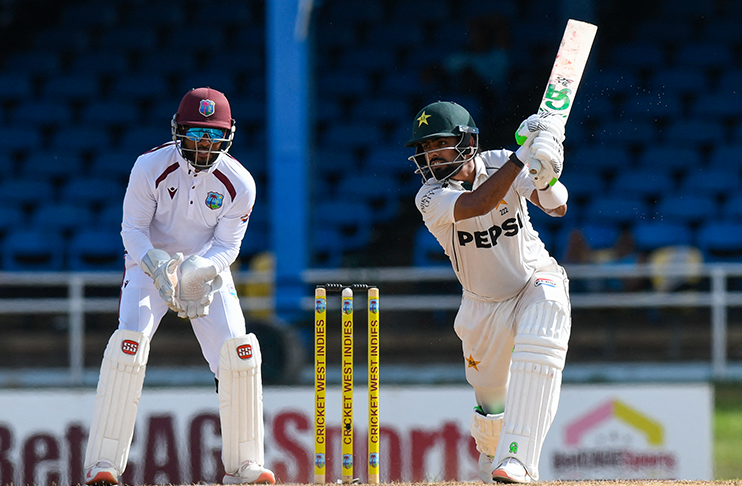
    DARWIN: Bangladesh captain Najmul Hossain Shanto believes his team is ready for the pace and bounce of Australian conditions as the visitors prepare for their first Test on Australian soil in more than two decades. Bangladesh will face Australia in Darwin in their first Test in the country since 2003. The unfamiliar conditions are expected to provide a major challenge, particularly against an Australian attack capable of generating significant pace and bounce. Bangladesh’s preparations suffered an early setback when they were bowled out for just 54 against a Cricket Australia XI in a practice match. Shanto, however, insisted the result had not damaged the team’s confidence after spending around 10 to 12 days preparing in Darwin. “Tackling the bounce is the key,” Shanto said at his pre-match press conference, adding that Bangladesh had spent recent months preparing on bouncy pitches at home. The captain acknowledged that the opening phase against the new ball could be Bangladesh’s toughest test but urged his batters to remain disciplined and trust their natural game. Bangladesh arrive with reasons for optimism. They defeated Australia 2-1 in an ODI series in June, securing their first bilateral series victory over the 2023 ODI World Cup champions. The matches were played on relatively quick pitches, giving the visitors useful experience before their Test assignment. Their improvement has also been reflected in the World Test Championship standings. Bangladesh currently sit fourth after completing a 2-0 Test series victory over Pakistan in May, compared with seventh place in the previous WTC cycle. Shanto said the team had made steady progress, particularly with the ball, but believed greater consistency from the batting unit could take Bangladesh to another level. The visitors are also considering a combination of three fast bowlers and two frontline spinners, Mehidy Hasan Miraz and Taijul Islam. Mehidy heads into the match with confidence after scoring a century in the tour game. Shanto expects the Darwin pitch to offer opportunities for both batters and bowlers. “There’s grass on the wicket, but it’s a good wicket where both batters and bowlers will find help,” he said. For Bangladesh, the Test represents more than a difficult overseas assignment. It is an opportunity to measure their recent progress against one of cricket’s strongest teams in conditions that demand patience, discipline and adaptability.

  • | |

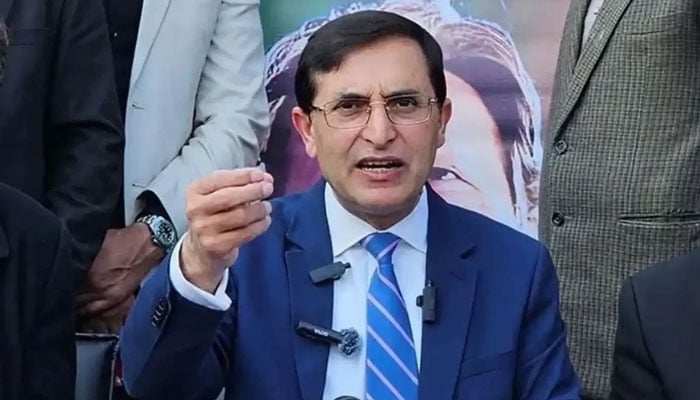
    PTI chairman barrister Gohar Says Noreen Niazi’s…

    Rawalpindi: Pakistan Tehreek-e-Insaf (PTI) Chairman Barrister Gohar Ali Khan has clarified that the recent statement made by Noreen Niazi regarding the “Battle of Truth” (Maarka-e-Haq) does not reflect the official policy of the party. Speaking to the media in Rawalpindi, Barrister Gohar emphasized that the remarks were Noreen Niazi’s personal views and should not be interpreted as PTI’s official position. During the media interaction, Barrister Gohar said that every Pakistani takes pride in the country’s success in what he described as the Maarka-e-Haq. He stressed that Pakistan’s defense is strong and capable of protecting the country from any external threat. According to him, the nation remains united when it comes to safeguarding its sovereignty, and no enemy has the ability to defeat Pakistan. Addressing questions about Noreen Niazi’s comments, Barrister Gohar explained that, according to the information available to him, the interview in question had actually been recorded around three months ago. He stated that the remarks expressed during that interview represented Noreen Niazi’s personal opinion and not the official stance of Pakistan Tehreek-e-Insaf. He reiterated that the party’s policies are determined through its official leadership and decision-making process, not through individual statements. The PTI chairman further said that the party has consistently been trying to improve the overall political atmosphere in the country. He noted that political leaders should avoid reopening old controversies and instead focus on reducing tensions. According to Barrister Gohar, this is a time for restraint and reconciliation rather than confrontation. He remarked that everyone should avoid revisiting past disputes if the goal is to create a more stable political environment. Speaking about the current political climate, Barrister Gohar also referred to comments made by Jamiat Ulema-e-Islam (F) chief Maulana Fazlur Rehman. He pointed out that the senior politician had already clarified his earlier remarks. Barrister Gohar observed that, during emotional speeches, public figures may sometimes say things that they later need to explain. However, he added that if a statement is incorrect, it should be acknowledged as such regardless of who made it. He further emphasized that certain sensitive matters should not be discussed publicly if doing so could worsen the political situation. According to him, some issues are better left untouched in order to help the country move toward greater political stability and national harmony. He urged political leaders and stakeholders to exercise caution in their public statements and avoid comments that could increase tensions. Barrister Gohar also spoke about PTI’s position regarding the upcoming Azad Jammu and Kashmir (AJK) elections. He stated that, at present, the party’s official decision is to boycott the elections. However, he indicated that the decision is not necessarily final and could be reviewed if political conditions improve in the future. He revealed that there had been internal discussions within the party about reconsidering the boycott. According to Barrister Gohar, some members believed that PTI should revisit its decision and participate in the elections. Nevertheless, he explained that the party leadership could not reach a consensus on changing the existing policy. As a result, the decision to boycott the AJK elections remains in place for now. The PTI chairman concluded by reiterating the party’s commitment to promoting political stability and constructive dialogue. He stressed that while differences of opinion are a normal part of politics, all political actors should prioritize national unity and work toward creating an environment that supports peace, democratic processes, and institutional stability.

  • |

    PIA-style model proposed for DISCO privatisation

    ISLAMABAD: The government has proposed a new financial structure for the privatisation of three major power distribution companies. The plan covers Faisalabad Electric Supply Company (FESCO), Gujranwala Electric Power Company (GEPCO) and Islamabad Electric Supply Company (IESCO).The proposal is based on the restructuring model used during the privatisation process of Pakistan International Airlines (PIA). Under the proposed plan, selected assets and liabilities of the three companies will be separated from their balance sheets.The government plans to establish a Special Purpose Vehicle (SPV) for this purpose. The SPV will be owned by the government. It will hold specific assets and liabilities removed from the DISCOs. The restructuring is aimed at making the companies more attractive to private investors. The government wants to offer financially stronger entities to potential buyers.Land assets are among the items expected to be separated from the DISCO balance sheets. Liabilities related to retired employees and pension benefits will also be shifted to the SPV.These pension-related liabilities were worth around Rs312 billion for the three companies as of June 2025. The final amount could change after the companies’ balance sheets are restructured. The government plans to use audited financial results for March 2026 as the basis for the final calculation.The three DISCOs had combined assets of around Rs1.2 trillion in June 2025. Their combined liabilities stood at approximately Rs1.05 trillion.The companies together reported net positive equity of around Rs145 billion. However, the financial position of the three companies varies considerably.GEPCO had negative equity of around Rs14.4 billion as of June 2025. The final figures may be different because the government is using March 2026 audited accounts for the restructuring process. The Privatisation Commission board has recommended that the Cabinet Committee on Privatisation approve the restructuring plans. The plans cover the first group of DISCOs selected for privatisation.The proposed arrangements have been prepared using audited financial statements for the period ending March 31, 2026. Officials believe the new structure could increase the value of the companies for the government.It is also intended to make the transactions commercially viable for private-sector investors. The government hopes the approach will attract stronger interest from domestic and international buyers.The strategy closely resembles the model adopted for PIA. During the airline’s privatisation process, the government separated more than Rs650 billion in liabilities from PIA’s balance sheet.The move was designed to leave the airline in a stronger financial position before its transfer to new owners. A similar approach is now being considered for the three DISCOs.The Privatisation Commission has been informed that both local and foreign investors have shown interest in the companies. The government has already announced deadlines for Expressions of Interest.Investors interested in FESCO must submit their Expressions of Interest by August 7, 2026. The deadline for GEPCO is August 21, 2026.For IESCO, the deadline has been set for September 7, 2026. FESCO has a relatively stronger financial position among the three companies.Its assets stood at around Rs410.3 billion as of June 2025. Its liabilities were approximately Rs347 billion.The company reported positive equity of around Rs63 billion. The equity position was supported by deposits for shares and gains from asset revaluation.FESCO also recorded a profit after tax of around Rs9.4 billion. Its non-current liabilities stood at approximately Rs217.6 billion.Staff retirement benefits accounted for around Rs123 billion of these liabilities. The company’s current liabilities were estimated at about Rs130 billion.Trade payables made up around Rs118 billion of the current liabilities. GEPCO reported a profit after tax of around Rs13.7 billion.Its total assets stood at approximately Rs238 billion. However, its equity remained negative at around Rs14.4 billion.The company’s total liabilities were around Rs252.5 billion. Staff retirement benefits accounted for approximately Rs79 billion.IESCO reported a loss after tax of around Rs1.42 billion during the same period. The company had total assets of approximately Rs547 billion.Its liabilities stood at around Rs450 billion. Despite recording a loss, IESCO had positive equity of around Rs97 billion. The company’s equity position was supported by a share deposit of approximately Rs67 billion. It also benefited from a surplus revaluation of around Rs158 billion.IESCO’s liabilities included staff retirement benefits worth around Rs110 billion. The company also carried deferred tax liabilities.The proposed privatisation is part of Pakistan’s wider power-sector reform programme. It is also linked to commitments made under Pakistan’s agreement with the International Monetary Fund (IMF).Pakistan has repeatedly pledged to reduce government involvement in the power distribution sector. The commitment to privatise at least three DISCOs has been made several times since 2013.Previous attempts, however, failed to reach completion. The IMF has urged Pakistan to implement structural reforms in the power sector.The broader objective is to reduce electricity costs for households and businesses. The reforms also aim to improve the operational efficiency of power distribution companies.The IMF has previously noted delays in the private-sector participation process for DISCOs. The first group, consisting of FESCO, GEPCO and IESCO, faced delays after potential investors raised concerns about the proposed transaction structure.The government has now said that those concerns have been addressed. Officials expect the privatisation process to move forward.The government is targeting completion of the first phase by early 2027. The proposed SPV will be an important part of the process.It is intended to separate selected financial burdens from the three companies before they are offered to private investors. The government hopes the restructuring will improve investor confidence and make the DISCO transactions more commercially attractive.

  • |

    Love marriage turns fatal in Khanewal as father allegedly kills daughter

    KHANEWAL: A young woman was allegedly murdered by her father and other family members in Khanewal after she married a man of her choice, police said. The incident took place in Chak No. 170, Tens-R, within the jurisdiction of Sadar police station. According to the initial information, the victim, identified as Iqra, had married Muhammad Sohail three days before the incident. Police said Iqra’s father, Falak Sher, allegedly went to his daughter’s in-laws’ residence and persuaded her to accompany him, reportedly assuring the family that she would be sent off respectfully. However, after taking her with him, he allegedly killed her with the assistance of his two brothers and son. The incident came to light after Iqra’s husband, Muhammad Sohail, approached the police and filed a complaint. A murder case was subsequently registered against the deceased’s father, Falak Sher, and his three sons. Following the registration of the case, police arrested Falak Sher and initiated further investigation. Authorities are also working to determine the exact circumstances surrounding the killing and the alleged involvement of other suspects. Rescue officials shifted Iqra’s body to the district headquarters hospital, where doctors conducted a post-mortem examination to establish the cause and nature of her death. The case has once again raised concerns over violence against women who choose to marry according to their own wishes. Police said further legal action would be taken in light of the investigation and evidence collected from the crime scene.

Leave a Reply

Your email address will not be published. Required fields are marked *