
myanmar offensive clears
|

Myanmar offensive clears path for Russia-backed po…

DAWEI, Myanmar: Myanmar’s military has deployed hundreds of troops into the country’s southern Tanintharyi region in an offensive aimed at clearing areas earmarked for a Russia-backed special economic zone, according to resistance fighters and a local activist familiar with developments in the area.

The campaign around the Dawei Special Economic Zone (SEZ), which includes plans for a deep-sea port and power plant on the Andaman Sea, represents one of the clearest signs yet that Myanmar’s military-backed government is prepared to use force to revive a long-delayed project seen as a potential alternative trade route to the Strait of Malacca.

The offensive also comes as Myanmar’s leadership intensifies diplomatic efforts to attract foreign investment.

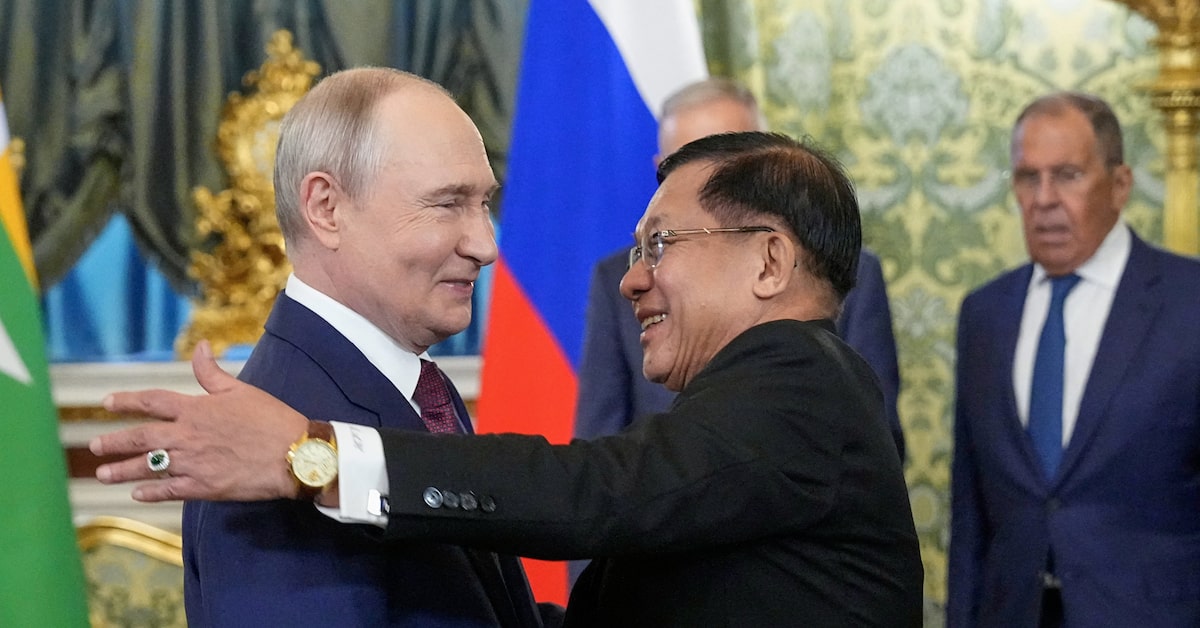
Junta chief-turned-President Min Aung Hlaing promoted the Dawei project during a recent visit to Thailand and discussed its prospects again this week during talks with Russian President Vladimir Putin in Moscow.

Villages Caught in Military Push

Since July, hundreds of soldiers have reportedly moved into Tanintharyi, a region bordering Thailand where the Dawei project is located. Their advance has triggered repeated clashes with local resistance groups, according to two sources.

“The military is advancing its columns and conducting area-clearance operations. Some villages and homes have been burned down,” Saw Dah Ko of the Tanintharyi Region People’s Defence Force told Reuters.

A second resistance fighter, operating with the Dawei District No.1 battalion under the shadow National Unity Government, said troops had burned homes in at least three villages and killed three aid workers helping displaced communities.

The civil society group MAGGA Initiative said the three aid workers were detained and killed after encountering a military column in Yebyu Township on July 9.

Reuters was unable to independently verify the accounts. Myanmar’s government and Russia’s embassy in Myanmar did not respond to requests for comment.

Conflict monitor ACLED said the offensive had involved a column of about 700 soldiers advancing into surrounding areas, with raids on villages and reports of civilian deaths.

The military’s campaign has reportedly been supported by air and naval attacks, according to local sources, putting pressure on loosely organised resistance groups.

“They enter the region, and once reinforced by the navy, they launch offensives into the villages situated within the deep sea port project area,” said Min Lwin Oo of the Democracy Movement Strike Committee.

A Strategic Project

The push around Dawei is part of the military’s wider effort to regain territory and strategic border areas lost to opposition groups following the 2021 coup that plunged Myanmar into civil war.

The conflict has killed an estimated 100,000 people and displaced more than 3.5 million, according to humanitarian and conflict assessments.

The military-backed government has sought to strengthen its control while pursuing projects that could bring investment and strategic partnerships.

The Dawei SEZ is among the most ambitious.

Originally launched in 2008 as a joint venture with Thailand, the project was intended to create a major industrial and transport hub linking Southeast Asia with markets in East and West Asia.

However, construction stalled in 2013 amid local opposition and funding difficulties.

In early 2021, shortly before the military takeover, authorities moved to terminate agreements covering nine projects in the initial construction phase and said they would seek new partners.

Russia has now emerged as a key potential supporter.

Russia Sees Gateway to Asia

At a business forum in Moscow this week, Tanintharyi Chief Minister Zaw Naing Oo promoted Dawei as a faster route for regional trade.

State media quoted him as saying cargo could reach its destinations four to six days faster through Dawei than by travelling through the Strait of Malacca.

The proposed port is also around 45 kilometres from Myanmar’s major offshore gas fields, adding to its strategic appeal.

Russian Prime Minister Mikhail Mishustin said Russian companies were interested in working with the Dawei SEZ, potentially expanding trade and creating employment opportunities for small and medium-sized businesses.

For Moscow, the project could offer more than commercial returns. A person familiar with Russian thinking said the port could provide Russia with greater access to Southeast Asian markets and a foothold in the Indian Ocean region.

But the source cautioned that Myanmar remains a high-risk investment destination.

“The risk in Myanmar is still very high,” the source said, adding that Russian investment would need strong connectivity with Thailand for the project to make economic sense.

A Project With High Stakes

The Dawei development could reshape trade routes across the region if it is successfully revived. Its location on the Andaman Sea offers a potential route that could reduce reliance on the heavily used Strait of Malacca.

For Myanmar’s military leadership, restoring control over the surrounding territory is therefore closely linked to its ambitions for the project.

For local communities, however, the military advance has brought renewed fear and displacement.

The fate of Dawei now rests on a difficult balance between geopolitics, investment and security — with the proposed port’s future increasingly tied to the outcome of Myanmar’s continuing civil war.

Similar Posts

  • |

    Nigerian President Bola Tinubu authorises up to 80% salary increase for military personnel

    Nigerian President Bola Tinubu has announced a major pay review for the country’s armed forces, granting salary increases of up to 80 per cent for junior military personnel as part of broader efforts to boost morale amid widespread security threats. The wage adjustment represents the second military pay rise within a month. Under the new structure, monthly earnings for privates, the lowest-ranking soldiers, will increase from $73 to $132 starting in September, up from $36 earlier this year. The pay review is scaled hierarchically across all operational ranks. Privates up through staff sergeants will receive the maximum 80 per cent increase, while warrant officers up to colonels will see a 50 per cent boost. Senior leadership, from brigadier generals to full generals, will receive a 30 per cent pay adjustment. These adjustments will raise the military’s annual wage expenditure from $484 million to $678 million. The announcement follows recent defence initiatives aimed at expanding military capacity, including the planned recruitment of 28,000 additional soldiers and the establishment of four new army divisions, bringing the national total to 12. Government forces continue to face complex security challenges, including persistent insurgencies in the north-east, widespread armed banditry and kidnapping networks in central and north-western regions, and separatist movements in the south-east.

  • | | |

    SBP injects Rs11.6tr into banking system

    The State Bank of Pakistan (SBP) injected around Rs11.6 trillion into the country’s banking system through an open market operation on Monday, providing significant liquidity to banks. The central bank conducted a reverse repo auction under its Open Market Operations (OMOs). Banks submitted bids worth Rs11.777 trillion across two different tenors. The SBP accepted Rs11.613 trillion in total. For the four-day tenor, banks offered Rs31 billion. The central bank accepted the entire amount at an interest rate of 11.54%. The bids in this category ranged between 11.56% and 11.54%. The 14-day tenor attracted much larger demand. Banks submitted offers worth Rs11.746 trillion. The SBP accepted Rs11.583 trillion at a cut-off rate of 11.51%. The bidding rate for the 14-day facility ranged from 11.57% to 11.51%. Of the Rs5.6527 trillion offered specifically at 11.51%, the central bank accepted Rs5.48415 trillion on a pro-rata basis. The large-scale liquidity injection comes as banks continue to manage their short-term funding requirements. Open market operations are among the SBP’s key tools for managing liquidity and maintaining stability in the financial system. Meanwhile, the Pakistani rupee recorded a slight improvement against the US dollar during Monday’s trading session. The rupee strengthened by three paisa, closing at Rs277.62 per dollar compared with the previous close of Rs277.65. The marginal gain reflected relative stability in the foreign exchange market. The US dollar index also declined by 0.1%. The index, which measures the dollar against six major international currencies, traded near its lowest level of the month at 99.519. Gold prices, meanwhile, moved sharply higher in Pakistan. The price of gold increased by Rs2,000 per tola to reach Rs461,936. The price of 10 grams also rose by Rs1,715 to Rs396,035, according to market rates. The increase followed a strong recovery in international bullion prices. Gold has gained around 9% in August and was trading near $4,400 an ounce. Market analysts said the recent recovery suggested renewed interest from institutional investors and central banks. The rebound has also pushed gold above key technical resistance levels. This has strengthened expectations that prices could move higher if buying momentum continues. Gold had faced heavy pressure following the escalation of the US-Israel conflict with Iran. International prices fell from a record level of around $5,595 an ounce in January to below $4,000 in June. The decline prompted some investors to raise cash. Some central banks also used reserves to support their domestic economies as oil prices surged. Analysts now believe renewed central bank purchases could support the precious metal. Institutional investors are also rebuilding their holdings after the earlier sell-off.

  • |

    The dual catalyst of changing climate and human

    France is confronting unprecedented environmental devastation as wildfires swept across the nation’s forests and countryside. The fire burned over 300,000 acres. A level of destruction not witnessed in the country since the aftermath of the Second World War. The communities assess ruined homes, scorched ecosystems and degraded air quality. The French public and authorities are left with an urgent question: what is driving these catastrophic blazes? A Perfect Storm of Climate Conditions At the root of the crisis is a changing global climate driven by greenhouse gas emissions. Rising regional temperatures, combined with prolonged dry spells, have transformed expansive tracts of woodland into dry tinderbox environments. In these prolonged heatwaves, humidity drops sharply, rendering vegetation prone to rapid ignition. Under such extreme drought, even a minor spark can ignite an uncontrollable inferno within minutes. Environmental scientists emphasize that while climate conditions establish the background vulnerability, they do not act alone. Heat and drought create the ideal environment for fires to spread, but the vast majority require an initial ignition source. The Human Factor: Negligence, Accidents and Arson Official records in France reveal a shocking pattern. Approximately nine out of every ten wildfires originate from human activity.  Public concern often focuses on intentional acts of arson. However, investigators note that deliberate fire-setting accounts for only a fraction of total blazes. The overwhelming majority stem from everyday human negligence or accidents. Common accidental triggers include: Discarded Cigarettes: Unextinguished butts tossed from vehicles or thrown onto dry brush. Fire investigators refer to the rule of 30 conditions where ambient temperatures exceed 30°C (86°F), humidity drops below 30%, wind speeds stay below 30 km/h. A remaining cigarette segment retains at least 30% of its length. Under severe drought, these thresholds lower drastically, making ignition almost immediate. Infrastructure and Equipment: Sparks generated by heavy machinery, ongoing construction projects, or faulty electrical equipment operating near dry grass. Recreational Fires: Unattended outdoor barbecues and small campfires in or around forested boundaries. In response to the scale of destruction, the French Interior Ministry has taken aggressive legal action, detaining over 400 individuals suspected of initiating blazes either through reckless behavior or intentional acts. Among those apprehended are scores of minors, as well as individuals facing immediate judicial sentencing for setting fires in protected woodland zones. Mental health professionals and legal experts point out that intentional fire-starters typically fall into distinct categories, including careless individuals, opportunistic actors seeking financial gain (such as insurance payouts), pyromaniacs, or individuals seeking recognition during emergency responses. Looking Ahead: Reconstruction and Forest Adaptation The unprecedented severity of the blazes has sparked intense public debate over state readiness and resource allocation. Critics question whether preventive measures and response mechanisms were adequate for a summer marked by continuous heatwaves. Addressing the national crisis, French President Emmanuel Macron emphasized the necessity of adapting national forestry policy to match evolving climate realities. Rebuilding efforts will require replanting woodlands with more fire-resistant tree species rather than simply restoring vulnerable pine monocultures. As emergency crews continue to monitor remaining hotspots and brace for subsequent heatwaves, France faces a long-term strategy shift: balancing immediate enforcement against negligence with broad ecological adaptation.

  • |

    Sudanese army drone strike on traditional court in North Darfur leaves dozens dead

    A drone attack launched by the Sudanese armed forces killed at least 35 people and left dozens of others injured after striking a traditional court session in the village of Ghara al-Zawiya, located in North Darfur. The civil monitoring group Emergency Lawyers reported that multiple missiles hit a customary gathering held under a tree where local elders, community leaders, and residents had assembled to resolve regional disputes. Eyewitness accounts confirmed that the victims included four tribal leaders alongside two commanders from the Rapid Support Forces, which currently holds administrative control over much of the Darfur region. Human rights observers and legal advocacy groups strongly condemned the attack, characterising the targeting of civilian infrastructure and traditional judicial venues as a violation of international humanitarian law. The incident underscores the growing deployment of uncrewed aerial systems across Sudan’s ongoing civil conflict, which has displaced millions and caused severe humanitarian degradation nationwide.

  • |

    Italy joins Tunisia’s wildfire fight

    An Italian firefighting aircraft has joined efforts to contain two major wildfires in Tunisia’s western Kef province, as authorities continue a large-scale operation to prevent the flames from spreading through forested and mountainous areas. The Italian Embassy in Tunis announced on Friday that Italy had sent a Canadair firefighting aircraft to assist Tunisian emergency teams. The aircraft collected water from the Mellegue Dam and repeatedly dropped it over areas affected by the fires, according to footage broadcast by Tunisia’s national radio. Khalil Mechri, head of operations and monitoring at Tunisia’s Civil Protection Directorate, said firefighting teams continued their work throughout Friday evening to bring both blazes under control. He said the fires began several days earlier in Jebel Touila and Jebel Takrouna, two mountainous areas in the Kef province. The wildfires have already scorched hundreds of hectares of forests and vegetation, Mechri told Tunisia’s state news agency TAP. Around 22 fire engines and large numbers of civil protection personnel remain engaged in the operation, while several government ministries and local authorities have provided additional equipment and logistical support. Tunisia’s Defense Ministry has also contributed to the response by deploying military aircraft to provide aerial assistance in the firefighting operation. The latest fires come amid a sharp rise in wildfire damage across Tunisia this summer. According to figures released by Tunisian authorities, wildfires have destroyed around 4,400 hectares (10,873 acres) of land since the beginning of May. Mohamed Noufel Ben Haha, director general of forests at the Agriculture Ministry, said fires recorded between May 1 and July 23 had burned approximately 4,400 hectares. The figure represents a significant increase from the 2,705 hectares affected by wildfires during the same period in 2025, marking a rise of nearly 63 percent. Authorities continue to monitor the situation as firefighters work to contain the remaining flames and protect nearby forests and communities from further damage.

  • | |

    Sindh High Court rejects disqualification plea aga…

    The Sindh High Court has dismissed a petition seeking the disqualification of Pakistan Peoples Party leader and National Assembly member Shazia Marri over an alleged fake degree. The court announced its decision after the case remained pending for around 13 years. The petition was declared not maintainable and subsequently rejected. The court said the High Court does not have constitutional authority to disqualify a member of Parliament. According to the court, such matters must be dealt with through the relevant constitutional and electoral forums. The court also noted that a similar objection had previously been raised during the 2018 general elections. The matter was taken before an election tribunal at that time. The Election Commission later rejected the objection concerning Marri’s degree in 2022. An appeal against the tribunal’s decision was subsequently filed before the Supreme Court. The Supreme Court dismissed the appeal in 2023 after it was withdrawn. During the latest proceedings, Marri’s lawyer argued that the degree issue had already been examined by the Election Commission. He told the court that evidence relating to the qualification had been presented before the commission. The lawyer maintained that the Election Commission had already rejected the petition concerning Marri’s degree. The court also discussed the constitutional requirements for disqualification. It observed that a person cannot be disqualified simply through a constitutional petition. The court said the authority to determine whether a person meets the required constitutional standards rests with the appropriate judicial and electoral forums. It further stated that the courts cannot declare an individual truthful and trustworthy outside the constitutional procedure provided for such matters. The judges also referred to previous orders of the Supreme Court while determining the maintainability of the petition. Based on these considerations, the court concluded that the petition could not be entertained. The decision brings an end to a legal challenge that had remained pending for more than a decade. The case had focused on allegations concerning Marri’s educational qualification. However, the Election Commission had already rejected the related objection. The latest ruling also reinforces the distinction between the powers of the High Court and those of election tribunals and other constitutional forums in matters involving parliamentary eligibility. The court’s decision means that the petition seeking Marri’s disqualification has been dismissed without granting the requested relief.

Leave a Reply

Your email address will not be published. Required fields are marked *