china indonesia deepen
|

China, Indonesia deepen security and economic ties

JAKARTA: China and Indonesia opened a new round of high-level talks on Friday, with defence cooperation, regional security, political relations and trade expected to dominate discussions as Jakarta seeks to maintain strong ties with Beijing while preserving its relationship with Washington.

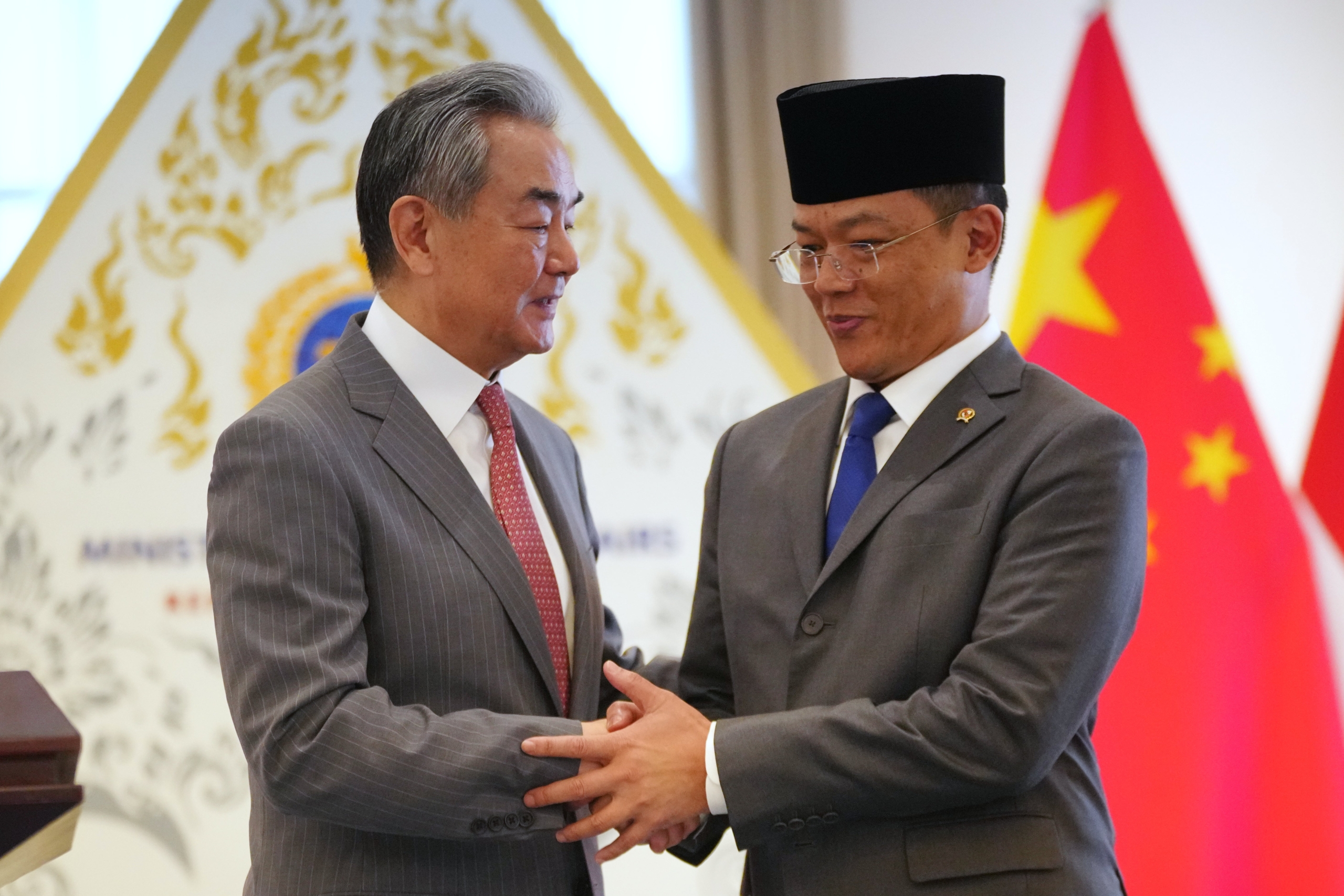
Chinese Foreign Minister Wang Yi, visiting Jakarta for the first time in two years, met his Indonesian counterpart Sugiono before joining a “2+2” dialogue involving the two countries’ defence ministers.

The talks come at a sensitive moment for Southeast Asia, where tensions in the South China Sea, competition between China and the United States and growing economic interdependence are putting pressure on regional governments to carefully balance their relationships with major powers.

Wang said the new dialogue mechanism was timely as the world faced increasingly complex challenges.

“Unilateralism and hegemonic acts bring serious impact on global cooperation and stability,” he said, adding that China aimed to build cooperation with Indonesia at a high level.

Indonesian officials said economic issues and political relations would be among the foreign ministers’ priorities, while China said the discussions would also cover defence cooperation and international and regional affairs.

Defence Cooperation Expands

Chinese Defence Minister Dong Jun was welcomed with a military honour guard at Indonesia’s defence ministry, where he said the two armed forces had significant room to strengthen cooperation.

“The prospects for cooperation between the two militaries are broad,” Dong said, describing the relationship as increasingly effective and higher in quality.

Indonesia’s Defence Minister Sjafrie Sjamsoeddin said the countries planned to expand military activities, including joint exercises, officer exchanges and cooperation in the defence industry.

He described the move as an important step in strengthening Indonesia’s defence capabilities.

The discussions follow a joint naval exercise between China and Indonesia last week that drew attention because of its location east of Taiwan. Taiwan, which Beijing claims as part of China, expressed concern over the exercise.

Indonesia’s navy said the activity was routine and noted that it conducts exercises not only with China but also with Japan and the United States.

Defence analyst Curie Maharani said the episode highlighted how military diplomacy could serve broader strategic purposes.

Indonesia, she said, had gained an important lesson about how major powers can use defence cooperation to project influence.

Balancing China and Washington

Jakarta’s approach reflects its long-standing “free and active” foreign policy.

President Prabowo Subianto has repeatedly said Indonesia intends to remain non-aligned while maintaining friendly relations with all countries, including China and the United States.

That balancing act is becoming more complicated as competition between Washington and Beijing intensifies.

Indonesia also has differences with China over developments in the South China Sea. Beijing claims almost the entire disputed waterway, while Indonesia has sought to avoid becoming directly involved in broader territorial disputes between China and the Philippines, Malaysia and Vietnam.

Jakarta has generally maintained a measured position, prioritising diplomacy and economic cooperation while protecting its own interests.

Billions at Stake

Economic ties provide another major reason for Indonesia to maintain close relations with Beijing.

China contributed $3.9 billion in foreign direct investment to Indonesia during the first half of 2026, according to Indonesian figures.

Chinese companies have invested heavily in industries ranging from nickel processing and steel to electric-vehicle batteries. Indonesia possesses the world’s largest nickel reserves, making it strategically important to China’s rapidly expanding electric-vehicle supply chain.

Among major investors are Contemporary Amperex Technology, one of the world’s largest electric-vehicle battery makers, and Tsingshan Group, which operates nickel and steel facilities in Indonesia.

However, the growing investment relationship has not been free of tension.

In May, Chinese companies operating in Indonesia urged Jakarta to introduce more business-friendly policies, arguing that higher taxes and a new nickel pricing formula were increasing costs and threatening investment.

The China Chamber of Commerce in Indonesia also complained of what it described as excessive regulation and enforcement, while raising allegations of corruption and extortion.

The concerns underline the challenge facing both countries: expanding economic cooperation while managing disagreements over regulation, investment conditions and strategic interests.

For Indonesia, Friday’s talks therefore carry significance beyond bilateral diplomacy. Jakarta is trying to strengthen its economy and defence capabilities without becoming overly dependent on either Beijing or Washington. In

For China, deeper engagement with Indonesia offers an opportunity to strengthen its influence in one of Southeast Asia’s largest economies while expanding defence and economic partnerships in a strategically important region.
Similar Posts

  • | |

    Lionel Richie takes a dig at Chris Brown during co…

    Lionel Richie has sparked a conversation among music fans after taking a pointed swipe at Chris Brown and Usher during one of his recent concerts. The 77-year-old music legend made the comments while performing with Earth, Wind & Fire in Phoenix on August 11. During the show, Richie compared the current R&B tour featuring Brown and Usher with the tours he performed decades ago with the Commodores and Earth, Wind & Fire. (People.com⁠) Richie suggested that Brown and Usher were not doing something completely new by bringing two major R&B performers together for a large-scale tour. He pointed out that the Commodores and Earth, Wind & Fire had already been performing major joint shows about four decades ago. However, Richie’s comparison took a sharper turn when he referenced the legal troubles surrounding Brown. He joked that the biggest difference between his generation and today’s artists was that his group members had not gone to jail. The comment appeared to be a reference to Brown’s past legal issues. (Billboard⁠) The remark quickly spread online, with clips from Richie’s concert gaining attention across social media. While some fans viewed the moment as an amusing example of the veteran singer defending his generation’s legacy, others debated whether the joke went too far. Richie later appeared to soften the tone of his comments. He described both Brown and Usher as “fine Christian men” and suggested that the internet often creates unnecessary controversy around celebrities. (People.com⁠) Brown, for his part, did not appear to take the comment too seriously. The singer responded on Instagram with a playful message directed at Richie, calling him “paw paw” and adding laughing emojis. His reaction suggested that he viewed the exchange more as friendly teasing than a serious feud. (TMZ⁠) The comments come as Brown and Usher continue their joint R&B stadium tour, which launched earlier this year. The collaboration has attracted considerable attention because both singers are major figures in modern R&B, with their careers spanning different eras of the genre. Richie’s own career gives him plenty of experience with massive R&B performances. As a member of the Commodores and later as a solo artist, he became one of the most recognizable voices in popular music. For now, there is no indication of a serious feud between the three singers. Instead, Richie’s remarks and Brown’s playful response appear to have created an unexpected exchange between two generations of R&B stars.

  • Strong Baht May Deter Tourist Spending, Impact Forward Bookings

    BANGKOK – The continued strengthening of the Thai baht against the U.S. dollar, recently surpassing 31 baht per dollar for the first time in nearly five years, is raising concerns among tourism operators about reduced visitor spending and forward bookings, especially during the upcoming low season, the Bangkok Post reported. Bank of Thailand to Limit […]

  • |

    Iran inflation surges to 66%

    Iran’s annual inflation rate has climbed to 66%, highlighting the growing pressure on household budgets as the prices of essential goods continue to rise sharply across the country. According to Iranian media reports, food and beverage prices recorded the most significant increase, rising by 128.1% compared with the same period last year. The steep increase has made everyday necessities considerably more expensive and placed additional strain on consumers, particularly low- and middle-income families. Officials and economic observers have increasingly raised concerns over the rapid rise in the cost of basic commodities. Reports indicate that the prices of at least eight essential items have more than doubled over the past 12 months. The sharp increase has reduced consumers’ purchasing power and made it increasingly difficult for many households to maintain their usual standard of living. The latest figures also point to continued price pressure on a monthly basis. Iran recorded a monthly inflation rate of 3.1% in July, according to the Iranian news agency. Although the monthly increase appears smaller than the annual rise, continued month-on-month price growth can further intensify inflationary pressures if the trend persists. The surge in food prices is particularly significant because food represents a major portion of household spending. Rising costs for basic groceries can quickly affect family budgets, leaving consumers with less money for other necessities such as housing, transportation, healthcare and education. Iran has faced persistent economic challenges in recent years, including currency pressures, high living costs and restrictions affecting trade and economic activity. The latest inflation figures add to concerns about the country’s economic outlook and the financial difficulties facing ordinary citizens. With food and other essential commodities recording exceptionally high annual increases, Iranian households are likely to remain under significant financial pressure unless inflation begins to slow substantially in the coming months.

  • | |

    SSGC explains strong gas smell in Karachi

    The Sui Southern Gas Company (SSGC) on Sunday clarified that the strong gas smell reported in several parts of Karachi, including areas near Abul Hasan Isphahani Road, did not result from a gas leak. The company said residents began reporting the unusual smell on Saturday night, raising concerns about a possible leak. However, SSGC explained that the smell came from the testing of odourisation plants during the commissioning process of a newly installed gas pipeline. According to the company, natural gas has no smell of its own. Gas distribution companies add special odorants to the supply as a safety measure so that consumers can quickly detect a potential leak. During the testing process, SSGC added a larger-than-usual quantity of the odorant, which caused the gas to produce a much stronger smell than normal. The unusual odour prompted people from different parts of Karachi to report what they believed could be a gas leak. SSGC, however, said its teams found no evidence of any leak and confirmed that the gas network was operating at normal pressure. In a media alert issued on Sunday, the company urged customers not to panic and said they could continue with their routine activities. SSGC also reassured consumers that the strong smell resulted solely from the increased amount of odorant used during the testing of the new odourisation facilities. Gas leaks can pose serious risks to public safety. Accumulated gas can cause fires and explosions, while inhaling high concentrations in enclosed spaces can lead to suffocation and death. Authorities regularly advise consumers to take immediate precautions if they detect an unusual gas smell and to report suspected leaks to the relevant gas utility. The latest clarification comes months after a tragic gas leak incident in Rawalpindi. In January, three women died from suffocation while another woman fainted after a gas leak in an apartment in Bahria Town Phase VII. SSGC’s clarification aims to reassure Karachi residents that the strong smell reported in the city was linked to the testing of its odourisation system rather than an actual gas leak.

  • | |

    Karachi hospitals face fire safety gaps after PIMS…

    KARACHI: Serious shortcomings in fire safety arrangements have been reported at major government hospitals in Karachi following the deadly fire at the Pakistan Institute of Medical Sciences (PIMS) in Islamabad, where newborns lost their lives. Hospital sources said several major public healthcare facilities in Karachi lack functional fire alarm systems and adequate emergency preparedness, raising concerns about the safety of thousands of patients and healthcare workers. At Abbasi Shaheed Hospital, operated by the Karachi Metropolitan Corporation (KMC), only 13 fire extinguishers are reportedly available across the facility. Sources said hospital staff have also not received regular fire safety training or participated in proper fire drills. The hospital reportedly does not have a fire alarm system or a designated emergency exit route. The situation is particularly concerning because hundreds of patients visit the emergency department every day, while more than 1,000 patients reportedly attend the outpatient department (OPD). Abbasi Shaheed Hospital has two generators, with one reportedly kept as a backup power source. The hospital’s Medical Superintendent said authorities were taking further steps to improve the fire safety system and address existing shortcomings. At Jinnah Postgraduate Medical Centre (JPMC), fire extinguishers are available in the wards, but hospital sources said several of them are not functional. Sources further said the last fire drill at the hospital was conducted in 2017. The hospital also reportedly lacks an installed fire alarm system. JPMC’s Joint Executive Director said a dedicated firefighting team needs to be established at the hospital. He said each ward has a fire extinguisher, while further training for staff is also required. He added that the hospital administration would write to the Sindh government seeking additional fire safety training for employees. Meanwhile, Civil Hospital Karachi has around 180 fire extinguishers distributed among its wards. However, sources said the overall fire safety arrangements at the hospital also fall short of ideal standards. The revelations have raised concerns about the preparedness of major public hospitals in Karachi to deal with fires and other emergencies. Large government hospitals handle thousands of patients, attendants and healthcare workers every day. In the event of a fire, the absence of functional alarms, clearly marked emergency exits, regular drills and trained response teams could make evacuation difficult and increase the risk to human lives. The situation has come under renewed scrutiny after the PIMS tragedy in Islamabad, prompting calls for immediate inspections of fire safety systems at hospitals across the country. Experts and hospital officials have stressed the need for regular fire drills, functioning extinguishers, alarm systems, emergency exits and trained firefighting teams.

  • | |

    Rain fails to dampen Khalistan referendum turnout …

    INDIANAPOLIS: A large number of members of the Sikh community participated in a Khalistan referendum held in Indianapolis, Indiana, despite rainy weather, as organizers called for the creation of an independent Sikh state. The event was organized by Sikhs for Justice, with participants travelling from different cities and states across the United States. Organizers said voting continued despite the rain, with women and children also among those attending. Polling was scheduled to remain open until 6pm, after which organizers were expected to announce the final turnout. Pro-Khalistan slogans were raised during the event, while some participants also expressed support for Kashmir’s independence. Ghazala Habib, chairperson of Friends of Kashmir, addressed the gathering and said she was the only non-Sikh speaker to speak from the stage. Vikramjit Singh, a representative associated with the Khalistan Referendum Campaign, said the initiative was launched in 2020 but faced disruptions because of the COVID-19 pandemic. He said the first voting event under the campaign was held in London on October 31, 2021, attracting thousands of Sikh participants. According to Singh, subsequent voting events were organized in countries including the United Kingdom, Australia, Switzerland, Italy and Canada. He said Canada hosted three events in Toronto, two in Vancouver and another in Calgary, while the United States has held voting in San Francisco, Los Angeles, Washington, DC and now Indianapolis. Singh claimed that nearly two million Sikhs worldwide had participated in the campaign so far. However, the figure could not be independently verified. He accused the Indian government of committing historical injustices against Sikhs, citing the 1984 attack that damaged the Akal Takht and subsequent violence against the Sikh community, as well as what he described as the exploitation of Punjab’s economic resources. Singh said supporters of the movement wanted to pursue their demand through peaceful and democratic means. He called for a formal referendum in Punjab whose outcome, according to him, would have legal and political effect for all parties. Organizers said details of the Indianapolis vote and the next stage of the campaign would be announced after polling concludes. The campaign is expected to hold another referendum in Canada on October 18, although the specific city has not yet been confirmed.

Leave a Reply

Your email address will not be published. Required fields are marked *