iran says response
|

Iran says US response to its proposal to reopen Hormuz ‘insufficient’

DUBAI, UAE – The United States’ response to Iran’s seven conditions in a proposal to reopen the strategic Strait of Hormuz was “insufficient,” Iran’s security chief, Mohsen Rezaei, was quoted by state media on Sunday, October 11, as saying.

Iran presented a proposal during the UN General Assembly under which the Strait of Hormuz waterway could be reopened and normal maritime passage restored within seven days if the conditions were met, to which the US later replied via Qatari intermediaries.

Washington needs to clarify the issues that remain unclear to Tehran, Rezaei, secretary of the Supreme National Security Council, said, adding “we presented seven conditions to the Americans and clearly stated that the Strait of Hormuz would not be opened to them, and no negotiations would take place, until these conditions are met.”

The White House did not immediately respond to a Reuters request for comment.

Rezaei said Iran is “no longer in the process of responding to the Americans.”

“In their response, they have accepted some of our conditions, while others remain unclear,” he added.

Tehran said late in September that it had received a US response to its latest proposal to resurrect the collapsed ceasefire in the Gulf, days after US President Donald Trump said he had rejected it.

Qatar and other mediators have transmitted messages between Washington and Tehran in an effort to end the conflict and reopen the Strait of Hormuz, the conduit for a fifth of the world’s oil and liquefied natural gas before the war that began at the end of February with US and Israeli attacks on Iran. – Rappler.com

Similar Posts

  • |

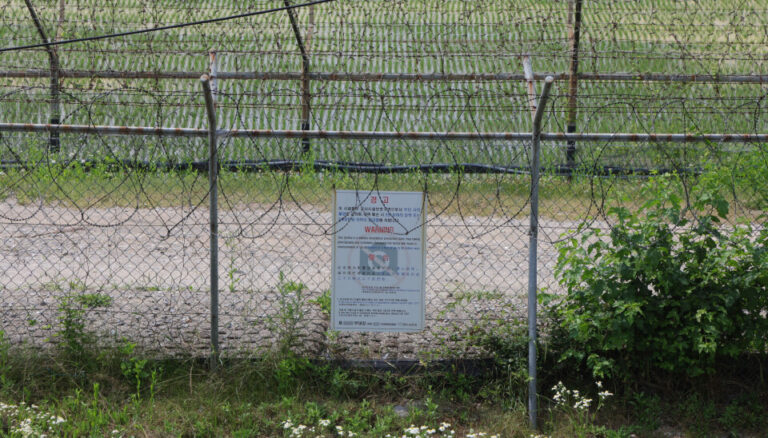
    South Korea investigates military response after US drone mistaken for threat

    South Korea has launched a review after its military nearly opened fire on a United States military drone that was initially identified as an unknown aircraft near the border with North Korea. The incident briefly raised security concerns in one of the most heavily guarded areas of the Korean Peninsula before officials confirmed the aircraft was taking part in a joint military exercise. According to South Korea’s Joint Chiefs of Staff, the drone was detected on Thursday in northern Gyeonggi Province close to the border. Military personnel followed standard operational procedures after they were unable to immediately identify the aircraft. As a precaution, troops prepared to respond while continuing to track its movements. The aircraft was later confirmed to be a United States Marine Corps drone participating in combined training with South Korean forces. The incident prompted a temporary security alert in the border region. Local authorities issued evacuation warnings to residents and farmers living inside the Civilian Control Zone around Cheorwon and nearby communities. Emergency text messages sent shortly after 2 pm advised people in frontline areas to move to shelters or other safe locations until the situation became clear. After military officials confirmed the aircraft’s identity, a second message informed residents that the alert had been lifted and there was no longer any immediate danger. No shots were fired and no injuries or damage were reported. United States Forces Korea confirmed that the aircraft belonged to the US Marine Corps and was involved in a scheduled joint exercise with South Korean troops. The command said it is reviewing the circumstances that led to the misunderstanding and is working with South Korean authorities to examine the incident. South Korea’s Joint Chiefs of Staff announced that military inspectors from its readiness office would visit the Army’s 1st Corps on Friday to review how the situation was handled. The inspection will assess whether existing identification and communication procedures were properly followed and whether improvements are needed to prevent similar incidents in the future. The episode highlights the high level of military alert maintained along the border with North Korea, where tensions remain elevated. South Korean forces routinely monitor unidentified aircraft because of the possibility of North Korean military activity. Officials said troops acted according to established procedures because they could not immediately determine whether the aircraft posed a potential threat. The incident also comes shortly after another security concern involving the United States military. Earlier this week, residents living near a US military base in Pyeongtaek were briefly advised to evacuate following an incident involving white phosphorus. That event prompted some civic groups to call for an investigation and for the US military to provide a public explanation. Although the drone incident ended without violence, it has renewed attention on the challenges of coordinating military operations in a region where misunderstandings can quickly escalate. South Korean authorities are expected to use the findings of their review to strengthen communication and operational procedures during future joint exercises with United States forces.

  • |

    Sri Lankan court sentences two former security chiefs to death over Easter bombings

    A special court in Sri Lanka has sentenced two former senior security officials to death after finding them guilty of failing to prevent the devastating Easter Sunday bombings that killed 279 people in 2019. The ruling marks one of the country’s most significant legal decisions related to the attacks, which also claimed the lives of 45 foreign nationals and injured more than 500 others. The three judge bench ruled by majority that former police chief Pujith Jayasundara and former defence ministry secretary Hemasiri Fernando neglected their responsibilities despite receiving advance warnings about the possibility of extremist attacks. The court concluded that their failure to act contributed directly to one of the deadliest terrorist incidents in Sri Lanka’s history. Jayasundara, 66, and Fernando, 76, were taken into judicial custody following the verdict. Although both have been sentenced to death, they have the right to challenge the ruling before Sri Lanka’s Supreme Court. They will remain in custody until they are granted bail during the appeals process. Despite the sentence, executions are unlikely to take place. Sri Lanka has not carried out a death sentence since 1976 and has maintained an unofficial moratorium on capital punishment for decades. Government figures presented to parliament earlier this year showed that around 800 prisoners are currently on death row, with most death sentences later reduced to life imprisonment. Friday’s ruling overturned an earlier decision that had cleared both men of criminal responsibility. In 2022, a lower court acquitted the former officials, but prosecutors appealed the verdict, leading to a fresh review of the case before the special fast track court. During the trial, prosecutors presented evidence showing that Indian intelligence agencies had warned Sri Lankan authorities on April 4, 2019 about the possibility of suicide attacks by extremist groups. The warning came more than two weeks before the coordinated bombings on April 21, yet the court found that adequate preventive measures were never taken. The Easter Sunday attacks targeted three churches during religious services and three luxury hotels across the country. The coordinated explosions shocked Sri Lanka and drew international condemnation, becoming one of the country’s worst terrorist attacks since the end of its civil war. Both Jayasundara and Fernando were arrested later in 2019 and spent four months in custody before being released on bail. In a separate civil case, they were ordered to pay 125 million Sri Lankan rupees in compensation to victims and survivors for failing to fulfil their duties. Prosecutors argued that the negligence of the two senior officials amounted to an extremely serious offence because they ignored credible intelligence that could have prevented the attacks. They initially sought murder convictions, claiming their failure to respond to the warnings resulted in hundreds of avoidable deaths. The court ultimately convicted both men of negligence leading to the deaths of 279 people. During earlier parliamentary investigations, Jayasundara and Fernando testified that then President Maithripala Sirisena had not followed established national security procedures before the attacks. They claimed weaknesses in communication and decision making at the highest levels of government contributed to the failure to respond effectively to the intelligence warnings. The verdict is expected to renew debate over accountability for the Easter Sunday bombings and the responsibilities of senior officials in protecting national security. Families of the victims have repeatedly demanded justice and greater transparency over the events leading up to the attacks, while the case remains one of the most closely watched legal proceedings in Sri Lanka’s recent history.

  • |

    US democrat challenges antisemitism claims over Israel aid

    US Democratic politician Abdulrahman Mohamed El-Sayed has pushed back against attempts to portray criticism of US funding for Israel as antisemitic, arguing that invoking concerns about antisemitism to defend the actions of a foreign government ultimately harms Jewish Americans. Speaking during an interview with a US host, El-Sayed said that criticism of government policies should not automatically be dismissed as hatred against a religious or ethnic community. He stressed that the fight against antisemitism must continue alongside efforts to combat Islamophobia and other forms of discrimination. El-Sayed argued that both antisemitism and Islamophobia represent serious challenges that society must confront rather than use as political tools. He said Americans should be able to question how public funds are being spent, particularly when those funds support the military policies of another country. “We cannot remain silent and ignore why the United States provides billions of dollars in annual assistance and how that support is being used,” he said, questioning whether American aid should contribute to policies he described as involving racial segregation. The Democratic politician also criticized Washington’s approach to military assistance, saying the US should not provide unconditional support to any foreign government. He argued that American involvement in the war in Gaza over the past several years was not inevitable and that Washington should have taken a more critical approach to its relationship with Israel. El-Sayed’s comments reflect a broader debate within the Democratic Party and across the United States over American military and financial support for Israel. While supporters of Israel argue that US assistance helps protect a key ally and supports its security, critics have called for stricter conditions on aid and greater scrutiny of Israel’s military actions. The remarks also highlight the growing political debate over how to distinguish legitimate criticism of Israeli government policies from antisemitism, while ensuring that concerns about antisemitism are not dismissed or minimized.

  • |

    Saudi sounds alarm on rising sea threats

      Saudi Arabia has issued a forceful warning over escalating security dangers in the region, making it clear that the era of unilateral action is over. In an official statement, Ministry of Defense Spokesman Major General Turki Al-Malki stressed that new and complex threats—ranging from maritime terrorism to drone swarms and smuggling networks—now demand a collective response. “Every country has the right to protect its national interests,” Al-Malki said, “but the scale and sophistication of today’s risks require us to act together. No nation can stand alone.” He specifically pointed to the Red Sea corridor, a lifeline for global oil shipments and trade, as a flashpoint that needs constant vigilance. The nations bordering this strategic waterway, he added, are already in continuous dialogue to align their security strategies. The spokesman made it clear that the multi-national naval defense coalition—first proposed by Saudi Arabia—is not an offensive alliance but a defensive shield. Its core mission: to secure international shipping lanes, deter hostile acts, and ensure freedom of navigation in accordance with international law. The coalition, he emphasized, is open to all nations that share these goals and is firmly rooted in the principles of the United Nations Convention on the Law of the Sea. Al-Malki warned that the threat landscape has shifted dramatically. Non-state actors now possess advanced unmanned systems, anti-ship missiles, and cyber capabilities that can disrupt maritime traffic within minutes. Piracy and human trafficking add another layer of complexity. “We are not facing traditional navies,” he noted. “We are facing hybrid threats that exploit every gap in coordination. That is why interoperability, intelligence-sharing, and joint patrols are no longer optional—they are survival tools.” In a move that underscores Saudi Arabia’s commitment to this mission, the Ministry of Defense announced the appointment of Rear Admiral Abdullah bin Salim as the commander of the coalition. A distinguished naval officer with decades of command experience, bin Salim has served in multiple high-level posts within the Royal Saudi Naval Forces, overseeing fleet modernization and participating in large-scale international exercises. His leadership is expected to bring operational sharpness, strategic clarity, and a hands-on approach to coalition drills and rapid-response mechanisms. Rear Admiral bin Salim’s appointment is not merely symbolic. It reflects Saudi Arabia’s willingness to shoulder greater responsibility in regional security while maintaining an inclusive, consultative stance. He will oversee the integration of naval assets from partner nations, coordinate joint training missions, and ensure that the coalition can respond within hours—not days—to any maritime breach. Al-Malki also extended an open invitation to the international community. “We welcome all nations that believe in a rules-based maritime order,” he said. “The Red Sea is not just a regional asset—it is a global artery. Its security is everyone’s business.” He called for increased naval presence, technology transfers, and financial backing to sustain the coalition’s operations over the long term. The spokesman concluded with a sobering reminder: in a world of drone warfare, proxy conflicts, and rapidly evolving tactics, waiting for disaster is not a strategy. “The coalition is already active,” he said. “Our patrols are ongoing, our command is in place, and our resolve is firm. We are building a security architecture that will outlast any single crisis.” With Rear Admiral bin Salim now at the helm, the coalition enters a new phase—one defined by action, accountability, and unity. Saudi Arabia has made its position clear: the time for talk is over. The time for collective defense is now.

Leave a Reply

Your email address will not be published. Required fields are marked *