gasoline prices again
| | |

Gasoline prices up again, diesel prices down on October 13

MANILA, Philippines – Motorists will see another mixed fuel price adjustments starting Tuesday, October 13.

In a press conference on Monday, October 12, Energy Secretary Sharon Garin announced the following fuel price adjustments for the week of October 13 to 19:

  • Gasoline – increase of P1.56 per liter
  • Diesel – rollback of P3.01 per liter
  • Kerosene – increase of 1.77 P per liter
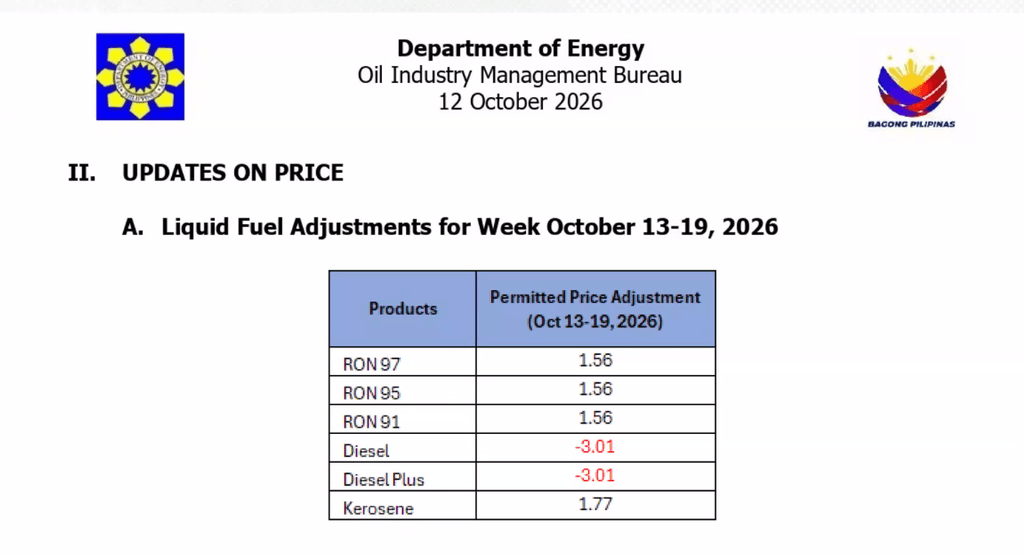
Screenshot from DOE press conference.

The same mixed adjustments had also been seen over the past two weeks. On October 6, gasoline prices increased by as much as P1.93 per liter and kerosene by P3.30 per liter, while diesel fell by P1.30 per liter.
Must Read

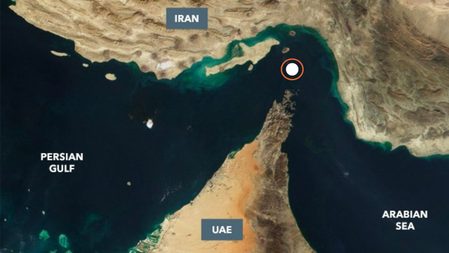
Iran says US response to its proposal to reopen Hormuz ‘insufficient’


Iran says US response to its proposal to reopen Hormuz ‘insufficient’

Gasoline and diesel markets in Asia also face pressure from tighter Chinese supply. China briefly stopped exports of gasoline, diesel, and jet fuel at the start of October as it sought to rebuild domestic inventories, constricting an already strained regional market. 

Exports have since resumed, with China approving around 3.7 million metric tons of the three fuels for October, slightly below the 4 million tons or more shipped in September.

China is the world’s largest oil refining market by capacity and an important source of fuel for the Philippines. In 2025, it supplied 3.78 billion liters, or about 20% of the country’s imported finished petroleum products, second only to South Korea. 

Local pump prices also remain well above levels seen before fighting involving Iran and US-Israeli forces broke out on February 28. In the last full week before the conflict, DOE data showed common retail prices in Metro Manila at P56 per liter for gasoline RON95, P54.70 per liter for gasoline RON91, P55 per liter for diesel, and P83.47 per liter for kerosene.

The Philippines is a net importer of petroleum products, making local pump prices vulnerable to global oil price swings, foreign exchange movements, regional refined fuel prices, and disruptions in international supply routes. – Rappler.com

Must Read

DOE sees ‘no signs’ oil prices will fall as excise tax relief goes on table


DOE sees ‘no signs’ oil prices will fall as excise tax relief goes on table

Similar Posts

  • Thailand Relaunches Gasohol E20 to Fight Rising Energy Costs

    BANGKOK – Energy authorities in Thailand are aggressively relaunching Gasohol E20 in the third quarter of 2026. The government desperately wants to reduce the country’s massive dependence on expensive imported oil. Officials sincerely hope this renewed push will finally convince drivers to embrace biofuel, boost local farming, and stabilize national energy security. Thailand will aggressively relaunch […]

  • | |

    Trump hits back at Canada as tariff war escalates

    WASHINGTON: US President Donald Trump has lashed out at Canada after Prime Minister Mark Carney announced retaliatory tariffs on American goods, deepening a trade dispute that threatens to further strain economic ties between the two neighbouring countries. Trump responded sharply on Sunday after Canada confirmed that new tariffs targeting US products would take effect on September 8. “Canada wants the benefits of being a state, without being one!!!” Trump said in a post on Truth Social, while also accusing Canada of imposing heavy tariffs on American farmers for years. The latest escalation follows the introduction of new US tariffs covering around $20 billion worth of Canadian goods. The measures, which took effect on Saturday, impose tariffs of up to 50 per cent and affect products ranging from hockey sticks and cement to other Canadian exports. Carney announced Canada’s response a day earlier, saying Ottawa would impose new tariffs particularly targeting American steel and dairy products. The Canadian prime minister described the situation in unusually forceful terms, saying the country had effectively been “attacked” and was responding accordingly. The confrontation follows the collapse of recent trade negotiations between Washington and Ottawa. Earlier discussions had appeared more constructive, with Trump saying he believed the United States could reach an agreement with Canada and pointing to his positive relationship with Carney. But Carney said the latest US demands had crossed a line. According to the Canadian leader, Washington proposed terms that were “uneconomic” and “unfair” while undermining the benefits Canada expected from a potential agreement. Ottawa ultimately rejected the proposal. US Trade Representative Jamieson Greer offered a different account of the negotiations. He told The New York Times that Washington had offered to reduce tariffs on Canadian steel, aluminium and automobiles while also removing a recently imposed tariff on Canadian lumber. Greer said the proposed measures would have provided Canada with exceptionally favourable treatment compared with other US trading partners. However, the offer failed to produce a breakthrough. Greer also told Fox News that Washington was preparing measures in response to Canada’s retaliation, signalling that the dispute could escalate further rather than return immediately to the negotiating table. A senior US official described the latest talks as candid but not acrimonious, suggesting that despite the increasingly hostile public statements, both sides had maintained communication during negotiations. The economic stakes are significant. The United States and Canada share one of the world’s largest trading relationships, with businesses and consumers on both sides relying heavily on cross-border commerce. The latest tariffs could therefore raise costs for companies, disrupt supply chains and put additional pressure on industries already facing uncertainty. With Canadian counter-tariffs scheduled to take effect in September, attention will now turn to whether Washington and Ottawa can find a compromise before the measures trigger a wider trade confrontation.

  • |

    Pakistan seeks $1.3 billion Chinese loan refinancing to strengthen forex reserves

    Pakistan has formally approached China to refinance a $1.3 billion commercial loan, as the government continues efforts to strengthen the country’s foreign exchange reserves and meet its external financing obligations. According to officials familiar with the matter, negotiations between Pakistani and Chinese authorities are currently in progress to finalise the terms and conditions of the refinancing arrangement. Once the discussions are completed, the funds are expected to be disbursed later this month. The anticipated inflow is expected to provide much-needed support to Pakistan’s foreign exchange reserves, which remain under pressure due to significant external debt repayments and ongoing financing requirements. The refinancing would also help ease short-term liquidity pressures while supporting the country’s broader macroeconomic stability. Sources revealed that Pakistan repaid approximately $2.2 billion in external debt during July, including the settlement of the $1.3 billion Chinese commercial loan. The government’s request for refinancing is aimed at replacing the repaid amount, ensuring that reserve levels remain stable without placing additional strain on the country’s external account. The move comes as Islamabad continues to pursue a strategy of securing rollover agreements and refinancing facilities from friendly countries and international partners to meet its debt servicing commitments. Maintaining adequate foreign exchange reserves has remained a key priority for economic managers as Pakistan seeks to strengthen investor confidence and sustain financial stability. Economic experts believe that successful refinancing of the Chinese loan would provide temporary relief to the country’s external financing position while allowing policymakers greater flexibility in managing upcoming debt obligations. Officials said talks with Chinese financial institutions are progressing positively, although the final timeline will depend on the completion of documentation and agreement on financing terms. The refinancing request also reflects Pakistan’s ongoing efforts to manage its external debt profile prudently amid global economic uncertainties and higher financing costs in international markets.

Leave a Reply

Your email address will not be published. Required fields are marked *