democrats plan probes
| | |

Democrats plan probes of Musk, Miller, corporate America after midterm rout

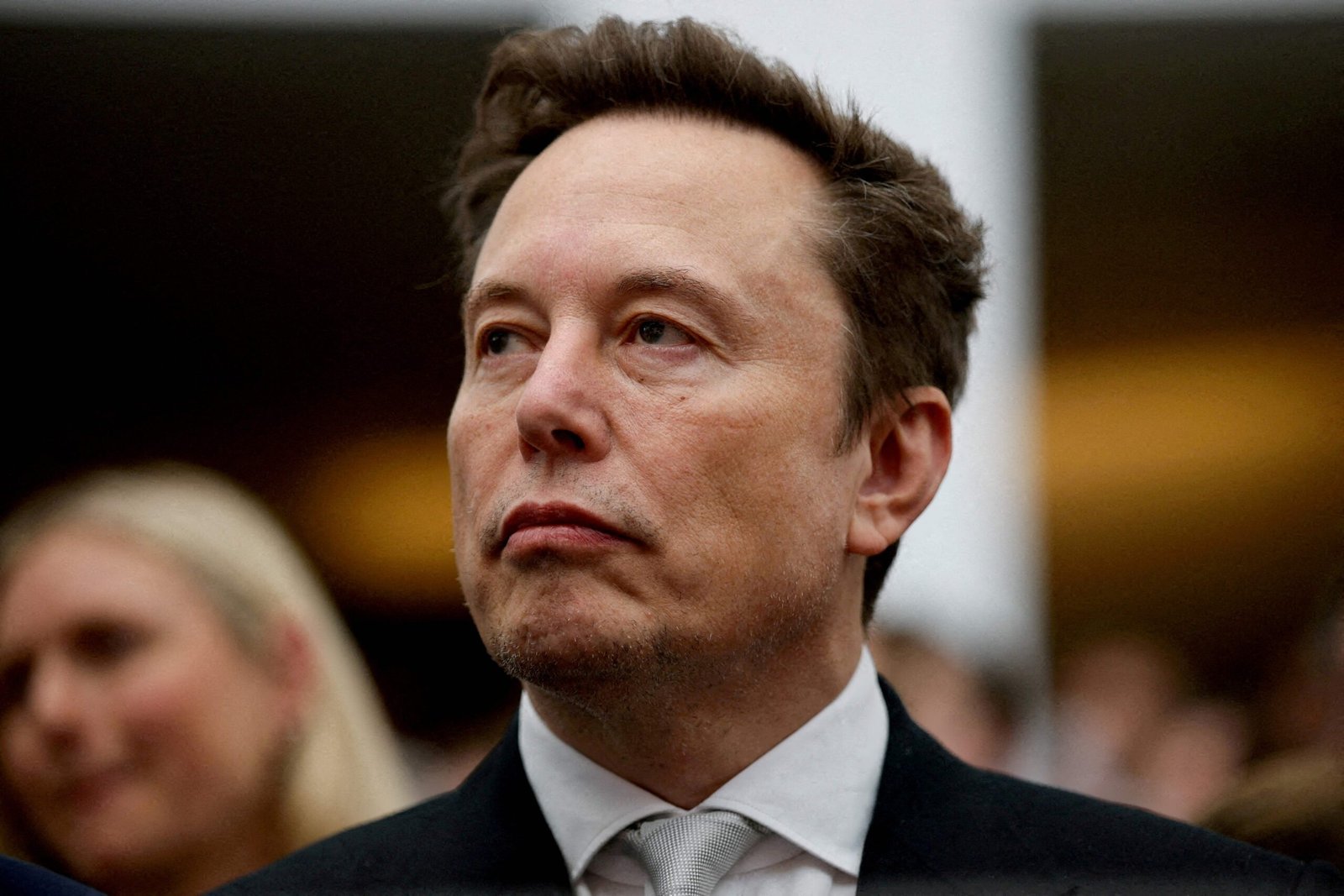
WASHINGTON, USA – Tech megabillionaire Elon Musk and President Donald Trump’s newly appointed White House chief of staff, Stephen Miller, and some large companies will likely be targets of congressional probes when Democrats take control of Congress in January, senior lawmakers said on Sunday, November 8.

In television appearances, US Representative Robert Garcia of California and US Senator Elizabeth Warren of Massachusetts, set to lead the House oversight and Senate banking committees, vowed aggressive oversight after their party’s sweeping midterm election victory.

Meanwhile, House Democratic leader Hakeem Jeffries indicated he and his fellow Democrats would back an impeachment of Defense Secretary Pete Hegseth.

Garcia, who is the ranking Democrat on the House oversight committee, said investigations will focus on Musk’s involvement in the Department of Government Efficiency’s firing of federal workers last year, and Miller’s role in Trump’s hardline immigration crackdown.

“I think there’s a lot of interest, not just from our committee, but from committees across the Congress to speak to Mr. Musk,” Garcia told CNN’s State of the Union.

Warren said some companies should be ready for congressional investigations. She did not name any of the companies.

“If you’ve been making your profits by cheating American families and scamming your investors, you’d better get ready for some investigations, serious ones,” Warren told CBS’ Face the Nation program.

Democrats focus on Miller, Hegseth

Miller — whom Garcia called the architect of a “horrific, unjust” immigration policy — has been promoted to White House chief of staff.

“Stephen Miller is at the center of the major policy decisions that are happening in the administration, and so it does deserve oversight and investigation,” Garcia told CNN.

Voters delivered a historic rebuke to Republicans in the midterm election last Tuesday, November 3, but with Miller as White House chief of staff, the Trump administration is expected to ‌continue its aggressive approach to immigration enforcement, amplify cultural conflicts, and give no ground to a Democratic-controlled Congress, say officials and experts who spoke to Reuters.

The crackdown on immigration, which included operations in which two people were fatally shot in Minnesota by federal agents, has proven widely unpopular. A Reuters/Ipsos poll in October found that only 37% approved of Trump’s handling of immigration, down from 50% when he took office.

Jeffries, who will become speaker of the US House in January, said on Sunday that Democrats would support a measure to impeach Hegseth, a congressional process that could remove him from office.

Representative Thomas Massie, a Kentucky Republican and Trump critic who leaves Congress in January after a Trump-backed primary defeat this year, has said he will reintroduce articles of impeachment against Hegseth soon. Jeffries said he is a “hard yes” on backing that measure.

“Pete Hegseth has got to go,” Jeffries told ABC’s This Week, citing the defense secretary’s oversight of the unpopular Iran war launched by Trump in February, which has led to a spike in gas prices.

“I believe there will be incredibly strong support for that resolution,” Jeffries added.

Attorney General Todd Blanche signaled on Sunday that the Trump administration was prepared to battle the Democrats in Congress, calling threats by some Democrats to target administration officials and allies “not something we can tolerate in this country.”

“If that’s what this new incoming leadership wants to do, we are ready,” said Blanche, a former personal lawyer for Trump. “If you work in this administration, you have a lawyer. It’s me.” – Rappler.com
Similar Posts

  • |

    Benjamin Netanyahu sparks diplomatic backlash after labelling UK an “Islamic republic”

    Israeli Prime Minister Benjamin Netanyahu has drawn widespread criticism following a radio interview in which he referred to the United Kingdom as the “Islamic republic of Britain” and suggested it could become the first Islamic republic with nuclear capabilities. The remarks, delivered during a broadcast on Israel’s Army Radio, have drawn condemnation for echoing far-right Islamophobic rhetoric. During the exchange, Netanyahu contrasted media coverage of the 1967 Arab-Israeli war with modern British politics, questioning whether contemporary UK figures would offer similar support. Pressed by the interviewer on whether such dynamics applied to Europe as a whole, Netanyahu doubled down, repeating the assertion regarding Britain’s nuclear status. His comments notably ignored the fact that Pakistan, officially an Islamic republic, has possessed a nuclear arsenal since the late 1990s. The incident has heightened existing diplomatic tensions between London and Jerusalem. The British Foreign, Commonwealth and Development Office described the statement as completely unacceptable and confirmed the matter had been raised directly with the Israeli government. Domestically, Israeli opposition figures criticized Netanyahu for alienating a strategic international partner amid mounting diplomatic isolation.

  • | |

    Report details Trump’s covert aircraft switc…

    President Donald Trump quietly switched planes while departing a NATO summit in Turkey last month as part of an elaborate security maneuver designed to counter a possible Iranian threat, according to a US media report. The report said Trump boarded Air Force One in full public view before being discreetly transferred to a separate military aircraft with the help of a catering truck used to shield the movement from onlookers. Journalists and some White House staff traveling with the delegation reportedly had no idea at the time that Trump had already been moved off the plane. Officials said security teams had identified a credible Iranian threat involving a possible missile strike against the aircraft. During the Ankara summit, Trump had described Iran as the country’s top target. According to the report, Trump had traveled to Turkey aboard a newer Boeing 747-8 previously donated by Qatar, but chose to depart on the older Air Force One instead, saying at the time it was “for old time’s sake.” Footage released on July 9 showed Trump boarding the presidential aircraft at Ankara airport before being secretly transferred to a smaller C-32A military jet, a modified Boeing 757 typically used to transport the vice president. Defense Secretary Pete Hegseth reportedly boarded the C-32A through a separate exterior entrance as part of the effort to keep the flight’s appearance routine. Journalists and staff who boarded Air Force One were told to lower their window shades during the departure. While in the air, Trump spoke with reporters on board and acknowledged concerns about threats from Iran, though he made no mention of the earlier switch between aircraft. Explaining why passengers had been asked to keep their windows lowered during the flight from Turkey, Trump said the flight carried added risk “because of the sleazebags we have to deal with.” A previous report had already raised questions about security risks tied to the Qatari donated jet, noting that the Secret Service had urged Trump to change planes during his return from the NATO summit. The United States has spent months upgrading the $400 million Boeing 747-8 to bring it up to presidential standards, while older Air Force One aircraft carry laser based countermeasures designed to disrupt the guidance systems of incoming missiles.

  • |

    Electricity tariff may rise by Rs2.50 per unit as July FCA pushes recovery above Rs34bn

    ISLAMABAD: Electricity consumers across Pakistan could face an additional burden of around Rs2.50 per unit as the government moves to recover more than Rs34 billion through the July 2026 monthly Fuel Charges Adjustment (FCA), according to sources. The proposed increase is expected to affect consumers of distribution companies (Discos) as well as K-Electric, with the final adjustment to be determined by the National Electric Power Regulatory Authority (Nepra) after reviewing the relevant power purchase and generation costs. Sources said the expected positive FCA for July has largely been driven by higher electricity consumption during the peak summer season and greater reliance on expensive generation sources. Among the key factors behind the anticipated increase are the use of liquefied natural gas (LNG) procured from the spot market and furnace oil to meet additional electricity requirements, particularly during periods of high demand. June FCA already approved The expected July adjustment comes after Nepra approved a positive FCA of Re0.7503 per unit for electricity consumed in June 2026. The adjustment was lower than the Rs1.20 per unit sought by the Central Power Purchasing Agency-Guaranteed (CPPA-G). Under the FCA mechanism, variations in fuel costs and other electricity generation and purchase-related expenses are passed on to consumers through periodic adjustments. For July, CPPA-G will submit its relevant claims to Nepra, which will examine the costs and determine the admissible adjustment before issuing separate decisions for the respective distribution companies. Multiple costs to be examined The regulator is expected to assess several components included in the FCA claim before determining the final amount recoverable from consumers. Separate adjustments will subsequently be calculated for each Disco after taking into account electricity purchased through CPPA-G, bilateral arrangements with small power producers and captive power producers, as well as electricity supplied under net-metering arrangements. The final impact on consumers could therefore vary depending on the individual power procurement mix and applicable tariff structure of each distribution company. Expensive generation raises concerns The expected tariff increase has emerged at a challenging time for Pakistan’s industrial sector, where electricity prices remain a major concern for manufacturers and exporters. Industrial consumers are already facing pressure from elevated production costs, while exporters are also dealing with uncertainty caused by deteriorating security and economic conditions in the Middle East. The latest FCA discussion has also brought the issue of partial-loading charges under scrutiny. During a recent hearing, Nepra raised questions over approximately Rs4.9 billion in partial-loading costs and asked CPPA-G to explain the reasons behind the additional expenditure and measures being considered to control it. Solar power changes demand pattern CPPA-G told the regulator that the partial-loading charges were not primarily the result of inefficient operation by power plants. Instead, the agency attributed the costs largely to changes in electricity consumption patterns caused by the rapid expansion of rooftop solar generation. According to CPPA-G, daytime demand from the national grid has declined as more consumers generate electricity through rooftop solar systems. Conventional power plants are consequently required to operate below their optimum capacity during solar-generation hours. However, demand rises again in the evening when solar generation falls, forcing grid-connected power plants to increase generation quickly. This change in the daily demand curve has created additional operational costs for the power system. The authority noted that partial-loading charges recorded in June 2026 were around Rs1 billion higher than the corresponding amount in June 2025, highlighting the growing financial impact of the changing electricity demand pattern. Plant shutdowns could increase costs The Independent System and Market Operator (ISMO) also informed the regulator that shutting down power plants during periods of lower demand would not necessarily provide a cheaper solution. According to ISMO, taking plants completely offline to avoid partial-loading charges could result in substantial start-up expenses when the units are required again to meet evening demand. The issue has therefore become increasingly important as the rapid growth of distributed solar generation continues to alter the traditional pattern of electricity consumption. Exporters seek cheaper fuel options Amir Sheikh, a prominent textile exporter, called for the removal of the levy imposed on high-speed diesel and furnace oil-related generation costs, arguing that furnace-oil-based power plants could offer an alternative to expensive RLNG-fired generation under certain circumstances. He maintained that allowing more flexible use of available generation sources could help reduce the overall cost of electricity, particularly during periods when LNG prices remain elevated. Sheikh also proposed a change in the way FCA-related surcharges are calculated. He suggested that the additional charges should be recovered on the basis of projected electricity consumption rather than only through the conventional mechanism, similar to the approach followed under quarterly tariff adjustments (QTA). Falling demand creates another challenge Another concern raised during the discussion was the continuing decline in electricity demand and its possible implications for future tariff adjustments. Rehan Javed highlighted the potential impact of lower electricity consumption on the power sector’s financial structure, particularly as fixed system costs are spread over a smaller volume of electricity sales. The Ministry of Energy’s Power Division, however, said the decline in demand was largely linked to the increasing number of consumers using net-metering facilities. The ministry maintained that although distributed solar generation was changing electricity consumption patterns, its impact on future quarterly tariff adjustments would not necessarily be as severe as feared by industrial consumers. Government seeks to avoid costly LNG purchases The Power Division further explained that electricity demand was being managed in a manner designed to reduce dependence on expensive RLNG spot-market cargoes. Officials said excessive reliance on spot LNG during the summer could significantly increase power generation costs and ultimately translate into higher electricity tariffs for consumers. The government is therefore attempting to balance electricity availability, fuel costs and demand management while dealing with the changing structure of Pakistan’s power market. If Nepra ultimately approves an FCA close to the expected Rs2.50 per unit, consumers could face another substantial increase in their electricity bills. The final adjustment, however, will depend on Nepra’s assessment of CPPA-G’s July claim and the costs deemed

  • | | | |

    Petrol pump owners announce nationwide strike over…

    The All Pakistan Petrol Pumps Owners Association (APPPOA) has announced a nationwide strike beginning Wednesday night after negotiations with the government over the proposed daily petroleum pricing mechanism ended without an agreement. The decision was announced following talks between representatives of the association and a government delegation led by Petroleum Minister Ali Pervaiz Malik. The discussions focused on the government’s plan to introduce daily fuel price adjustments, but both sides failed to reach a consensus. Speaking after the meeting, APPPOA leaders said the proposed pricing system was unacceptable and would seriously affect the financial stability of petrol pump owners across the country. They argued that the new mechanism would create uncertainty for businesses already operating on narrow profit margins. Association officials said nearly 15,000 petrol pumps across Pakistan are expected to remain closed if the strike goes ahead, warning that the shutdown could disrupt fuel supplies nationwide. Vice Chairman Nauman Ali Butt said petrol dealers wanted petroleum prices to continue being revised on a monthly basis rather than daily. He also pointed out that dealers’ commissions had not been increased for the past three years despite rising operating costs. APPPOA Chairman Humayun Khan said petrol pump owners were already facing financial pressure due to regulatory requirements, policies of oil marketing companies and increasing business expenses. He argued that daily price revisions would benefit oil marketing companies while placing additional risks on retail dealers. According to the association, frequent price changes could create confusion in the market and make inventory management more difficult for petrol pump operators. The association also criticised the government for introducing the policy without consulting key stakeholders. It urged authorities to suspend the daily pricing mechanism, increase dealers’ commissions and involve petrol pump owners in future policy decisions. Meanwhile, the Pakistan Petroleum Dealers Association (PPDA) said it would hold a meeting of its executive committee on Wednesday to decide whether it would also join the nationwide strike. PPDA representatives acknowledged that discussions with government officials and the Oil and Gas Regulatory Authority (OGRA) had taken place. They said OGRA officials sought additional time to review the concerns raised by dealers before making further recommendations to the government. The government maintains that the new pricing mechanism is intended to improve transparency and ensure domestic fuel prices reflect changes in international oil markets more quickly. Under the proposed system, petroleum prices would be updated daily using a rolling average of global market prices.

  • | | |

    Lindsay Clancy psychiatrist ‘surprised’ by sui…

    Lindsay Clancy’s psychiatrist testified in court Monday as her defense lawyer questioned whether warning signs were missed during the Massachusetts mother’s deteriorating mental health in the months before the deaths of her three young children. Dr. Jennifer Tufts, who began treating Clancy in September 2022, faced detailed questioning from defense attorney Kevin Reddington about her approach to treatment, medication decisions and the use of relatively brief video appointments. According to the Associated Press, Reddington argued that Clancy’s mental healthcare may have been inadequate at a time when she was experiencing serious emotional and psychological difficulties. He focused on 25-minute telehealth appointments, computerized clinical forms and the numerous medications prescribed as Clancy reported different symptoms and side effects. During questioning, Reddington challenged Tufts over whether Clancy should have received more intensive or in-person care. When asked why she did not recommend that Clancy meet her face-to-face instead of continuing with video appointments, Tufts said she did not believe there was a problem with providing treatment through telehealth. The psychiatrist also told jurors she was “surprised” to learn that Clancy had contacted a suicide hotline twice while receiving treatment. Tufts said Clancy had denied experiencing suicidal thoughts during their treatment, although she acknowledged that she had been “close to feeling suicidal.” Reddington highlighted an appointment roughly two months before Clancy strangled her children, asking the psychiatrist what she had done after Clancy described feeling hopeless. Tufts responded that she had reassured Clancy that there was hope and that treatment options and different programs were available. She said her goal was to make Clancy understand that she still had options and reasons to hope. Reddington highlighted an appointment roughly two months before Clancy strangled her children, asking the psychiatrist what she had done after Clancy described feeling hopeless. Tufts had previously testified for prosecutors that Clancy initially sought treatment because of anxiety and had raised concerns about medication side effects. Court records indicate that Clancy was prescribed more than a dozen psychiatric medications through multiple healthcare providers before the killings. The testimony is part of the ongoing trial involving Clancy, whose case has drawn significant attention because of the deaths of her three children. The defense continues to examine the care she received and whether her mental health deterioration was properly recognized and addressed before the tragedy. As the trial continues, jurors are expected to hear further testimony about Clancy’s mental state, treatment history and the circumstances surrounding the deaths of her children.

Leave a Reply

Your email address will not be published. Required fields are marked *