[Ask the Tax Whiz] The new BIR chief’s 3 crosses: Will he dare audit the powerful?
From the Marcos estate tax to Sara Duterte’s alleged unexplained wealth and the fortunes of political dynasties, Commissioner Rolando Ligon Jr. faces a defining test: Can the Philippines enforce tax laws without political exceptions?
What happens when the country’s chief tax collector must confront the financial interests of the President who appointed him, a Vice President who could succeed him, and some of the most powerful political families in government?
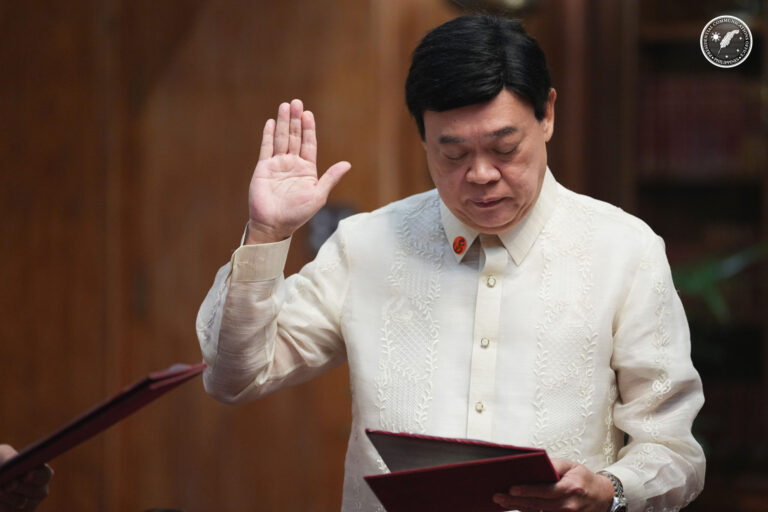
For newly appointed Bureau of Internal Revenue (BIR) Commissioner Rolando Ligon Jr., these are three crosses he must carry—not merely to meet revenue targets, but to restore public trust, strengthen governance, and rebuild investor confidence.
In 2025, the BIR collected ₱3.105 trillion, with ₱3.03 trillion—or 97.55%—coming from voluntary payments. Yet high-profile unpaid taxes, allegations of unexplained wealth, and corruption involving public funds continue to test the credibility of tax enforcement.
The question is no longer simply how much government collects, but whether it can collect what is legally due without fear, favor, or political interference.
First cross—Will Ligon collect the Marcos estate tax from the family of the President who appointed him?
In 1991, the BIR assessed ₱23.3 billion in estate taxes following the death of Ferdinand Marcos Sr. In 1997, the Supreme Court upheld the assessment’s finality and the legality of the BIR’s collection levies in Ferdinand R. Marcos II v. Court of Appeals.
By 2021, the reported liability had reached approximately ₱203.8 billion, including accumulated interest and penalties. Former BIR commissioner Caesar Dulay confirmed a written demand to the Marcos heirs dated December 2, 2021. (READ: [ANALYSIS] Inconvenient truth: The Marcos estate tax liability)
With 1Sambayan warning of a December 2, 2026 deadline, Ligon must immediately establish the certified outstanding liability, previous recoveries, and remaining enforceable collection remedies.
Crucially, another demand letter does not automatically extend prescription. The legal effect of previous collection proceedings, including levies initiated in 1993, must be determined.
The liability concerns the estate and its heirs to the extent provided by law. (READ: [ANALYSIS] The estate tax liability of the Marcos Estate)
After 35 years, will the President’s appointee demonstrate that even the First Family is subject to the same tax laws as ordinary Filipinos?

Second cross—Will the BIR independently investigate Vice President Sara Duterte’s alleged unexplained wealth?
Duterte faces an impeachment trial involving allegations of approximately ₱817.87 million in unexplained wealth and undeclared assets associated with her and her husband from 2022 to 2025. Her defense disputes these findings.
The Senate impeachment court has admitted relevant financial records, including Statements of Assets Liabilities and Net Worth (SALNs), bank records, tax documents, and corporate disclosures.
But impeachment and tax enforcement are distinct legal processes.
Where credible evidence establishes potential tax violations, the BIR can initiate a lawful investigation independently of the impeachment proceedings.
The investigation must reconcile declared income, assets, business interests, and financial transactions against tax records. Unexplained wealth is not automatically proof of tax evasion, and due process must be observed.
If financial discrepancies involving a possible future President warrant scrutiny, will the BIR investigate regardless of political affiliation?
Tax enforcement must neither protect political allies nor become a weapon against political opponents.

Third cross—Will Ligon investigate political dynasties, their family businesses, campaign donors, and government contractors?
The concentration of political power in the Philippines is staggering.
In its landmark August 2026 anti-political dynasty ruling, the Supreme Court cited research showing that 216 of 253 district representatives—approximately 85%—in the 19th Congress had relatives previously or currently in public office, or seeking election in 2025. The figure remains approximately 83% in the 20th Congress, with 212 of 254 district representatives linked to political dynasties.
At the local level, 71 of 82 governors belong to political dynasties.
Meanwhile, former House speaker Martin Romualdez, President Marcos’s cousin, faces a ₱7.44-billion plunder case involving alleged kickbacks from government infrastructure projects. He denies wrongdoing. An Anti-Money Laundering Council witness recently testified that ₱560.5 million in examined remittances to his accounts was not linked to flood-control transactions.
Separately, the Philippine Center for Investigative Journalism reported that Romualdez’s Leyte district received approximately ₱57 billion in public works allocations from 2023 to 2025, while presidential son Sandro Marcos’s district received the largest share of discretionary district infrastructure allocations.
These allocations do not establish corruption or tax evasion. But credible evidence of procurement irregularities, unexplained financial discrepancies, or conflicts of interest should trigger independent investigation.
The BIR must look beyond individual politicians and, where justified by objective risk indicators, examine family-controlled businesses, campaign donors, contractors, and beneficial ownership structures—from Congress to provincial, city, and municipal governments.
Follow the money: Who received government contracts? Who ultimately benefited? Were the proceeds properly declared and taxed?
No political surname should confer immunity. Equally, family relationships alone must never create a presumption of guilt.
What policy reforms can make tax enforcement genuinely independent, effective, and accountable?
Four reforms can transform Philippine tax administration beyond collection targets and digitalization.
First, establish an Unexplained Wealth Tax Audit Program. Use objective, risk-based criteria to reconcile SALNs, income tax returns, corporate ownership, campaign donations, procurement records, and property transactions. Coordinate with the Ombudsman, Customs, AMLC, Commission on Audit, Securities and Exchange Commission, and Commission on Elections under lawful data-sharing arrangements. Establish independent audit-selection safeguards and publish aggregate enforcement outcomes, including assessments, actual collections, and prosecution referrals.
Second, reform bank secrecy and financial transparency laws. Authorize proportionate, legally supervised access to relevant financial information for serious tax and corruption investigations. Strengthen beneficial ownership disclosure and campaign finance transparency while protecting legitimate privacy rights.
Third, modernize compliance through AI-assisted risk assessment, electronic invoicing, and integrated financial data. Prioritize substantial discrepancies and sophisticated evasion schemes instead of subjecting compliant MSMEs, professionals, and online sellers to unnecessary, repetitive, and potentially abusive audit.
Fourth, establish an independent National Revenue Authority (NRA). Pursue legislation to integrate the BIR and Bureau of Customs under a professionally governed, semi-autonomous revenue institution, with merit-based appointments, operational independence, independent oversight, transparent performance standards, and strong accountability mechanisms.
An NRA must do more than merge agencies or modernize technology. It must reduce political interference, professionalize tax and customs enforcement, strengthen taxpayer rights, and make corruption and selective enforcement harder to conceal.

For foreign investors, predictable and impartial tax administration matters as much as competitive tax rates and investment incentives.
Tax reform must be measured not only by how much government collects, but by how fairly, efficiently, and independently it enforces the law—especially when the taxpayers under scrutiny are rich, powerful, or politically connected.
The ultimate test: Who carries the burden?
The Philippines does not need another tax commissioner who aggressively pursues small taxpayers while politically sensitive financial cases remain unresolved.
It needs an institution capable of investigating credible evidence, recovering legally collectible taxes, and holding public officials accountable regardless of political connections.
The Tax Code itself recognizes the gravity of tax offenses committed by public officials.
Under Section 253(c) of the National Internal Revenue Code, a public officer or employee convicted of an offense punishable under the Code faces the maximum applicable penalty, dismissal from public service, and perpetual disqualification from holding public office, voting, and participating in elections.
The law expressly provides that such an offender shall be “perpetually disqualified from holding any public office, to vote and to participate in any election.”
This severe consequence requires a conviction under the applicable law—not merely accusations, audit findings, or the filing of charges.
The principle is unmistakable: Public office is no shield against tax accountability.
For Commissioner Ligon, the three crosses converge in one defining test:
Will he dare collect the Marcos estate tax, investigate Sara Duterte’s alleged unexplained wealth, and follow the money in Congress—or protect the powerful who control the nation’s purse?
The President may appoint the BIR commissioner. But neither the President, the Vice President, nor any politician or political dynasty enjoys an exemption from the Tax Code.
Public office is a public trust—not a family business or a tax exemption. – Rappler.com
Mon Abrea, CPA, MBA, MPA (Harvard) is a global tax policy expert and Chief Tax Advisor of Asian Consulting Group (ACGlobal), an international tax and investment advisory firm. He advises governments, multinational enterprises, and international organizations on tax policy, investment competitiveness, and fiscal reform. He is the author of Reimagining the World Without Corruption and Why Invest in the Philippines? CREATE MORE Edition, and has represented the Philippines in policy dialogues at the OECD, World Bank, and other international forums.