[New Rx] South Korea overcame its IMF crisis. Can Filipinos unite against inflation?
In 1997, South Korea faced economic collapse and required an International Monetary Fund (IMF) bailout.
In an extraordinary display of solidarity, approximately 3.5 million Koreans donated jewelry and wedding rings, collecting over 220 tonnes of gold to help secure foreign currency.
Combined with sweeping reforms, Korea rebounded from a 5.8% contraction in 1998 to approximately 10% growth in 1999. By August 2001, it had repaid its IMF loans ahead of schedule.
Korea’s recovery required government leadership, economic discipline, and collective sacrifice.
Inflation in the Philippines
Nearly three decades later, the Philippines faces a different challenge. But the lesson remains relevant.
October 2026 inflation reached 7.8% in the Philippines, compared with 5.1% in Vietnam, 3.9% in Thailand, and 3.2% in Indonesia. Thailand’s inflation was itself a 45-month high, driven largely by energy costs. Yet Philippine inflation was twice as high.
Growth offers little comfort. Philippine GDP expanded just 2.4% in the second quarter, against 8.4% in Vietnam, 6.0% in Malaysia, and 5.9% in Singapore. Worse, newly released figures show Philippine growth slowing further to 2.1% in the third quarter.
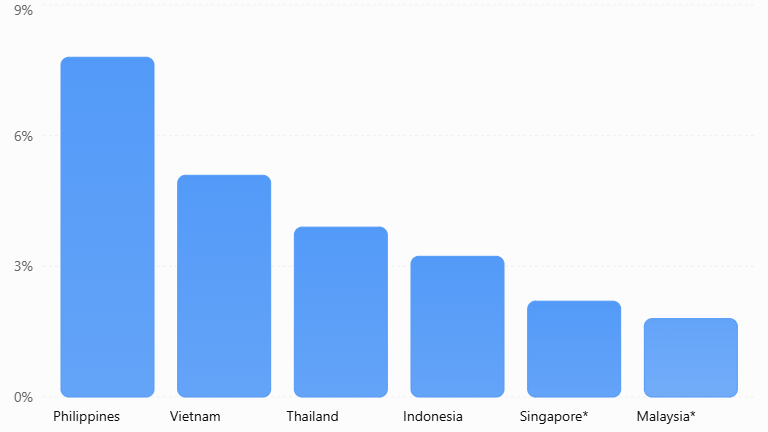
Figure 1. Inflation across major ASEAN economies – Year-on-year CPI inflation · October 2026, except September for Singapore and Malaysia

Figure 2. GDP growth across major ASEAN economies – Q2 2026 · Year-on-year real GDP growth
For a developing economy needing higher incomes and better infrastructure, this combination is alarming.
The peso recently breached ₱64 per US dollar before recovering slightly, increasing import costs and currency risks.
And El Niño’s full economic consequences may still lie ahead.
PAGASA expects the very strong event to persist into the first half of 2027. Gandara, Samar, has already declared a state of calamity amid drought and water shortages.
Only months ago, parts of the Philippines faced severe floods. Now communities struggle to secure water. Existing reservoirs and irrigation systems must be better maintained and coordinated to store wet-season water for dry-season use.
Poor water management becomes an inflation problem when harvests fall and food prices rise.
Global shocks may be unavoidable. Domestic inefficiency is not.
Treat inflation with pandemic-level urgency
During COVID-19, government, businesses, and citizens rapidly adapted. Remote work expanded, operations changed, and agencies coordinated responses.
President Ferdinand Marcos Jr. should bring comparable urgency today. The Inter-Agency Committee on Inflation and Market Outlook, established in 2023, should become a presidentially supervised task force coordinating transportation, energy, agriculture, finance, and infrastructure.
Its mandate should extend beyond monitoring prices and distributing subsidies: remove avoidable costs, repair irrigation, address logistical bottlenecks, and publish measurable results.
Interest-rate adjustments alone cannot accomplish these reforms.
Introduce rotating economic conservation days
Metro Manila, Cebu, and Davao could introduce rotating conservation days by business district or government office.
Suitable employees would work remotely, meetings would move online, and nonessential travel would decline. Essential services, manufacturing, freight, and public transportation would continue.
This is not another lockdown. It is an effort to save fuel, electricity, water, and commuting hours.
Stop wasting years of your life in traffic
Life expectancy in the Philippines is approximately 70 years, compared with 84 in South Korea and 83 in Singapore. Yet someone commuting two to three hours each workday could spend 2.3–3.4 entire years traveling over a 40-year career.
Why sacrifice so much precious time?
Employers should expand remote work. Professionals heading to the same district could carpool and conduct discussions during shared commutes.
Consider requiring three occupants, including the driver, in private vehicles on designated roads during peak hours, with sensible exemptions.
Grab should encourage pooled rides through discounts, with higher peak-hour pricing for exclusive trips subject to regulation.
Politicians should reduce convoys. EDSA and C5 should progressively transition from jeepneys on trunk routes to high-capacity city buses with numbered routes, fixed stops, and reliable schedules. Existing operators should have opportunities in bus services and feeder routes.
Political and religious gatherings should avoid unnecessarily obstructing main roads while respecting freedom of assembly.
Encourage household savings as buffer vs inflation
Inflation does not end at the supermarket checkout. It also erodes whatever Filipinos manage to save.
Consider ₱100,000 earning 3% annual interest. After the government’s 20% withholding tax on interest, the household receives just ₱2,400. Even at 4% inflation, its purchasing power declines.
The government collects tax on nominal earnings that fail to preserve the household’s wealth.
Singapore generally exempts individual interest income from deposits with approved banks.
The Philippines should exempt the first ₱10,000 of annual bank deposit interest from withholding tax, helping ordinary savers build emergency reserves. Larger interest earnings could remain taxable.
As El Niño threatens household budgets, encouraging financial preparedness should become part of economic policy.
Prepare, conserve, and spend modestly
Thai retailers report increased purchases of essentials despite inflation being only half the Philippine rate. Filipinos should prepare sensibly without hoarding.
Christmas also offers an opportunity for discipline.
Government agencies, companies, and professional organizations should hold joint celebrations, sharing venues, catering, and transportation instead of staging separate costly events.
Households can celebrate modestly, avoid unnecessary borrowing, and prioritize savings.
Everyone must contribute
| Sector | Practical action |
| Politicians and officials | Reduce convoys, ceremonies, and waste |
| Motorists | Carpool and minimize unnecessary trips |
| Employers and professionals | Expand remote work and shared commutes |
| Transport operators | Promote pooled rides and organized buses |
| Political and religious groups | Avoid obstructing major roads |
| Government employees | Conserve resources and combine celebrations |
| Companies and organizations | Share costs and eliminate waste |
| Individuals and households | Prepare sensibly, spend modestly, and save |
Those with greater resources should shoulder greater responsibility, while lower-income households need affordable alternatives.
Turn Filipino resilience into collective action
Korea demonstrated what reforms and public participation can achieve together.
Filipinos have long taken pride in their resilience. But resilience should mean more than enduring hardship. It should translate into practical measures that strengthen the economy and protect household purchasing power.
Government must provide leadership and implement meaningful reforms. Businesses should improve efficiency and reduce unnecessary costs. Households should be encouraged to conserve resources, spend prudently, and build savings. – Rappler.com
Dr. Jaemin Park is a physician, healthcare investor, and adjunct professor at the University of the Philippines Manila. He writes about healthcare economics, investment, and public policy in the Philippines and across Asia.