fastest turnout years
| |

Fastest turnout in 45 years as Israelis pass wartime judgment on Netanyahu

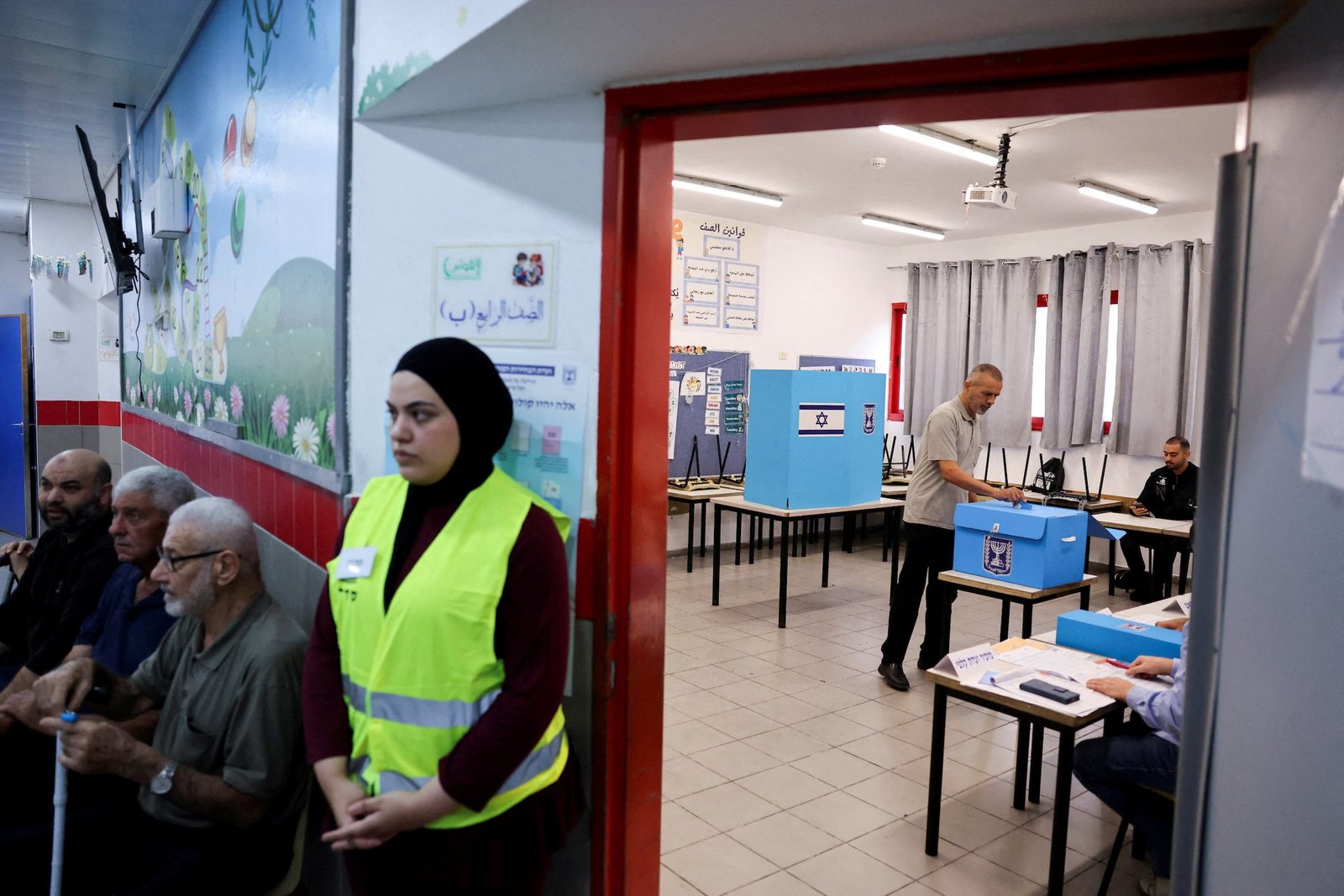
JERUSALEM – Israelis surged to the polls at the fastest rate in 45 years on Tuesday, October 27, passing wartime judgment on Prime Minister Benjamin Netanyahu in what voters described as the most consequential election in their history.

In the first election since the October 7, 2023, Hamas-led attacks, voters are passionately engaged over the trauma of the country’s deadliest day, and the ensuing wars in Gaza, Lebanon and Iran.

Fastest turnout in 45 years as Israelis pass wartime judgment on Netanyahu

Policies of Netanyahu’s right-wing coalition have been divisive at home and have deepened Israel’s international isolation, but he has defended his record as the only leader with the mettle to face Israel’s foes.

Netanyahu, Israel’s longest-serving leader with 19 years in office, is an unmatched political survivor, and his nationalist politics are increasingly entrenched. Israel’s fragmented system makes it difficult for an array of opponents to force out his coalition of right-wing, far-right and ultra-Orthodox parties.

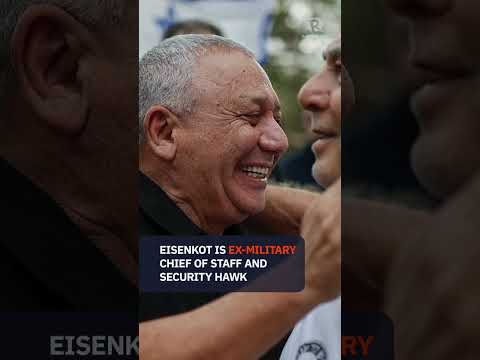
His main rival, Gadi Eisenkot, a military ex-chief of staff and security hawk, aims to unseat him with the support of parties on the right and center, as well as the rump of an increasingly marginalised left. Opinion polls show a close race, with neither leader facing an easy path to power.

Voters began casting ballots after polling stations opened at 7 am (0500 GMT). The polls close at 10 pm (2000 GMT).

The Central Elections Committee reported that 16.7% of eligible voters had already cast their ballots within the first three hours, the fastest early turnout rate since 1981.

“I think these elections are the most important of all the ones I’ve known,” said Ruth Epstein, an 81-year-old longtime left-wing voter in Ramat Gan near Tel Aviv, who voted for the opposition Democrats.

“I’m really scared about what will be here.”

Netanyahu supporter Louis Lipsky of Jerusalem said he was voting to keep the prime minister in power, crediting him with normalising relations with several Arab states under the Abraham Accords of 2020.

Netanyahu has campaigned on his wartime leadership and an endorsement from US President Donald Trump, his ally in war against Iran, who has said they should “finish the job.”

If neither Netanyahu nor Eisenkot can form a governing coalition in the 120-seat parliament, Netanyahu could stay on as caretaker until another election is held. His opponents have managed to wrest him from the premiership only once since 2009, and that took four inconclusive elections in two years. He was back 18 months later.

Eisenkot sees ‘new spirit’

For many of Netanyahu’s opponents, the election turns on accountability for the security failures of October 7, Israel’s deadliest day. Opposition groups have promised to hold a national inquiry, which Netanyahu’s government has resisted.

“I am convinced that by the end of today, we will see a change — a new spirit for the State of Israel — that will serve as a rectification for the past three years and for that terrible day,” Eisenkot said during a visit to kibbutz Nir Oz in southern Israel, targeted in the October 7 attacks.

He walked to the polls with Gadi Mozes, one of 251 people kidnapped by Hamas and taken to Gaza during the attack that killed 1,200 people.

Eisenkot says Israel’s response — a war which health authorities say killed more than 74,000 Palestinians — was a failure because Hamas remains in charge. He repeated his commitment to dismantle or destroy Hamas’ military and governing power in Gaza within 18 months of forming a government.

In his first public commentary on election day, Netanyahu shared an article on X about an incident in which police said three people were arrested over an election bribery attempt.

“Right-wing voters, dear Likud voters, in the face of attempts to undermine the integrity of the elections, we must go out and vote en masse, vote Likud for the sake of our country,” he said.

Netanyahu’s critics have said the prime minister may try to cast doubt on the integrity of the voting process, which his office rejects.

Itamar Ben-Gvir, leader of a far-right party in Netanyahu’s coalition, cast his vote in the Kiryat Arba settlement in the occupied West Bank early on Tuesday. He predicted Netanyahu would return as prime minister, and his own party would serve as the right-wing anchor of the government.

Arab turnout could be key

Voters from Israel’s Arab minority — Israeli by citizenship but Palestinian by heritage — were voting in “unprecedented” numbers, Palestinian candidate Ahmed Tibi said.

Eisenkot has ruled out partnering with Arab parties, citing a lack of shared values, although some experts envision them propping up a minority government to ensure Netanyahu is removed from office.

“My expectation is that we will have only a slight majority either way. No landslide,” said Israeli political analyst Amotz Asa-El of the Shalom Hartman Institute.

The wartime record

Eisenkot joined Netanyahu’s war cabinet after the October 7 attacks but quit after eight months, criticising his leadership.

Israel flattened much of Gaza in the offensive launched after October 7, and now occupies around two-thirds of the enclave under a year-old US-brokered ceasefire.

Israel also dealt heavy blows to Iran-backed Hezbollah in Lebanon and traded strikes with Iran, culminating in a 12-day aerial campaign against Iranian nuclear sites in 2025 and this year’s joint US-Israeli war.

Like nearly all Jewish-led parties in Israel, Eisenkot opposes the two-state solution that underpinned decades of peace negotiations with the Palestinians.

But he has criticized Jewish settler violence against Palestinians in the Israeli-occupied West Bank, which has surged since 2023 and strained Israel’s ties with Western states. And he opposes Netanyahu’s far-right coalition partners. – Rappler.com

Similar Posts

  • |

    Saudi Arabia introduces major education reforms under new school law

    Saudi Arabia has approved the executive regulations for its new General Education Law, introducing wide ranging reforms that will reshape the country’s education system from nursery through Grade 12. The new legislation creates a comprehensive legal framework for public and private education and is designed to support the goals of Saudi Arabia’s Vision 2030 by improving educational quality, expanding opportunities and strengthening oversight across the sector. One of the most notable changes allows private schools to decide whether boys and girls can study together, while public schools will continue to separate male and female students after the early childhood stage. The move marks a significant shift in education policy for the Kingdom and gives private institutions greater flexibility in organizing their academic programmes. The law also establishes a new General Education Affairs Council that will oversee key education policies. The council will be chaired by the Minister of Education and include representatives from several government ministries, the Education and Training Evaluation Commission and the private sector. Officials say the body will help coordinate education reforms and ensure that policies are aligned with national development goals. Compulsory education will continue for children between the ages of six and 15. The Ministry of Education will have the authority to take legal action against parents or guardians who prevent children from attending school or who contribute to students leaving education before completing the compulsory stage. Officials say the measure is intended to improve school attendance and reduce dropout rates. Arabic will remain the main language of instruction throughout the general education system. However, schools will be allowed to teach in another language when appropriate, giving educational institutions greater flexibility while preserving the country’s cultural and linguistic identity. The legislation also confirms that classroom teaching will remain the primary method of education across all grade levels. At the same time, the Ministry of Education plans to expand digital learning by developing programmes that include live online classes, self paced learning and other flexible educational options. Regulations will also be introduced for lifelong learning certificates to encourage continuous education beyond traditional schooling. Students will have access to more diverse educational pathways under the new framework. The ministry will be able to introduce specialized academic and vocational tracks designed to better prepare students for future careers and meet the changing demands of the labor market. The law places greater emphasis on supporting students with disabilities by requiring schools to provide suitable educational services, assistive technology and assessment methods that match individual learning needs. It also strengthens programmes for gifted students through specialized schools, enrichment centers, improved identification systems, teacher training and partnerships with universities and research institutions. Private schools will face stricter quality standards under the reforms. Educational institutions must obtain accreditation from the Education and Training Evaluation Commission or another internationally recognized accreditation body approved by Saudi authorities. The Ministry of Education will oversee licensing procedures, ownership transfers, school operations and the introduction of international curricula while ensuring that subjects related to national identity remain part of every approved curriculum. The new rules also introduce a clearer process for education licences. Applications must receive a written decision within 30 days, and institutions whose applications are rejected will have the right to appeal. The government says these measures are intended to improve transparency and encourage investment in the education sector. Private and nonprofit education providers will also benefit from a more defined regulatory framework. Under certain conditions, the ministry may provide financial assistance, staffing support or other resources to eligible institutions as part of efforts to expand educational services under Vision 2030. Teachers will have broader professional responsibilities under the new law. They will be expected to follow approved curricula, meet the learning needs of individual students, encourage creativity and innovation, identify gifted learners, uphold national values and participate in continuous professional development programmes. The legislation also introduces stricter disciplinary procedures for teachers, administrators and private schools that violate regulations. Authorities will have the power to temporarily remove staff from duty while investigations are carried out. Serious violations could result in dismissal and permanent disqualification from working in the education sector. Private schools that fail to comply with the law may receive warnings, face financial penalties, lose the right to admit new students or have their operating licences revoked. If a licence is cancelled, the school must ensure that enrolled students are able to complete the academic year without disruption at the owner’s expense.

  • |

    Iran publicly confirms three missing Pilots were captured by Qatar

      Iran has publicly confirmed for the first time that three Iranian Air Force pilots who went missing following an attack on a US military base in Qatar on March 2 were captured alive by Qatari forces. According to news agency, a senior Iranian military official has called on the International Committee of the Red Cross (ICRC) to investigate the condition of the pilots and take steps to secure their release. Brigadier General Mohammad Bagherzadeh, commander of the committee established by the Iranian Armed Forces General Staff to investigate missing personnel, expressed concern over the fate of the pilots in a letter addressed to ICRC President Mirjana Spoljaric Egger. According to Bagherzadeh, on March 2, 2026, two Iranian Air Force Su-24 fighter bombers were dispatched toward a US military base in Qatar in response to attacks carried out against Iran. He said both aircraft successfully completed their mission but were targeted by an enemy air defence system while returning, forcing their crews to eject. Four pilots were aboard the two aircraft. One of them, Majid Kazemi, was killed in the incident. His remains were later recovered, transferred to Iran and buried there, according to the Iranian military official. Bagherzadeh said Iran had received information indicating that the other three pilots involved in the incident—Javad Salehi, Abdulhamid Dashtian and Imran Behroishian—had survived and were captured by Qatari forces. In his letter, the Iranian brigadier general criticised Qatar, claiming that six months after the incident, Qatari authorities had failed to respect the rights of the prisoners under international law, including the Geneva Conventions. He said that despite diplomatic efforts and continued communication, Iranian authorities had not been allowed to meet or interview the pilots. He also alleged that the three men had not been permitted to communicate with their families or Iranian officials responsible for following the case. Bagherzadeh said the issue could fall under provisions relating to war crimes and therefore required serious consideration and investigation. He called on the Red Cross to immediately visit the three Iranian pilots in Qatar, assess their health and current condition, inform Iranian authorities about their situation, and assist in securing their immediate release. The Iranian news agency said the disclosure came after months of uncertainty surrounding the fate of the three pilots. On August 1, Iranian military spokesman Brigadier General Mohammad Akraminia said Iran was continuing to pursue the matter. At the time, Qatari authorities maintained that they had no information regarding the missing Iranian air force personnel. According to the Iranian military, the two Su-24 aircraft had taken off from Shahid Doran Air Base in Shiraz. Iranian officials claimed that, despite advanced radar networks and sophisticated air defence systems, the aircraft managed to strike Al Udeid Air Base in Qatar, which is used by the United States. The Iranian military further claimed that the aircraft were targeted by enemy air defence systems over the Gulf while returning from the mission. Despite heavy ground-based anti-aircraft fire, the operation was reportedly completed successfully. Iranian officials described the mission as a demonstration that the attacking forces could be challenged and said it delivered a clear message to their adversaries. The development follows an earlier statement by Qatar’s Ministry of Defence, which said on March 2 that the Qatari Air Force had shot down two Iranian Su-24 aircraft approaching from Iran. The latest Iranian disclosure could add further diplomatic pressure on Qatar and increase international attention on the status and treatment of the three missing pilots.

Leave a Reply

Your email address will not be published. Required fields are marked *