iran shifting tactics
|

Iran shifting tactics to step up attacks on shipping before US vote, officials say

Iran is deploying new tactics to target ships sailing through the Strait of Hormuz as it seeks to keep oil prices high and influence the US midterm elections, two senior Iranian officials told Reuters.

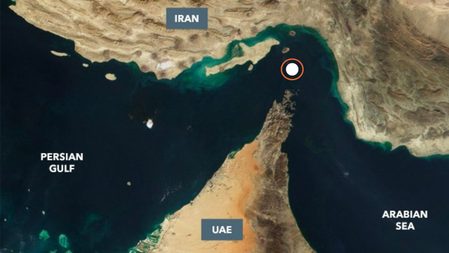
Tehran has tried to exert control over the Strait of Hormuz since the US and Israel launched strikes against Iran on February 28. It has restricted passage through the waterway, which carried about a fifth of global oil and liquefied natural gas trade before the war, in an effort to gain leverage over Washington.

Its threats and attacks have severely curtailed traffic through the strait, driving up oil prices, though some oil has continued to transit.
Must Read

Iran says US response to its proposal to reopen Hormuz ‘insufficient’


Iran says US response to its proposal to reopen Hormuz ‘insufficient’

The two officials declined to provide details of the new strategy, but one said that Iran had started using different offensive tactics against vessels it considered in violation of its restrictions about 10 days ago, adding that this had led to an increase in attacks on such ships.

The strategy included a change in the type as well as the pace of attacks, with one goal being to influence the outcome of the US vote, they said.

“The aim is to frustrate efforts by the United States and its allies to bring down global oil prices,” one of the two officials said.

The decision to adopt the new strategy had been taken at the highest levels of Iran’s leadership and was fully coordinated across the country’s ruling system, the officials said.

Iran using spotters

A US military official, speaking on condition of anonymity, confirmed that Iran had changed tactics in one significant way: after the US destroyed much of Iran’s radar capabilities, Iran’s Islamic Revolutionary Guard Corps (IRGC) had started using unarmed spotters in small boats to identify potential targets, including US naval vessels, the official said.

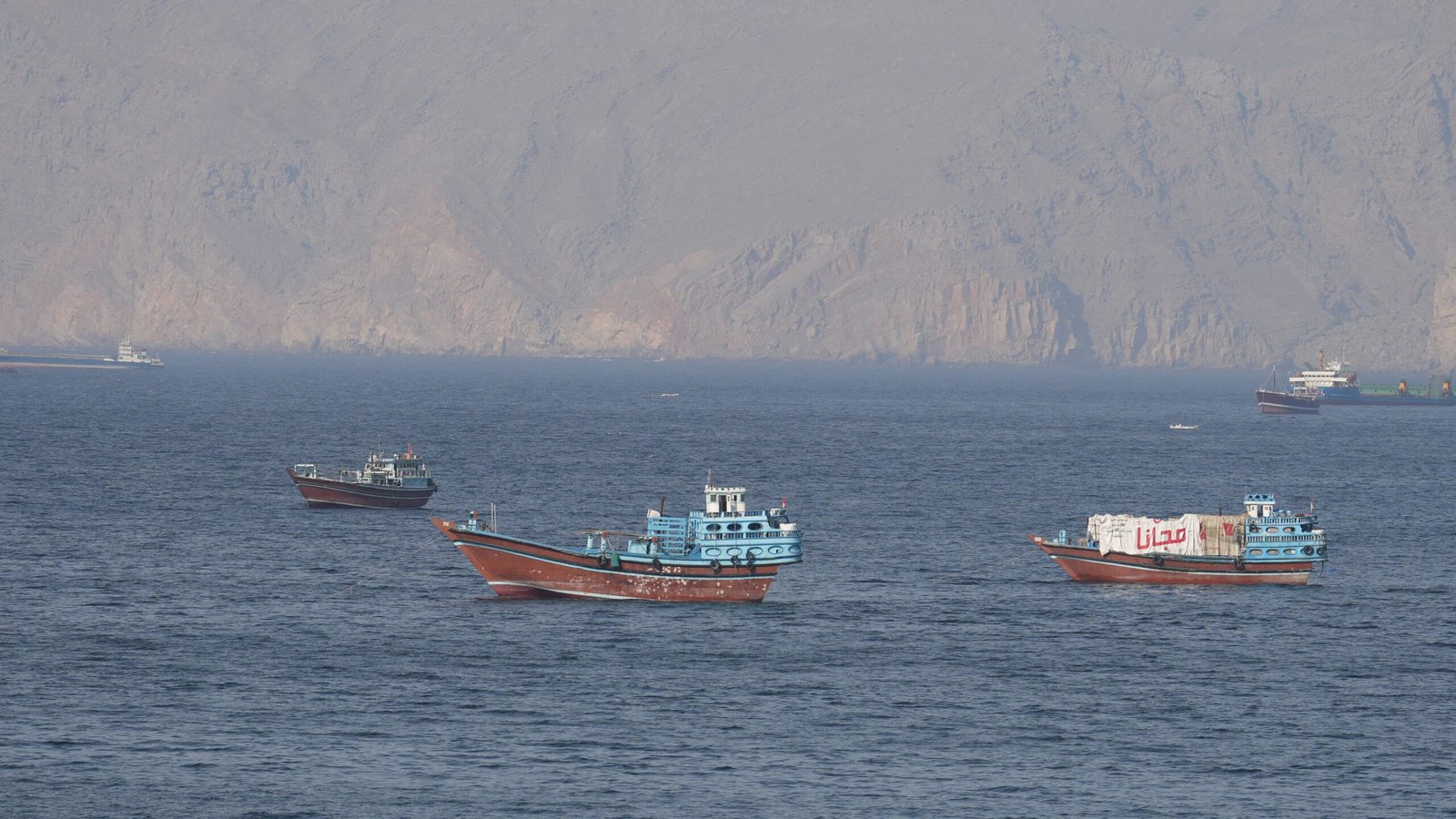
Last week, in a previously unreported incident, the US military determined that Iranian spotters were operating from a dhow, calling in targets to the IRGC, the official said. US forces confronted the vessel, told its occupants to abandon ship and then destroyed it. There were no casualties, the US official said.

Unwilling to risk its remaining fast boats, Iran had been unable to prevent a ramp-up in oil exports through the strait, the official said, particularly after US strikes devastated its navy.

The war — and its $3 billion monthly price tag — has become a key issue on the US campaign trail for November’s midterm elections, which will decide control of Congress.

US President Donald Trump has been weighing next steps against Iran, but has said he will not attack again before the vote.

The US has meanwhile been pressing its own naval blockade of Iranian ports and extending sanctions as it tries to pile economic pressure on Tehran to reach a deal to end the conflict.

The standoff over Hormuz has left global energy markets exposed to further disruption, with the threat of attacks and high shipping and insurance costs complicating efforts to restore normal traffic.
Must Read

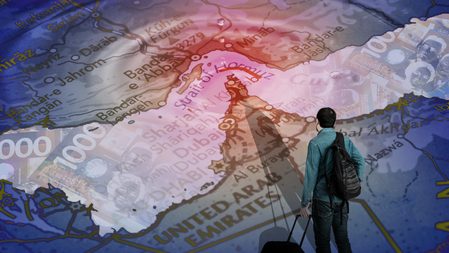
The Middle East crisis: From the Strait of Hormuz to your dining table


The Middle East crisis: From the Strait of Hormuz to your dining table

In recent days, attacks on commercial ships still sailing through the strait have surged to their highest level since the war began, according to independent data.

There have been at least five incidents in the past 48 hours involving tankers and other commercial ships around the Hormuz area, including drone strikes, according to data analysis from maritime security sources and incidents reported to British navy-affiliated agency United Kingdom Maritime Trade Operations (UKMTO).

That approximately mirrored the rate of attacks on October 3-5, pointing to a new escalation, according to data from the UN shipping agency, the International Maritime Organization.

“There is a tempo increase in strikes, which looks deliberate,” one maritime security source said.

Attacks over an expanded area

As part of the new strategy, Tehran will also expand the geographical scope of its operations beyond the Strait of Hormuz to the Gulf of Oman and waters further afield, the officials said.

Analysis by maritime security sources based on attacks reported to UKMTO and maritime security companies in the region suggest this may already be happening. They show Iran targeting ships in areas beyond the Strait of Hormuz, including waters off the coast of Qatar and the United Arab Emirates, in recent days.

The second Iranian official added that Tehran would not allow Trump to bring down oil prices before the November elections.

“Just when they think they are getting close to the point where prices will fall, we will push them away from it. This is a game of chess,” the second official said.

“Such vessels would be safe nowhere, even outside the Strait of Hormuz.”

The Pentagon and Iran’s Foreign Ministry did not immediately respond to requests for comment.

Complete closure of Hormuz soon, says Iranian official

Both Iranian officials said Tehran is moving toward a situation in which no vessel violating its restrictions would be able to pass through the strait. “It will be complete closure soon,” one of the officials said.

In its latest report on Sunday, the US Navy-led Joint Maritime Information Center (JMIC) said the threat to merchant shipping in the Strait of Hormuz remained “severe”, the second-highest level.

“IRGC attacks, attempted attacks, and/or harassment activity persisted including UAV overflight, targeted surveillance of merchant shipping, and occasional VHF hailing,” JMIC said. – Rappler.com

Must Read

Gasoline prices up again, diesel prices down on October 13


Gasoline prices up again, diesel prices down on October 13

Similar Posts

  • | | | |

    US, Saudi forces strike Iran allies in Iraq

    The conflict involving Iran, the United States and its regional allies has entered a new and more dangerous phase, with fresh military strikes reported across the Middle East. US and Saudi forces carried out coordinated airstrikes against Iran-aligned armed groups in eastern Iraq, according to US Central Command (CENTCOM). The operation came after a series of drone attacks that Washington and Riyadh attributed to groups linked to Iran’s Islamic Revolutionary Guard Corps (IRGC). CENTCOM said American and Saudi fighter jets targeted weapons and logistics facilities used by the armed groups. The US military claimed the groups had carried out more than 30 IRGC-directed drone attacks in recent days, including strikes targeting Saudi energy infrastructure. Saudi Arabia also confirmed the operation, saying its forces acted alongside CENTCOM after drones were launched from Iraqi territory toward petroleum facilities in the kingdom’s Eastern Province and Riyadh region. Riyadh said it did not seek a wider escalation but warned that it would respond to further attacks. The latest strikes were followed by an explosion at the headquarters of Iraq’s Popular Mobilisation Forces (PMF) in Basra. The PMF is an umbrella organisation containing several armed factions, including groups closely aligned with Iran. The cause of the blast and any casualties were not immediately confirmed. Meanwhile, tensions escalated further after the US military reported that Iran had launched multiple ballistic missiles toward American military positions in Jordan. CENTCOM said the missiles were intercepted and that US forces remained on heightened alert. Iranian authorities had not immediately issued an official statement regarding the missile launches. However, an Iranian military official rejected claims that Tehran was responsible for projectiles fired toward Saudi Arabia, warning that attributing attacks on US interests to Iran could be a serious miscalculation. The developments threaten to derail diplomatic efforts aimed at containing the conflict. Iran has repeatedly warned that any attempt to restrict its control over the Strait of Hormuz could trigger a renewed military confrontation. The latest escalation also comes as US President Donald Trump met Israeli Prime Minister Benjamin Netanyahu. Their discussions reportedly focused on Iran and the possibility of renewed military action

  • |

    UK leaders mourn former Cambridge professor Arday

    UK Prime Minister Andy Burnham has described the death of former Cambridge professor Jason Arday as “a tragedy on so many levels” and urged people to reflect before reaching conclusions about the circumstances surrounding his death. Arday, 41, was found dead at a property in Battersea, south London, on Friday afternoon. His family said they were devastated by the loss of the academic, describing him as a loving father, partner, brother, uncle and son. In a statement released through his publisher, Simon & Schuster UK, the family said Arday had been struggling amid what they described as a campaign of misinformation. Burnham, speaking during a visit to Cornwall, said the situation required reflection rather than immediate judgement. Arday resigned from his position as Professor of Sociology of Education at the University of Cambridge last week following allegations concerning plagiarism and questions about some claims surrounding his career. He rejected the allegations, although he acknowledged errors in some of his earlier academic work. Friends and colleagues have spoken about the pressure Arday faced in the weeks before his death. Eamonn McCrystal, a friend from St Mary’s University College London, said Arday had described feeling “destroyed” and expressed concern after his US travel visa was revoked. McCrystal remembered him as a kind and gentle person who had been involved with student radio during their university years. Cambridge Vice-Chancellor Professor Deborah Prentice said the university community was deeply saddened by Arday’s death and extended sympathy to his family and friends. Education Secretary Lucy Powell also expressed shock and urged the public to remember the human impact of intense public scrutiny. London Mayor Sadiq Khan said Arday had faced sustained media attention and described the treatment he received as an unacceptable campaign of public abuse. He called the death a wake-up call. The University and College Union also called for scrutiny of the harassment Arday experienced, including allegations of racism. Other prominent figures in British public life similarly raised concerns about the treatment of Black academics and the pressures faced by people from underrepresented backgrounds. Professor Simon Baron-Cohen, director of Cambridge’s Autism Research Centre, said he had spoken to Arday on the morning of his death. He described him as a caring and gentle person and said Arday had felt unable to leave his home. Professor Kehinde Andrews, a friend of Arday, said the academic had been deeply distressed after leaving Cambridge and had withdrawn from public life. The controversy surrounding Arday began after questions were raised about sections of his academic work. He denied plagiarism and said some errors were linked to the way he processed information as an autistic academic. Further questions were also raised about claims related to aspects of his personal history, including a long-distance charity run and fundraising achievements. Arday later clarified details surrounding both claims. His appointment at Cambridge in 2023 had been celebrated as a significant milestone, making him the university’s youngest Black professor at the time. When announcing his resignation, Arday said the personal cost of the controversy had become too great. He maintained that his decision to leave Cambridge should not be interpreted as an acceptance of the allegations made against him. Cambridge has announced an independent investigation into the circumstances surrounding his appointment. Liverpool John Moores University, which awarded Arday his PhD in 2015, previously concluded that he had not committed plagiarism.

  • |

    Bangkok’s original name has 168 characters

    Did you know that the city with the world’s longest official name is also one of the most famous cities on Earth? Interestingly, the name by which most people know this city is not its official name. The city is Bangkok, the capital of Thailand whose full ceremonial name consists of 168 characters. If you ever visit Thailand, you are unlikely to hear local residents recite the full name as even many of them cannot remember it. The city’s full ceremonial name is Krungthepmahanakhonamonrattanakosinmahintharaayuthayamahadilokphopnoppharatratchathaniburiromudomratchaniwetmahasathanamonpimanawatansathitsakkathattiyawitsanukamprasit. Bangkok’s official ceremonial name is recognized by Guinness World Records as the longest place name in the world. If you find it impossible to remember, you’re certainly not alone. The city also has a shorter official name in Thai: Krung Thep Maha Nakhon which is commonly shortened further by locals to simply Krung Thep. In 2022, the Thai government announced that both Krung Thep Maha Nakhon and Bangkok would be accepted as official Romanized names for the capital. The 168-character ceremonial name is derived from Sanskrit and Pali and its shorter form roughly translates to “The Great City of Angels.” However, historians are still uncertain why such an extraordinarily long ceremonial name was originally adopted. How did name “Bangkok” come about? According to popular accounts, the name Bangkok predates the establishment of the city as Thailand’s capital. It is believed to have originated from the area’s former village or district name possibly derived from the Thai words “Bang” (a village or riverside settlement) and “Makok” referring to a type of wild plum or olive tree that once grew abundantly in the area. Over time, the name Bang Makok is thought to have evolved into Bangkok, the name by which the city became known internationally.

  • | |

    Police officer took his own life after leading dou…

    An investigation has found that a police officer who died by suicide in May carried out a series of rapes and attempted murders targeting women over a period of at least fourteen years while serving as an officer. PC Alan Greer’s earliest known victim was a woman he raped inside her own home in Glasgow in 2012, shortly after she had contacted police to report an unrelated crime. The woman came forward late last year to report the assault, a disclosure that triggered one of the largest anti corruption investigations in Police Scotland’s history. Detectives have since identified eight additional victims, five of them sex workers who were attacked while Greer was off duty. Investigators have also established that Greer paid for sex from hundreds of women throughout his career and expect further victims to come forward as the inquiry continues. Assistant Chief Constable Lynn Ratcliff, who is leading the investigation, described the findings as deeply disturbing. She said the officer had abused his position of authority by returning to target a woman he had first encountered through his police duties. Ratcliff said the woman’s decision to come forward and speak with investigators became the catalyst that launched the wider inquiry. Her confirmation of the investigation followed months of reporting into Greer’s conduct. A source close to the case said the scale and nature of the case draws comparisons to the conviction of Wayne Couzens, the London police officer sentenced for the rape and murder of Sarah Everard five years ago, suggesting the Greer case could represent a similarly significant reckoning for Police Scotland. Greer was born in Australia in 1978 and moved to the United Kingdom at age six. He joined Strathclyde Police in 2009, and continued serving after the force merged into Police Scotland in 2013, building what appeared to be an unblemished seventeen year career. He initially worked as a uniformed response officer in Glasgow before moving into an officer safety training role based in Coatbridge around 2016, a position that involved training probationary officers and refreshing the skills of more experienced colleagues. Greer was 47 years old when he died in May, and was married with a child. Those close to him, including his family and police colleagues, are understood to have had no knowledge of his pattern of violence. Senior officers have said there were no clear opportunities that would have allowed the force to identify his offending earlier. The investigation traces back to a woman in her late thirties who walked into a Glasgow police station late last year to report the assault. She described how, in 2012, she had called officers to her home after a disturbance, only for one of the responding officers to later attack her. Cases involving police officers who abuse their positions of trust to target victims, particularly vulnerable women and sex workers, have prompted broader scrutiny of vetting and oversight procedures within UK police forces in recent years. Investigations of this kind often expose gaps in how forces monitor off duty conduct and respond to complaints against serving officers, and they tend to renew public pressure for independent oversight mechanisms capable of identifying patterns of abuse before they escalate over many years. The investigation into Greer’s offending remains active, and Police Scotland has said it anticipates identifying more victims as the inquiry proceeds.

  • | | |

    CBFC orders cuts in Emraan Hashmi’s Awarapan 2 b…

    Bollywood actor Emraan Hashmi’s much-awaited film Awarapan 2 has officially received clearance from the Central Board of Film Certification (CBFC), but only after several significant edits were made. The film has been awarded a U/A 16+ certificate, allowing viewers aged 16 and above to watch it under parental guidance. The CBFC approved the film on August 5, 2026, with a final runtime of 140 minutes and 20 seconds. However, before granting certification, the board instructed the filmmakers to implement changes at nine different points throughout the movie. According to reports, the CBFC asked the makers to tone down violent sequences, remove certain objectionable words from both the audio and subtitles, and include mandatory health warnings related to smoking and drug use. The board also directed the filmmakers to display the Hindi title prominently and ensure that anti-smoking messages remain visible during scenes featuring tobacco use. In addition, the certification body required a warning related to child trafficking to be included in the film. Some action scenes were shortened to reduce the intensity of violence, while one particular sequence was reportedly cut by nearly 50 percent. A scene involving drug inhalation was also modified to comply with certification guidelines. The end credits were adjusted to better align with the background music. Overall, approximately four minutes of footage were removed, while another 20 seconds of content were altered. Despite these edits, the film’s official runtime remains unchanged at 140 minutes and 20 seconds. Directed by Nitin Kakkar, Awarapan 2 stars Emraan Hashmi alongside Disha Patani and Shabana Azmi in key roles. The film serves as the sequel to the 2007 hit Awarapan and continues the emotional storytelling of the original while introducing a darker, revenge-driven narrative. Produced by Vishesh Bhatt, the sequel also reunites composer Mithoon and lyricist Sayeed Quadri. Fans can look forward to refreshed versions of the iconic songs “To Phir Aao” and “Tera Mera Rishta,” along with several new tracks created specifically for the film. With the required CBFC changes now completed, Awarapan 2 is set for a theatrical release on August 14, 2026. The film is expected to attract both longtime fans of the original and new audiences eager to see Emraan Hashmi return to one of his most memorable franchises.

Leave a Reply

Your email address will not be published. Required fields are marked *