naqvi visit balochistan
| |

Naqvi to visit KP, Balochistan over business secur…

Interior Minister Mohsin Naqvi has announced plans to visit Peshawar and Quetta to engage directly with business leaders and provincial authorities as the government steps up efforts to address security challenges affecting trade and investment in Khyber Pakhtunkhwa and Balochistan.

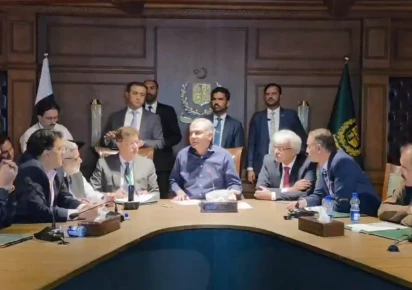
The announcement came during a meeting with a delegation of traders, industrialists, and representatives of chambers of commerce from both provinces. The delegation briefed the minister on the law and order situation and highlighted the security issues that continue to disrupt commercial and industrial activities.

Naqvi said the government recognizes the difficulties faced by the business community and is committed to creating a safer environment for investment and economic growth. He assured participants that all available resources would be utilized to improve security and resolve issues affecting businesses.

The interior minister said his upcoming visits to Peshawar and Quetta would include meetings with senior provincial officials, law enforcement agencies, and business representatives to develop practical and long-term solutions to security concerns.

He emphasized that a secure business environment is essential for economic stability, adding that the success of traders and industrialists is closely linked to the country’s overall development.

“The progress of the business community is the progress of Pakistan,” Naqvi said, reaffirming the government’s commitment to supporting entrepreneurs and protecting commercial activities.

The meeting followed a high-level discussion held a day earlier between Naqvi and President Asif Ali Zardari, during which they reviewed the country’s overall security situation, with particular focus on Khyber Pakhtunkhwa and Balochistan.

Pakistan has witnessed a rise in militant violence in recent months, particularly in the two provinces. Security forces have intensified intelligence-based operations to counter militant groups responsible for attacks on civilians, security personnel, and public infrastructure.

The deteriorating security environment has also affected workers and businesses. Earlier this week, six labourers who had been abducted in Balochistan’s Kech district were found dead, while several other attacks in recent weeks targeted police officers, judges, transport routes, and public facilities.

The government believes improving security is essential not only for protecting citizens but also for restoring investor confidence and advancing major regional connectivity and infrastructure projects that have been affected by instability.

Similar Posts

  • | | |

    AJK violence won’t derail democracy: DG ISPR

    Pakistan’s military has defended the state’s handling of unrest in Azad Jammu and Kashmir (AJK) and the security situation in Balochistan, saying the government is exercising restraint while remaining committed to constitutional governance, counterterrorism efforts and national stability. Addressing a detailed press conference on Friday, Director General of Inter-Services Public Relations (ISPR) Lieutenant General Ahmed Sharif Chaudhry said political issues should be resolved through democratic and constitutional means, while security challenges require strong governance and public support. State urges constitutional path in AJK The military spokesperson said the state had acted with restraint in dealing with recent unrest in AJK, adding that the electoral process would continue without disruption. He stressed that the will of the people should be reflected through democratic institutions and that all individuals would be held accountable under the Constitution and the law. He said Pakistan remained committed to its long-standing position on Kashmir, describing the region as central to the country’s national policy. He also rejected claims that the Pakistan Army was an occupying force in AJK, saying security matters in the region were being handled by the AJK government, police and civilian law enforcement agencies. The DG ISPR alleged that India was attempting to fuel instability inside Pakistan through proxy campaigns and misinformation, while reaffirming Pakistan’s support for the Kashmiri people’s right to self-determination under United Nations resolutions. Good governance key to national security Responding to questions about governance reforms, the military spokesperson said effective administration was essential for ensuring peace and long-term stability. He noted that Pakistan’s rapidly growing population required a review of administrative structures and said reforms should be debated and implemented through constitutional and democratic processes. He said an administrative reset could be considered if it helped improve governance, but emphasized that any changes must reflect the will of the people and remain within the legal framework. Referring to the National Action Plan, he said most of its objectives—including countering extremist narratives, stopping terror financing, improving institutional capacity and tackling smuggling—depended on strong governance rather than military action alone. Security operations intensify against terrorism The DG ISPR said security forces had significantly increased intelligence-based operations across the country during 2026, conducting thousands of operations aimed at dismantling terrorist networks. According to him, more than 2,000 militants had been killed this year, while hundreds of security personnel and civilians had embraced martyrdom. He said the majority of recent suicide bombers were Afghan nationals and accused militant groups linked to the Afghan Taliban of supporting cross-border terrorism against Pakistan. He maintained that the rise in security incidents reflected a more aggressive counterterrorism strategy, with intelligence-led operations forcing militants into direct confrontation with security forces. Balochistan challenges linked to governance and propaganda Discussing Balochistan, the military spokesperson said the province’s security challenges stemmed from a combination of militancy, organized crime, entrenched elite interests and external interference. He argued that some influential groups resisted reforms to preserve their political and economic influence, while terrorist organizations exploited local grievances through propaganda. He highlighted ongoing development projects, including investments in education, healthcare, transport infrastructure and Gwadar’s development, saying the government had allocated substantial resources to the province. He also referred to data from the Commission of Inquiry on Enforced Disappearances, stating that most reported cases had already been resolved while investigations into the remaining cases were continuing.

  • Punjab continues Rs25,000 Honorarium for 69,000 Imams

    Lahore – The Punjab Chief Minister’s Honorarium Program for Imam Masjid Sahibaan is continuing successfully under the directives of the Chief Minister of Punjab. According to the spokesperson for the Home Department Punjab, the provincial government has allocated Rs 21 billion for the program, while more than Rs 9 billion has already been disbursed to Imams under the scheme since January 2026. It is pertinent to mention that under the Punjab Chief Minister’s Honorarium Program, more than 69,000 registered Imams across the province are receiving a monthly honorarium of Rs 25,000. The spokesperson stated that the monthly honorarium is being disbursed without interruption to registered Imams throughout Punjab through dedicated ATM cards. The payment mechanism has been designed to ensure dignity, convenience, transparency and efficiency in accordance with modern standards. The Government of Punjab has completed all necessary documentation for the honorarium program for the fiscal year 2026–27, and the required payment has been transferred to the Bank of Punjab. The spokesperson further stated that respected Imams are playing an exemplary role in promoting religious harmony, maintaining peace and fostering social welfare across the province. Their services and contributions are helping strengthen social cohesion and reinforce the values of unity and harmony in the society.

  • |

    Uganda football captain David Owere killed in robbery attack

    KAMPALA: Uganda’s football world has been plunged into mourning after national team captain David Owere died following a brutal attack during an alleged robbery near his home in Kampala. The 27-year-old footballer was reportedly confronted by suspected robbers in the Makindye area while they attempted to steal his mobile phone and other valuables. Police said Owere resisted the attackers, triggering a violent assault that left the young captain critically injured. Witnesses said the attackers allegedly pelted Owere with stones before fleeing the scene. He was found unconscious and was quickly taken to a nearby clinic for treatment. As his condition remained serious, Owere was later transferred to a private hospital. Despite receiving medical care, the footballer succumbed to his injuries, bringing a sudden and tragic end to the life of one of Uganda’s emerging football leaders. His death has shocked supporters and the football community across the country. Owere was a key figure for both the Uganda national team and SC Villa, one of Uganda’s most successful clubs. His versatility allowed him to play as a right-back as well as in midfield, while his leadership qualities earned him the captain’s armband. SC Villa paid an emotional tribute to their captain, saying the club had lost far more than a footballer. The Uganda Football Federation also mourned Owere, describing him as an exemplary leader who made an impact both on and off the pitch. The federation highlighted his influence on younger players and his role as an inspirational figure within Ugandan football. The circumstances of his death have raised concerns about violent crime in Kampala, with the alleged attack occurring close to the player’s home. Police are expected to investigate the incident and pursue those responsible for the attack. For Uganda’s football fans, Owere’s death is a devastating loss. At only 27, he had already established himself as a respected captain and leader, leaving behind teammates, supporters and a football community struggling to come to terms with his sudden death.

  • |

    7 in 10 Afghan women report poor mental health

    Restrictions imposed on women and girls in Afghanistan have sharply reduced their participation in public life, with more than half of surveyed women saying they now leave their homes only once or twice a month, according to a new UN Women assessment. The findings were released as Afghanistan approaches the fifth anniversary of the Taliban’s return to power in August 2021. UN Women said Afghanistan remains the only country where girls are barred from secondary education and women are prohibited from attending universities. The agency said the restrictions have increasingly affected women’s freedom of movement, education, employment and access to public life. More than half of the women surveyed reported leaving home no more than twice a month. Nearly three-quarters said they did not feel safe going outside without a male guardian, commonly referred to as a mahram. UN Women said the restrictions have also contributed to growing concerns about women’s mental health. Around seven out of 10 women surveyed described their mental health as either “bad” or “very bad”. Respondents cited social isolation, reduced opportunities and limited access to support networks among the factors affecting their wellbeing. The UN agency said Taliban authorities have introduced more than 100 decrees affecting women and girls since returning to power. It described the measures as creating a system of discrimination and said Afghanistan had become an extreme global example of restrictions on women’s rights. The Taliban maintain that their policies respect women’s rights under their interpretation of Islamic law and Afghan culture. Education remains heavily restricted The restrictions on education have affected millions of Afghan girls. UNESCO estimated that about 2.4 million girls have been prevented from attending secondary school since the Taliban returned to power. Women and girls have also been excluded from university education, limiting their opportunities to pursue professional careers and higher education. UN Women said recent measures had further weakened legal protections available to women. According to the agency, rules introduced this year reduced legal equality between men and women, strengthened the authority of men within marriage and created additional difficulties for women seeking divorce. Women largely excluded from workforce Economic participation remains another major challenge. UN Women reported that only about 7% of Afghan women are employed, compared with approximately 84% of men. The agency said the restrictions on education and employment were limiting women’s ability to earn income, develop careers and contribute to the country’s economy. The findings were based on a door-to-door survey involving 2,190 people conducted between February and March 2025. The agency also conducted telephone interviews with 2,811 people between April and May 2025. UN Women warned that continued restrictions could further isolate women and deepen the social and economic consequences of excluding half of Afghanistan’s population from public life. The Taliban government has not immediately responded to requests for comment on the latest findings.

  • | |

    Attaullah Khan’s remarks on burial plans spark debate

    Legendary Pakistani folk singer Attaullah Khan Essa Khelvi has sparked widespread discussion on social media after revealing that he has already prepared his burial place and often reflects on life after death. During a recent podcast interview, the veteran singer spoke openly about his preparations for the hereafter. He said he has arranged a grave for himself in his hometown of Isa Khel, where his family has a private graveyard. Attaullah Khan said the grave has already been prepared and that it is located near the mosque and farmhouse he built in the area. He explained that after completing those projects, he felt it was important to also prepare a final resting place for himself. The singer said he has witnessed the deaths of many close friends, relatives and family members, including his mother. Those experiences, he said, have made him think deeply about the temporary nature of life and the importance of preparing for the hereafter. He added that he prays for a peaceful death and hopes to leave this world with faith and dignity. While mentioning that there are burial plots nearby, he clarified that he has reserved only his own grave. His remarks quickly went viral on social media, where users expressed mixed opinions. Some people appreciated his willingness to speak openly about death and described his comments as a reminder that life is temporary and everyone should prepare spiritually for the hereafter. Others questioned the idea of preparing a grave in advance. Some users argued that while planning for the hereafter is important, faith, good deeds and righteous actions matter more than constructing a burial place. A number of social media users also suggested that spending money on charitable projects, such as welfare initiatives or homes for the elderly, would have a greater long-term impact. The discussion has generated a wide range of reactions online, with many praising the singer’s honesty while others debated the religious and cultural aspects of preparing a grave before death. Attaullah Khan Essa Khelvi is regarded as one of Pakistan’s most celebrated folk singers. Over the decades, he has earned recognition for his performances in Saraiki, Punjabi and Urdu, with several of his songs remaining popular among audiences across generations.

  • |

    China launches Arctic route to bypass global shipping chokepoints

    China is preparing to open a regular container shipping route through the Arctic as disruptions at major maritime chokepoints continue to affect global trade. The new service will operate through Russia’s Northern Sea Route along the Arctic coast. It is being presented as an alternative route between Asia and Europe. Chinese shipping company Sea Legend is expected to launch its first regular service on the route. The service will connect Ningbo in China with Felixstowe in the United Kingdom. The route has been described as the “Ice Silk Road”. It is designed to provide faster access to European markets. It could also improve trade links with Turkey and North Africa. The Arctic route could significantly reduce sailing times between China and Europe. The journey between Ningbo and Felixstowe normally takes around 40 days by traditional routes. The Northern Sea Route could cut the travel time by roughly half under suitable conditions. The route has gained attention as shipping companies look for alternatives to heavily congested and politically sensitive waterways. The Strait of Hormuz and the Bab al-Mandab have become major areas of concern for international shipping. Rising tensions in these regions have increased risks for vessels and raised costs for shipping companies. Marine risk experts say the Arctic is attracting greater interest from shipowners because it can offer shorter journeys and reduce exposure to geopolitical conflict zones. The Northern Sea Route is divided into 28 sections. Different rules and operating requirements apply along the route. Ships generally need permission from the Northern Sea Route administration, which is controlled by Russia’s state nuclear energy company Rosatom. Interest in the Arctic route is not new. Several international shipping companies have previously tested the Northern Sea Route. However, many European operators later avoided regular use of the route because of worsening relations with Russia. Concerns over the potential environmental impact of increased shipping in the fragile Arctic ecosystem have also remained a major issue. The changing climate has added another dimension to the debate. Shrinking sea ice has made some Arctic routes more accessible during parts of the year. The Arctic is now becoming an increasingly important area of competition among major powers. Russia considers the region strategically important for its economy and national security. It also views the Northern Sea Route as a major trade corridor. China has described itself as a “near-Arctic state” and has promoted the concept of a “Polar Silk Road”. Beijing sees greater Arctic access as an opportunity to expand trade and strengthen its global supply chains. The United States, meanwhile, has opposed efforts that could give Russia and China excessive control over Arctic routes. Washington has repeatedly supported freedom of navigation and greater international access to the region. The growing use of the Arctic shipping corridor could therefore have implications beyond commercial trade. For China, the route offers a potential way to reduce dependence on traditional maritime passages. For Russia, it could strengthen the economic importance of its Arctic coastline.

Leave a Reply

Your email address will not be published. Required fields are marked *