nab chairman grilled
| |

NAB chairman grilled over bureau’s performance

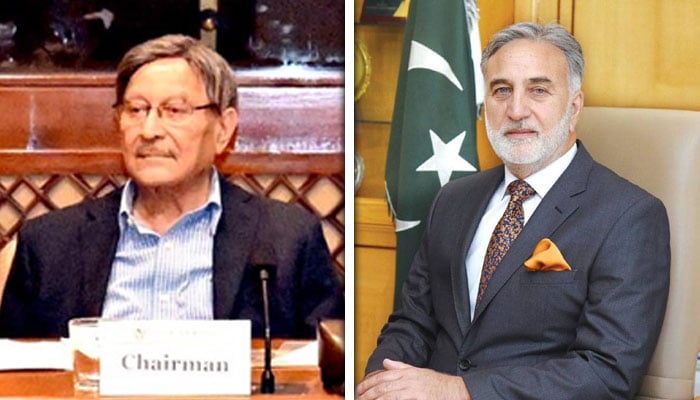
A meeting of the Senate Standing Committee on Law and Justice was held under the chairmanship of Senator Farooq H Naek, where National Accountability Bureau (NAB) Chairman Nazir Ahmed Butt appeared before the committee on its instructions.

During the meeting, Senator Farooq H Naek remarked that the NAB chairman had perhaps appeared before the committee for the first time.

In response, Nazir Ahmed Butt said that it was his first appearance before the committee as NAB chairman. He added that he had appeared before the committee several times while performing his previous responsibilities.

The NAB chairman said he had been assigned the responsibility in 2023. He recalled that ministers he met during his tenure repeatedly complained that the bureaucracy was afraid to make decisions and was therefore reluctant to work.

During the meeting, NAB Director General Operations briefed the committee on the bureau’s powers and performance.

The official said NAB had received 505,799 complaints since its establishment.

He said NAB also operates as an investigative agency under the Anti-Money Laundering Act, 2010.

According to the briefing, NAB has so far completed 12,147 inquiries, conducted 7,339 investigations and filed 4,105 references.

The DG Operations further told the committee that NAB had been allocated Rs22.556 billion over the past three-and-a-half years.

Despite the expenditure, the bureau reported significantly higher recoveries during the same period.

The committee was informed that NAB had recovered Rs1.069 trillion over the past three-and-a-half years.

The briefing highlighted the bureau’s role in investigating corruption, financial crimes and other cases falling under its legal mandate.

The committee members discussed NAB’s powers, investigations, recoveries and its overall performance during the meeting.

The NAB chairman and officials responded to questions from the committee and provided details about the bureau’s operations and financial performance.
Similar Posts

  • |

    Iran sent IRGC commanders to aid Houthis: report

    Iran is alleged to have flown senior Islamic Revolutionary Guard Corps (IRGC) commanders, military advisers and missile- and drone-related equipment to Yemen earlier this month in a move that could significantly strengthen the military capabilities of the Houthi movement, according to multiple sources familiar with the matter. The reported transfer is believed to have taken place on July 13 aboard a Mahan Air flight that departed from Tehran. Sources said the aircraft was originally scheduled to land in the Houthi-controlled capital, Sanaa, but was forced to divert to the Red Sea port city of Hodeidah after military activity disrupted operations at Sanaa International Airport. According to the sources, between 10 and 21 IRGC personnel, including senior commanders, were on board the aircraft. They claimed the mission included military advisers tasked with providing operational support and training on advanced missile systems. The flight was also reportedly carrying missile components, drone-related equipment and gold, which the sources alleged was intended to finance Houthi military operations. The reported shipment has raised fresh concerns that Tehran may be expanding its military support for the group amid growing regional tensions. Officials from Yemen’s internationally recognised government said intelligence indicated that Iranian military experts had arrived to strengthen Houthi capabilities. They claimed the advisers were expected to improve the group’s ability to launch attacks against international shipping in the Red Sea and the strategic Bab al-Mandab Strait, one of the world’s busiest maritime trade routes. Regional security analysts also supported the claims, saying the shipment allegedly included components for short- and medium-range missiles as well as drone systems similar to those previously used in attacks across the Gulf region. The reported deployment came only days before the Houthis announced a naval blockade targeting Saudi Arabia. The group later claimed responsibility for attacks on Saudi oil tankers operating in the Red Sea, further escalating tensions and increasing fears over global energy supplies and maritime security. Despite the allegations, both Iran and the Houthi movement strongly denied the reports. A Houthi media official who said he was among the passengers on the flight insisted that everyone on board was a civilian and rejected claims that military personnel or weapons had been transported. Iran has also repeatedly denied supplying advanced weapons to the Houthis or directing their military operations. Iranian officials maintain that the Yemeni group independently develops its own military capabilities and makes its own operational decisions. According to Iranian officials, the July 13 flight was organised to return a Houthi delegation and Yemeni civilians who had travelled to Tehran earlier in the month. They said the passengers included people who had attended a funeral ceremony as well as Yemenis who had received medical treatment in Iran. The allegations have emerged at a time of heightened confrontation across the Middle East, where attacks involving the United States, Iran, Israel and Iran-backed groups have intensified. Growing instability has already disrupted commercial shipping through the Strait of Hormuz and the Red Sea, contributing to rising oil prices and increasing uncertainty in global financial markets.

  • |

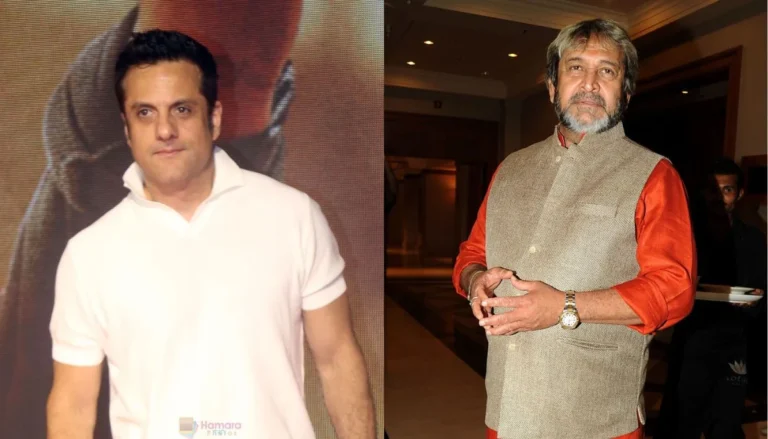
    ‘Malamaal Weekly 2’ adds Fardeen Khan, Mahesh Manjrekar to cast

    The star cast of “Malamaal Weekly 2” continues expanding, with Fardeen Khan and Mahesh Manjrekar now joining the ensemble. The sequel first entered development back in February 2026. Bollywood Hungama has exclusively learned that both actors have officially signed on for the project. Their addition marks the latest in a steady string of casting announcements surrounding the film. Amit Joshi, known for directing 2024’s “Teri Baaton Mein Aisa Uljha Jiya” was confirmed as director back in April. Since then, the cast has grown rapidly with each passing week. Last week alone brought news of Raveena Tandon and Parineeti Chopra joining the project. That was quickly followed by confirmation on August 11 that Shilpa Shirodkar had signed on too, marking her Bollywood return after 26 years. Just two days later, on August 13, Elvish Yadav and Rajpal Yadav were also locked in for roles. The rapid pace of signings reflects growing momentum behind the project. According to a source, Fardeen Khan was considered an easy choice for the makers. The insider explained that Khan has been on a strong career comeback, working across multiple genres while remaining especially popular in comedic roles, which made him a natural fit for the makers. The source added that Khan was genuinely pleased with the offer and signed on without hesitation. His comic sensibility reportedly aligned well with what the makers were looking for. Mahesh Manjrekar’s casting was explained similarly, with the source describing him as a uniquely versatile performer who excels in comedy as well. The film reportedly includes a quirky character that the makers felt suited him perfectly. According to the insider, Manjrekar was excited to be offered a role in the sequel of such a beloved original film. The producers reportedly feel confident he’ll deliver a performance audiences will enjoy. The film is expected to begin shooting in November 2026. While the storyline itself will be entirely new, it is set to retain the spirit of the original, following ordinary small-town characters caught up in poverty, greed and the chaos triggered by a sudden shot at wealth.

  • | |

    Pakistan’s military tightens grip on Islamis…

    Munir’s family background feeds into this shift as well. He is the son of an imam and considers himself a devout, conservative Muslim, and religious identity remains deeply woven into Pakistan’s state institutions. Even so, he has pushed the country toward international engagement through cryptocurrency partnerships, foreign investment deals, a mediating role in the conflict between the United States and Iran, and a mutual defence pact with Saudi Arabia. Data shared with a foreign news agency by the Armed Conflict Location and Event Data Project, a group that tracks conflict incidents worldwide, shows the scale of the shift. Pakistan averaged more than seven blasphemy related riots or attacks annually between 2021 and 2024, but recorded only one such incident over the past twelve months. Economic pressure appears to have played a significant role in prompting the crackdown. Two Pakistani government sources said officials grew alarmed during the summer of 2025 that rising hostility from fundamentalist groups toward France and other European countries threatened to jeopardize a European Union duty waiver covering Pakistani exports. Nearly a third of Pakistan’s total exports go to the EU, and losing that preferential access could have dealt a severe blow to the national economy. Neither the European Commission nor Pakistan’s commerce ministry responded to requests for comment on the matter. Washington has added its own pressure over religious freedom concerns. The US Commission on International Religious Freedom, a government watchdog, recommended last year that Pakistan be placed back on a list of countries of particular concern due to its blasphemy laws, a designation Islamabad has firmly rejected. Analyst Abdul Basit of Singapore’s S. Rajaratnam School of International Studies said worsening insurgent violence in Balochistan and Khyber Pakhtunkhwa, Pakistan’s two most mineral rich provinces, likely added urgency to Munir’s campaign, particularly since he has pitched foreign investment in the country’s mining sector to American officials over the past year. Basit noted that religious groups have lost favor within the state’s priorities, though he cautioned that the militias driving these regional insurgencies are not formally tied to the newly banned Islamist organizations, even if both draw recruits from the same pool of young, radicalized men. Elizabeth Threlkeld, who directs the Stimson Center’s South Asia program, said the open question going forward is whether Pakistan can sustain this level of focus over time. Crackdown targets country’s largest fundamentalist movement The largest of the groups swept up in the crackdown, Tehreek e Labbaik Pakistan, built its identity around the slogan “Death to blasphemers” before authorities banned it late last year. Many of its leaders now sit in jail, its mosques have been sealed shut and its financial accounts frozen. A previously undisclosed government document that laid the groundwork for the ban argued the organization had become a serious threat to Pakistan by damaging both domestic stability and the country’s standing internationally. A spokesperson for the group pointed to a statement it issued last year describing the ban as illegal and unconstitutional. The move against Tehreek e Labbaik follows earlier crackdowns on groups such as Lashkar e Taiba and Jaish e Muhammad, which Pakistan pursued under pressure from the Financial Action Task Force, the international body that monitors terrorism financing. Basit linked the newest crackdown to a period of internal reflection within Pakistan over its historical backing of the Afghan Taliban, whom Islamabad now blames for stoking Islamist insurgencies against the Pakistani state from across the border. The Taliban government in Kabul has dismissed that accusation as baseless, and a spokesperson for its foreign ministry declined to comment further, describing Pakistan’s crackdown as an internal matter. For Pakistan’s Christian, Shia and Ahmadi communities, the change in atmosphere has been dramatic. In the past, suspects in blasphemy related killings, including police officers, were sometimes greeted with rose petals or celebratory receptions, and individuals accused of burning churches or minority mosques often received public praise. Blasphemy remains a capital offense under Pakistani law, and even a rumor of an accusation has historically been enough to spark riots or lynchings. Human rights organizations say victims’ families have rarely obtained justice, since judges and lawyers have often been too frightened to take on such cases. Officer Malik said everyone who confronted the crowd during last month’s incident in Karachi felt genuine fear. The Christian family targeted that day was eventually moved to safety, and an initial investigation has since found the accusations against them to be false. Group’s military links trace back a decade Tehreek e Labbaik formed in 2015 while its founder was imprisoned for shooting and killing a Pakistani provincial governor in 2011 over his support for a Christian woman accused of blasphemy. That gunman, a former police bodyguard, was later convicted and executed months after the group’s founding. Analysts have long suspected the group’s creation received at least tacit support from Pakistan’s military establishment, including its intelligence services, as a tool to keep civilian governments and mainstream political parties in check. Following violent riots led by the group in 2017, then army chief General Qamar Javed Bajwa referred to its protesters as the country’s own people. Pakistan’s Supreme Court later ordered the military and intelligence agencies to stay out of politics but stopped short of directly tying them to the organization. Analysts and former officials say the effects of years of tolerance for the group will not disappear simply because of a ban, and that the shock felt by its supporters could still trigger backlash. Ihsan Ghani, who served as Pakistan’s counter terrorism chief during the 2017 riots, said he worries the group could resurface at full strength if its usefulness to the state changes again. He compared decades of state backed nurturing of the movement to something that cannot simply be switched on and off at will. Within Pakistan’s minority communities, the sudden shift still feels fragile. One of the Christian women rescued during last month’s incident in Karachi said she and her family are now physically safe, but admitted the fear has not fully faded.

  • | |

    Liberty Chowk celebrations descend into chaos

    Independence Day celebrations at Liberty Chowk in Lahore took an unexpected turn after a large crowd became involved in disorderly behaviour following an organised event on Thursday night. The Punjab government had arranged a special programme at Liberty Chowk to mark Pakistan’s Independence Day. The venue was decorated with lights and other patriotic arrangements, while professional artists were invited to entertain the public. The official celebrations were held as planned, with people gathering at the iconic Lahore location to mark August 14. However, scenes changed after the formal programme ended. Videos circulating on social media appeared to show a large crowd behaving aggressively at the venue. The footage showed people climbing and swinging on structures at the site. Some individuals were also seen throwing bottles and getting involved in physical confrontations. The gathering appeared to consist largely of young men, while women and families were not prominent in the crowd shown in the videos. The scenes quickly attracted criticism online. Many social media users expressed disappointment over the behaviour and questioned whether such actions were appropriate during a national celebration. One user criticised the crowd for behaving like a mob rather than a united nation. Another argued that the country needed a stronger sense of civic responsibility. Others said the incident was unfortunate and pointed to the need for citizens to take responsibility instead of blaming authorities and institutions for every problem. The videos sparked a wider discussion about how public celebrations should be conducted. Independence Day events are traditionally associated with patriotism, national unity and respect for public spaces. The incident at Liberty Chowk highlighted the contrast between the carefully organised official celebrations and the disorder that reportedly followed among sections of the crowd.

  • | |

    Four family members killed in Lahore firing

    LAHORE: A case has been registered over the killing of four members of a family in Lahore’s Chuhng area. The incident involved a man who allegedly opened fire on his in-laws. Four people were killed in the shooting. According to the FIR, the victims included the suspect’s wife, his father-in-law, mother-in-law and brother-in-law. The complainant alleged that the suspect carried out the killings with the involvement or encouragement of his father and brothers. The victim’s brother told police that the family had previously registered a kidnapping case against the suspect at Sunder Police Station. He alleged that the case was filed after his sister was allegedly abducted. Police identified the suspect as Imran Shaukat. According to officials, he had married the woman around six months ago. The shooting took place in the Chuhng area, where the suspect allegedly targeted members of his wife’s family. The incident left four people dead and caused panic in the area. Police said the suspect fled or moved away from the scene after the shooting before turning the weapon on himself. He died from the gunshot wound. Investigators have registered a case and begun examining the circumstances surrounding the killings. Police are also looking into the allegations contained in the FIR regarding the suspect’s family members and the earlier kidnapping case. Officials said further investigation would determine the exact motive behind the incident and establish the circumstances that led to the deadly shooting. The case has raised concerns about a possible dispute between the two families following the marriage. Police are expected to question relatives and examine available evidence as part of the investigation.

  • | |

    Ebola outbreak becomes Congo’s deadliest, death …

    KINSHASA: The Democratic Republic of Congo is facing its deadliest Ebola outbreak on record, with the death toll reaching 2,325 and confirmed infections climbing to 4,945, according to the latest government figures. The outbreak, declared on May 15, has now surpassed the 2,299 deaths recorded during Congo’s previous worst Ebola epidemic from 2018 to 2020. Health authorities also reported 101 new confirmed cases in a single day, highlighting the rapid spread of the disease. The current outbreak is the country’s 17th and has already become its largest in terms of confirmed cases. Only the devastating West African Ebola epidemic of 2014–2016, which killed more than 11,000 people across Guinea, Liberia and Sierra Leone, has recorded a higher overall toll. Health officials say the outbreak is being driven by major challenges, including weak healthcare infrastructure, insecurity and resistance within some communities. Delays in detecting infections and getting patients into medical care are also contributing to the high death rate. The case fatality ratio has climbed sharply to 46%, compared with around 20% in early June. Public health experts caution that the increase does not necessarily mean the virus has become more deadly. Instead, they say many patients are being identified only after their condition has severely deteriorated or after death. The outbreak is being caused by the Bundibugyo species of Ebola, for which there are currently no approved vaccines or specific treatments. Researchers are assessing experimental vaccines and therapies, but available evidence remains limited. Ebola is transmitted through direct contact with the bodily fluids of infected people, including those who have died from the disease. Symptoms can include fever, vomiting and diarrhoea, while severe infections may lead to internal or external bleeding. The outbreak also crossed into neighbouring Uganda, where authorities confirmed 20 cases and two deaths before declaring the outbreak over last month.

Leave a Reply

Your email address will not be published. Required fields are marked *