8216malamaal weekly 28217
|

‘Malamaal Weekly 2’ adds Fardeen Khan, Mahesh Manjrekar to cast

The star cast of “Malamaal Weekly 2” continues expanding, with Fardeen Khan and Mahesh Manjrekar now joining the ensemble. The sequel first entered development back in February 2026.

Bollywood Hungama has exclusively learned that both actors have officially signed on for the project. Their addition marks the latest in a steady string of casting announcements surrounding the film.

Amit Joshi, known for directing 2024’s “Teri Baaton Mein Aisa Uljha Jiya” was confirmed as director back in April. Since then, the cast has grown rapidly with each passing week.

Last week alone brought news of Raveena Tandon and Parineeti Chopra joining the project. That was quickly followed by confirmation on August 11 that Shilpa Shirodkar had signed on too, marking her Bollywood return after 26 years.

Just two days later, on August 13, Elvish Yadav and Rajpal Yadav were also locked in for roles. The rapid pace of signings reflects growing momentum behind the project.

According to a source, Fardeen Khan was considered an easy choice for the makers. The insider explained that Khan has been on a strong career comeback, working across multiple genres while remaining especially popular in comedic roles, which made him a natural fit for the makers.

The source added that Khan was genuinely pleased with the offer and signed on without hesitation. His comic sensibility reportedly aligned well with what the makers were looking for.

Mahesh Manjrekar’s casting was explained similarly, with the source describing him as a uniquely versatile performer who excels in comedy as well. The film reportedly includes a quirky character that the makers felt suited him perfectly.

According to the insider, Manjrekar was excited to be offered a role in the sequel of such a beloved original film. The producers reportedly feel confident he’ll deliver a performance audiences will enjoy.

The film is expected to begin shooting in November 2026. While the storyline itself will be entirely new, it is set to retain the spirit of the original, following ordinary small-town characters caught up in poverty, greed and the chaos triggered by a sudden shot at wealth.

Similar Posts

  • | |

    Egypt confirms drone strike behind blaze at two ga…

    A drone strike caused the fire that engulfed two gas vessels at Egypt’s Mediterranean port of Damietta, the Egyptian cabinet confirmed Thursday, ending speculation over whether the blaze that broke out a day earlier was an accident or an attack. No group has claimed responsibility for the strike, which occurred close to the Suez Canal, now serving as the last safe route for Saudi oil shipments reaching global markets. Egyptian authorities said they are continuing their investigation and taking steps to safeguard national security. British maritime security firm Ambrey said Wednesday that a drone had struck a US owned gas storage tanker at the port, an early assessment that raised fears the wider regional conflict could spread further. Three trading sources familiar with the incident said the drone hit the floating storage vessel Energos Winter, sparking a fire that then spread to a second ship, Gaslog Salem. According to maritime risk group Vanguard, the Energos Winter was struck on its starboard side, and the resulting fire was later extinguished. Egypt’s petroleum ministry said firefighting and security teams responded immediately and that the incident caused no injuries or fatalities. Petroleum Minister Karim Badawi traveled to the port to personally oversee the emergency response, according to the ministry. The strike came shortly after Iran launched a missile attack targeting US forces in Jordan, prompting Washington and Saudi Arabia to carry out strikes against Iran backed paramilitary groups in Iraq. President Donald Trump warned of retaliation against Iran, while Yemen’s Houthi movement declared a naval blockade against Saudi Arabia, marking what appears to be the widest expansion of the conflict since the United States and Israel began bombing Iran in February. The Energos Winter is a floating storage and regasification unit owned by the US based firm Energos Infrastructure. Its technical, safety and commercial operations are managed by Wilhelmsen Ship Management, a Singapore based subsidiary of the Norwegian company Wilhelmsen Group. In a first for the five month war, Saudi Arabia publicly joined US forces in striking Iran aligned groups in eastern Iraq on Wednesday, responding to drone attacks on Saudi oil facilities that were launched from Iraqi territory. Following the joint operation, Saudi Arabia’s defense minister met with US Vice President JD Vance in Washington to urge the Trump administration against further escalation, according to two people familiar with the meeting. The conflict began in February when the United States and Israel launched a bombing campaign against Iran that Trump initially said would last only a few weeks. A temporary ceasefire reached in June collapsed amid renewed fighting centered on the Strait of Hormuz, a critical waterway that Iran now claims to control. The latest strikes in Iraq and Egypt threaten to pull additional countries into the conflict, coming after Yemen’s Houthi forces declared a naval blockade on Saudi Arabia last week, putting the alternative Red Sea shipping route for Saudi oil bound for Asia at risk. Attacks on vessels by Houthi fighters have already prompted London’s marine insurance market to expand its high risk zone in the Red Sea to cover a larger stretch of coastline near Saudi ports. Trump said the United States would respond forcefully to Iran’s missile attack on American forces, while maintaining that Washington remains open to a negotiated peace deal to end a war that has unsettled global energy and financial markets. Oil prices jumped more than eight percent on Wednesday before easing slightly on Thursday amid volatile trading, with benchmark Brent crude hovering just under 90 dollars a barrel. Iran said Wednesday that it had struck three tankers attempting to pass through the Strait of Hormuz along what it called an unauthorized route. Even so, a QatarEnergy controlled liquefied natural gas tanker exited the strait overnight, the first such vessel tracked leaving the waterway since July 11. Iran’s semi official Fars news agency reported that Tehran had specifically authorized the tanker’s passage. Oman has presented Iran with a Gulf backed proposal to manage traffic through the Strait of Hormuz, including a system of voluntary usage fees, according to sources familiar with the talks. Iran rejected that proposal on Wednesday, though foreign ministry spokesperson Esmaeil Baghaei said discussions with Oman over the strait’s management are continuing, according to the semi official ILNA news agency. Separately, sources familiar with the matter said Iran is expected to receive its first shipment within weeks of up to 400 Chinese made shoulder fired air defense missile launchers, part of an effort to shore up gaps in its ability to protect military sites and strategic infrastructure exposed during the war. Iran’s foreign ministry did not immediately respond to a request for comment, while China’s foreign ministry denied the report. The expanding pattern of strikes across Iraq, Egypt and the Red Sea underscores how a conflict initially centered on Iran has increasingly drawn in neighboring states and global shipping lanes, complicating efforts by mediators to contain the fighting before it further disrupts international energy markets.

  • |

    Michigan cyclosporiasis outbreak grows as health officials expand investigation

    Michigan has reported a sharp increase in cases of cyclosporiasis as health authorities continue to monitor one of the largest outbreaks of the intestinal illness in recent years. According to the latest update from the state’s health department, the total number of reported cases has climbed to 9,253, an increase of 1,077 infections since the previous report issued on Friday. The outbreak has led to 160 hospitalizations across the state. However, officials said no deaths have been recorded so far. Public health authorities are continuing to track new infections while working with federal agencies to identify the source of the outbreak and prevent additional cases. Cyclosporiasis is an intestinal illness caused by the Cyclospora parasite. People usually become infected after consuming food or water contaminated with human waste. Raw fruits and vegetables are among the most common sources of infection because they are often eaten without cooking, allowing the parasite to survive if proper food safety measures are not followed. The outbreak in Michigan is part of a wider public health concern affecting several states across the United States. Federal data show that 4,173 laboratory confirmed domestic cases have been recorded nationwide. In addition, the Centers for Disease Control and Prevention is reviewing more than 7,400 suspected cases that have not yet been confirmed through laboratory testing. Many of these reports have come from Michigan and neighboring Ohio. The US Food and Drug Administration and the CDC have expanded their joint investigation after identifying additional infections in four more states. Health officials are focusing on a possible link between the outbreak and shredded iceberg lettuce imported from central Mexico. The investigation now includes cases reported in Illinois, Indiana, Kansas, Kentucky, Michigan, Ohio, Oklahoma, Pennsylvania and West Virginia. Authorities are examining distribution records and supply chains to determine how contaminated produce may have reached consumers in different parts of the country. According to the FDA, epidemiological data collected by the CDC indicate that 1,947 people infected with the Cyclospora parasite had eaten food from Taco Bell restaurants before becoming ill. Investigators believe many of those infections may be connected to shredded iceberg lettuce supplied by Taylor Farms and served at Taco Bell locations. However, officials say the investigation is still ongoing and a final conclusion has not yet been reached. Health experts have reported cases of cyclosporiasis in at least 41 states this year, although not all infections are believed to be related to the current outbreak. Investigators are continuing to determine which cases are connected to the suspected contaminated lettuce and which may have originated from other sources. Symptoms of cyclosporiasis often include prolonged diarrhea, stomach cramps, nausea, fatigue and loss of appetite. While most people recover with appropriate treatment, the illness can be more serious for older adults and people with weakened immune systems. Health authorities continue to advise consumers to follow food safety practices and remain alert for symptoms as the investigation into the outbreak continues.

  • | |

    Sindh to introduce AI in public service recruitmen…

    KARACHI: The Sindh government has decided to introduce artificial intelligence (AI) and modern technology into the recruitment and examination system of the Sindh Public Service Commission (SPSC). The decision was taken during a high-level meeting chaired by Sindh Chief Secretary Asif Haider Shah on Tuesday. The chairman of the SPSC, the secretary of information technology and other senior officials attended the meeting. During the meeting, the chief secretary said AI and modern technology would be used to make the SPSC examination process more efficient and transparent. Officials discussed the use of technology in several stages of the examination process. This includes the preparation of question papers, assessment of candidates and management of examination-related data. The new system is also expected to reduce unnecessary human involvement in certain stages of the examination process. Officials believe greater use of technology could help improve efficiency and minimise administrative delays. The Sindh government also plans to establish technology-equipped workstations across the province. These facilities will provide candidates in different areas with access to modern examination services. The initiative is aimed at improving accessibility for applicants from various parts of Sindh. The government said the use of AI and digital tools would help modernise the recruitment process and improve the overall management of SPSC examinations.

  • | |

    JI threatens nationwide shutdown over petroleum le…

    Jamaat-i-Islami (JI) Emir Hafiz Naeemur Rehman has warned the government that his party could expand its ongoing protests into a nationwide wheel-jam and shutter-down strike if the petroleum levy is not abolished. Speaking at a press conference in Islamabad on Thursday, Rehman said the nationwide strike could begin after August 26, following 12th Rabiul Awwal. He said the party would also establish protest camps in different parts of the country as part of its campaign. If the government failed to respond to its demands, he warned that JI could consider marching towards Islamabad on foot. The JI chief said he would address the party’s sit-in in Lahore, while a public gathering was scheduled at its Karachi protest site on Friday. Rehman said rising inflation had placed a heavy burden on ordinary citizens. He criticised the petroleum levy, describing it as an unfair additional charge on consumers. According to him, consumers were paying around Rs80 per litre under the levy. He claimed the charge was originally introduced to support the modernisation of Pakistan’s oil refineries but that the government had collected more than Rs8 trillion through it while spending less than Rs100 billion on refinery upgrades. He called for the immediate abolition of the levy and urged Prime Minister Shehbaz Sharif to reduce petrol and diesel prices by Rs130 per litre. The government recently revised fuel prices, reducing the price of high-speed diesel while increasing the price of petrol. Rehman said the JI’s protests in Lahore, Karachi and Peshawar were gaining support from traders, religious scholars, young people and members of civil society. He said the demonstrations had grown beyond the petroleum levy issue and were now highlighting broader public concerns. He said JI would not attend government briefings as part of negotiations. Instead, he demanded that government representatives visit the protesters and engage with them directly. The JI leader also referred to the party’s previous campaign against independent power producers. He claimed that negotiations following that protest resulted in the closure of several power projects and new agreements that saved the national exchequer Rs3.36 trillion. He called for a review of the remaining independent power producers, arguing that negotiations could help bring down electricity costs within 12 to 18 months. Rehman also criticised the government over the country’s growing debt, taxes and electricity prices. He claimed Pakistan’s total debt had reached Rs98 trillion and urged authorities to reduce reliance on interest-based financing. He called for greater austerity in government spending and suggested limiting official vehicles to engines of up to 1,300cc. The JI emir also criticised what he described as excessive privileges for the political elite while ordinary citizens continued to face rising living costs and taxes. On provincial matters, Rehman accused successive governments in Sindh and Punjab of failing to resolve major economic and social problems. He also criticised Punjab’s education policy and raised concerns over the outsourcing of thousands of schools.

  • |

    Iranian lawmaker questions Saudi defence pact with Pakistan, Türkiye

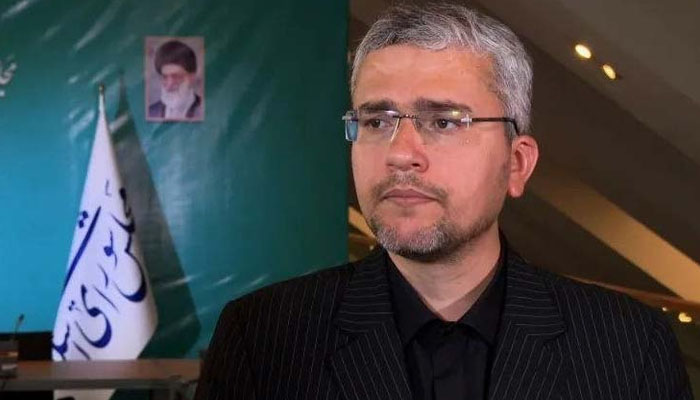
    TEHRAN: Iranian parliamentarian Ebrahim Rezaei has questioned whether Saudi Arabia’s new defence agreement with Pakistan and Türkiye can guarantee the Kingdom’s security. Rezaei, a member of Iran’s Parliament National Security and Foreign Policy Committee, made the remarks in a social media post. He said Saudi Arabia should understand that the agreement with Pakistan and Türkiye would not provide the level of protection Riyadh had failed to obtain despite decades of reliance on the United States. Rezaei described the agreement as a “paper pact” and urged Saudi Arabia to reconsider its policies so that it would not have to seek security guarantees from other countries. His comments came shortly after Saudi Arabia, Pakistan and Türkiye signed a joint defence agreement in Makkah. The agreement was signed amid concerns over potential attacks on Saudi Arabia by Iran-aligned militias in Iraq and Yemen. Saudi officials have reportedly warned of such security threats. Under the new agreement, an attack against any one of the three countries will be considered an attack against all three. The pact aims to strengthen defence cooperation and develop joint capabilities among Saudi Arabia, Pakistan and Türkiye. A trilateral defence summit was held at Al-Safa Palace in Makkah, attended by Saudi Crown Prince Mohammed bin Salman, Turkish President Recep Tayyip Erdogan and Pakistani Prime Minister Shehbaz Sharif. According to Pakistan’s Foreign Office, the three leaders signed the agreement, formally described as the Makkah Defence Joint Agreement.

  • | |

    Saudi-US talks focus on easing regional tensions, …

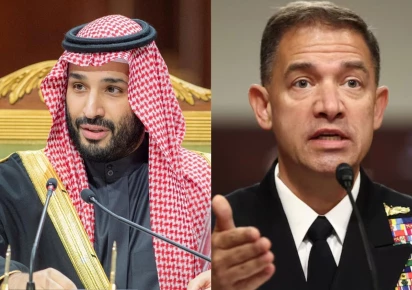
    Saudi Crown Prince Mohammed bin Salman and US Central Command chief Admiral Brad Cooper have held talks on regional security and efforts to ease tensions, as the conflict involving Iran continues to threaten stability and global energy supplies. According to Saudi state media, the two officials discussed defence cooperation between Riyadh and Washington, developments across the region and diplomatic efforts aimed at reducing tensions and strengthening security. The meeting came as concerns surrounding the Strait of Hormuz intensified. The strategic waterway remains a major route for global oil and liquefied natural gas shipments, and disruptions caused by the conflict have raised fears of further pressure on international energy markets. Saudi Arabia also announced the launch of a multinational defensive maritime alliance, with 13 countries joining the initiative. Representatives from 39 countries attended a planning meeting held at the Western Fleet Command in Jeddah, which Saudi authorities described as an important step towards putting the alliance into operation. Meanwhile, Washington has signalled that its economic and military pressure on Tehran could intensify. US Treasury Secretary Scott Bessent said the United States was preparing measures against Iran on a scale not previously seen in efforts to economically isolate a country. Bessent said the strategy would combine tougher economic restrictions with continued pressure surrounding the Strait of Hormuz. He indicated that further announcements could come next week as Washington seeks to increase pressure on Tehran. US Defence Secretary Pete Hegseth also said the US Navy could maintain a blockade of Iranian ports and shipping routes for an indefinite period, arguing that American forces had sufficient capacity to rotate vessels and sustain the operation. The standoff has already severely affected shipping through the Strait of Hormuz. Traffic has fallen sharply compared with levels recorded before the conflict, when roughly 130 to 140 vessels passed through the waterway each day. The decline has raised concerns about disruptions to international energy supplies. Tensions escalated further after two vessels operated by Abu Dhabi National Oil Company were reportedly attacked while travelling through the strait. The UAE condemned the incident and blamed Iran for the attacks. Iran has rejected US claims over control of the waterway and has indicated that normal shipping will not resume until its demands are addressed. Tehran has called for the removal of economic sanctions and the release of frozen Iranian assets. The conflict is also putting increasing pressure on global oil markets. The International Energy Agency has revised its estimate for the decline in global oil supply, projecting a reduction of about 4.3 million barrels per day this year, equivalent to around 4% of global supply. Although oil prices fell by more than 2% on Thursday amid concerns over weaker demand and rising US crude inventories, renewed reports of attacks linked to Iran-backed forces have continued to fuel uncertainty in energy markets. The economic consequences are spreading beyond the region, with economists warning that a prolonged conflict could significantly weaken global growth and increase the risk of recession in some economies. US President Donald Trump has faced growing domestic pressure to bring the conflict to an end as higher fuel prices weigh on American consumers and threaten his political standing ahead of November’s midterm elections. While Trump has repeatedly warned that military action against Iran could escalate, he has so far avoided deploying ground troops or launching attacks against some of the region’s most sensitive strategic targets. More recently, he has indicated a greater reliance on economic pressure. Hegseth, meanwhile, said Washington’s priority remained preventing Iran from acquiring a nuclear weapon and declined to comment on whether previous ceasefire decisions had been mistakes. With diplomatic efforts struggling and tensions around the Strait of Hormuz continuing, Saudi-US security coordination is emerging as a key factor in attempts to contain the wider regional crisis and protect vital international shipping routes.

Leave a Reply

Your email address will not be published. Required fields are marked *