sindh introduce public
| |

Sindh to introduce AI in public service recruitmen…

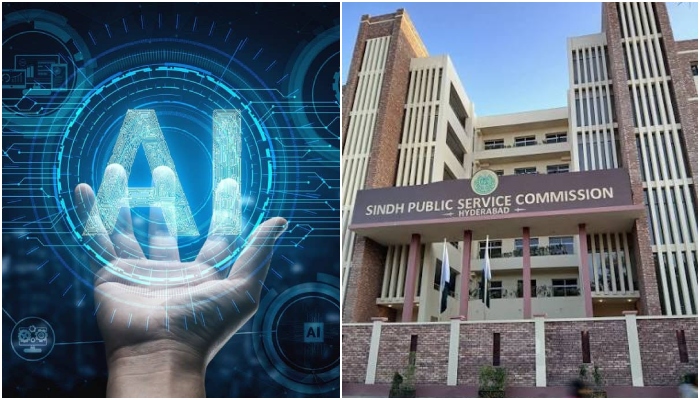
KARACHI: The Sindh government has decided to introduce artificial intelligence (AI) and modern technology into the recruitment and examination system of the Sindh Public Service Commission (SPSC).

The decision was taken during a high-level meeting chaired by Sindh Chief Secretary Asif Haider Shah on Tuesday. The chairman of the SPSC, the secretary of information technology and other senior officials attended the meeting.

During the meeting, the chief secretary said AI and modern technology would be used to make the SPSC examination process more efficient and transparent.

Officials discussed the use of technology in several stages of the examination process. This includes the preparation of question papers, assessment of candidates and management of examination-related data.

The new system is also expected to reduce unnecessary human involvement in certain stages of the examination process. Officials believe greater use of technology could help improve efficiency and minimise administrative delays.

The Sindh government also plans to establish technology-equipped workstations across the province.

These facilities will provide candidates in different areas with access to modern examination services. The initiative is aimed at improving accessibility for applicants from various parts of Sindh.

The government said the use of AI and digital tools would help modernise the recruitment process and improve the overall management of SPSC examinations.


Similar Posts

  • Punjab launches 77 electric buses in seven more districts

    LAHORE – Chief Minister Punjab Maryam Nawaz on Thursday inaugurated 77 electric buses on 17 routes in seven more districts — Vehari, Lodhran, Kasur, Gujrat, Narowal, Sheikhupura and Nankana Sahib — expanding the province’s green public transport network. According to an official handout, women, students, senior citizens and persons with disabilities will travel free of charge, while the fare for all other passengers has been fixed at Rs20. The buses are equipped with wheelchair ramps, air conditioning, Wi-Fi, CCTV monitoring and charging ports. The handout said that 511 electric buses were already operational in 29 districts and one tehsil. With the latest addition, the number of operational electric buses has increased to 588 across 36 districts. Another 101 electric buses have already reached nine districts, while the remaining 488 buses are expected to arrive by the end of August 2026. It added that 1,500 more electric buses would be introduced across every tehsil of Punjab after the completion of the ongoing district-level project. Funds worth billions of rupees have been allocated for the initiative under the Annual Development Programme. Addressing the inauguration ceremony, the chief minister said the seven districts had received government-operated public transport for the first time. She described the Green Bus Service as a popular initiative that had made daily commuting easier for people travelling to educational institutions, hospitals and workplaces. CM Punjab said that during her visit to Azad Jammu and Kashmir, she realised the importance of the Green Bus Service, adding that demand for the facility there was higher than anywhere else she had seen. She expressed confidence that the number of electric buses in Punjab would reach 1,100 by the end of August. The handout further stated that 11 electric buses had been allocated to each of the seven districts. In Gujrat, the buses will operate on routes from the General Bus Stand to Mangowal and Daulat Nagar. In Narowal, services will run from the General Bus Stand to Manga Pull, Shakargarh, Pasrur Chowk, Zafarwal and on the circular route. In Kasur, buses will ply between the General Bus Stand and Kacha Paka, and between the General Bus Stand and Gajju Matta Stop. In Sheikhupura, services will operate from the e-bus depot to Shahdara Metro Station and Khanqah Dogran. In Nankana Sahib, the buses will run from the General Bus Stand to Mor Khunda and Warburton. In Lodhran, the routes will connect Shaheed Islam Hospital with Kehror Pacca and Dunyapur. In Vehari, the buses will operate from Government Graduate College to Fawara, and from Pir Mahal to Tibba Sultanpur.

  • |

    Darwin Test, Bangladesh lead by 228 despite Hazlewood’s six wickets

    Bangladesh produced a remarkable batting display against Australia in the Darwin Test, taking a commanding 228-run first-innings lead despite Josh Hazlewood’s six-wicket haul. Bangladesh were bowled out for 426 after showing tremendous resilience against Australia’s pace attack. Mehidy Hasan Miraz played the starring role in the lower order, frustrating the Australian bowlers for nearly 50 overs and completing his 12th Test half-century. Hazlewood eventually ended Mehidy’s stubborn resistance after lunch on the third day before removing Taijul Islam’s partner, completing six wickets in the innings. His performance also brought a major personal milestone as he became only the ninth Australian bowler to reach 300 Test wickets. The fast bowler also claimed his 14th five-wicket haul in Test cricket. Remarkably, all four wickets to fall during the third day belonged to Hazlewood, keeping Australia in the contest despite Bangladesh’s substantial advantage. Mehidy was well supported by Mahmoud, Taijul Islam and Taskin Ahmed as Bangladesh continued to stretch Australia’s bowling attack. The visitors also benefited from Australia’s fielding lapses, with the hosts dropping five catches during the innings. Earlier, Bangladesh had built a strong platform through Tanzid Hasan’s maiden Test century and a determined half-century from captain Najmul Hossain Shanto. Australia’s first innings had already ended in disappointment after Hasan Mahmud claimed six wickets, exposing weaknesses in the home side’s batting. Bangladesh’s huge lead now puts Australia under considerable pressure. With their bowlers needing early breakthroughs, the hosts face a demanding task to recover momentum and keep the Darwin Test within reach.

  • 5,000 Foreign Medical Graduates face career crisis over PMDC rules

    Islamabad: A major controversy has erupted between Foreign Medical Graduates and the Pakistan Medical and Dental Council (PMDC), with thousands of doctors and medical students claiming that new PMDC policies have placed their careers and future at serious risk. Foreign Medical Graduates say that around 1200 doctors who have already completed their medical degrees and more than 4000 students currently studying abroad are affected by PMDC decisions. They claim that students who entered foreign medical universities years before these notifications are now being affected by rules introduced later. During a press conference, Dr Waqas Akbar, President of Foreign Medical Graduates Afghanistan, said that many students had taken admission in universities in Afghanistan, Kyrgyzstan and China after receiving approval and information from PMDC. He said these students trusted the system, spent millions of rupees on education and completed their degrees before the new policy was introduced. Dr Waqas alleged that the PMDC notification created new conditions, including requirements related to international recognition and affiliation, and stopped some graduates from appearing in the National Registration Examination (NRE) and receiving Provisional Registration Medical Practice (PRMP). The main complaint of the graduates is that a new policy should apply to future students, not those who had already enrolled or graduated under previous rules. They argue that changing the rules after students completed years of education is unfair. According to Dr Waqas, many affected students enrolled between 2016 and 2018 when their universities appeared on PMDC lists and students obtained approval before travelling abroad. The issue reached the courts after affected graduates approached the Peshawar High Court. Dr Waqas stated that a two member bench of the court gave a decision in favour of students, observing that students who were already enrolled before the notification should not be affected by the new policy. However, according to the graduates, the matter remains unresolved and has moved to further legal proceedings. During the press conference, Advocate Abdul Rahim Wazir said the dispute involved important legal questions regarding whether administrative notifications could be applied to students who had already started their education years earlier. He argued that many students had spent millions of rupees on their education and returned to Pakistan expecting registration procedures according to existing laws. He further stated that the Peshawar High Court questioned the legality of applying the notification retrospectively and directed that affected graduates should receive registration opportunities. The graduates claim that the issue is not only about individual doctors but about thousands of families connected with these students. Advocate Abdul Rahim said the affected group represents around 5000 families whose futures depend on the outcome of this matter. The controversy intensified after PMDC issued another notification on 31 July 2026, which the graduates say created further uncertainty. They argued that political tensions between countries should not affect the careers of Pakistani students who studied abroad legally. Advocate Abdul Rahim said that political situations between countries may change over time, but students and doctors should not suffer because of diplomatic problems. The graduates also questioned why some doctors from similar foreign institutions were allowed to appear in professional examinations while others faced restrictions. Dr. Waqas gave the example of classmates from the same university where one student was allowed opportunities while another faced barriers. The affected doctors rejected claims that they were avoiding examinations. They said they were ready to appear in the NRE and wanted only the opportunity to prove their ability. Dr. Waqas said the students were not afraid of the NRE examination and requested permission to sit for the exam so their professional ability could be judged fairly. The graduates also challenged criticism that foreign universities were not of proper standard. They argued that many institutions were recognised internationally and questioned why students were allowed admission if those universities were later considered unacceptable. Dr. Waqas stated that students followed the rules available at the time of admission and that PMDC should take responsibility for the information and approvals provided earlier. The group also raised questions about recognition standards, saying some universities had international links and recognition pathways through organisations such as ECFMG and other international medical bodies. Representatives of the graduates demanded that PMDC withdraw the disputed notifications and create a fair transition policy. Their demands include allowing students enrolled before September 2025 to follow previous rules, permitting NRE participation and completing registration without discrimination. The graduates also demanded that the government, Parliament, PMDC and relevant authorities resolve the matter according to law and protect the future of thousands of medical students and doctors. The controversy now remains before legal forums, while affected doctors continue demanding a solution that allows them to appear in licensing examinations and serve patients in Pakistan.

  • | |

    Johnson & Johnson agrees $5.5bn talc cancer settlement

    NEW YORK: Johnson & Johnson has agreed to pay an estimated $5.5 billion to settle tens of thousands of lawsuits alleging that its talc-based baby powder and other products caused ovarian cancer. The proposed settlement covers around 76,000 claims. The cases include lawsuits pending in federal and state courts across the United States. The agreement could bring an end to a legal battle that has continued for about a decade. However, it will only become final if 95 per cent of eligible ovarian cancer claimants accept the deal. Lawyers representing the plaintiffs welcomed the settlement. They described it as a reasonable outcome after years of legal proceedings. Johnson & Johnson has continued to deny that its talc products caused cancer. The company has also rejected claims that its products contained asbestos. The company said it agreed to the settlement to bring the long-running dispute to an end. Its litigation chief maintained that the claims lacked merit. Under the proposed agreement, Johnson & Johnson expects to pay about $3 billion in 2027. Additional payments will follow in 2028. The final cost could be higher. Lawyers involved in the negotiations said the total amount could eventually reach $7 billion or more, depending on the number of claimants who participate. The settlement does not place a fixed ceiling on the company’s total payments. Individual qualifying claims will receive amounts based on specific criteria. The agreement follows several important courtroom victories for Johnson & Johnson. The company has won a number of individual trials. It has also successfully challenged some of the experts used by plaintiffs to support their claims. A federal judge recently raised questions about whether individual plaintiffs could establish that talc specifically caused their ovarian cancer. Johnson & Johnson has maintained for years that its talc products were safe. The company stopped selling talc-based baby powder in the United States in 2020. It replaced the product with a cornstarch-based version. The legal dispute also involved a controversial bankruptcy strategy. In 2021, Johnson & Johnson moved talc liabilities to a subsidiary that sought bankruptcy protection. The strategy, commonly known as the “Texas two-step”, was intended to resolve the lawsuits through bankruptcy proceedings. The attempts ultimately failed after courts dismissed the bankruptcy cases. Before those efforts, Johnson & Johnson had experienced mixed results in talc trials. In one major case, a jury awarded billions of dollars to 22 women who alleged that the company’s baby powder contributed to their ovarian cancer. Other cases ended in victories for the company, while some awards were later reduced on appeal. The new settlement differs from the earlier bankruptcy proposals. It applies only to existing claims. It does not cover potential future lawsuits. The agreement is also expected to provide faster payments to eligible claimants. Lawyers involved in the deal said payments could be completed within about 18 months. The settlement now faces an important approval test. At least 95 per cent of ovarian cancer claimants must agree to the deal before it can become final. If approved, the agreement would significantly reduce one of Johnson & Johnson’s longest-running legal challenges and provide compensation to thousands of people involved in the litigation.

  • | |

    22 dead, 183 injured in Punjab rains

    Punjab Disaster Management Authority (PDMA) Director General Umar Abbas has said that 22 people have died and 183 others were injured in various rain-related incidents across Punjab. Speaking at a press conference in Lahore, Abbas said the Gujranwala and Rawalpindi divisions received the highest rainfall during the recent spell. He added that the water situation in the Ravi and Sutlej rivers remains normal. According to the PDMA chief, a breach developed in an embankment in Sheikhupura, but authorities immediately repaired it and filled the gap. Abbas said new machinery had been acquired under the Punjab Development Programme to improve the province’s ability to respond to emergencies. He claimed that water accumulation this year was three times lower than last year. He said the authorities had also completed the cleaning of major drains before the monsoon season to reduce the risk of urban flooding and waterlogging. The PDMA director general said Punjab’s electricity infrastructure is outdated, and relevant authorities are reviewing several issues concerning the power system. He further said that encroachments and people living in riverbeds have been removed as part of measures to prevent casualties during flooding. According to Abbas, protective embankments are also being constructed at several locations along rivers to strengthen flood protection and minimise the impact of rising water levels. The latest figures highlight the continuing risks posed by heavy monsoon rains across Punjab, while authorities are monitoring rainfall, river levels and vulnerable areas to prevent further loss of life and property.

  • |

    PTI will win even if Pakistan has 100 provinces, B…

    ISLAMABAD: Pakistan Tehreek-e-Insaf (PTI) Chairman Barrister Gohar Ali Khan on Friday launched a sharp criticism of the country’s ruling coalition, claiming that administrative reforms or the creation of new provinces would not weaken his party’s political strength. Speaking to reporters outside Parliament House, Gohar said the Pakistan Muslim League-Nawaz (PML-N) and the Pakistan Peoples Party (PPP) lacked both the political will and public mandate to introduce major constitutional changes, including the formation of new administrative units or provinces. “You may create 100 provinces, but PTI will still emerge victorious across the country because the people stand with Imran Khan,” Gohar said, asserting that the former prime minister continues to enjoy overwhelming public support. The PTI chairman also commented on the health of Bushra Bibi, saying she had recently been shifted to hospital for an eye examination before being returned to Adiala Jail. He said he was informed about her transfer only after she had already been taken to the hospital. Responding to speculation about political contacts, Gohar denied having any communication with Interior Minister Mohsin Naqvi or PPP Chairman Bilawal Bhutto Zardari. He questioned the government’s handling of national affairs and urged authorities to explain what had led the country’s governance system into what he described as a “default mode.” Turning to the judiciary, Gohar argued that recent constitutional amendments had failed to improve the justice system despite the appointment of dozens of additional judges. He claimed public confidence in judicial institutions had declined and called for reforms based on consensus rather than political interests. The PTI leader further alleged that the ruling parties were considering administrative restructuring to weaken the opposition. He insisted that constitutional amendments should not be introduced without broad political agreement. Gohar also criticised the PPP, accusing it of remaining silent on national issues while focusing on political gains. He repeated PTI’s longstanding allegations regarding the 2024 general elections and challenged the PPP leadership to a public debate over disputed electoral seats, including constituencies in Karachi. His remarks come amid renewed political debate over constitutional reforms, governance and the country’s evolving political landscape, with both the government and opposition continuing to exchange sharp criticism over electoral legitimacy and institutional performance.

Leave a Reply

Your email address will not be published. Required fields are marked *