asif signals possible
| | |

Asif signals possible US-Iran deal amid Hormuz talks

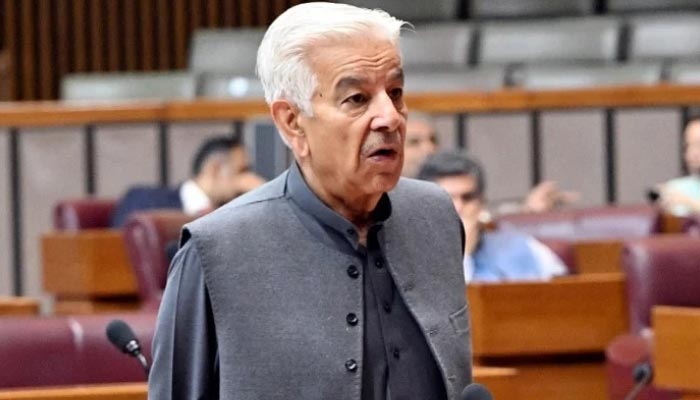
ISLAMABAD: Defence Minister Khawaja Asif has said the United States and Iran may be moving closer to an agreement as diplomatic efforts continue to resolve the conflict and ease restrictions around the Strait of Hormuz.

Speaking to Bloomberg, Asif said recent developments had created renewed hopes for a possible peace arrangement. He said signals over the past two to three days suggested that Washington and Tehran were approaching “some sort of an arrangement.”

His comments came as Qatar said separate discussions between Oman and Iran regarding the management of the Strait of Hormuz had reached an advanced stage.

The waterway remains at the centre of the crisis. It is a major route for global energy supplies, with a significant share of the world’s oil and liquefied natural gas shipments passing through it.

Pakistan and Qatar have been involved in diplomatic efforts aimed at reducing tensions between Iran and the United States. Pakistan has continued contacts with Iranian officials as part of these mediation efforts.

On Tuesday, Iranian Foreign Minister Abbas Araghchi met Pakistan’s Interior Minister Mohsin Naqvi in Tehran. Details of their discussion were not immediately disclosed, but the meeting came amid renewed diplomatic activity over the conflict.

Iran has previously said it was working with Oman on arrangements for shipping through the Strait of Hormuz. Tehran has maintained that reopening the waterway fully would depend on the United States meeting several conditions.

Those demands include compensation, an easing of sanctions and guarantees against further military action, according to Iranian officials.

Araghchi has said Iran and the US are not holding direct negotiations. Messages are instead being exchanged through intermediaries.

US President Donald Trump has also raised the issue of compensation. He said Washington would seek payments from Iran for damage and casualties allegedly caused over several decades.

Despite the diplomatic activity, tensions remain high in regional waters.

Four crew members were reportedly killed in a suspected attack on a cargo vessel near the Bab el-Mandeb Strait. The incident was blamed on Houthi forces, although the group had not immediately claimed responsibility.

A separate container ship was also reportedly struck while sailing through the Gulf of Oman near Pakistan. Initial reports indicated that the incident may have involved US military action.

The developments have increased concerns over the safety of commercial shipping in the region.

Oil prices also remained elevated because of uncertainty surrounding the Strait of Hormuz. Prices eased on Tuesday after reaching a one-week high earlier in the session as investors responded to signs of possible diplomatic progress.

The crisis has placed pressure on Washington and Tehran to find a political solution. Any agreement that reduces tensions and restores normal shipping through Hormuz could have a major impact on global energy markets.

Similar Posts

  • |

    UK government announces crackdown on subscription traps 

      British Prime Minister Andy Burnham has announced a new package of measures aimed at easing financial pressure on households as the UK continues to face concerns over the cost of living. The government says it will take action against business practices that can leave consumers paying more than expected, including misleading discounts and difficult-to-cancel subscriptions. The measures form part of Burnham’s wider “everyday fixes” agenda, which focuses on addressing common financial frustrations faced by families across the country. One of the first priorities will be an accelerated crackdown on so-called “subscription traps”, under which consumers can find themselves automatically paying for services they no longer want. The government also plans to tackle misleading pricing practices used by retailers. These include fake “was” prices, invented reductions and misleading recommended retail prices that can make a product appear to offer a much larger discount than it actually does. The changes are intended to prevent businesses from artificially increasing the price of an item before reducing it, creating the impression that shoppers are receiving a significant bargain. Burnham said consumers should be able to trust the discounts advertised to them, particularly at a time when household budgets remain under pressure. He argued that if a product is promoted as being half price, customers should be confident that they are genuinely receiving a 50% reduction. Subscription services are another major focus of the government’s plans. According to government figures, there are approximately 155 million active subscriptions across the UK, while unwanted subscriptions cost consumers around £1.6 billion every year. The average consumer has several subscriptions, ranging from streaming and entertainment services to magazines, beauty products and other recurring services. Under the new rules, companies will be required to provide clearer information before customers sign up and remind them when free or discounted trials are approaching their end. Businesses will also have to make cancellation procedures significantly easier. Consumers who sign up online will be able to cancel through a straightforward online process rather than being forced to navigate lengthy telephone calls or complicated cancellation systems. Another important protection will be a 14-day cooling-off period following the end of certain trials or the renewal of long-term contracts. This will give customers additional time to reconsider a subscription and leave if they no longer want it. The government estimates that consumers could save an average of £14 a month for every unwanted subscription they successfully cancel early. Overall, the wider consumer-protection measures are expected to provide substantial financial benefits to households. The subscription rules are being brought forward from the previous timetable, with the government aiming for the new protections to take effect in January 2027. The changes are designed to give consumers greater control over their spending while putting greater responsibility on companies to make their pricing and cancellation policies transparent. Burnham has described the measures as an effort to make everyday life fairer and less frustrating for British families. While the reforms will not resolve every aspect of the cost-of-living pressures facing households, the government says they are intended to deliver practical savings and prevent consumers from being caught out by unfair commercial practices.

  • |

    Musafir Cafe season 2 officially announced by Netflix

    Netflix has officially renewed Musafir Cafe for a second season, promising to continue the emotional journey of love, relationships and unresolved feelings that made the first installment popular among viewers. The streaming platform confirmed that Vikrant Massey, Vedika Pinto and Mahima Makwana will reprise their lead roles, returning as Chander, Sudha and Preeti for the next chapter of the romantic drama. The announcement was made through a special promotional video, offering fans their first confirmation that the story will move forward. While the teaser did not reveal any major plot details, it hinted that the upcoming season will pick up where the previous one ended, exploring the next stage of the characters’ personal and emotional lives. The first season of Musafir Cafe focused on the complexities of modern relationships, highlighting the emotional struggles, difficult choices and evolving connections between its three central characters. Its ending sparked widespread discussions among viewers, with many debating the future of Chander, Sudha and Preeti and wondering how their unfinished stories would unfold. Speaking about the show’s renewal, Tanya Bami, Series Head at Netflix India, said that Musafir Cafe had resonated deeply with audiences across the country. She noted that viewers connected strongly with the characters, memorable dialogues and music, while conversations surrounding the ending generated significant buzz on social media. According to her, the overwhelming response encouraged the platform to continue the story with a second season. Creator and writer Sharanya Rajgopal also expressed gratitude for the appreciation the series received. She said the love shown by audiences had been overwhelming and that, as a storyteller, there could be no greater reward than seeing fictional characters become meaningful to viewers. She added that the audience’s support inspired the creative team to continue Chander, Sudha and Preeti’s journey in a new chapter. Although Netflix has kept the storyline under wraps, expectations are high that Season 2 will further explore the emotional consequences of the characters’ earlier decisions. Fans are anticipating new challenges, evolving relationships and deeper emotional conflicts as the story progresses. The returning cast includes Vikrant Massey, Vedika Pinto and Mahima Makwana in the lead roles. They will once again be joined by a talented supporting ensemble featuring Adil Hussain, Rajeev Siddhartha, Anubha Fatehpuria, Loveleen Mishra and Sadia Siddiqui, all of whom played significant roles in the first season. Musafir Cafe was created and written by Sharanya Rajgopal and directed by Ruchir Arun. The series is based on characters from a novel by Divya Prakash Dubey and is produced by Terribly Tiny Tales (TTT) in collaboration with Homemade Stories. An official release date for the second season has not yet been announced. However, with the original cast returning and the creative team back on board, viewers can expect another heartfelt chapter exploring love, longing and the emotional complexities of human relationships.

  • |

    London motorway chaos: M25 closed after major industrial fire near St Albans

    A major industrial fire near London has forced the closure of the M25 in both directions, triggering widespread traffic disruption and fears of possible explosions. The blaze broke out at a commercial premises in Ventura Park, near St Albans, shortly after 9.20am on Tuesday. Huge plumes of thick smoke could be seen rising over the motorway as firefighters rushed to contain the fire. The M25 has been closed between Junction 21A and Junction 22, with motorists warned to avoid the area and use alternative routes. Emergency services took the decision to close the motorway amid concerns over smoke, falling debris and the potential for secondary explosions from the industrial site. Multiple fire appliances have been deployed to tackle the blaze, while police officers are also at the scene managing the emergency and surrounding traffic. National Highways has warned motorists to expect significant delays and congestion, urging drivers to allow extra time for their journeys or avoid the affected area altogether. The incident has caused major disruption on one of London’s key orbital routes, with congestion building on surrounding roads as traffic is diverted away from the closed section. Residents close to the fire have been advised to keep windows and doors closed because of the heavy smoke. The fire is also close to a railway line, with Network Rail representatives liaising with firefighters as emergency services assess the situation. The cause of the fire has not yet been established. Emergency crews remain at the scene and the M25 will stay closed while firefighters work to bring the blaze under control and authorities determine when it is safe to reopen the motorway. Motorists are being urged not to travel towards the affected section and to follow official traffic and emergency-service instructions. The incident remains ongoing.

  • | |

    Karachi roads blocked as JI protests fuel levy

    Traffic was disrupted across several major parts of Karachi on Friday as Jamaat-i-Islami (JI) workers staged sit-ins against the federal petroleum levy. The protests were part of a nationwide campaign announced by the party. JI had said it would hold demonstrations at hundreds of locations across the country by blocking major roads. Karachi traffic police issued an advisory warning motorists about congestion, temporary diversions and partial road closures in several areas. Major routes affected included areas around Mazar-i-Quaid, Numaish Chowrangi, Saddar, Sharea Faisal, Shahrah-i-Pakistan, UP Mor, Power House Chowrangi, Defence Housing Authority, Sea View, Shahrah-i-Orangi, Hub River Road, Super Highway and National Highway. The traffic police advised citizens to avoid the protest-hit areas where possible and use alternative routes. Commuters were also asked to allow additional time for their journeys. According to updates shared by JI Karachi, protesters blocked the road connecting Sharea Faisal with Natha Khan. The Super Highway and Hub River Road were also affected. Another road connecting the Sharea Faisal Nursery Bus Stop with the airport was reportedly blocked as protesters gathered at the designated locations. The demonstrations prompted criticism from the Sindh government. Provincial government spokesperson Sadia Javed said the petroleum levy was a federal issue and questioned why Karachi’s residents were facing difficulties because of the protest. She accused the JI of using the demonstrations for political gains instead of addressing public issues through relevant constitutional forums. Javed said road blockades were affecting the daily lives of millions of Karachi residents and raised concerns about the movement of ambulances and patients during the disruptions. She urged the party to raise its objections in Parliament and other relevant forums rather than blocking roads. The government spokesperson also warned protesters against damaging public property or taking the law into their own hands. The demonstrations were not limited to Karachi. JI workers also gathered in Lahore, Islamabad, Quetta and Peshawar as part of the nationwide campaign. In Islamabad, protesters reportedly blocked Srinagar Highway near Golra Mor while attempting to march towards Chungi 26. Several locations across Sindh also witnessed demonstrations, including Thatta, Matiari, Tando Allahyar and Shikarpur.

  • | | |

    Lab report finds 176 substandard samples of oil, g…

    ISLAMABAD: A laboratory assessment has found that 176 out of 491 samples of packaged edible oil, ghee and milk failed to meet national quality standards. According to a statement issued by the Ministry of Planning, a total of 491 samples of packaged cooking oil, ghee and milk products were tested. Of these, 315 samples were found to comply with national standards, while 176 were declared substandard. The ministry said approximately 36% of the tested samples failed to meet the required quality standards. The assessment showed significant variations across different products. Of the 204 samples of vanaspati ghee tested, 98 were found to be below the required standards. Similarly, 40 out of 146 samples of blended cooking oil failed the quality assessment, while 26 of 104 samples of packaged liquid milk were declared substandard. The report also found quality concerns in milk powder, refined palm oil and refined canola oil. Eight of the 18 milk powder samples failed to meet national standards, while three of four refined palm oil samples were found to be substandard. In the case of refined canola oil, one out of 13 tested samples did not meet the required standards. The findings have highlighted concerns over the quality of commonly consumed food products and the need for stronger monitoring and enforcement to ensure that packaged edible oils, ghee and dairy products available in the market comply with national quality requirements.

  • | |

    Mufti Muneeb-ur-Rehman criticizes Pakistan’s…

      Renowned Islamic scholar Mufti Muneeb-ur-Rehman has strongly criticized Pakistan’s judicial and economic systems, stating that a justice system that fails to deliver justice even after forty years cannot be considered a true system of justice but rather a system of oppression. He made these remarks while addressing a public ceremony in Karachi, where he spoke about the country’s pressing legal and economic challenges. During his speech, Mufti Muneeb-ur-Rehman expressed concern over the prolonged delays in the judicial process. He argued that when people have to wait decades for justice, the very purpose of the legal system is defeated. According to him, justice delayed for such an extended period effectively becomes justice denied, leaving citizens frustrated and deprived of their fundamental rights. He emphasized that a judicial system should provide timely and fair decisions so that public confidence in the rule of law remains intact. The scholar also urged those in positions of authority to focus on resolving Pakistan’s domestic problems instead of concentrating solely on international issues. He remarked that while government leaders often discuss and engage with global affairs, the country’s internal challenges require immediate attention. He specifically called upon policymakers and those holding power to prioritize the welfare of the people by addressing the nation’s economic difficulties. One of the major issues highlighted by Mufti Muneeb-ur-Rehman was the problem of Independent Power Producers (IPPs). He appealed to the government to find a practical and sustainable solution to the IPP issue, which has been widely debated due to its impact on electricity prices and the country’s financial stability. According to him, resolving this matter would help reduce the economic burden on both the government and ordinary citizens. Speaking about the national economy, Mufti Muneeb-ur-Rehman painted a concerning picture of Pakistan’s financial condition. He stated that after distributing the constitutionally allocated shares to the provinces and making payments on interest obligations, the federal government is left with very limited financial resources. This situation, he suggested, reflects the severity of the country’s fiscal challenges and highlights the urgent need for comprehensive economic reforms. He stressed that policymakers should adopt measures that promote financial stability, reduce unnecessary expenditures, and improve revenue generation without placing excessive burdens on the public. The event also featured an address by Maulana Bashir Farooqi, who criticized the government’s approach toward eliminating the interest-based financial system. He argued that the authorities are not demonstrating sufficient seriousness in transitioning toward an Islamic banking framework. According to him, meaningful reforms require not only policy changes but also practical steps to prepare financial institutions for such a transformation. Maulana Bashir Farooqi announced that his organization is willing to provide training for approximately 100,000 employees working in conventional banks. He explained that this initiative aims to equip banking professionals with the knowledge and skills necessary to operate within an interest-free Islamic banking system if the government decides to pursue such reforms. He maintained that the availability of trained professionals would facilitate a smoother transition and strengthen the implementation of Islamic financial principles in the country’s banking sector. The speeches delivered at the Karachi ceremony underscored concerns regarding Pakistan’s judicial efficiency, economic management, and financial policies. Both religious leaders called on the government to prioritize domestic reforms, strengthen public institutions, address long-standing economic challenges, and work toward a system that better serves the interests of the people.

Leave a Reply

Your email address will not be published. Required fields are marked *