hrcp pfuj slam
| | | |

HRCP, PFUJ slam new foreign media rules

The Human Rights Commission of Pakistan (HRCP) and the Pakistan Federal Union of Journalists (PFUJ) have strongly criticised the government’s newly introduced Foreign Media Facilitation Guidelines 2026, describing the policy as a serious threat to press freedom and independent journalism.

The criticism comes after the Ministry of Information and Broadcasting reminded foreign media organisations that journalists must obtain prior government approval before carrying out reporting assignments outside Islamabad, Lahore and Karachi under the revised External Publicity Guidelines. The ministry issued the reminder following concerns over international coverage related to Azad Jammu and Kashmir.

In a statement, the HRCP said the new guidelines could discourage independent reporting on issues of public interest instead of facilitating journalistic work. The commission expressed concern that the policy reflects an increasing trend of restrictions on media freedom, including tighter controls on reporting and growing administrative hurdles for journalists.

According to the rights body, requiring official permission before reporting from many parts of the country could create an atmosphere where critical journalism is discouraged. It urged the government to withdraw the new measures and ensure protection of freedom of expression in line with constitutional guarantees and international commitments.

The PFUJ also condemned the notification, calling it a direct attack on press freedom. The journalists’ union argued that the policy not only limits the movement of foreign correspondents but also places restrictions on Pakistani journalists working for international media organisations.

PFUJ President Afzal Butt and Secretary General Arshad Ansari questioned how journalists would be able to perform their professional responsibilities if access to large parts of the country is restricted. They warned that the policy could affect Pakistan’s international reputation and further weaken its standing in global press freedom rankings.

The union also expressed concern that Pakistani journalists employed by foreign media organisations could face job losses if they are prevented from reporting from different regions of the country.

Similar Posts

  • |

    Karachi receives second day of monsoon rain with l…

    Karachi experienced light to moderate rainfall accompanied by high winds on Saturday evening, marking the second consecutive day of rain in the current monsoon spell. Rain was reported in multiple areas across the metropolis, including Scheme 33, Gulshan-i-Maymar, and adjoining areas, while a light drizzle fell in Hassan Square. Heavy rain was reported in Gulistan-i-Jauhar, and video footage showed commuters travelling through 4K Chowrangi in Surjani Town amid heavy rainfall. Light rainfall was also reported in Saddar, multiple blocks of Clifton, and the Defence Housing Authority. Earlier today, the provincial chief secretary directed provincial and district authorities to activate the Provincial Disaster Management Authority and district control rooms immediately, while ordering the submission of 24-hour situation reports every morning throughout the monsoon season for continuous monitoring. Chairing a meeting on monsoon preparedness, the chief secretary stressed that contingency plans must include the identification of relief camp sites, availability of rescue boats, dewatering pumps, water bowsers, and emergency mechanisms for food and drinking water, as well as adequate stocks of medicines for health and livestock departments. He instructed municipal authorities to remove bottlenecks, complete the cleaning of storm-water drains, and ensure uninterrupted drainage arrangements ahead of heavy rains. The meeting was informed that, according to the Pakistan Meteorological Department, moderate to isolated heavy rainfall was expected until July 27 in several districts, including Tharparkar, Umerkot, Mirpurkhas, Badin, Sanghar, Tando Muhammad Khan, Tando Allahyar, Hyderabad, Matiari, Jamshoro, and Shaheed Benazirabad. Light to moderate rainfall was also forecast for districts including Ghotki, Kashmore, Jacobabad, Shikarpur, Sukkur, Kambar Shahdadkot, Larkana, Khairpur, Naushahro Feroze, and Thatta, while Karachi was likely to experience mostly cloudy weather with chances of light rain and drizzle. Yesterday, the metropolis received this season’s first spell of rain after multiple localities reported light to moderate showers. Earlier this week, on the directives of Sindh Chief Minister Syed Murad Ali Shah, the PDMA placed district administrations across Sindh on high alert and directed all relevant departments to take precautionary and emergency response measures as strong monsoon currents from the Arabian Sea continue to affect the province. The CM directed all deputy commissioners, district administrations, municipal authorities, irrigation officials, health services, rescue agencies, and local government institutions to remain fully vigilant, ensure the preparedness of emergency response teams, maintain drainage systems, and take all necessary steps to protect lives and property. The rain has brought relief to residents after a prolonged dry spell, but authorities remain on high alert to address any potential flooding or rain-related emergencies. The public has been advised to stay updated with weather forecasts and follow official directives to ensure their safety during the monsoon season.

  • |

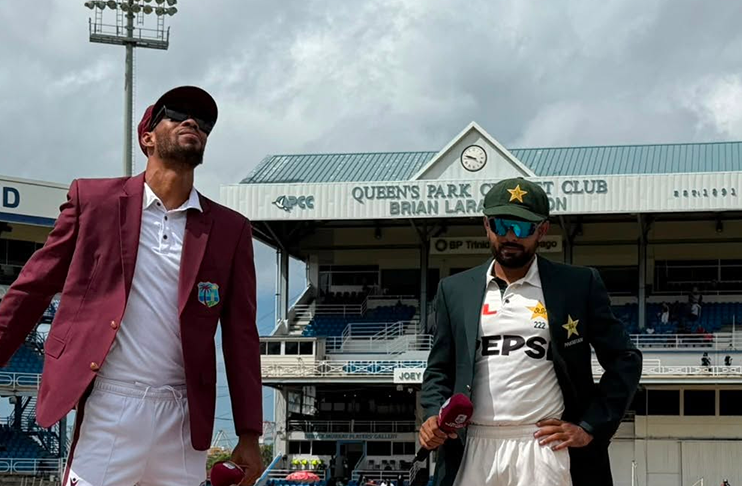
    West Indies opt to bat first as Pakistan drop Mohammad Abbas

    West Indies won the toss and chose to bat first against Pakistan in the second Test at the Queen’s Park Oval in Trinidad on Sunday. The hosts went into the match with an unchanged playing XI from the series opener. Pakistan, meanwhile, made four changes to their lineup for this fixture. Pacer Mohammad Abbas was among those dropped, with captain Babar Azam citing the pitch and match conditions as the reasoning behind the call. Two players were handed their maiden Test caps for this match. Ubaid Shah and Awais Zafar both made their debuts for the side. Alongside them, Abdullah Shafique and Sajid Khan returned to the playing eleven after being left out previously. On the flip side, a few key names were missing from Pakistan’s squad this time around. Aamer Jamal and Khurram Shahzad were both left out of the XI. Captain-in-waiting Shan Masood also remained unavailable due to injury, adding to the selection headaches facing the team management. West Indies currently hold a 1-0 lead in the two-match series. They sealed that advantage with a 90-run win over Pakistan in the opening Test, played at the Brian Lara Cricket Academy. The stakes in this second Test are significant for the hosts. A win, or even a draw, would be enough to hand West Indies their first Test series victory over Pakistan in 26 years. Their most recent series win against Pakistan dates back to 2000, making this a rare opportunity for the Caribbean side to end a long wait. For Pakistan, the changes reflect an attempt to find the right balance after their defeat in the first Test. The inclusion of two debutants suggests the team management is looking to inject fresh energy into the squad, while also adjusting the bowling attack to better suit local conditions. West Indies fielded Tagenarine Chanderpaul, Brandon King, Kavem Hodge, Shai Hope (wk), Amir Jangoo, Justin Greaves, Roston Chase (capt), Jomel Warrican, Shamar Joseph, Kemar Roach, and Jayden Seales for this Test. Pakistan’s playing eleven featured Azan Awais, Imam-ul-Haq, Abdullah Shafique, Babar Azam (capt), Mohammad Rizwan (wk), Salman Ali Agha, Awais Zafar, Ali Usman, Sajid Khan, Mohammad Ali, and Ubaid Shah. With both sides fielding largely settled top orders, the outcome of this Test could go a long way in shaping the final result of the series.

  • |

    Alliance Française de Lahore exhibits ‘What…

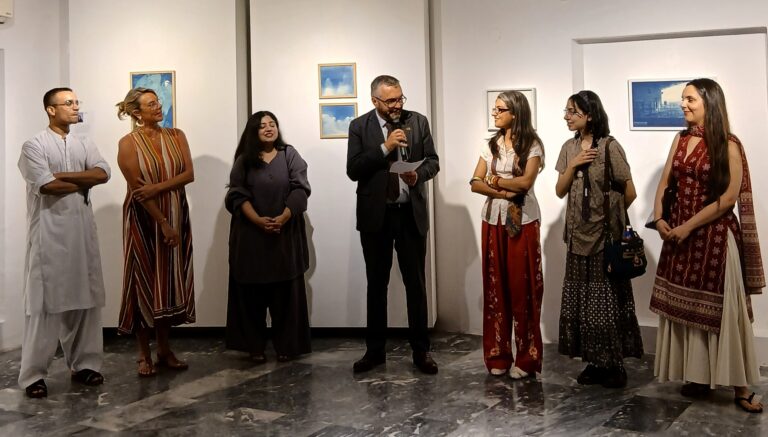
    LAHORE — The gallery at Alliance Française de Lahore opened its doors to art enthusiasts on August 10, 2026. The exhibition presented “What’s Remains”  curated by Anne Sophie Français. The evening paired thought-provoking artworks installations with a lively Kathak dance showcase. The multidisciplinary art offered attendees a rich space and human experience. The art exhibition was curated as a inquiry into what lingers after a place is traversed or a voice is silenced. “What’s Remains“ features new works by three emerging Pakistani visual artists: Rabya Khalid, Sarim Syed and Yumna Salman. They worked across diverse mediums ranging from cyanotypes and charcoal drawings to intricate textile sculptures. Rabya Khalid anchors her compositions in rich cyanotype blues overlaid with soft pastels and color pencils. Rabya focuses on urban architectural features. Water towers, elevated rooftops and quiet watchtowers dominate her skyline studies. Her works cast functional city infrastructure as silent or watchful witnesses to human activity. Sarim Syed utilized delicate charcoal rendering. Sarim creates dreamlike, atmospheric landscapes that occupy the boundary between remembering and forgetting. Her works evoke the lingering sensation of places once inhabited, capturing moments suspended between presence and absence. Yumna Salman brings a tactile, social critique to the gallery space. Yumna knots loose threads onto rigid metal wire mesh. Her labor-intensive textile installations reinterpret traditional weaving techniques to question inherited social norms, gender roles and collective memory. She turned each deliberate knot into an act of quiet resistance. Following the gallery preview, the evening changed into a vibrant 7:30 PM Kathak performance. The performance featured dedicated dance students. They celebrated an intensive month of rhythm, classical movement and expressive storytelling. The fluid footwork and rhythmic precision of the dancers created a unified dialogue with the silent, lingering themes of the surrounding artwork. Alliance Française de Lahore continues to act as an essential platform for emerging talent. The institution provides artists a non-commercial environment to showcase work, inspire public dialogue and strengthen cultural ties between Pakistani and Francophone creative communities. “What’s Remains” invites viewers to engage with stories that endure through art, memory and movement.

  • | |

    Shahid Afridi voices concern over Karachi’s decline

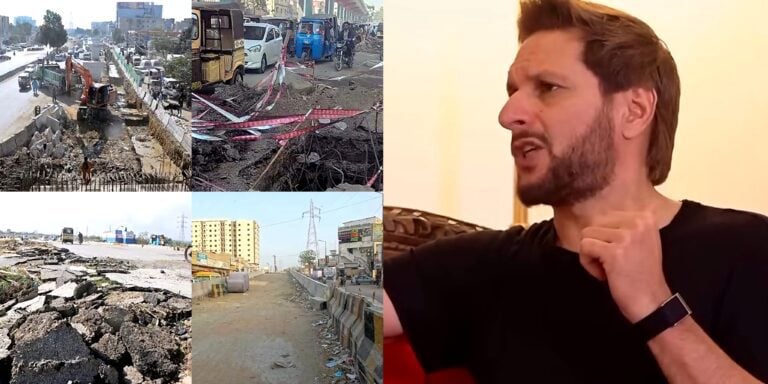
    Shahid Afridi has always had a complicated relationship with Karachi, the city of his origins and the one he eventually left behind. He now lives in Islamabad with his family, a decision he has attributed to the worsening state of roads and cleanliness in the city. But a recent visit to Karachi, his first in several months, brought those feelings rushing back with full force, and he did not hold them in. In a video shared on social media following his visit, Afridi spoke directly to his followers about what he saw during a trip to the Korangi area, and his disappointment was palpable from the very first word. “Day before yesterday, I was visiting the Korangi area,” he said. “Friends, I don’t understand this. We give you billions of rupees’ business and this city provides millions of jobs, but I feel embarrassed seeing the condition of Karachi.” He then described the particular disillusionment that comes from returning to a place with hope, only to find it unchanged. “I came to Karachi after years, thinking there must have been some construction work or development, but it is still the same. It disappoints me.” He named specific areas to illustrate his point, places that residents have long complained about and that appear to have remained in a state of perpetual half-construction. “The areas around Korangi, the side area, university road have been under construction for years,” he said. “The city needs a lot of development, and the authorities need to work on it. Please do something. I hope Karachi gets better.” The appeal was genuine and the frustration behind it real, coming from a man who grew up in the city and clearly retains a deep affection for it even in its current condition. The contrast between Karachi’s economic significance and the state of its infrastructure is one that has been raised by residents, civic activists and public figures for years. Afridi’s remarks gave fresh voice to that long-running complaint. The public reaction, however, was not entirely sympathetic. While some supporters agreed with the substance of his concerns, many commenters pointed to what they saw as a glaring contradiction. Afridi has been vocal in his political commentary and has aligned himself publicly with certain political figures and parties over the years. For many Karachiites, the individuals and systems he has supported are the very ones responsible for the neglect he was now condemning. The criticism was pointed: it is easier to express disappointment from Islamabad than to have consistently held accountable those who could have made a difference. The response reflects a broader frustration that many Pakistanis feel when public figures with platform and influence choose to react rather than act. Shahid Afridi’s concern for Karachi appears genuine. Whether that concern translates into sustained accountability for those in power over the city’s administration is the question his critics were loudly putting back to him.

  • |

    Onion, tomato prices surge over 90% in one year

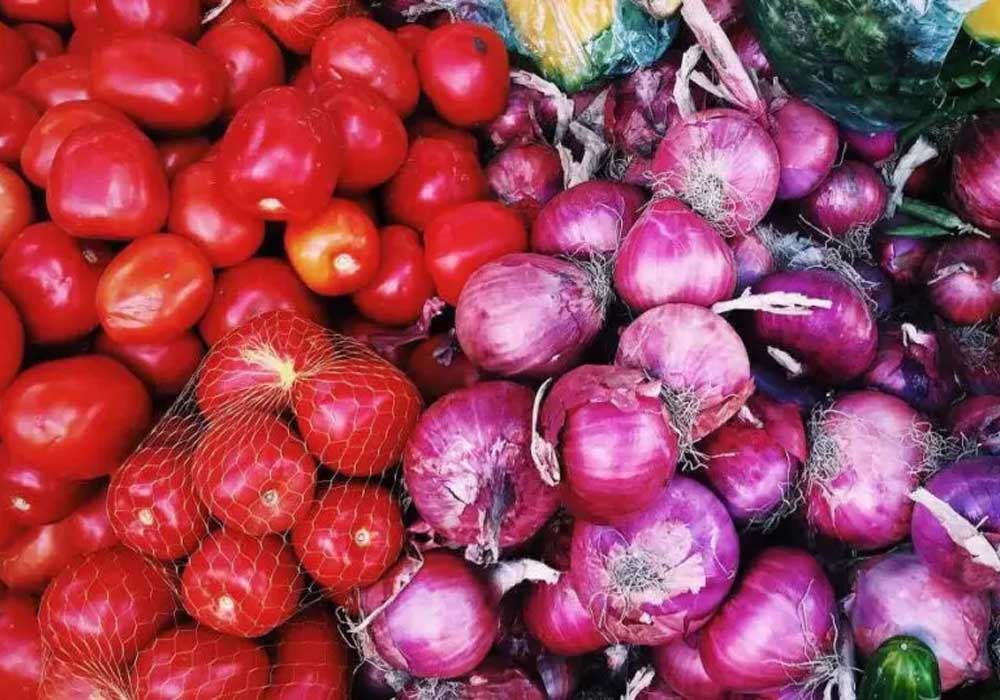
    ISLAMABAD: The prices of several essential food and household items have recorded significant changes over the past year, with onions and tomatoes witnessing some of the sharpest increases, according to the latest data released by the Bureau of Statistics. The data showed that onion prices jumped by 132.52% on a year-on-year basis, making the vegetable one of the biggest contributors to the increase in food costs. Tomato prices also surged by 93.21% during the same period, putting additional pressure on household budgets. Among other essential commodities, the price of flour rose by 62.25% over the year, while LPG became 51.69% more expensive. The prices of diesel and petrol increased by 33.08% and 27.65%, respectively, adding to transportation and household expenditure pressures. The data further showed that banana prices increased by 17.66% during the year. Mutton became 15.98% more expensive, while beef prices recorded an increase of 13.54%. However, several food items became cheaper compared with their prices a year earlier. Potato prices declined by around 30%, providing some relief to consumers. Sugar prices fell by 19.10%, while chicken became 17.68% cheaper. Egg prices also registered a year-on-year decline of 17.41%, while gram prices dropped by more than 13%. The statistics further revealed that prices of lentils and masoor decreased by 12.29%, while jaggery became around 6% cheaper over the year.

  • | |

    Pakistan, Türkiye unite for Palestine

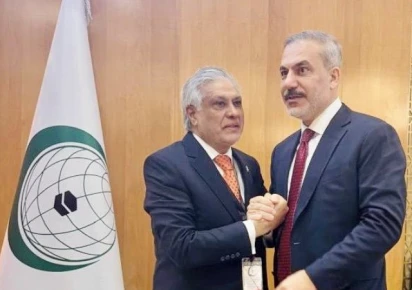
    Pakistan and Türkiye have reaffirmed their unwavering support for the Palestinian people while expressing deep concern over the worsening humanitarian crisis in Gaza, continued military operations in the occupied Palestinian territories, and repeated violations at the Al-Aqsa Mosque compound. The commitment came during a telephone conversation between Deputy Prime Minister and Foreign Minister Ishaq Dar and Turkish Foreign Minister Hakan Fidan. The two leaders reviewed the latest regional and international developments, with the situation in Palestine dominating their discussions. Both foreign ministers voiced serious concern over the continued violence in Gaza and the occupied West Bank, warning that the deteriorating humanitarian conditions require immediate international attention. They also condemned repeated violations at the Al-Aqsa Mosque compound in occupied East Jerusalem and stressed the need to protect religious and historical sites. The ministers reiterated their support for the legitimate rights of the Palestinian people and discussed Jordan’s proposal to convene a meeting of Arab and Islamic countries aimed at coordinating diplomatic efforts to address the crisis and strengthen international support for Palestine. The discussion follows Pakistan’s recent diplomatic engagements with several regional partners, including Egypt, where officials also called for an immediate ceasefire, unrestricted humanitarian assistance, and greater diplomatic coordination to end the ongoing conflict. Meanwhile, fresh violence was reported in Gaza despite an existing ceasefire, with Palestinian medical officials reporting casualties and injuries following new attacks. Military operations and raids also continued across the occupied West Bank, adding to concerns over the worsening security and humanitarian situation.

Leave a Reply

Your email address will not be published. Required fields are marked *