uae charge music
|

UAE to charge music licensing fees at cafes, hotels and malls

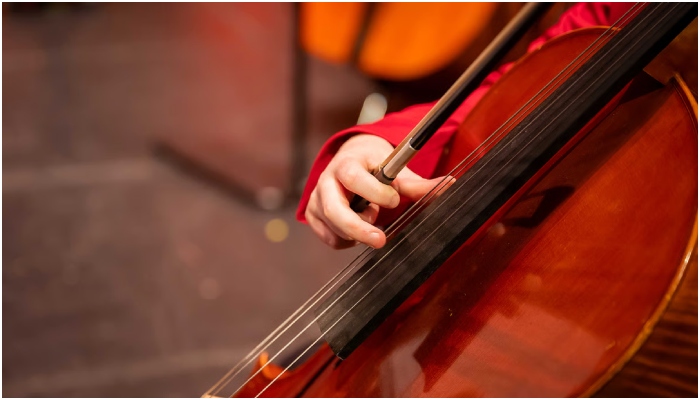
DUBAI: The United Arab Emirates is set to introduce licensing fees for playing music at cafes, hotels, malls and other commercial venues.

According to UAE authorities, a music licence will be required for commercial use of music from December. The new fee will apply to businesses and commercial establishments that play music for customers.

The licence will remain valid for one year. Businesses will be required to renew it annually to continue using music commercially.

Authorities said educational institutions and government organisations will be exempt from the licensing fee. Non-commercial events will also not be required to pay the fee.

The new licensing system has been introduced to protect the copyright and intellectual property rights of singers and other music creators.

Officials said the system is intended to ensure that artists and rights holders receive appropriate protection when their music is used commercially.

Authorities have also warned that action may be taken against establishments that play music without obtaining the required licence.

The new rules are expected to affect a wide range of commercial venues across the UAE, including hospitality and retail businesses.

Similar Posts

  • | |

    Sangeeta’s intimate direction to Moammar Rana criticized online

    Veteran Pakistani filmmaker Sangeeta has found herself at the center of online discussion after behind-the-scenes footage showing her directing actor Moammar Rana on set began circulating on social media platforms. ​The viral video, captured during the production of her upcoming film Mukho, shows the experienced director physically demonstrating how to execute a close romantic sequence between the lead actors. In the footage, Sangeeta steps in to personally guide Moammar Rana on body posture, facial expressions, and the specific physical proximity required for the scene. Taking a hands-on approach typical of traditional Lollywood directors, Sangeeta directly adjusted the actor’s positioning to demonstrate the movements needed to capture romantic chemistry on camera. ​Addressing her direct approach to film direction, the veteran filmmaker explained that hands-on instruction is an essential part of her creative process on set: ​”As a director with decades of experience, my focus is always on getting the exact emotion required for the scene. In traditional cinema, showing an actor how to move and convey feelings on camera is simply part of the job to ensure the final shot looks believable to the audience.” ​The behind-the-scenes clip quickly spread across online entertainment portals, triggering divided reactions among social media users. Critics described the physical guidance as awkward and unnecessary, arguing that established actors like Moammar Rana should be allowed more creative space without physical demonstration. Some commentators suggested that older directing methods might feel out of place in modern, contemporary filmmaking environments. ​Conversely, many fans and industry insiders came to Sangeeta’s defense, highlighting her career in Pakistani cinema spanning nearly 50 years. Supporters noted that veteran directors from the classic Lollywood era have long relied on direct physical demonstrations to communicate their creative vision clearly to the cast. They argued that her active role on set reflects her passion for filmmaking and close attention to detail rather than anything controversial. ​The online debate highlights the contrast between classic Lollywood production techniques and contemporary film set standards. While traditional directors frequently relied on direct physical instruction to achieve specific visual shots, modern digital coverage means behind-the-scenes moments are now routinely scrutinized and discussed by online audiences. ​As production on Mukho continues toward its scheduled release, the widespread reaction to the viral footage demonstrates how everyday moments from film sets regularly become topics of public debate in the digital age.

  • | |

    Shein turns to China as Hong Kong IPO nears

    Fast-fashion giant Shein is preparing to make its stock market debut in Hong Kong after years of efforts to list in the United States and Britain, marking a significant shift in how the company presents its relationship with China. The company is expected to raise around $1.7 billion through its Hong Kong initial public offering, with a valuation of about $26.5 billion. That figure is considerably below the company’s valuation in 2022. Shein had previously sought to establish itself as a global company. It moved its headquarters to Singapore in 2021 and promoted plans to expand manufacturing and operations in countries including Brazil, Türkiye and parts of Europe. However, its attempts to secure a Western listing faced regulatory and political obstacles. Chinese authorities were also reportedly involved in blocking earlier efforts to list in New York and London. After shifting its focus to Hong Kong in 2025, Shein founder Sky Xu increased his engagement with Chinese officials and became more involved in regulatory and capital-market discussions inside the country, according to people familiar with the matter. Xu also made a rare public appearance at a business forum in Guangdong earlier this year, where he announced plans for Shein to invest $1.5 billion in the province. He said the company would deepen its presence in Guangdong and develop its smart supply-chain system while contributing to the region’s fashion industry. Shein also opened a research and development centre in Nanjing, the eastern Chinese city where the company was founded in 2012. These moves helped reinforce the company’s economic links with China at a time when Beijing has been paying close attention to companies with major overseas operations. Officials in Guangdong also reportedly highlighted Shein’s contribution to employment and domestic economic activity when engaging with central authorities. The company has sought to emphasise that its main business is overseas rather than in China. Shein does not market its extremely low-priced products to Chinese consumers, allowing it to distance itself from the intense competition among domestic e-commerce platforms. Shein has instead argued that its international operations benefit China by generating foreign currency and supporting Chinese manufacturing and supply chains. The company’s Hong Kong prospectus describes China as the foundation of its global logistics and fulfilment network. Nearly 80 per cent of Shein’s workforce is based in mainland China. The shift comes after growing difficulties in Western markets. In the United States, lawmakers raised concerns over Shein’s supply chains and called for stronger assurances that its products were not linked to forced labour. The company has also faced scrutiny in Europe over competition, product safety and items offered through its online marketplace. At the same time, changes to low-value import rules in the US and Europe have created additional challenges for Shein’s business model, which relies heavily on inexpensive shipments directly to consumers. Analysts say the company’s experience demonstrates how geopolitical tensions are increasingly influencing corporate decisions and stock-market listings.

  • |

    UEFA opposes FIFA’s $20bn commercial venture proposal

    FIFA is facing growing criticism over its proposal to establish a new commercial subsidiary valued at $20 billion, a move that would oversee the commercial and operational management of the FIFA World Cup and other major international tournaments. The governing body plans to launch the new entity under the name FIFA Forward Enterprise (FFE). According to the proposal, the company would be responsible for handling commercial rights, sponsorship operations, event management, and other business activities linked to FIFA’s flagship competitions. While FIFA intends to retain full control of the new company, it plans to sell up to 20 percent of its shares to outside investors. The sale is expected to raise approximately $4.2 billion, which FIFA says will be reinvested into the global development of football. The proposal has sparked strong opposition, particularly from the Union of European Football Associations (UEFA), which argues that the plan risks turning the governance of football into a commercial asset. UEFA believes the sport’s core values should not be influenced by external investors, warning that football’s integrity and independence must remain protected. FIFA, however, insists that the new structure is designed to strengthen, rather than undermine, the global game. The organization says the funds generated through the partial sale of the company will support football development projects around the world, including investments in infrastructure, coaching programs, grassroots initiatives, women’s football, youth development, and financial assistance for member associations. FIFA President Gianni Infantino defended the proposal, saying the organization remains committed to ensuring equal opportunities for football development across all regions. He emphasized that any net profits generated through the new subsidiary would be reinvested directly into football rather than distributed elsewhere. Infantino also stressed that FIFA would continue to exercise full authority over football governance, competition regulations, the international match calendar, and the organization of its tournaments. According to FIFA, the creation of the subsidiary would not affect the governing body’s decision-making powers or its responsibility for managing the sport. Reports have suggested that the group of potential investors could be led by an investment platform associated with Joshua Kushner, although FIFA has not officially confirmed the identities of any future shareholders. The proposal has also drawn criticism from several political figures and football stakeholders, who argue that the FIFA World Cup is one of the world’s most prestigious sporting events and should not become part of a structure involving private investment. Critics believe that introducing outside shareholders, even without granting them control, could create commercial pressures that may influence the long-term direction of the sport. Despite the backlash, FIFA has made it clear that the proposal has not yet been finalized. Before any changes are implemented, the plan will be presented to FIFA’s Council and all 211 member associations for review and approval. The final decision will depend on whether FIFA’s members believe the new commercial structure can generate greater financial support for football while preserving the organization’s independence, governance, and commitment to the global growth of the game.

  • | |

    Joan Jett calls off upcoming shows over ‘health …

    Joan Jett is taking a temporary break from the stage after undergoing surgery for a fractured vertebra. The rock icon has canceled two upcoming September performances while she focuses on recovery and physical therapy. Jett’s team announced the news on Instagram Stories on Wednesday, August 5, explaining that the 67-year-old singer recently underwent orthopedic surgery following an injury. On doctors’ advice, she will now take time away from performing to allow her body to heal. (The News International⁠) Two September shows canceled The canceled performances include a September 5 show in Costa Mesa, California, and a September 24 concert in Louisville, Kentucky. Both appearances were part of Jett’s upcoming performance schedule. Her team said the decision was made to give the singer enough time for her recovery. Jett is expected to concentrate on physical therapy and rehabilitation before considering a return to the stage. (Page Six⁠) The announcement comes after an active period for Jett and her band, the Blackhearts. Earlier this summer, the group completed its first UK headline tour in 16 years, marking a major return for the legendary rock performer. Jett’s long career in rock music Jett has remained one of the most recognizable women in rock for decades. She first gained attention as a member of the all-female rock band the Runaways before launching her successful solo career. With the Blackhearts, she became known worldwide for songs including “I Love Rock ’n Roll,” “Bad Reputation” and “I Hate Myself for Loving You.” Her influence has continued across generations, earning her a reputation as one of rock music’s most enduring performers. Despite being in her late 60s, Jett has continued to tour and perform regularly. Her recent UK shows demonstrated that she remains committed to live music and connecting with audiences. Fans await her return News of the canceled shows has prompted an outpouring of support from fans, many of whom have wished Jett a smooth recovery. While her immediate performance plans have changed, the cancellation appears to be focused on giving her time to recover rather than signaling the end of her touring career. Jett’s team has indicated that she hopes to return to performing once she is ready. For now, the singer is prioritizing healing and following her doctors’ advice. After decades of touring and performing, the temporary pause gives the rock legend an opportunity to focus on her health before getting back onstage. Fans will undoubtedly be watching for further updates about her recovery and future concert plans. (Rolling Stone⁠)

  • | |

    Pakistan increases Diyat amount by 97% to over Rs….

    The federal government has significantly increased the value of diyat (blood money) for the fiscal year 2026-27, setting the amount at more than Rs. 19 million due to a sharp rise in silver prices. The new value represents an increase of nearly 97 percent compared to the previous year. According to a notification issued by the Ministry of Finance, the official value of diyat has been fixed at Rs. 19,352,390 in accordance with the provisions of the Pakistan Penal Code (PPC), 1860. Under Pakistani law, diyat refers to the compensation paid by an offender to the heirs of a person killed in a criminal case. The amount is determined based on the value of 30,630 grams of silver, as outlined in Section 323 of the PPC. The latest increase is mainly linked to the significant rise in silver prices. The diyat amount for the fiscal year 2025-26 was Rs. 9,828,670, meaning the new figure has almost doubled within one year. The value of diyat has continued to rise in recent years due to fluctuations in precious metal prices. For the fiscal year 2023-24, the amount was fixed at Rs. 6,757,902, which was already a 56 percent increase from Rs. 4,318,524 in 2022-23. Section 323 of the Pakistan Penal Code states that courts must determine the diyat amount while considering Islamic injunctions from the Quran and Sunnah, as well as the financial circumstances of both the convicted person and the victim’s heirs. However, the amount cannot be lower than the value of 30,630 grams of silver. The law also requires the federal government to announce the value of silver through an official notification each year. This declared value becomes the basis for calculating the minimum diyat amount for that financial year. The increase has renewed discussion over the method used to calculate blood money. In July 2025, a proposed amendment was introduced in the Senate suggesting that the minimum diyat calculation should be changed from 30,630 grams of silver to either 2,000 grams of gold or one-fourth of the assets owned by the convicted person. The latest notification highlights how changes in precious metal markets can directly affect legal compensation amounts in Pakistan. As silver prices continue to fluctuate, the annual revision of diyat remains an important financial and legal matter affecting victims’ families and the criminal justice system.

  • |

    Mohammad Ali strikes early as rain interrupts Pakistan-West Indies Test

    West Indies reached 49-1 at lunch on day one of the second Test against Pakistan. The opening session was cut short by rain at the Queen’s Park Oval in Trinidad on Sunday. Having won the toss and opted to bat first, the home side made steady progress through the morning. They moved to 49-1 in just 9.5 overs before rain forced an early break in proceedings. Brandon King was the standout batter during the shortened session. He remained unbeaten on 33 runs from 27 deliveries at the interval, having struck four boundaries along the way. His innings gave West Indies a solid platform, despite the disrupted playing conditions. Pakistan’s lone success with the ball came through pacer Mohammad Ali. He dismissed opener Tagenarine Chanderpaul for 15 runs, drawing an edge that was well taken by Sajid Khan at deep fine leg. Chanderpaul had faced 32 deliveries before departing. Throughout the session, Pakistan’s bowlers maintained discipline with the new ball. They created a handful of half-chances during the opening spells, testing the West Indies top order on a surface that offered some early assistance. However, a largely defensive approach from the batting side meant Pakistan weren’t able to build further pressure or add to their solitary wicket. With rain interrupting play so early into the Test, both teams will now be keeping a close eye on the weather as the match unfolds. Given how tightly poised this series already is, any lost playing time could have a real bearing on how the remaining days shape up. West Indies fielded a settled lineup for this Test, featuring Tagenarine Chanderpaul, Brandon King, Kavem Hodge, Shai Hope as wicketkeeper, Amir Jangoo, Justin Greaves, Roston Chase as captain, Jomel Warrican, Shamar Joseph, Kemar Roach, and Jayden Seales. Pakistan named Azan Awais, Imam-ul-Haq, Abdullah Shafique, Babar Azam as captain, Mohammad Rizwan behind the stumps, Salman Ali Agha, Awais Zafar, Ali Usman, Sajid Khan, Mohammad Ali, and Ubaid Shah in their playing eleven for the contest. As the two sides look to make up for lost time, the coming sessions could prove crucial in determining which team gains the early advantage in this pivotal second Test.

Leave a Reply

Your email address will not be published. Required fields are marked *