threatens nationwide shutdown
| |

JI threatens nationwide shutdown over petroleum le…

Jamaat-i-Islami (JI) Emir Hafiz Naeemur Rehman has warned the government that his party could expand its ongoing protests into a nationwide wheel-jam and shutter-down strike if the petroleum levy is not abolished.

Speaking at a press conference in Islamabad on Thursday, Rehman said the nationwide strike could begin after August 26, following 12th Rabiul Awwal.

He said the party would also establish protest camps in different parts of the country as part of its campaign. If the government failed to respond to its demands, he warned that JI could consider marching towards Islamabad on foot.

The JI chief said he would address the party’s sit-in in Lahore, while a public gathering was scheduled at its Karachi protest site on Friday.

Rehman said rising inflation had placed a heavy burden on ordinary citizens. He criticised the petroleum levy, describing it as an unfair additional charge on consumers.

According to him, consumers were paying around Rs80 per litre under the levy. He claimed the charge was originally introduced to support the modernisation of Pakistan’s oil refineries but that the government had collected more than Rs8 trillion through it while spending less than Rs100 billion on refinery upgrades.

He called for the immediate abolition of the levy and urged Prime Minister Shehbaz Sharif to reduce petrol and diesel prices by Rs130 per litre.

The government recently revised fuel prices, reducing the price of high-speed diesel while increasing the price of petrol.

Rehman said the JI’s protests in Lahore, Karachi and Peshawar were gaining support from traders, religious scholars, young people and members of civil society. He said the demonstrations had grown beyond the petroleum levy issue and were now highlighting broader public concerns.

He said JI would not attend government briefings as part of negotiations. Instead, he demanded that government representatives visit the protesters and engage with them directly.

The JI leader also referred to the party’s previous campaign against independent power producers. He claimed that negotiations following that protest resulted in the closure of several power projects and new agreements that saved the national exchequer Rs3.36 trillion.

He called for a review of the remaining independent power producers, arguing that negotiations could help bring down electricity costs within 12 to 18 months.

Rehman also criticised the government over the country’s growing debt, taxes and electricity prices. He claimed Pakistan’s total debt had reached Rs98 trillion and urged authorities to reduce reliance on interest-based financing.

He called for greater austerity in government spending and suggested limiting official vehicles to engines of up to 1,300cc.

The JI emir also criticised what he described as excessive privileges for the political elite while ordinary citizens continued to face rising living costs and taxes.

On provincial matters, Rehman accused successive governments in Sindh and Punjab of failing to resolve major economic and social problems.

He also criticised Punjab’s education policy and raised concerns over the outsourcing of thousands of schools.

Similar Posts

  • | |

    Homenet Pakistan urges protection of democratic ma…

      Lahore, July 2026: HomeNet Pakistan, in partnership with AwazCDS/PDA, organized a high-level policy dialogue with Members of the Provincial Assembly (MPAs), including members of the Standing Committee on Local Government, to discuss legislative reforms aimed at promoting a stronger, more inclusive, and constitutionally compliant local government system in Punjab. The dialogue brought together parliamentarians, civil society representatives, and governance experts to exchange views on the future of local governance and explore ways to strengthen democratic institutions at the grassroots level. The session focused on ensuring political continuity, enhancing public participation, and improving the effectiveness of elected local governments.   Opening the event, Mr. Zia ur Rehman, Chief Executive of AwazCDS-Pakistan, highlighted the constitutional importance of Article 140A, which requires the devolution of political, administrative, and financial authority to elected local governments. He stressed that an effective local government system is essential for democratic governance and improved public service delivery. He urged the Punjab Assembly to introduce legal and institutional reforms that would safeguard democratic continuity, ensure the timely conduct of local government elections, and strengthen the autonomy of elected local bodies.   During the session, Ms. Ume Laila Azhar, Executive Director of HomeNet Pakistan, presented a set of policy recommendations designed to reinforce democratic governance at the local level. She emphasized the need for a stable and party-based electoral framework for local governments, noting that frequent legislative changes have weakened institutional continuity. She referred to the replacement of the Punjab Local Government Act 2022 with the Punjab Local Government Act 2025 as an example of policy shifts that have contributed to delays in restoring elected local governments across the province. She called for legal safeguards to prevent repeated delimitations and unnecessary postponements of local government elections. HomeNet Pakistan also recommended a transparent and representative mechanism for filling reserved seats allocated to women, youth, minorities, workers, persons with disabilities, and other marginalized groups. According to the organization, such measures would promote broader democratic participation and ensure that local governments better reflect the diversity of society.   In addition, the organization emphasized the importance of returning key municipal responsibilities—including water supply, sanitation, solid waste management, and local infrastructure development—to elected local governments. It proposed that provincial and district administrations should primarily provide technical guidance and institutional support rather than directly managing these essential services. The dialogue was attended by Ms. Sumbal Malik Hussain, Ms. Fizzah Maimona Rao, Ms. Somia Atta, Ms. Rukhsana Kausar, Ms. Farzana Abbas, Ms. Nasreen Riaz, and Ms. Attia Hanif, alongside representatives from civil society organizations and governance experts. Responding to the recommendations, the participating MPAs appreciated the constructive engagement and acknowledged the importance of strengthening democratic local governance. They reaffirmed the Punjab Government’s commitment to transparency, institutional reforms, and democratic accountability, expressing confidence that these principles would continue to guide the ongoing local government reform process. The parliamentarians informed participants that the delimitation process had made substantial progress, with geographical boundaries largely finalized. They stated that the remaining objections were expected to be addressed by the end of July 2026. Following the completion of the statutory process, they expressed optimism that the election schedule would be announced, paving the way for timely local government elections. The MPAs also committed to sharing the recommendations emerging from the dialogue with the Honorable Speaker of the Punjab Assembly and pledged to advocate for legislative reforms that promote constitutional compliance, political continuity, and an empowered local government system capable of responding effectively to citizens’ needs. Concluding the event, HomeNet Pakistan reaffirmed its commitment to working closely with parliamentarians, government institutions, and civil society partners to advance democratic governance, strengthen inclusive representation, and support the timely restoration of empowered elected local governments across Punjab.

  • | | |

    Gulf shipping slumps as Houthi claims of Saudi tan…

    NEW DELHI: Commercial shipping through two of the world’s most strategic maritime routes declined sharply on Wednesday after Yemen’s Houthi movement claimed it had launched missile attacks on Saudi oil tankers, raising fresh concerns over security in the Gulf. Shipping data showed that traffic through the Strait of Hormuz and the Bab el-Mandeb Strait fell significantly compared with the previous day. According to maritime analytics firm Kpler, only two vessels passed through the Strait of Hormuz on Wednesday—a Panama-flagged coal carrier entering the waterway and a Marshall Islands-flagged commodity vessel departing. The previous day, eight vessels had transited the route. Before the outbreak of the US-Israel conflict with Iran and Tehran’s subsequent closure of the Strait of Hormuz, the waterway typically handled between 130 and 140 ships daily, making it one of the busiest energy transit routes in the world. Traffic through the Bab el-Mandeb Strait also dropped sharply. Kpler data showed that only one Bahamas-flagged dry bulk carrier crossed the chokepoint on Wednesday, compared with 20 vessels the day before. The Houthis announced that they had fired missiles at a Saudi oil tanker near the Red Sea port of Yanbu and targeted another Saudi tanker in the Gulf of Aden. Saudi authorities had not confirmed either attack at the time of reporting. The Iran-aligned group has maintained what it describes as a naval blockade against Saudi-linked shipping in the Red Sea since last month, saying the move is a response to an alleged Saudi siege on Yemen. Riyadh has rejected those allegations. The latest claims have heightened concerns over the safety of commercial navigation in the region, where maritime trade remains vulnerable to escalating geopolitical tensions.

  • |

    Kashmir activist and journalist released on bail after years in custody

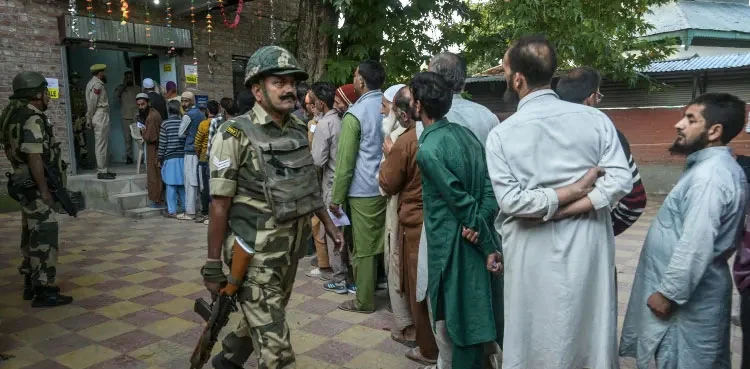
    Indian authorities have released Kashmiri human rights activist Khurram Parvez and journalist Irfan Mehraj on bail after they spent years in custody under terrorism related charges. Their families confirmed that both men were released from a prison in New Delhi late on Wednesday following a court order, although strict bail conditions will keep them in the capital while their trial continues. Parvez, a well known human rights defender and programme coordinator of the Jammu Kashmir Coalition of Civil Society, was arrested by India’s National Investigation Agency in November 2021 from his home in Srinagar. Mehraj, a freelance journalist who also worked with the same rights organisation, was arrested in 2023. Both men have been charged under India’s anti terrorism laws with allegedly financing terrorism and promoting separatist activities. The legislation allows authorities to detain suspects for long periods without trial and has frequently been criticised by rights organisations for its broad powers. Although they have now been granted bail, their freedom remains limited. Court conditions require both Parvez and Mehraj to stay in New Delhi during the legal proceedings. They are not permitted to return to Kashmir and must arrange their own accommodation in the capital while attending court hearings. Indian investigators had challenged the decision to grant bail, but a higher court upheld the order. The Jammu Kashmir Coalition of Civil Society has spent many years documenting alleged human rights violations in the region. The organisation has published reports on cases involving torture, unlawful killings, enforced disappearances, and unmarked graves in areas affected by the long running conflict. Its work has often drawn international attention and placed it at the centre of debates over human rights in Kashmir. Parvez has received support from several international human rights organisations that have repeatedly called for his release. In 2023, the United Nations Working Group on Arbitrary Detention described his arrest as retaliation for his human rights activities. The UN experts said the detention appeared intended to silence both Parvez and wider civil society efforts in Kashmir. The case has also renewed attention on press freedom in the region. Journalists working in Indian administered Kashmir have reported increasing restrictions, surveillance, and legal action since the Indian government revoked the region’s special constitutional status in 2019. Several media workers and activists say they have faced questioning, arrests, or pressure while reporting on political and security issues. The Indian government maintains that its actions are necessary to combat terrorism and protect national security. Officials argue that the anti terrorism laws are an essential tool in dealing with militant groups operating in the region. However, critics say the legislation has increasingly been used against journalists, activists, and civil society members who peacefully document human rights concerns. Government figures show that more than 3,600 people were arrested under anti terrorism laws in Kashmir between 2019 and 2023. More than half of those detained remain in prison while awaiting legal proceedings, highlighting concerns over lengthy pre trial detention. The release of Parvez and Mehraj has been welcomed by rights advocates, but legal proceedings against both men continue. They will remain in New Delhi under the conditions set by the court until their trial reaches its conclusion. Their cases are expected to remain closely watched by international human rights organisations and press freedom groups as they continue to raise concerns about civil liberties and legal protections in Indian administered Kashmir.

  • |

    Carlos Alcaraz withdraws from Cincinnati Masters with wrest injury

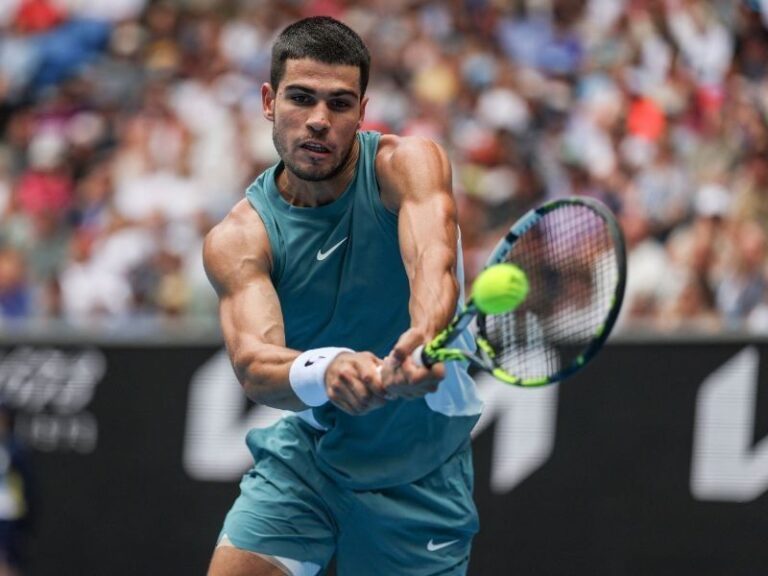
    World No. 2 Carlos Alcaraz has officially withdrawn from the Cincinnati Masters as he continues to recover from a wrist injury that has kept him off the ATP Tour since April, casting fresh doubt over his participation in this month’s US Open. Tournament organizers confirmed on Tuesday that the Spanish superstar will not defend his Cincinnati title, citing an “ongoing wrist injury.” The ATP Masters 1000 event, scheduled to begin on August 13, is regarded as the final major warm-up tournament before the US Open. Tournament director Bob Moran expressed support for the 23-year-old, saying everyone at Cincinnati hopes to see him back on court soon. “We know Carlos is doing everything he can to get back to playing tournaments as soon as possible. We wish him the best with his recovery and look forward to welcoming him back to Cincinnati in the future,” Moran said in an official statement. The withdrawal has intensified speculation surrounding Alcaraz’s fitness ahead of the US Open, which begins on August 30 in New York. As the defending champion, his absence from Cincinnati leaves him with little opportunity to regain competitive rhythm before the year’s final Grand Slam. Alcaraz has not played a competitive match since suffering a wrist injury during the opening round of the Barcelona Open in April. Since then, he has withdrawn from several high-profile tournaments, including the Madrid Open, Italian Open, French Open, Wimbledon, and now Cincinnati. When announcing his decision to miss Roland Garros earlier this year, Alcaraz described it as “the most prudent” choice after discussions with his team. Although his rehabilitation has reportedly progressed well, the Spaniard has repeatedly stressed that he would only return when fully fit. His absence from Wimbledon proved particularly significant, as world No. 1 Jannik Sinner successfully defended his title by defeating Germany’s Alexander Zverev in the final. Despite his lengthy spell on the sidelines, Alcaraz enjoyed a remarkable start to 2026. He completed the career Grand Slam by winning the Australian Open in January, becoming the youngest men’s player to achieve the feat. He followed that historic triumph with another title in Doha in February, taking his Grand Slam tally to seven. With the countdown to Flushing Meadows underway, tennis fans will now be anxiously waiting for an official update on whether one of the sport’s biggest stars will be fit in time to defend his US Open crown.

  • |

    China rejects Pakistan’s waiver request

    Chinese lenders and Independent Power Producers (IPPs) have turned down Pakistan’s request to write off nearly Rs 170 billion in late-payment surcharges. The refusal highlights the growing friction between the two long-standing allies as Pakistan struggles to navigate a staggering power-sector circular debt that continues to drag down its broader economy. The unpaid dues owed to 18 Chinese-backed power generation projects established under the CPEC have now increased to approximately Rs 423 billion. The financial bottleneck stems from a combination of structural inefficiencies within Pakistan’s domestic energy distribution network and systemic delays in clearing operational invoices. Under the original 2015 CPEC Energy Framework Agreement, Pakistan was legally obligated to ensure full and timely payments to power producers, backed by a designated revolving fund to cushion investors against domestic liquidity shortfalls. As payment deadlines were repeatedly missed over recent years due to severe foreign exchange constraints, contractual interest penalties accumulated to the tune of Rs 170 billion. While local power suppliers previously accepted debt-restructuring deals and fee write-offs to ease the burden on state coffers, Chinese energy firms have maintained a strict stance, citing global precedent and financial commitments to their own institutional lenders. This refusal creates an immediate impasse for Pakistan’s Ministry of Energy and financial regulators. The federal government had structured a massive Rs 1.225 trillion banking facility intended to retire the country’s broader circular debt stock. However, disbursement terms mandated that power producers accept renegotiated terms or offer discounts on late-payment fees before receiving principal clearances. Because the Chinese IPPs declined to waive the surcharges or offer similar concessions, billions in funds remain locked, leaving power plant operators facing severe liquidity squeezes that threaten regular fuel procurement and plant operation. Total Outstanding Dues: Rs 423 Billion. Requested Surcharge Waiver (Rejected): Rs 170 Billion. Principal Energy Cost Owed: Rs 253+ Billion. Pakistani negotiators are exploring alternative financial maneuvers to manage the expensive debt burden. Seeking low-interest bilateral funding including potential long-term loan packages in the range of $6 billion to $10 billion from partner nations like Saudi Arabia to retire high-cost Chinese energy loans. Requesting cabinet approval for extensions on expiring domestic banking facilities to prevent immediate default claims. Balancing the debt burden through structured tariff pass-throughs, though consumer capacity to absorb higher electricity prices remains extremely strained. The dispute underscores a delicate transition in the CPEC bilateral relationship. While both nations remain deeply committed to long-term strategic partnership and Phase-Two infrastructure development, commercial reality is setting a firmer baseline. Moving forward, resolving the sovereign debt backlog will require transparent structural reforms within Pakistan’s power distribution setup rather than relying on debt waivers from foreign investors.  

  • |

    Why people are belting Disney tunes at smart-glasses wearers

    If you suspect someone is secretly filming you with smart glasses, the internet has come up with an unusual defence. People are being told to start singing a Disney song out loud. The idea is not that singing will actually stop the recording itself. Instead, it relies on platforms’ copyright detection systems flagging the music and quietly taking the video down. Most major platforms scan uploaded videos for any copyrighted audio in the background. If a clip contains protected music, it typically gets muted, deleted, or in rarer cases, flagged for legal action. Copyright protection applies to lyrics, composition and melody alike, which means even a rough, off-key rendition can trigger removal. That loophole is exactly what people online are now trying to exploit. This trick has already spread across social media, with people from different countries picking it up. Reactions online have mostly ranged from disbelief to outright frustration at the whole situation. Many users have pointed out the irony that copyrighted music seems to receive stronger legal protection online than personal privacy does. Being filmed without consent, by comparison, often leaves people with far fewer options. Copyright law tends to apply fairly consistently across different countries, but privacy law is a different story entirely. It varies significantly from place to place, leaving many people, especially women, without a reliable way to get unwanted footage removed. The debate has grown louder alongside the rising popularity of smart glasses in everyday life. Meta’s Ray-Ban models have become the clear frontrunner in this fast-growing product category. As more people walk around with cameras built into their glasses, old arguments about filming strangers without consent have resurfaced. The devices have made it easier than ever to record someone without them even realising it. Meta has responded by saying it takes non-consensual filming seriously as a company. It has also made changes to the indicator light that shows when the glasses are actively recording. The company added that it has been removing certain types of content it considers harassment. This includes unsolicited, “pick-up line” style videos aimed at strangers without their consent.

Leave a Reply

Your email address will not be published. Required fields are marked *