title Story

  • | | | |

    Trump reportedly left Türkiye on secret flight amid Iran threat

    US President Donald Trump reportedly left Türkiye on a military aircraft during a covert security operation last month. The move was allegedly made because of an Iranian assassination threat. According to a report citing US officials and people familiar with the operation, Trump initially boarded the older Air Force One aircraft in Ankara. Television cameras were present as he departed. Minutes later, however, Trump was reportedly moved to a smaller Air Force C-32A aircraft. The transfer was allegedly carried out using an airport catering truck. The unusual operation was designed to keep Trump’s actual location hidden. The report said the information was not shared publicly. Some journalists and even members of the White House staff were also reportedly unaware of the change. Trump had travelled to Ankara for a NATO summit held on July 7 and 8. The reported security threat emerged during his visit. The operation reportedly took place shortly after US forces resumed strikes against Iran. The strikes followed the collapse of negotiations between Washington and Tehran. White House Communications Director Steven Cheung defended the security arrangements. He said the aircraft being used as Air Force One had been equipped with advanced security measures. Cheung said the president faced threats from several enemies of the United States. He added that the administration was using all available measures to protect him. The reported security operation comes as tensions between the United States and Iran remain high. Trump has continued to leave open the possibility of stronger military action against Tehran. Oil prices rise amid escalation fears Global oil prices also climbed sharply as markets reacted to Trump’s latest comments on Iran. Brent crude rose around 5% on Monday. It reached about $87.70 per barrel, its highest level in nearly two weeks. US West Texas Intermediate crude also gained around 5.1%. It reached approximately $82.20 per barrel. The rise came after Trump said the United States still had the option of taking stronger action against Iran. Trump told reporters that Washington had the capability to pursue a major escalation if it decided to do so. His comments increased uncertainty over efforts to end the conflict. They also raised concerns about the future of shipping through the Strait of Hormuz. Trump has claimed that the strategic waterway is open and fully under US control. However, he acknowledged that Iran could still attempt to interfere with maritime traffic. Iran has taken a different position. Tehran has reportedly demanded that the US lift its blockade before it agrees to fully restore the waterway’s operations. The Strait of Hormuz is one of the world’s most important energy routes. Large volumes of crude oil and liquefied natural gas pass through the waterway. Any prolonged disruption could therefore put further pressure on global energy prices. Oil prices were also supported by reports of attacks involving energy infrastructure in Saudi Arabia and a tanker operated by Abu Dhabi National Oil Company. Meanwhile, US crude reserves remained under pressure. Stocks in the Strategic Petroleum Reserve fell below 300 million barrels last week. The reserve was reported at around 298.7 million barrels. It was the lowest level recorded since 1983.

  • | | |

    Dar, Araghchi discuss regional tensions and Makkah…

    Pakistan’s Deputy Prime Minister and Foreign Minister Ishaq Dar held a telephone conversation with Iranian Foreign Minister Abbas Araghchi. The two leaders discussed the latest situation in the region. They also exchanged views on the recently concluded Makkah Defence Agreement between Pakistan, Saudi Arabia and Türkiye. The conversation comes as the regional security situation remains sensitive. Both sides discussed developments in the region and efforts to promote peace and stability. According to reports, Araghchi briefed Dar on recent discussions with Oman. The talks focused on a proposed new trade corridor in the Strait of Hormuz. The Strait of Hormuz remains an important international trade and energy route. Developments in the area have raised concerns about regional security and the movement of commercial shipments. During the telephone call, Dar also explained Pakistan’s position on the Makkah Defence Agreement. He told his Iranian counterpart that the agreement was aimed at strengthening strategic cooperation between the participating countries. Dar also stressed that the pact was intended to support peace and stability in the region. The agreement involving Pakistan, Saudi Arabia and Türkiye has attracted regional attention. Questions have also been raised about its possible impact on the wider security environment. Iran has previously sought clarification about the nature and objectives of the defence cooperation. Pakistani officials have maintained that the agreement is focused on strategic cooperation and regional stability. The latest conversation between Dar and Araghchi provided an opportunity for both countries to discuss these developments directly. The two foreign ministers also discussed diplomatic efforts aimed at preventing further instability in the region. Their conversation highlights the importance of continued engagement between Pakistan and Iran. Both countries share close regional ties and have an interest in maintaining peace and stability.

  • | | |

    Syria sentences former President Bashar al-Assad to death

    A Syrian court has sentenced former President Bashar al-Assad to death over allegations of premeditated and deliberate killings. The sentence was issued in absentia. Assad was not present in court when the ruling was announced. The court also sentenced Atef Najib, a former security official who served during Assad’s rule, to death. According to the court, the charges against Assad relate to allegations of killings that were deliberately planned and carried out. The ruling marks a major development in the legal proceedings against the former Syrian president. Assad was removed from power before the court issued the sentence. The court proceeded with the case in his absence. It reached its decision based on the charges brought against him. Atef Najib was also named in the proceedings. He served as a security official during the Assad era and was handed the same punishment. The court described the alleged crimes as involving premeditation and deliberate killing. These allegations formed the basis of the death sentences. The development comes amid continued legal and political efforts concerning officials associated with the former Syrian government. The ruling against Assad could become an important part of the legal record surrounding his years in power. The former president has faced allegations related to serious abuses during the conflict in Syria. The latest court decision focuses specifically on charges of premeditated and deliberate murder. The sentence was announced without Assad appearing before the court. The court also issued its decision against Najib in connection with the same proceedings. Further legal developments could determine how the sentences are handled and whether additional proceedings follow. According to the reported ruling, the former Syrian leader was convicted on charges described as war crimes and crimes against humanity. The decision marks a significant development in legal proceedings against senior figures from Assad’s former government. Assad ruled Syria for nearly 24 years after succeeding his father, Hafez al-Assad, in 2000. His government faced years of armed opposition after protests erupted across the country in 2011. The conflict developed into a prolonged civil war involving Syrian government forces, opposition groups and several foreign powers. The war caused widespread destruction and a major humanitarian crisis. Millions of Syrians were forced to leave their homes, while large numbers sought refuge in neighbouring countries and beyond. Assad remained in power throughout most of the conflict. His government was accused by international organisations and rights groups of carrying out serious abuses against civilians. The former government repeatedly rejected many of the allegations. Assad’s rule eventually came to an end in December 2024. Opposition-led forces advanced towards Damascus, forcing him to leave the country with members of his family. He subsequently travelled to Moscow, where Russia provided him with protection. The latest verdict is the first death sentence against Assad under Syria’s transitional authorities. The new authorities have begun legal proceedings against officials and figures associated with the former government. Some defendants have appeared before the courts in person, while proceedings against others have been conducted in absentia. The case against Assad is therefore being closely watched as part of broader efforts to address alleged crimes committed during the conflict. The death sentence also represents a dramatic reversal for a leader who remained at the centre of Syrian politics for decades.

  • | | | |

    Mohsin Naqvi begins official visit to Iran

      Federal Interior Minister Mohsin Naqvi has arrived in Iran on an official visit, where he is set to hold meetings with senior Iranian officials, according to Iranian media reports. Naqvi’s visit is expected to focus on strengthening relations between Pakistan and Iran and improving coordination on issues of mutual interest. During his stay, the interior minister will meet high-ranking Iranian officials and exchange views on matters concerning the two neighbouring countries. The visit comes amid continued diplomatic engagement between Islamabad and Tehran, with both sides seeking to enhance cooperation and maintain regular contact at the leadership and ministerial levels. Discussions during Naqvi’s meetings are likely to cover bilateral relations as well as regional developments that have implications for both Pakistan and Iran. The two countries share a long border and have close historical, cultural and economic ties, making regular coordination between their governments important. Pakistan and Iran have also been working to improve cooperation on border management and other issues affecting communities along their shared frontier. High-level visits and official meetings provide an opportunity for both sides to review progress, address outstanding concerns and explore new areas of cooperation. Iranian media said Naqvi will meet senior officials during his visit, although further details about his schedule and the specific issues to be discussed were not immediately disclosed. The minister’s visit is part of Pakistan’s broader efforts to maintain engagement with neighbouring countries and strengthen bilateral ties through diplomatic and official channels. His meetings in Tehran are expected to contribute to continued dialogue between the two countries and provide a platform for discussing matters of shared concern.

  • | | |

    PTI leadership backs Sept 27 long March as KP CM r…

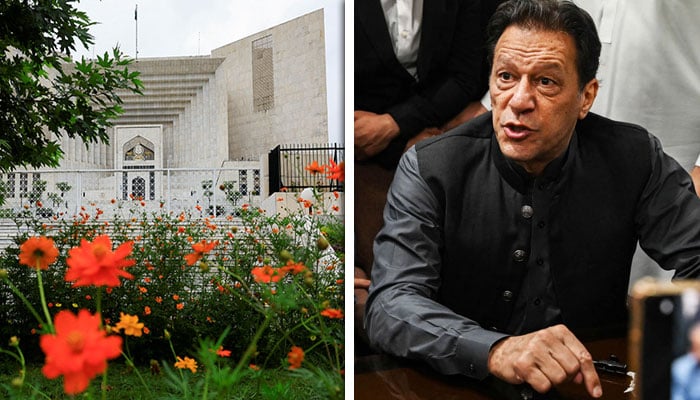
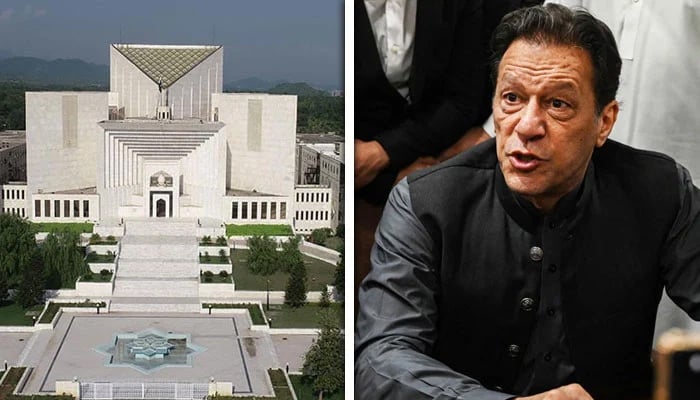
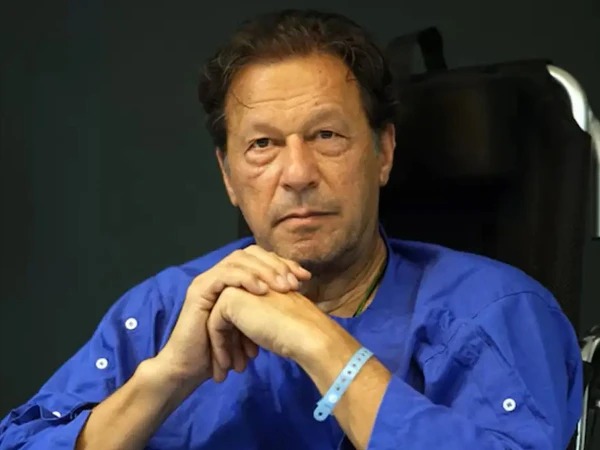
    PESHAWAR: Khyber Pakhtunkhwa Chief Minister Sohail Afridi has said that the Pakistan Tehreek-e-Insaf (PTI) leadership and the Tehreek-e-Tahaffuz-e-Ayeen-e-Pakistan (TTAP) alliance are fully supporting the planned long march towards Islamabad on September 27. Afridi said the date for the protest was finalised after consultations among PTI’s central and provincial leadership as well as its allied group. He stressed that the decision had been taken collectively and that the party’s leadership across the provinces was on board with the plan. Afridi’s comments came after reports that Aleema Khan, the sister of PTI founder Imran Khan, had questioned why the long march was scheduled for September 27 instead of an earlier date. Responding to the concerns, Afridi described Aleema as a non-political person who was speaking in her capacity as Imran Khan’s sister. He said he was confident that he could satisfy her concerns by explaining the reasons and circumstances behind the decision. The KP chief minister also rejected allegations made by some PTI leaders based abroad that he had agreed to the September 27 date as part of a secret deal with the government. Afridi said those making such accusations should have contacted him directly before discussing the matter publicly. He said such allegations could mislead PTI supporters and create unnecessary confusion. According to Afridi, individuals who were genuinely sincere with Imran Khan and the party should first seek clarification before making accusations against fellow party leaders. Responding to a specific allegation that he had met Interior Minister Mohsin Naqvi and another government official on August 4 before announcing the date of the long march, Afridi categorically denied the claim. He described the allegation as completely baseless and said he had been present at the KP House in Islamabad from noon until around 4:30pm that day. Afridi explained that he had been attending meetings related to the province’s Pado KP and telemedicine initiatives during that period. He also rejected the suggestion that the alleged meeting had taken place in Peshawar, reiterating that he was in Islamabad at the time. The controversy comes as PTI prepares for what its leaders describe as a major mobilisation aimed at securing the release of Imran Khan. A day earlier, PTI leader Shafi Jan said the party had no option left except to launch the long march, which he described as its “last option”. Jan said PTI workers were protesting because they believed their concerns were not being heard. He claimed that the party would march from Peshawar towards Islamabad with around two million people and said the demonstration would have an impact across the country. Imran Khan, 73, has remained in prison since August 2023 following convictions in several cases. PTI has repeatedly rejected the allegations against its founder and described the legal proceedings as politically motivated. Since his removal from office through a no-confidence vote in April 2022, Imran Khan has faced numerous legal cases, including those involving state gifts and his marriage. Although some of his convictions have been suspended or overturned, several appeals are still pending before higher courts. Imran Khan and PTI continue to deny any wrongdoing and maintain that the cases against him are politically driven.

  • | | |

    PPP accuses PML-N of rigging Azad Kashmir election…

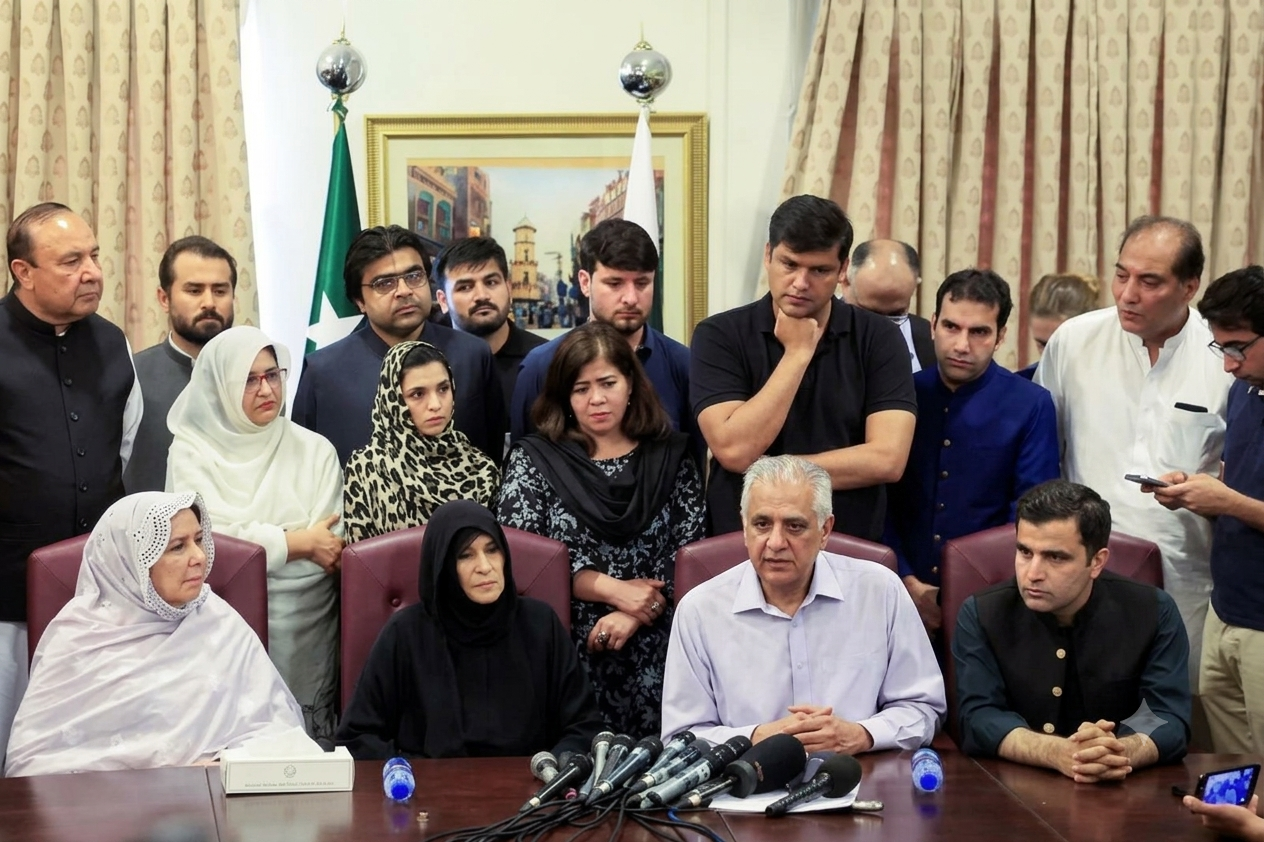
    The Pakistan Peoples Party has accused the Pakistan Muslim League-Nawaz of electoral irregularities during the Azad Kashmir elections. PPP leaders made the allegations during a press conference in Islamabad on Monday. PPP leader Sharmila Faruqui alleged that the PML-N was attempting to form a government in Azad Kashmir through rigging. She questioned claims that migrant seats had already been secured by the ruling party. Faruqui also criticised the Punjab government over its spending priorities. She questioned the concentration of development funds in Lahore and asked what had been done for other parts of the province. She said the PPP had avoided politicising incidents involving collapsed roofs in Punjab. However, she called for stronger measures to protect women and children. Faruqui also raised concerns about crime and law enforcement in Punjab. She referred to an alleged incident involving a girl with a mental disability in Lahore and criticised the police response. She further alleged that the Crime Control Department had carried out hundreds of encounters. According to her, the department had conducted around 670 encounters. Faruqui questioned whether the government was giving sufficient importance to courts and due process. She also claimed that a large majority of reported child abuse cases had occurred in Punjab. The PPP leader questioned the effectiveness of governance in cities where children and vulnerable citizens do not feel safe. Another PPP leader, Shahla Raza, also accused the PML-N of manipulating the Azad Kashmir election process. Raza claimed that the PML-N had entered the elections expecting to secure around 12 seats. She alleged that irregularities were reported in several constituencies because the party feared an outcome similar to the political situation in Gilgit-Baltistan. Raza said the alleged incidents demonstrated serious concerns about the credibility of the electoral process. She claimed that the Election Commission had received 26 complaints before 1pm on election day. She also alleged that election-related material was taken from police personnel and that gunfire occurred during the incidents. Raza further claimed that a PPP member of the National Assembly was shot. The PPP leaders called for greater transparency in the electoral process. They also urged authorities to investigate complaints submitted during polling. PPP leader Palwasha Khan said her party remains an ally of the PML-N at the federal level. However, she stressed that the PPP would not remain silent if it believed that the government was taking an incorrect step. Khan said the president has constitutional powers regarding official summaries and can act according to the law. She made it clear that the PPP considers itself a political partner rather than a subordinate of the PML-N. She warned that the government could face difficulties in achieving its political objectives if it ignored concerns raised by its allies. The allegations have added to political tensions surrounding the Azad Kashmir elections. The PPP and PML-N are coalition partners at the federal level. However, differences between the two parties have emerged over the election process and political developments in Azad Kashmir. The allegations made by PPP leaders have not, by themselves, established that electoral fraud occurred. The claims are expected to be examined by the relevant electoral and legal authorities.

  • | | |

    PM Shehbaz says Pak-Saudi-Turkiye defence pact is …

    Prime Minister Shehbaz Sharif has said the newly signed defence agreement between Pakistan, Saudi Arabia and Turkiye is strictly defensive in nature. He said the pact is not intended to promote aggression or create tensions in the region. The prime minister made the remarks while addressing a meeting of the federal cabinet on Monday. Pakistan, Saudi Arabia and Turkiye signed the Makkah Joint Defence Agreement on August 7 in Makkah. The agreement aims to strengthen cooperation among the three countries in the field of defence and security. Under the pact, an attack against any one of the three signatories would be treated as an attack against all three. The arrangement is intended to strengthen collective deterrence and improve coordination among the countries. PM Shehbaz said the main objective of the agreement was to promote peace, stability, progress and prosperity across the region. He stressed that the agreement should not be viewed as a preparation for military aggression. The prime minister described the pact as a source of strength for Pakistan, Saudi Arabia and Turkiye. He also said its benefits could extend to the wider Muslim world. Shehbaz Sharif congratulated Deputy Prime Minister Ishaq Dar and Chief of Defence Forces and Chief of Army Staff Field Marshal Asim Munir for their role in the agreement. He said discussions on stronger defence cooperation between the countries had continued for several years before the latest agreement was finalised. Pakistan and Saudi Arabia had already signed a Strategic Mutual Defence Agreement in September 2025. The prime minister said Pakistan and Turkiye had also maintained defence and security arrangements for decades. Shehbaz highlighted Pakistan’s long-standing defence cooperation with Saudi Arabia. He recalled that Pakistani personnel had served alongside Saudi forces in protecting the holy cities of Makkah and Madina. He said the latest trilateral agreement builds on those longstanding ties and provides a broader framework for cooperation. The agreement has also received attention across the Muslim world. The Organisation of Islamic Cooperation described it as an important strategic development. Several countries, including Kuwait, Bahrain and Somalia, have welcomed the agreement. Iran has also responded in a relatively positive tone. Tehran reiterated its preference for regional security arrangements based on cooperation among countries in the region. The agreement comes amid growing security concerns across the Middle East and wider region. Its signatories have presented the pact as a mechanism for collective defence rather than an offensive alliance. The Pakistani government has maintained that the arrangement is aimed at strengthening regional stability and protecting the sovereignty and security of its members.

  • | | |

    AJK polling enters third phase amid tight security

    MUZAFFARABAD: Voting in the third phase of the Azad Jammu and Kashmir general elections began on Monday in four constituencies of Bagh and Haveli districts. Polling started at 8am and will continue until 5pm. Security has been tightened across the constituencies due to concerns over possible clashes and disturbances. Authorities have declared most of the 803 polling stations sensitive or highly sensitive. A large security contingent has been deployed to maintain law and order. Around 10,300 additional security personnel have been sent to Bagh and Haveli. Officials said the deployment was aimed at providing a safe environment for voters and election staff. The third phase was originally planned for all 11 constituencies of Poonch Division. However, voting was restricted to Bagh and Haveli after authorities reviewed the security situation. The remaining seven constituencies are expected to be polled later this month. Election officials have indicated that voting could take place on August 20 or 21, depending on the security situation. The current phase has attracted considerable political attention. Several prominent leaders are contesting the four seats. AJK Prime Minister Faisal Mumtaz Rathore is seeking to retain his constituency. Two former prime ministers, Sardar Tanveer Ilyas and Sardar Attique Ahmed Khan, are also in the electoral race. A total of 460,371 voters are eligible to cast their ballots. They include 238,664 men and 221,707 women. The election is being held at 803 polling stations. These stations have 1,254 polling booths. As many as 82 candidates are competing in the four constituencies. LA-14 Dhirkot has the highest number of candidates. Thirty candidates are contesting the seat. LA-17 Haveli has nine candidates, the lowest number among the four constituencies. In LA-17 Haveli, Prime Minister Rathore is facing PML-N candidate Engineer Mohsin Aziz and independent contender Khawaja Tariq Saeed. Rathore and Saeed were previously political allies. They had reportedly agreed to contest the seat alternately. Their political relationship changed after Rathore became prime minister. Rathore sought Saeed’s withdrawal from the contest. Saeed refused to step aside. The two former allies are now competing against each other. Mohsin Aziz is also running an active campaign. His father, Chaudhry Mohammad Aziz, had won the constituency several times in the past. The PML-N candidate is expected to receive support from sections of the Gujjar community. Saeed is believed to have support among parts of the Kashmiri community and several smaller clans. Rathore has expressed confidence about retaining the seat. He has highlighted the performance of his government during his tenure. The constituency has also witnessed allegations of electoral irregularities. Claims circulated on social media about alleged manipulation by two presiding officers. Election officials rejected the allegations as presented on social media. However, they confirmed receiving complaints against the two officials. Both were subsequently removed from election duties. In LA-15 Wasti Bagh, former prime minister Sardar Tanveer Ilyas is facing several strong contenders. The candidates include PML-N nominee and former minister Mushtaq Ahmed Minhas. PPP candidate and sitting minister Sardar Ziaul Qamar is also contesting. Jamaat-i-Islami candidate retired Brigadier Dr Mohammad Khan is another key contender. Ilyas had initially announced a boycott of the third phase. He later reversed the decision and returned to the election campaign. He has described the contest as important for his political future. He has also linked his campaign to the possibility of securing a senior constitutional position after the election. Ilyas and Ziaul Qamar belong to the same Madiyal tribe. Brigadier Khan belongs to the Narma clan. He is backed by several influential Jamaat-i-Islami figures and local supporters. Mushtaq Minhas is benefiting from the PML-N’s position as the leading party in the elections held so far. The party has secured the largest number of seats in the previous phases and is expected to play a major role in forming the next government. In LA-16 Sharqi Bagh, former ministers Sardar Mir Akbar and Sardar Qamar Zaman are among the main contenders. Mir Akbar is contesting on the PML-N ticket. Qamar is representing the PPP. The LA-14 Dhirkot contest has also emerged as one of the closely watched races. Sardar Attique Ahmed Khan, head of the Muslim Conference, is seeking another victory from the constituency. He has represented the seat for several years and previously served as AJK prime minister. He is facing a strong challenge from Sajid Iqbal Abbasi of the Awam Dast-o-Bazu Party. Abbasi is a contractor and philanthropist. He has reportedly spent substantial personal resources on welfare and development projects in the constituency. His supporters believe his community work has helped him build a strong voter base. The contest has become more interesting because Attique and Abbasi belong to the same tribe. PML-N candidate Raja Faisal Azad and PPP nominee Raja Mubashar Ejaz are also contesting Dhirkot. However, the main competition is expected to remain between Attique and Abbasi. The results of the third phase could influence the political balance in AJK. The PML-N has already emerged as the strongest party in the earlier phases. The PPP and other political groups will now seek to strengthen their position in the remaining contests.

  • | | | | |

    Iran issues stark warning to US over ground troops

    TEHRAN: Iran has issued a stark warning to the United States, saying any American ground troops attempting to enter Iranian territory would face fierce resistance. The warning was delivered by Iranian Army Ground Forces Commander Brigadier General Ali Jahanshahi, as tensions between Tehran and Washington remain high and the region continues to watch closely for signs of further military escalation. According to Iranian media reports, Jahanshahi said Iran’s armed forces were fully prepared to respond to any hostile action. He stressed that the country’s ground forces remained at a high state of readiness and were closely monitoring Iran’s borders. The Iranian commander made clear that Tehran would not take any threat to its territory lightly. Any attempt by an enemy to launch military action on Iranian soil, he said, would trigger an immediate and forceful response. The remarks underline Iran’s long-standing position that a direct ground intervention would represent a major escalation. Iranian officials have repeatedly warned that foreign troops entering the country would encounter strong resistance from the country’s armed forces. Jahanshahi also emphasized that Iran’s military units were prepared to respond to a range of potential scenarios. Security measures along the country’s borders, he said, remain active as authorities continue to assess possible threats. The latest warning comes against the backdrop of continued tensions between Iran and the United States, with military developments and diplomatic efforts both shaping the rapidly changing regional situation. For Tehran, the message appears aimed at drawing a clear red line around Iranian territory: while the country may face external pressure, any attempt to send foreign ground forces across its borders would be treated as a direct threat to national security. Analysts say such statements also reflect Iran’s effort to strengthen deterrence and signal military readiness at a time when uncertainty remains over the future course of US-Iran relations. With tensions already running high, any direct military confrontation could have consequences far beyond Iran and the United States, potentially triggering a wider regional crisis. For now, the sharp warning from Iran adds another layer of uncertainty to an already fragile security situation, while international attention remains focused on whether diplomacy can prevent another escalation.

  • | | |

    Kuwait welcomes Pakistan-Saudi-Türkiye Makkah def…

    ISLAMABAD: Kuwait has congratulated Pakistan on the signing of the Makkah Joint Defence Agreement with Saudi Arabia and Türkiye, signalling growing regional interest in the new security arrangement. Pakistan’s Deputy Prime Minister and Foreign Minister Ishaq Dar received a telephone call from Kuwaiti Foreign Minister Sheikh Jarrah Jaber Al-Ahmad Al-Sabah late on Sunday, during which the two officials discussed the agreement as well as the wider regional situation. According to Pakistan’s Foreign Office, the Kuwaiti foreign minister felicitated Dar on the agreement signed in Makkah on Friday. The two ministers also exchanged views on developments in the region, including the situation in occupied East Jerusalem. Their conversation also covered bilateral relations and ways to expand cooperation between Pakistan and Kuwait, particularly in investment and other key sectors. The officials also discussed follow-up to Sheikh Jarrah’s recent visit to Pakistan. “The two sides agreed to remain closely engaged,” the Foreign Office said. The development comes as Pakistan continues to explain the objectives and scope of the landmark defence pact, which brings Pakistan, Saudi Arabia and Türkiye closer together on security matters. Dar has stressed that the agreement is defensive in nature and is not directed against any particular country. Under the pact, an armed attack against any one of the three signatories would be treated as an attack against all three. The foreign minister said the arrangement was designed to strengthen collective deterrence while supporting regional peace, stability and security. He also maintained that the agreement was consistent with the right of individual and collective self-defence recognised under Article 51 of the United Nations Charter. Importantly, Dar clarified that the Makkah agreement does not replace or cancel existing bilateral or multilateral defence arrangements involving the three countries. The pact could also have a broader regional dimension. Dar said the agreement remains open to other countries in the region that are willing to respect its principles and resolve differences through dialogue, cooperation and peaceful means. His comments came amid reports that Egypt could potentially join the arrangement. Earlier, Dar also spoke with Canadian Foreign Minister Anita Anand, with the two officials discussing regional developments and the newly signed agreement. Pakistan has presented the Makkah accord as part of its broader foreign-policy objective of promoting regional stability and peaceful conflict resolution. With Kuwait now extending its congratulations, attention is increasingly turning to how the new defence framework could influence cooperation and security across the wider region.