pakistan saudi arabia
| | | |

Pakistan, Saudi Arabia eye historic economic partn…

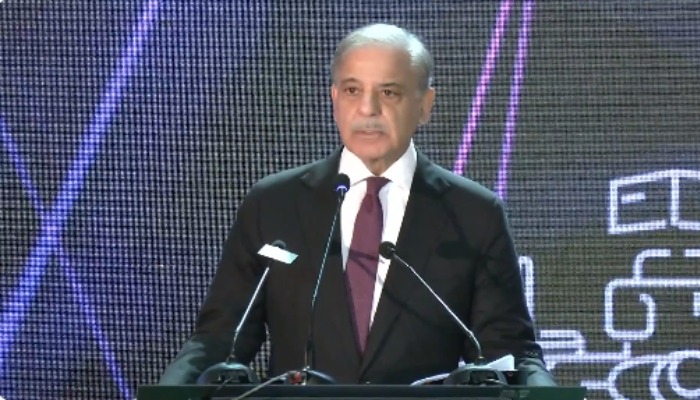
Prime Minister Shehbaz Sharif has said Pakistan wants to transform its economic relations with Saudi Arabia into a long-term strategic economic partnership.

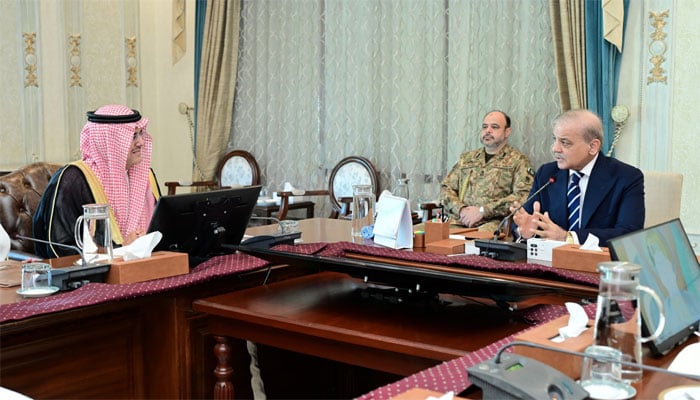
The prime minister made the remarks during a meeting with Prince Mansour, chairman of the Saudi-Pakistan Joint Business Council, who was accompanied by a high-level Saudi business delegation.

According to an official statement issued in Islamabad, Prime Minister Shehbaz conveyed his respect and best wishes for Saudi King Salman bin Abdulaziz and Crown Prince Mohammed bin Salman.

The meeting focused on expanding economic cooperation and increasing investment between Pakistan and Saudi Arabia. Both sides discussed opportunities for stronger business-to-business and government-to-government collaboration.

Prince Mansour expressed interest in investment opportunities in several key sectors of Pakistan’s economy. These included agriculture, ports, highways and the outsourcing of airport operations.

The Saudi delegation also showed interest in investment opportunities in real estate, energy, power distribution and information technology.

Prime Minister Shehbaz said the time was right to strengthen joint cooperation between the two countries through both government and private-sector partnerships.

He stressed the importance of developing stronger economic and commercial ties with Saudi Arabia and creating opportunities for increased investment.

Prince Mansour reaffirmed the Saudi government and business community’s interest in expanding commercial links with Pakistan.

During their visit, the Saudi business delegation is scheduled to meet senior government officials as well as important representatives of Pakistan’s private sector.

The meetings are expected to explore potential investment projects and identify areas where Pakistani and Saudi companies can develop joint ventures.

Similar Posts

  • | | |

    Saudi Crown Prince receives PM Shehbaz Sharif in M…

    Prime Minister Muhammad Shehbaz Sharif was received by Saudi Crown Prince and Prime Minister Prince Mohammed bin Salman bin Abdulaziz Al Saud at Al-Safa Palace in Makkah on Friday, where the two leaders commenced high-level bilateral talks aimed at further strengthening Pakistan-Saudi Arabia strategic ties. The Prime Minister is accompanied by Deputy Prime Minister and Foreign Minister Senator Mohammad Ishaq Dar, Field Marshal Syed Asim Munir, Chief of Army Staff and Chief of Defence Forces, and Defence Minister Khawaja Muhammad Asif. The meeting is expected to review the full spectrum of bilateral relations, with discussions focusing on defence and security cooperation, trade and investment, regional developments, and ways to deepen the longstanding strategic partnership between Pakistan and Saudi Arabia. The talks come amid heightened regional diplomatic activity and underscore the close coordination between Islamabad and Riyadh on key geopolitical and economic issues.

  • |

    EU to end automatic GSP+ extension from 2027, Pakistan told to submit fresh action plan

    ISLAMABAD: The European Union (EU) is set to introduce a revised mechanism for extending its Generalised Scheme of Preferences Plus (GSP+) trade facility from January 2027, under which beneficiary countries will no longer receive an automatic extension. The Commerce Ministry informed the National Assembly Standing Committee on Commerce on Wednesday that Pakistan would have to formally seek continuation of the GSP+ facility and submit an action plan covering its commitments under 32 United Nations conventions. Commerce Secretary Jawad Paul briefed the committee that the new GSP+ framework would come into force in January 2027, followed by a two-year transition period. During this period, countries benefiting from the scheme will be required to prepare and submit their respective plans, which will subsequently be assessed by the European Union. According to the secretary, the EU’s assessment of Pakistan contains both positive observations and areas of concern. Among the issues highlighted by the European bloc is the human rights situation in Pakistan, along with security and climate-related challenges. The briefing was given during a meeting of the National Assembly Standing Committee on Commerce chaired by Jawad Hanif. Members including Asad Alam Khan Niazi, Khurshid Ahmed Junejo, Shaista Pervaiz, Dr Ramesh Kumar Vankwani, Tahira Aurangzeb, Mir Amir Magsi, Dr Mirza Ikhtiar Baig and Kiran Haider attended the meeting. EU concerns discussed The committee asked the Commerce Ministry to explain the concerns raised by the European Union in its latest assessment of Pakistan and their possible implications for the country’s trade interests. Jawad Paul said the EU report had acknowledged the difficult circumstances Pakistan was facing, particularly in terms of security challenges, economic pressures and climate-related disasters, including floods. These factors, he said, had affected the country’s capacity to fully implement various commitments. He urged members of parliament to present Pakistan’s perspective during their engagements with European Parliamentarians and other EU representatives. The secretary maintained that Pakistan’s circumstances should be taken into account while evaluating the country’s performance under the GSP+ framework. He said the government needed to undertake fundamental measures to address the challenges identified by the EU while also ensuring that Pakistan’s position was effectively communicated to European stakeholders. The committee also expressed concern over the repeated absence of the Commerce Minister from its meetings and conveyed its displeasure over the matter. Tariff reforms aimed at boosting exports The meeting also reviewed the government’s tariff reforms and their impact on industrial competitiveness and exports. Committee members questioned whether exporters would be required to commit to specific export targets in return for government support. The committee chairman clarified that the measures being introduced should not be viewed simply as incentives for exporters, arguing that reductions in duties and taxes were intended to lower production costs and improve Pakistan’s competitiveness in international markets. Officials from the Commerce Ministry said the government had been pursuing a policy of reducing tariff protection and lowering the cost of imported raw materials. The objective, they said, was to enable domestic industries to become more competitive and increase their presence in international markets. As part of the reforms, tariffs on around 2,000 tariff lines were reduced last year to make raw materials and other industrial inputs available at lower prices. The secretary said tariff reforms were being implemented under the National Tariff Policy and that the government had provided an estimated Rs160 billion benefit to industry and exporters during the previous year. For fiscal year 2026-27, another Rs120 billion has been earmarked under the relevant support measures. According to the Commerce Ministry, the previous Rs120 billion package was associated with a $1.27 billion increase in exports during 2025-26. Jawad Paul acknowledged that the tariff changes could initially result in higher imports as industries gained access to cheaper inputs and machinery. However, he argued that the trade imbalance could gradually improve as increased industrial production translated into stronger exports. Committee seeks review of Pakistan-China trade agreement The standing committee also raised concerns over Pakistan’s trade deficit with China and identified the China-Pakistan Free Trade Agreement (CPFTA) as an issue requiring closer examination. Members asked the Commerce Ministry to provide a detailed presentation on the agreement’s impact on Pakistan’s exports, imports and overall trade balance. The committee also sought an update on the latest trade discussions between Pakistan and the United States. The Commerce Secretary assured members that a detailed briefing on the matter would be provided in an in-camera session. Export Development Fund restructuring reviewed The committee separately examined the restructuring of the Export Development Fund (EDF). Officials told the meeting that the management and decision-making structure of the fund had been moved towards greater private-sector participation, with leading exporters being given a more significant role in determining spending priorities. The committee welcomed the shift towards projects that have a direct and measurable connection with export growth rather than conventional infrastructure-focused initiatives. Members also reviewed the allocation of 40% of the Export Finance Scheme (EFS) portfolio for small and medium-sized enterprises (SMEs). They stressed that smaller businesses should have fair and sufficient access to export financing so that they can participate more effectively in international trade. Pakistan Reinsurance Company performance discussed The committee also reviewed the performance and investment strategy of Pakistan Reinsurance Company Limited (PRCL). Members were informed that the company retained nearly 30% of its risk domestically, while approximately 70% was placed in international reinsurance markets, including London, Dubai and Singapore. The committee chairman called for careful management of the company’s financial resources and urged officials to explore opportunities to improve returns without compromising risk-management standards. Proposed amendments for Karachi Chamber examined The committee considered the Trade Organizations (Third Amendment) Bill, 2026, a Private Member’s Bill seeking amendments to the Trade Organizations Act in relation to the Karachi Chamber of Commerce and Industry (KCCI). During the discussion, members examined the special status of KCCI and proposed exemptions from certain district-related provisions. The chairman directed that the proposed amendments be drafted in appropriate legal language in consultation with the Ministry of Commerce and the Ministry of Law and Justice

  • | |

    Former Pakistan test cricketer Basit Ali hospitali…

      Former Pakistan Test cricketer Basit Ali has been hospitalized after experiencing a heart-related health issue. The 55-year-old former international cricketer was taken to a private hospital, where doctors are currently treating him. According to Basit Ali’s wife, the former cricketer was brought to the hospital for an angioplasty procedure. She said that Basit Ali is currently under medical care and that doctors are monitoring his condition. Further details about his health are expected to emerge following the treatment. Basit Ali is a well-known former Pakistani cricketer who represented the national team during the 1990s. He was regarded as a talented middle-order batsman and became known for his aggressive approach at the crease. During his international career, he represented Pakistan in both Test and One Day International cricket. Basit Ali played 19 Test matches for Pakistan, scoring 858 runs. In the longer format, he was part of the national side during a period when Pakistan had a highly competitive cricket team and several established international batsmen. In One Day International cricket, Basit Ali represented Pakistan in 50 matches and scored 1,265 runs. His ability to score quickly and play attacking strokes made him a notable member of Pakistan’s limited-overs squad. The former cricketer’s hospitalization has drawn attention from the Pakistani cricket community, with fans and former players expressing concern over his health. His family has confirmed that he is receiving treatment at the private hospital. Angioplasty is a medical procedure commonly used to restore blood flow through narrowed or blocked arteries. During the procedure, doctors generally open the affected blood vessel to improve circulation. The decision to perform angioplasty depends on the patient’s medical condition and the assessment of the treating doctors. Basit Ali’s illness comes as a reminder of the importance of timely medical attention when symptoms related to the heart occur. His family brought him to the hospital for treatment, where specialists are currently attending to him. Born in Karachi, Basit Ali made his international debut for Pakistan in the early 1990s. Although his international career was relatively short, he remained a familiar figure in Pakistani cricket. Following his playing career, he continued to remain associated with the sport through cricket-related activities and analysis. His experience as a former international player has also allowed him to remain connected with Pakistan’s cricketing circles. Over the years, he has regularly shared his views on Pakistan cricket and the performances of national players. The cricket fraternity is now awaiting further updates regarding his condition. His family has requested prayers and good wishes as he undergoes treatment. At present, Basit Ali remains under medical supervision at the private hospital. His wife has confirmed that he was admitted for angioplasty and that treatment is underway. Fans and cricket supporters across Pakistan are hoping for his speedy recovery and a return to good health.

  • |

    PCB unveils commentary panel for Champions Cup 2026

    MULTAN: The Pakistan Cricket Board (PCB) has announced a star-studded commentary panel for the National Champions Cup 2026, adding further excitement to a tournament that could prove important in shaping Pakistan’s future international squad. The seven-match competition will be played at Multan Cricket Stadium from August 11 to 18, with four teams — Pakistan Greens, Pakistan Whites, Pakistan Blues and Pakistan Gold — competing in a single round-robin format. Former Pakistan captain Salman Butt will headline the commentary team alongside Ali Younis, Tariq Saeed, Aimen Anwar and Raja Asad. Their experience and analysis are expected to provide viewers with deeper insight into the performances of established players and emerging prospects. Under the tournament format, each team will face the other three sides once. The two teams collecting the most points at the end of the league stage will advance to the final. The Champions Cup carries added significance as the PCB looks ahead to the ICC Men’s Cricket World Cup 2027. Selectors will use the competition to closely monitor players competing for national recognition, while younger cricketers will have an opportunity to make a strong impression. The PCB has selected 44 players across the four squads, with another 13 players included in a reserve pool. Reserve players can replace members of the main squads only in cases involving injury or concussion. With established internationals sharing the field with promising domestic talent, the tournament is expected to offer a revealing look at Pakistan’s emerging cricketing depth. For selectors, every match could become an audition. For players, the Champions Cup may represent a crucial step towards earning a place in Pakistan’s plans for the 2027 World Cup, to be jointly hosted by South Africa, Zimbabwe and Namibia. Squads Pakistan Greens Playing XI: Shadab Khan (c), Faheem Ashraf, Fakhar Zaman, Farhan Yousuf, Mehran Mumtaz, Mohammad Hasnain, Mohammad Salman Mirza, Naseem Shah, Omair Bin Yousuf, Saad Baig (wk) and Sameer Minhas. Pakistan Whites Playing XI: Saim Ayub (c), Akif Javed, Ali Raza, Haris Rauf, Hasan Nawaz, Khushdil Shah, Mohsin Riaz, Mohammad Wasim Jnr, Saad Masood, Shahzaib Khan and Usman Khan (wk). Pakistan Blues Playing XI: Sahibzada Farhan (c), Abdullah Shafique, Ahmed Daniyal, Arafat Minhas, Hasan Ali, Hussain Talat, Jahandad Khan, Rohail Nazir (wk), Shamyl Hussain, Sufyan Moqim, Taimur Khan (wk). Pakistan Gold Playing XI: Shaheen Shah Afridi (c), Abdul Samad, Abdul Subhan, Faisal Akram, Haider Ali, Kamran Ghulam, Maaz Sadaqat, Mohammad Nawaz, Muhammad Akhlaq (wk), Muhammad Imran and Saad Khan.

  • |

    Electricity tariff may rise by Rs1.34 per unit under quarterly adjustment

    ISLAMABAD: Electricity consumers may face higher power bills for the next three months as the National Electric Power Regulatory Authority (Nepra) considers a proposal seeking to recover an additional financial burden from consumers through the quarterly tariff adjustment mechanism. Nepra has reserved its decision on a request submitted by electricity distribution companies seeking to pass on around Rs34 billion in additional costs to consumers. According to sources, the proposed adjustment could increase the electricity tariff by approximately Rs1.34 per unit each month for three months. If approved, the additional charge would be reflected in consumers’ electricity bills during the applicable period. The quarterly tariff adjustment is used to account for changes in various costs incurred by power distribution companies, including fluctuations in generation and other sector-related expenses. The adjustment is subsequently passed on to consumers after regulatory scrutiny. Sources said Nepra has not yet issued its final decision on the request. The regulator will examine the financial details and relevant data submitted by the distribution companies before determining whether the proposed increase should be approved in full, partially accepted or rejected. The final decision is expected to clarify the exact amount to be recovered from consumers and the period over which the additional charges will apply. Until Nepra announces its decision, the proposed Rs1.34 per-unit increase remains under consideration and should not be treated as a final tariff hike.

  • | |

    Kinza Hashmi visits National Assembly after praise…

    Pakistani actor Kinza Hashmi visited the National Assembly after receiving praise from lawmakers for her portrayal of a politically influential woman in the drama Leader. Hashmi was invited to the parliament by MNA Romina Khurshid Alam. The actor shared highlights from her visit in an Instagram reel on Thursday. During the visit, Alam accompanied Hashmi through different parts of the National Assembly building. She showed the actor several artworks, historical displays, dioramas and other artefacts kept inside the building. Hashmi also visited the National Assembly floor and met staff members. She later spent time in Alam’s office, where the lawmaker presented her with a token of appreciation. Alam praised Hashmi for bringing the experiences and challenges of women involved in politics to television. She said she was proud of the actor’s work and appreciated the way she represented female politicians through her performance. The lawmaker described Hashmi’s portrayal as meaningful and said her work had helped bring greater attention to the role of women in political life. Hashmi also met Federal Minister for Information and Broadcasting Attaullah Tarar during her visit. According to the actor, they held a productive discussion about several important matters. She said the conversation particularly focused on issues faced by women working in Pakistan’s media industry. Reflecting on her parliamentary visit, Hashmi said the experience gave her a better understanding of the character she plays in Leader. She noted that politics is not simply about privilege or power. It also involves responsibility, public service, duty and long-term commitment. The actor said visiting the parliament allowed her to see the political system from a different perspective. The experience also helped her connect more deeply with the themes explored through her character. Hashmi’s performance in Leader has recently attracted attention from several politicians. In July, Romina Khurshid Alam and Balochistan MNA Jamal Raisani publicly praised her acting. Alam said Hashmi had fully embraced the character and described her performance as outstanding. Raisani also expressed appreciation for the actor’s portrayal. Hashmi thanked both lawmakers for their supportive comments and recognition of her work. In Leader, Hashmi plays Rubab, the daughter of a powerful politician from a feudal background. Her character initially grows up under the influence of her father and his political network. As the story develops, Rubab begins to establish her own identity. She eventually takes control of her father’s political organisation and emerges as a determined party leader. Her character’s political journey has made the drama a talking point among viewers, while Hashmi’s portrayal has drawn attention from audiences as well as people working in politics.

Leave a Reply

Your email address will not be published. Required fields are marked *