National

  • Teen girl summits khushal gang

    A 14 year old girl from Pakistan’s Balochistan province has achieved an inspiring milestone by climbing one of the country’s highest mountains despite facing family concerns and difficult training. Malika Khilji became the first young girl from Balochistan to reach the top of Khushal Gang a 6,040 meter high peak making history with her achievement. she had always loved sports but growing up she had very few opportunities to take part. When she got the chance to learn mountaineering she decided to follow her passion. She explained that she received a training scholarship from the Alpine Club of Pakistan and the Balochistan Institute for Tourism Hospitality and Culture Management where she began formal mountain climbing training. Malika shared that her family was not supportive at first. She said girls in her community often have limited opportunities but her brother encouraged her and convinced their parents to let her join the expedition. Before attempting Khushal Gang she practiced on the hills around Quetta. However she had little experience with technical climbing. During the expedition she used professional climbing equipment for the first time and faced harsh weather conditions. The toughest part of  the climb came at around 3 a.m. during the final push to the summit when she had to climb a steep wall of snow. Feeling exhausted she almost decided to turn back. Her guide encouraged her by reminding her that she could become the first girl from Balochistan to reach the summit.  Inspired by those words she continued climbing and successfully reached the top. Malika said she hopes to keep climbing more mountains represent Pakistan proudly and encourage other girls to believe in themselves and chase their dreams.

  • NA committee demands action against drug suppliers in universities

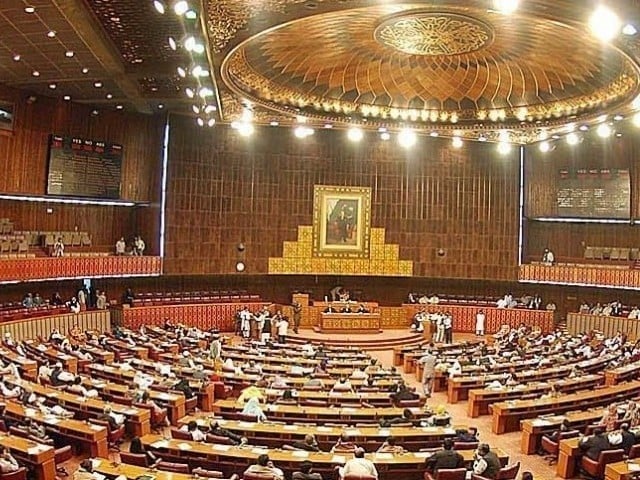
    ISLAMABAD: A serious debate erupted in the National Assembly Standing Committee on Federal Education and Professional Training after lawmakers questioned whether educational institutions were doing enough to stop the spread of drugs among students, warning that awareness campaigns alone cannot defeat organised supply networks operating around campuses. The committee, chaired by Ms. Mahtab Akbar Rashdi, examined the growing problem of narcotics in educational institutions and demanded practical results instead of only reports, seminars and awareness programmes. The committee stressed that the issue was not limited to students using drugs but also involved people supplying these substances to young people. During the meeting, officials of the Federal Directorate of Education (FDE) informed the committee that no drug use incident had been officially reported inside its public sector institutions. They said multiple measures were being taken, including drug awareness education, life skills programmes, tobacco free zones, monitoring committees and coordination with law enforcement agencies. However, Member of the Committee Dr Shazia Sobia Aslam Soomro expressed dissatisfaction with the briefing and questioned whether awareness campaigns were producing real results. She said simply giving presentations about awareness was not enough and asked authorities how many suppliers had been caught, how many institutions had reported cases and what action had been taken against those involved in supplying drugs. “This is not a joke,” Chairperson Ms. Mahtab Akbar Rashdi said while stressing that the problem required serious action. She questioned why authorities were focusing mainly on awareness while failing to show clear results against those involved in supplying drugs. The committee also raised concerns that drug suppliers were using new methods to reach students. Members pointed towards reports suggesting that drugs were being supplied through online channels and other hidden methods, including delivery systems that make it difficult for institutions to detect the problem. Dr Shazia Sobia informed the meeting that Islamabad Police had reported seizing 370 kilograms of drugs over three years, with 214 cases reported in educational institutions and 263 people arrested. The member questioned why education authorities were mostly discussing awareness instead of providing details about cooperation with police, the Anti Narcotics Force and rehabilitation centres. The committee raised another major concern that disciplinary action was often taken against students, while the people supplying drugs were not being targeted enough. Members questioned why students faced penalties while suppliers operating around educational institutions continued to escape. They demanded stronger action against those bringing drugs into campuses rather than focusing only on students who may already be victims of addiction. Chairperson Ms. Mahtab Akbar Rashdi said educational institutions must take responsibility because they control campuses, hostels and facilities where students spend their time. She said institutions cannot reach inside homes, but they must ensure strict monitoring within their own premises. She further directed that universities and colleges should provide regular reports about drug related cases, actions taken and rehabilitation efforts. She emphasised that the goal should not only be punishment but also helping affected students recover. The Higher Education Commission (HEC) informed the committee that it had implemented a drug and tobacco control policy across around 249 universities. According to HEC officials, committees had been formed in universities, monitoring mechanisms were introduced and coordination was established with the Anti Narcotics Force and other agencies. HEC officials told the committee that around 1,418 drug related cases were reported in 250 institutions. They said penalties, warnings, counselling and other disciplinary actions were taken in different cases. The committee, however, questioned whether these numbers reflected a real improvement or only showed administrative action after incidents had already occurred. Members also raised concerns about suppliers operating near universities, including allegations that some people connected with campus facilities could be involved in supplying drugs. They demanded that authorities investigate suppliers instead of limiting action to students. HEC officials responded that action had been taken against suppliers where evidence was available. They said surveillance systems, including CCTV monitoring, were being used and that students involved in supplying drugs could face suspension or termination. The committee decided that future discussions should include the Anti Narcotics Force, police authorities and relevant rehabilitation experts to develop a stronger strategy against drug supply networks. Officials were asked to return with practical results, including information about suppliers caught, students rehabilitated and improvements achieved.

  • K-IV project delay, NA committee summons Sindh officials

    Islamabad: The future of Karachi’s major water supply project K IV came under discussion in the National Assembly Standing Committee on Water Resources as lawmakers questioned the scheme’s progress and summoned senior Sindh government officials for a detailed briefing. The committee was informed that the portion of the K IV Project under the responsibility of the Water and Power Development Authority (WAPDA) is expected to be completed by 2027. The WAPDA Chairman told the committee that the funds required for this part of the project have already been secured, removing a major financial hurdle. However, questions remain over the overall progress of the project, as the committee decided to summon key Sindh officials in its next meeting to seek a clear update on the remaining work and coordination between different departments. The National Assembly Standing Committee on Water Resources, chaired by Mr. Ahmad Atteeq Anwer, MNA, directed that the Chief Secretary Government of Sindh, Secretary Irrigation Department Sindh, CEO Karachi Water and Sewerage Corporation and Project Director K IV must attend the next meeting to explain the current status of the project. The K IV project is considered an important scheme for improving water availability for Karachi, a city that has faced long standing challenges related to water supply. The committee stressed the need for better coordination among federal and provincial institutions to ensure timely completion. During the meeting, the committee also reviewed the WAPDA Security Force Bill, 2026. After detailed discussions, members directed that a comprehensive comparison study of the proposed legislation should be provided before the next meeting so that lawmakers can examine its provisions in detail. The committee members emphasised that major water projects require continuous monitoring and effective implementation to ensure public benefit. The committee will continue reviewing progress and seek updates from concerned departments in future meetings.

  • | |

    US publication praises Pakistan’s digital financ…

    A US publication has praised Pakistan’s efforts to modernise its financial system, saying the country is steadily strengthening its position in the global digital financial landscape through reforms and technological innovation. The article highlighted Pakistan’s initiatives to promote digital transformation and said the country has the potential to play a meaningful role in the evolving global digital economy. It also commended the vision of Pakistan Virtual Assets Regulatory Authority (PVARA) Chairman Bilal Bin Saqib, stating that Pakistan must actively position itself within the international digital financial system to benefit from emerging technologies and new economic opportunities. According to the publication, the future will belong to countries that make swift decisions and implement reforms without delay. It noted that Pakistan has the opportunity to emerge as a leader in the digital economy by embracing innovation and adopting forward-looking policies. The article further stated that governments can no longer rely solely on traditional bureaucratic systems. Instead, they must adopt the speed, flexibility and innovation-driven approach of technology startups to remain competitive in a rapidly changing global environment. It added that digital assets are becoming the foundation of the future financial infrastructure and countries investing in digital finance today will be better positioned for long-term economic growth and global competitiveness. The publication’s remarks come as Pakistan continues to promote digital payments, financial technology and cashless transactions as part of its broader strategy to modernise the economy and expand financial inclusion.