top court finds
|

Top UN court finds Myanmar committed genocide against Muslim Rohingya

THE HAGUE, Netherlands – The United Nations’ highest court ruled on Thursday, November 19, that thousands of killings and widespread sexual violence by Myanmar’s security forces against the Rohingya Muslim minority population in 2017 amounted to state-sponsored genocide.

The decision, seven years after the case was filed by predominantly Muslim Gambia, marked only the fourth time since the Nazi Holocaust that an international court ruled that the legal threshold to prove genocide had been met. It was the first time the court held a state responsible for genocide.

“The court finds that Myanmar’s security forces killed thousands of Rohingya civilians, perpetrated widespread acts of sexual violence as well as acts of extreme violence against children and attacked fleeing Rohingya,” Presiding Judge Yuji Iwasawa said in a reading of the decision.

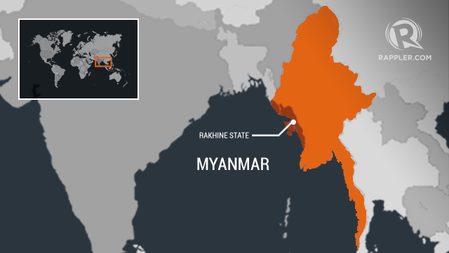
The panel found “that the Republic of the Union of Myanmar has committed genocide against the Rohingya group in Northern Rakhine State.”

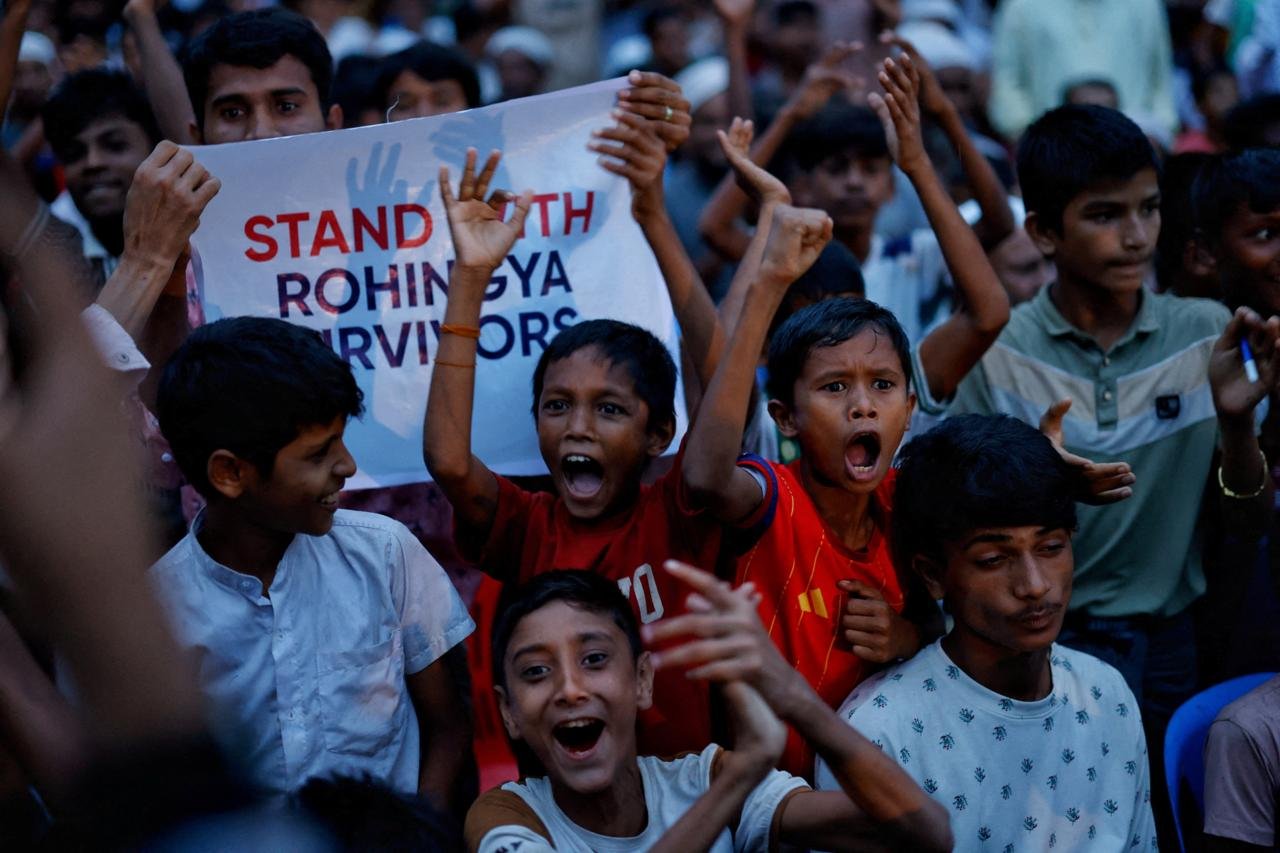
For the 1.2 million Rohingya forced into exile in the sprawling Cox’s Bazar refugee settlement in Bangladesh, where more than 1,000 people cheered as the verdict came in on a TV screen, it was a historic moment of truth and vindication, a prominent Rohingya campaigner said.

“For decades, the Burmese military tried to erase our identity, deny our existence, and dismiss our suffering,” said Wai Wai Nu, executive director of the Women’s Peace Network and a former political prisoner.

“By finding that Myanmar committed genocide, ordering a guarantee of non-repetition, and ordering restitution and compensation, the world’s highest court has permanently shattered that state-sponsored lie.”

Myanmar’s government, which has denied genocide, saying its forces were tackling a violent insurgency, did not immediately respond to a request for comment on the ruling.
Must Read

FAST FACTS: Who are the Rohingya?


FAST FACTS: Who are the Rohingya?

Decision is expected to influence other genocide cases

Judges found that Myanmar’s military carried out mass executions of men and boys, committed widespread rape and sexual violence against Rohingya women and burned or razed hundreds of villages during so-called clearance operations. The military actively spread hate speech targeting the Rohingya population, they said.

The court’s ruling is final and cannot be appealed.

Genocide has rarely been established in international courts, largely because prosecutors must prove a specific intent to destroy, in whole or in part, a national, ethnic, racial or religious group.

The decision by the International Court of Justice, or World Court, is expected to have repercussions far beyond Myanmar, including for South Africa’s 2023 case accusing Israel of genocide in Gaza.

Both Israel and Myanmar deny genocide and say their forces responded legitimately to attacks by armed groups.

The first major decision by the court in more than a decade on the application of the 1948 Genocide Convention will be pored over by legal experts for clues to how the bench assessed state responsibility in the alleged commission of international crimes.

In a major legal victory for Gambia, the court found the state responsible for genocide resulting from a military offensive that drove at least 700,000 Muslim Rohingya from Buddhist-majority Myanmar. The court adopted a UN fact-finding mission figure of at least 10,000 deaths during so-called clearance operations, saying it was supported by the record.

The court said “the only reasonable inference that can explain Myanmar’s actions is an intention to destroy a substantial part of the protected group namely the Rohingya population in Northern Rakhine state,” meeting the legal threshold for genocide.

Judgment raises hopes for return but enforcement is unclear

The ruling said Myanmar had an obligation to compensate the Rohingya for the violations it had committed, to be determined at a later date.

Myanmar must also allow the “safe and dignified return to their place of residence and the reunification of families for the Rohingya displaced as a result of Myanmar’s wrongful acts,” it said.

After losing everything, the Rohingya face struggles the court cannot solve, but the decision “will strengthen our efforts to return home,” said Sayed Ullah, a community representative speaking from Cox’s Bazar.

James Goldston, executive director of the Open Society Justice Initiative, said that with growing pressure on international law and institutions upholding it, the ruling showed their vital role “in establishing truth, assigning responsibility, and protecting the values that bind our common humanity.”

International courts previously recognised genocide only in Rwanda in 1994, the 1995 Srebrenica killings in Bosnia, and atrocities by Cambodia’s Khmer Rouge in the late 1970s.

While rulings by the ICJ, which settles disputes between states and rules on alleged breaches of international treaties, are final, the court has very limited options to enforce them.

Former colonial ruler Britain said on Thursday that it was expelling Myanmar’s defense attache and would set out further action in coming days. Two British lawmakers urged the government to bring a resolution to the UN Security Council to compel enforcement action.

The ICJ is distinct from the International Criminal Court, which prosecutes individuals for war crimes, crimes against ​humanity and genocide and can impose jail terms. – Rappler.com

Similar Posts

  • |

    Police file case against Meta India chief over Modi videos

    Police in the southern Indian city of Hyderabad have registered a criminal case against the head of Meta India over videos shared on Facebook that allegedly portrayed Prime Minister Narendra Modi in an abusive manner. Officials said the cybercrime unit has initiated legal proceedings and is preparing to issue a formal notice to Meta Platforms as part of the investigation. The notice had not been served as of Friday. Authorities have not disclosed further details about the videos but said the case relates to content published on Facebook that allegedly violated Indian laws. Meta did not immediately comment on the development. The latest case adds to growing friction between the Indian government and the social media company over content involving Prime Minister Modi. Earlier this week, India’s Ministry of Electronics and Information Technology summoned Meta representatives after Facebook briefly restricted one of Modi’s posts. The government sought an explanation from the company, calling for accountability over the incident. Meta later stated that the restriction was the result of an unintended error and restored the post. The message was Modi’s first public response to nationwide student protests that eventually led to the resignation of India’s education minister. In recent weeks, the Indian prime minister has faced intense criticism on social media, with users sharing protests, satire, and political commentary related to the ongoing unrest.

  • | |

    Cockroach movement demands release of detained pro…

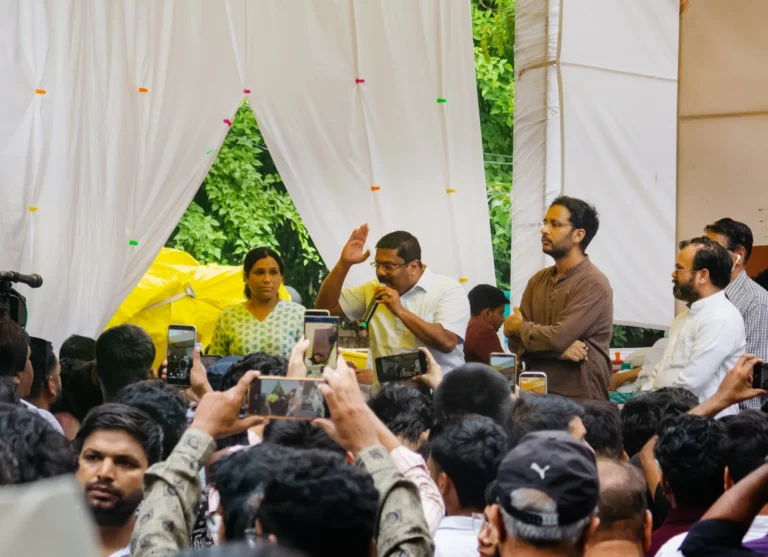
    India’s youth led Cockroach protest movement called on authorities Monday to release all demonstrators detained during weeks of nationwide rallies, days after the campaign succeeded in forcing the resignation of the country’s education minister. The Cockroach Janta Party, an online organized group that has driven weeks of protests over exam paper leaks and other irregularities in India’s competitive examination system, said it had received reports of students being held in custody, particularly across the states of Assam, West Bengal and Bihar. In a statement, the group said any failure to release detained protesters or drop criminal cases against them would represent a breach of public trust, and warned it would take further action if its demand was not met. The statement followed the resignation two days earlier of Dharmendra Pradhan as education minister, a move that came after repeated failures in the administration of competitive exams fueled widespread anger among young Indians. The Cockroach Janta Party accused the government of going back on earlier assurances that protesters would not face punitive action. The movement has attracted millions of followers on social media since it launched in May under the leadership of Abhijeet Dipke, a 30 year old public relations graduate. Tens of thousands of demonstrators, most of them students, rallied last week in New Delhi and other cities across the country to demand Pradhan’s resignation and broader changes to the examination system. Protests in the capital turned violent on July 20 when demonstrators attempted to march from the Jantar Mantar protest site toward parliament. Police responded with tear gas and batons to break up the crowd, setting off clashes that led to a wave of detentions. The fallout from the crackdown carried into parliament on Monday, where opposition lawmakers repeatedly disrupted proceedings while demanding that the government address last week’s police response. Despite the disruptions, the government pressed ahead with introducing legislation in the lower house aimed at imposing tougher penalties for examination paper leaks. The protest movement has emerged as one of the most significant youth led political mobilizations in India in recent years, drawing comparisons to earlier waves of student activism that used social media to rapidly organize large scale demonstrations. Analysts say the swift resignation of a sitting cabinet minister underscores the growing influence such movements can wield when they combine online organizing with sustained street pressure, though the outcome of the current standoff over detained protesters remains uncertain as both sides continue to weigh their next steps.

  • | |

    Fuego volcano forces evacuations in Guatemala as l…

    Guatemalan authorities have ordered residents in at least two villages to evacuate after the Fuego volcano erupted, sending lava and ash shooting into the air. Fuego, regarded as one of the most active volcanoes in the Western Hemisphere, began erupting on Monday. The country’s volcanic monitoring agency reported that pyroclastic flows, fast moving currents made up of hot gas, volcanic ash and rock fragments, continued rushing down the volcano’s south eastern slope into early Tuesday. Guatemala’s disaster management agency, known as Conred, raised a nationwide orange alert, the second highest level on its warning scale, and cautioned residents to remain prepared as further eruptions could generate additional pyroclastic flows and large ash clouds. The agency advised people living nearby to keep their doors and windows shut, and officials canceled classes at schools located close to the volcano. Fuego sits roughly 16 kilometers, or about 10 miles, west of Antigua, a city that draws large numbers of tourists each year for its well preserved colonial era architecture and status as a UNESCO World Heritage Site. The volcano itself has also become a popular destination for hikers in recent years, drawing visitors who trek its slopes for views of the surrounding region. Conred urged both tourists and local residents to avoid approaching the volcano or lingering in areas considered at risk, particularly along its slopes, as the situation continues to develop. The eruption has revived memories of a far deadlier event in 2018, when a sudden eruption of Fuego killed more than 200 people. Many of the victims were overtaken by fast moving pyroclastic flows that swept down the Las Lajas ravine with little warning, a disaster that remains one of the deadliest volcanic events in the country’s recent history. Fuego’s frequent activity has long made it one of Central America’s most closely monitored volcanoes, with authorities maintaining routine surveillance given its proximity to populated areas and popular tourist destinations.

Leave a Reply

Your email address will not be published. Required fields are marked *