rappler recap trump
| | |

Rappler Recap: Trump meets ASEAN leaders at special summit

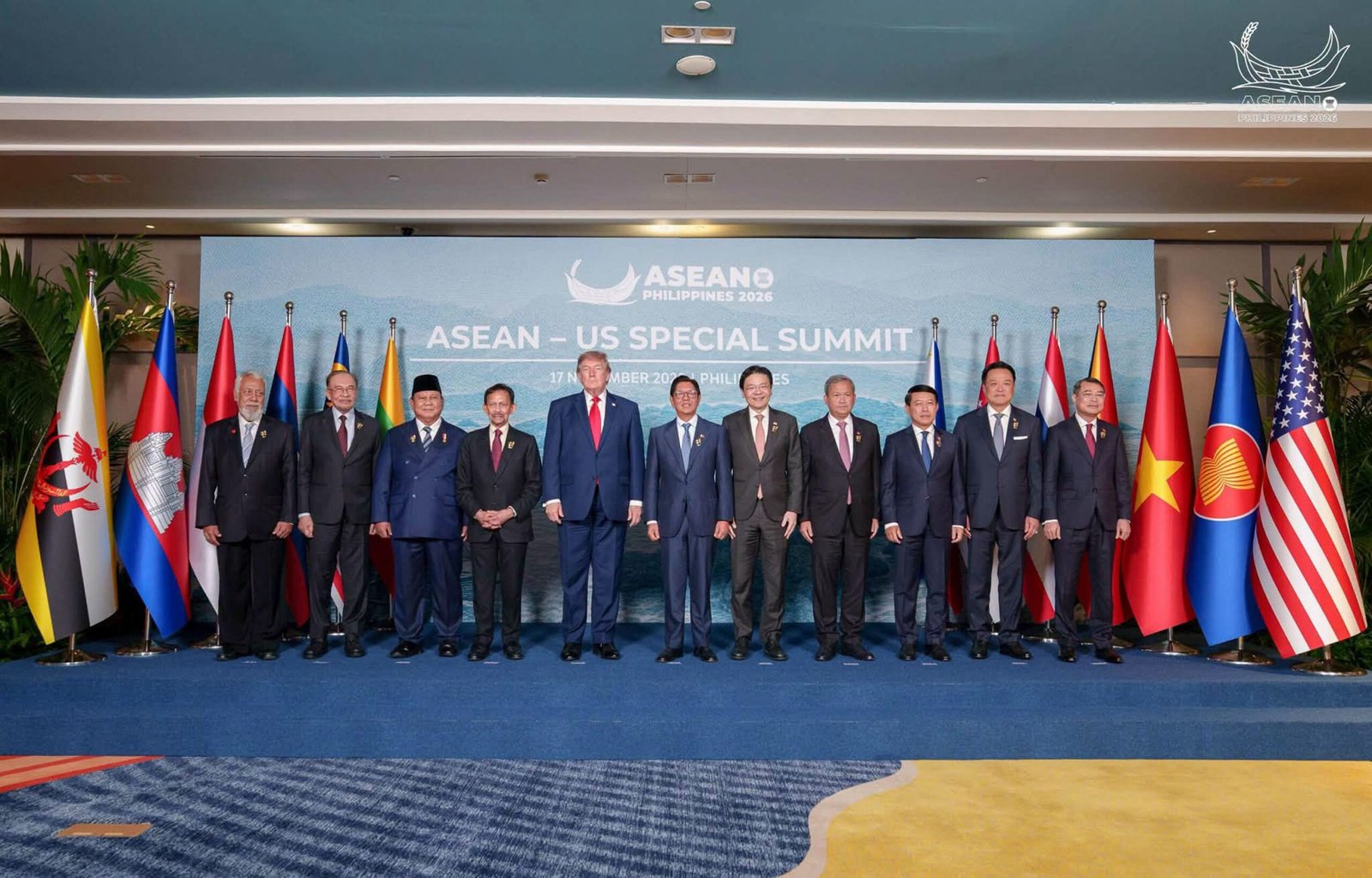
MANILA, Philippines – United States President Donald Trump is the last international leader to arrive in the Philippines during the 49th Association of Southeast Asian Nations Summit and Related Summits, meeting ASEAN leaders after the closing ceremony on Tuesday, November 17.

In this recap, Rappler reporter Jelo Mantaring gives a rundown of the issues raised during the special summit. – Rappler.com

Similar Posts

  • |

    Russian missile strike kills 9 in Kyiv

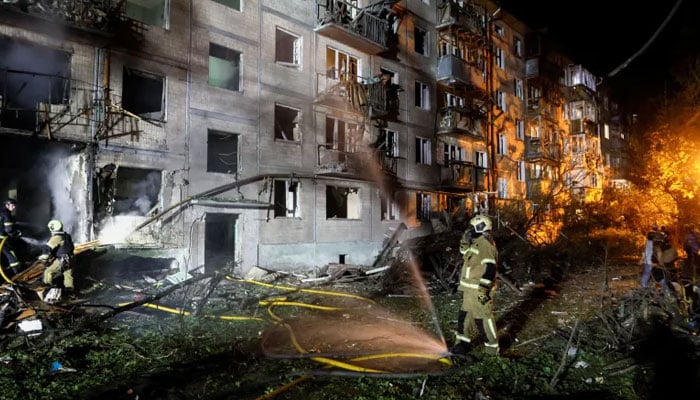
    At least nine people were killed and 23 others injured after Russia launched a missile attack on Ukraine’s capital, Kyiv, on Saturday morning, according to Ukrainian emergency authorities. The Ukrainian Emergency Service said the casualties included two young boys. Officials also reported that one of the injured victims remained in critical condition as rescue and emergency teams continued their operations across the affected areas. The missile strike caused extensive damage to several buildings and triggered fires at multiple locations in the capital. Emergency workers rushed to the scene to extinguish the fires, secure damaged structures and search through piles of debris for survivors. Rescue teams continued clearing the rubble in an effort to locate anyone who might still be trapped beneath collapsed sections of buildings. The attack added to growing concerns over the security situation in Kyiv, which has faced an increase in Russian missile and drone strikes in recent months. Ukrainian authorities have repeatedly warned that Russian attacks continue to pose a serious threat to civilians as well as critical infrastructure. The latest assault also renewed Ukraine’s calls for stronger air defence capabilities. Kyiv has been pressing its Western allies to provide additional advanced defence systems and ammunition, arguing that stronger air protection remains essential to defending major cities and strategic facilities from Russian missile and drone attacks. Ukraine has particularly sought additional Patriot air defence systems, which can intercept certain types of high-speed missiles and provide protection against aerial threats. Ukrainian officials have consistently described air defence as one of their most urgent military requirements as the conflict continues. Meanwhile, US President Donald Trump said discussions are continuing over the possibility of providing Ukraine with technology linked to the production of Patriot missile systems. Trump indicated that talks remain ongoing but made clear that Washington has not yet reached a final decision on the matter. The issue is significant for Ukraine, which has sought to strengthen its ability to defend its territory while reducing its dependence on foreign supplies. Access to advanced air defence technology could potentially help Kyiv expand its defensive capabilities and respond more effectively to repeated missile attacks. The latest strike comes as the war between Russia and Ukraine continues to put civilians and urban centres at risk. Kyiv remains a key target, and Ukrainian officials have repeatedly appealed to international partners for greater military support and stronger air defence measures to protect the capital and other major population centres.

  • |

    Iran cautions US against military action during regional diplomatic calls

    Iran has warned that it will respond firmly to any future military action by the United States, with Foreign Minister Abbas Araghchi delivering the message during separate conversations with senior officials from Pakistan, Turkiye and Saudi Arabia. The diplomatic outreach comes as tensions in the region remain high amid growing speculation about possible American military action against Iran. According to statements released through Iran’s Foreign Ministry, Araghchi held separate telephone discussions with Turkish Foreign Minister Hakan Fidan, Saudi Foreign Minister Prince Faisal bin Farhan Al Saud and Pakistan’s Field Marshal Asim Munir. During the conversations, he stressed that Iran would react decisively to what he described as any new act of aggression by the United States or its allies. He said Tehran would respond proportionately to any attack targeting the country’s territory or critical infrastructure. In his discussion with Turkish Foreign Minister Hakan Fidan, both sides reviewed the latest developments in regional diplomacy and ongoing negotiations related to the current crisis. Fidan later confirmed the conversation on social media, saying the two officials exchanged views on recent diplomatic efforts and the evolving regional situation. Araghchi also used his conversation with Saudi Foreign Minister Prince Faisal bin Farhan to repeat Iran’s warning that any military action by the United States, Israel or other regional actors would receive a strong and direct response. Iranian officials have consistently maintained that the country’s defence policy is based on responding to attacks with equal force rather than initiating conflict. Last week, Araghchi reinforced this position through a social media post, describing Iran’s defence strategy as an “eye for an eye” approach. He said any strike against Iranian infrastructure would be met with a comparable response, signalling that Tehran remains prepared to retaliate if its security is threatened. The latest statements come as reports continue to circulate about possible military planning in Washington. Michael Doran, a former senior official on Middle East affairs at the US National Security Council, said President Donald Trump is reportedly close to deciding whether to authorise a large scale military operation against Iran. Citing an Israeli official quoted by Israel’s Kan 12 television channel, Doran said the US military has reached its highest state of readiness, although no final decision has been made. Neither the White House nor the Pentagon has publicly confirmed the reports. However, the speculation has added to concerns that the already fragile security situation in the Middle East could worsen if diplomatic efforts fail. Regional governments have been closely monitoring developments, with many countries urging restraint and encouraging dialogue to prevent a wider conflict. Analysts say continued communication between Iran and neighbouring states reflects growing efforts to avoid further escalation while preparing for the possibility of increased military tensions. Iran has repeatedly said it prefers diplomacy but insists it will defend its territory and national interests if attacked. As uncertainty continues over Washington’s next move, the exchange of warnings and diplomatic contacts highlights the delicate balance facing the region, where any military confrontation could have far reaching consequences beyond Iran and the United States. Focused keyword:

  • | |

    FACT CHECK: Posts misrepresent COA auditor’s ‘no violation’ remarks on OVP confidential funds

    State auditor Roderick Wamil’s ‘no violation’ comment was specific to one document submitted by Duterte’s office; during his testimony, however, he flagged irregularities in the liquidation documents submitted by the OVP on its use of confidential funds

  • |

    Bangladesh President Shahabuddin resigns, cites serious health issues

    Bangladesh President Mohammed Shahabuddin has resigned from office after citing serious health concerns that he said were preventing him from fulfilling his constitutional responsibilities. The 76-year-old announced that he had recently been diagnosed with autonomic neuropathy, a medical condition that occasionally causes sudden loss of consciousness. He said continuing in office had become increasingly difficult because of his health and that stepping down was in the country’s best interest. Shahabuddin had been serving as Bangladesh’s president since April 2023. While the presidency is largely a ceremonial position, the office plays an important constitutional role as the country’s head of state and commander-in-chief of the armed forces. Following his resignation, the Speaker of the Jatiya Sangsad (Parliament) will assume the responsibilities of acting president until parliament elects a new head of state under constitutional procedures. His resignation comes at a crucial time for Bangladesh, which has undergone major political changes since the 2024 student-led uprising that led to the removal of former Prime Minister Sheikh Hasina from power. The country’s political landscape has since shifted significantly, with the Awami League facing legal restrictions and many of its leaders confronting legal challenges or remaining out of public view. Shahabuddin had been elected president in 2023 with the backing of the Awami League. His departure means another major political figure associated with the former ruling party has left public office during Bangladesh’s ongoing political transition. The government is now expected to begin the constitutional process of electing a new president. Until then, the acting president will perform all official duties to ensure the continuity of state affairs. Political observers say the selection of Bangladesh’s next president will be closely watched, as it comes during a period of political uncertainty and institutional reforms. The new appointment is expected to play an important symbolic role as the country prepares for future political and constitutional developments. In his resignation statement, Shahabuddin thanked the people of Bangladesh for their trust and support during his tenure. He expressed hope that the country would continue on a path of peace, democratic stability and economic progress despite the current political challenges.

Leave a Reply

Your email address will not be published. Required fields are marked *