
Si Mau ug J sing in Bisaya, but all listeners are welcome
In the middle of a 700-seater auditorium in Metro Manila, two musicians hailing all the way from Tagum perform a song about living your life to the fullest by exploring Mindanao in its entirety.
Called “Ugma Mamatay Ra Ta,” which roughly translates to “we’ll die tomorrow anyway,” the track is a heartwarming production despite its seemingly morbid title. But it begs an important question: What would you do if you knew you would die tomorrow?
It is sung almost entirely in Bisaya. The audience — presumably made up of mostly Tagalog speakers — nods along in enjoyment anyway, even when what little lyrics they could probably recognize were just the mentions of provinces like Zamboanga and Cagayan de Oro, or regions like BARMM and Soccsksargen.

The artists behind it all? The duo Si Mau ug J.
“Mindanao is worth exploring. Beautiful ‘yung Mindanao,” Mau, one-half of the duo, told Rappler. “Fun siya for us kasi as Mindanawons, nafeel namin na nagwrite kami ng love song para sa home namin.”
(Mindanao is worth exploring. It’s beautiful. Writing the song was fun for us because as Mindanawons, it felt like we were writing a love song for our home.)
Si Mau ug J can’t quite believe they were able to take their music to listeners this far away from home. But it’s as real as ever, and it’s just the beginning for them.
From solo artists to creative partners
Long before becoming a duo, Si Mau ug J were solo artists pursuing their own craft separately as Mau Ria and as J Florence.
The music community in Davao, however, is small and tight-knit, so everyone is bound to get to know each other sooner or later. Back then, the two would often play at the same gigs and bump into each other from time to time.
But it was only at the 2020 edition of the Mindanao Popular (MinPop) Music Festival that the two connected. Mau had taken home the top prize during the finals that night, and J happened to be watching — and more importantly — rooting for Mau’s song.
The two eventually reconnected over the pandemic, and sharing the stage with each other for the first time was what sealed the deal for Si Mau ug J. J had played the guitar while Mau sang, and as they watched the crowd’s response to their performance, it became clear that there was chemistry between them.
“Strengths niya at strengths ko, cinombine namin,” said J, whose command of the instruments levels with Mau’s songwriting abilities. “Nakita namin na swak siya, ‘pag tayo ang nagsulat together. Effective siya since marerecall ng mga tao.”
(We combined her strengths and mine. We saw that it was a perfect fit whenever we wrote songs together. It’s effective because people can recall it better.)

When you give a good listen to Si Mau ug J’s current catalogue, it’s made apparent from the get-go that they can seamlessly flow from a more mellow tempo backed by acoustic guitars to a high-powered track that leans toward pop and rock. Still, the delicate vocals are what tie everything together.
“Intentional ‘yung mga melodies namin. Kahit hindi maintindihan [‘yung lyrics], they can still sing along to it,” J explained.
This signature sound, however, didn’t come out of nowhere. As soloists, Mau gravitated more toward the bedroom pop sound, while J was drawn to anything acoustic. Si Mau ug J as we know it, then, is the product of two artists from different backgrounds meeting halfway to make music that they could truly call theirs as a duo.
“We want to capitalize on shared experiences and nostalgia for everyone. We want our listeners to relate to our music. We set our minds to make music in a way that we’re singing to a specific person, that this story is theirs, too,” J said in a mix of English and Filipino.

Sonic profile aside, Si Mau ug J find themselves particularly drawn to telling stories about the realities of life. They “inject their truth,” as Mau puts it, and they aren’t afraid to touch on topics that are socially relevant.
Proud of their language
But perhaps the most striking quality to Si Mau ug J’s music is that their lyrics are almost entirely in Bisaya.
With how packed the local music scene is with fresh talent, it almost seems like there’s a temptation to sing in English or Filipino to go mainstream more easily. But for Si Mau ug J, that’s the least of their concerns.
“Sa Davao, kung saan kami nanggaling, bihira lang ‘yung makaremember sa mga medyo malalim na terms sa Bisaya. Tapos we wanted to save the language, na it’s still beautiful na gagamitin siya sa song or sa art. Ginagamit namin ‘yung terms na hindi masyadong ginagamit to remind our generation na our language is beautiful,” Mau shared.
(In Davao, where we’re from, it’s rare for people to remember deeper Bisaya terms. We also wanted to save the language, and show that it’s still beautiful and it can be used in songs or in art. We use lesser-known terms in our songs to remind our generation that our language is beautiful.)
Music in general, though, has always been known to transcend barriers like language. And as more people go on to discover Si Mau ug J’s music, all they want them to know is this: “That they are welcome kahit hindi nila naiintindihan (even if they can’t understand). They are loved by the Bisaya. This is the way Bisaya loves you.”
As the artists behind the song “Ugma Mamatay Ra Ta,” Si Mau ug J hope to inspire more people to explore Mindanao in its entirety.
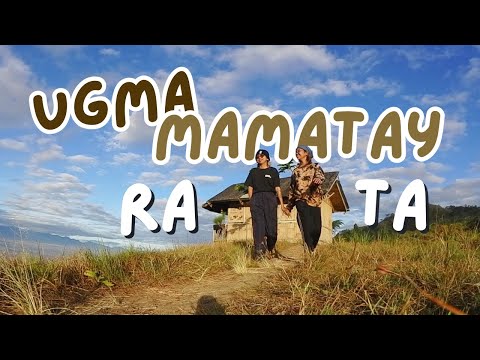
“May misconception sa Mindanao na ‘pag narinig, [maiisip nila] danger zone, mga giyera. Gusto namin na maerase ‘yung ganong stigma,” J emphasized.
(There are misconceptions about Mindanao where if people hear the word, they’ll think of it as a danger zone, or attribute it to warfare. We want to erase that stigma.)
Si Mau ug J don’t plan on stopping anytime soon. They’re planning on performing more, writing more music, and hopefully, exploring the rest of the Philippines, too. – Rappler.com