fsj young writers
|

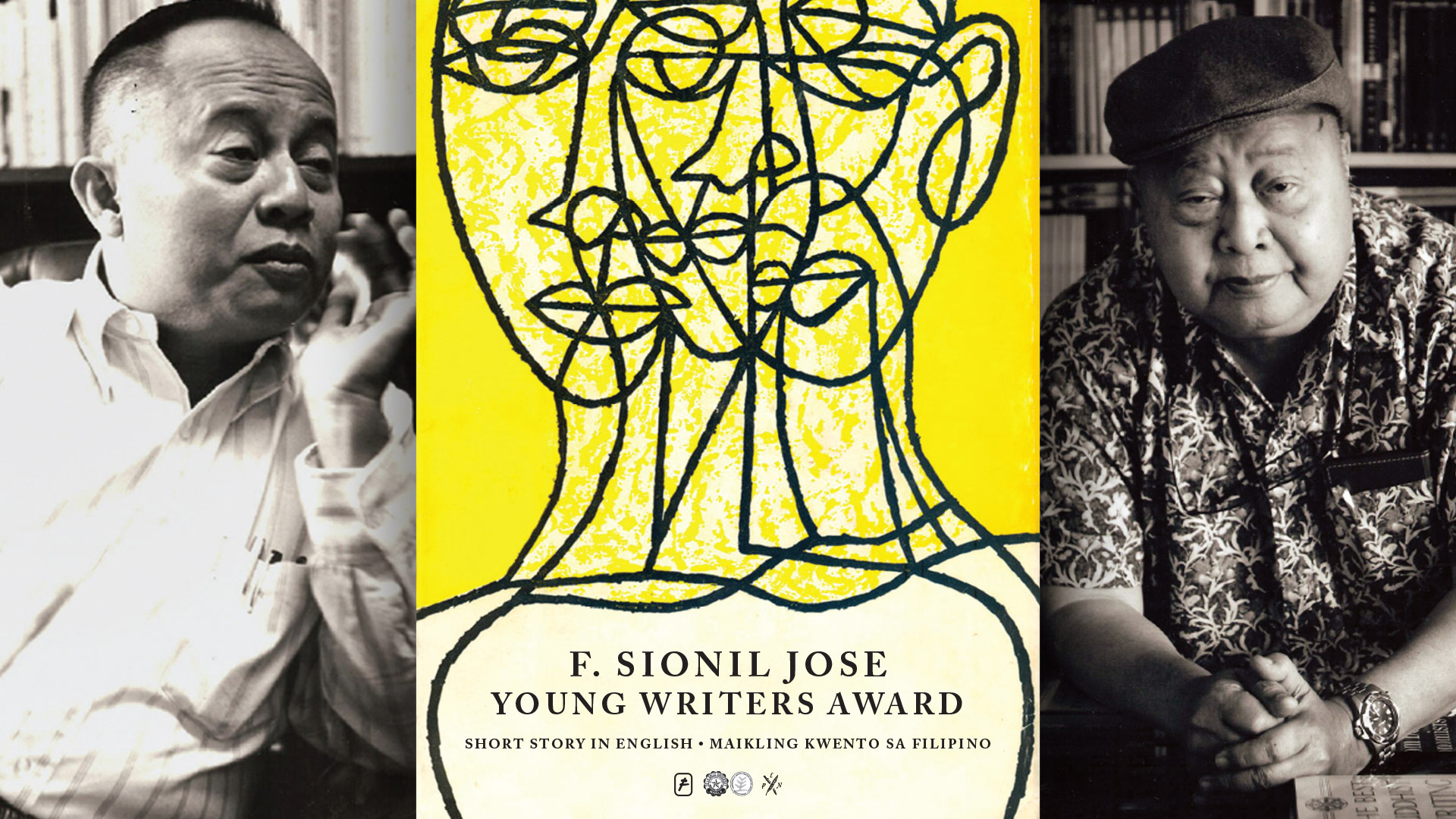
FSJ Young Writers Awards 2026 accepting entries until August 15 

(The following is a press release from the F. Sionil Jose Young Writers Awards.)

The F. Sionil Jose Young Writers Award was established by the children of F. Sionil Jose and Teresita Jovellanos Jose to honor his legacy to the young and beginning writers of the Philippines.

It seeks to advance excellence, integrity, social justice, and the expression of love of country in literature.

It is also to honor the memory of his wife, Teresita Jovellanos Jose, who was his pillar of support and inspiration.

Requirements

1. Writers should be 30 years old or younger.

    2. They should be Filipino citizens residing in the Philippines.

    3. The awards will be for the best short stories in English and Filipino.

    Submission guidelines

    1. Submit one short story written in English or Filipino.

      2. The story may be unpublished or published.

      3. Published stories must have been published in January 2026 or later.

      4. The stories must cover a maximum of 20 pages, in double-spaced, 12-point typeface. The pages must be numbered.

      5. Submissions must include a cover page, which will include the complete name of the writer, their date of birth, address, email address, phone number, and the title and the language of the short story.

      6. The cover page must also include a brief biography (200 words maximum) about the author. If the short story has been published, the publication source and date should be indicated.

      Submission date

      Entries must be received by 11:59 pm (Manila time) on August 15, 2026.

      Submissions must be sent in the form of a separate cover page and the short story, both in PDF form to fsjawards2026@gmail.com.

      Prizes for each category

      First prize – P25,000

      Second prize – P15,000

      Third prize – P10,000

      The awards ceremony will be held on October 10, 2026 at the PEN Philippines Congress to be held at De La Salle University.

      The F. Sionil Jose Young Writers Award is funded by the children of F. Sionil Jose and Teresita Jovellanos Jose.

      The awards are managed and facilitated by PEN Philippines and hosted by the Bienvenido N. Santos Creative Writing Center, De La Salle University.

      To protect the integrity of the competition, the organizers reserve the right to request drafts, revision histories, research notes, or other evidence of authorship. Entries for which satisfactory evidence of predominantly human authorship cannot be provided including those suspected of undisclosed generative AI authorship, may be disqualified. – Rappler.com
      Similar Posts

      • | | |

        Metrobank Foundation honors 10 outstanding Filipino teachers, soldiers, and police officers for 2026

        Guided by the theme ‘Beyond Excellence,’ this year’s awardees were selected for their innovative contributions, exemplary leadership, and sustained commitment to the people and institutions they serve

      • | |

        Theories behind Shakespeare’s true identity

        For centuries, William Shakespeare has been indicated as the undisputed genius of Western literature. His masterworks, ranging from the tragedy of Hamlet to the romantic drama of Romeo and Juliet, form the bedrock of English theater. Yet, beneath the reverence lies one of the most persistent controversies in literary history. Did a provincial actor from Stratford-upon-Avon actually pen these legendary plays? Was Shakespeare merely a convenient alias for another genius working in the shadows? The Paradox of the Bard’s Background Doubts surrounding Shakespeare’s authorship stem largely from the sharp contrast between his known biography and the astonishing depth of his literary canon. Born in 1564, Shakespeare attended the local grammar school where he learned Latin and basic rhetoric. He never pursued higher education at a university, nor did he ever leave England. In contrast, the plays attributed to him demonstrate an extraordinary mastery of complex subjects. They reveal intimate familiarity with international geography, continental languages, high-stakes royal politics, aristocratic court etiquette, and intricate legal doctrines. In an era before public libraries and widespread travel, skeptic scholars often called Anti-Stratfordians question how a man with limited schooling and exposure to foreign cultures could possess such erudition. This discrepancy has led many to speculate that the real Shakespeare acted primarily as a public frontman. As an actor and shareholder in the Lord Chamberlain’s Men, Shakespeare was well-positioned in London’s theatrical community. High-born courtiers or politically vulnerable figures who wished to write plays may have utilized Shakespeare’s name to publish their works safely. The Leading Candidates Over years, prominent figures from Tudor and Jacobean society have emerged as alternatives for the true authorship. Sir Francis Bacon: A brilliant philosopher, statesman, and pioneer of the scientific method. Bacon possessed the intellectual rigor and courtly insight required to craft the plays. Proponents argue that he’s Lord Chancellor and a government insider. So, Bacon couldn’t openly associate with public theater. It would’ve definitely ruined his political standing and risking royal disapproval. Edward de Vere, Earl of Oxford: Educated at Cambridge, well-traveled throughout Europe, and a celebrated poet in his own right, de Vere fits the profile of an elite playwright. However, a major hurdle for the Oxfordian theory is that de Vere passed away in 1604 several years before iconic plays like The Tempest and Macbeth were produced. Christopher Marlowe: Perhaps the most dramatic theory involves Shakespeare’s contemporary, Christopher Marlowe. A gifted Cambridge graduate and spy for the Tudor government, Marlowe officially died in a tavern brawl in 1593. Skeptics suggest he faked his death to escape charges of heresy and treason, subsequently continuing to write under the pen name William Shakespeare. Notably, the first publications under Shakespeare’s name appeared just weeks after Marlowe’s reported demise. Was the Genius a Woman? The authorship debate extends beyond male nobles to include extraordinary women of the Elizabethan court. Shakespeare’s plays are remarkable for their nuanced, highly capable female characters who defy traditional stereotypes of the era. Two prominent women are frequently cited in authorship theories. Mary Sidney, Countess of Pembroke: An accomplished writer, classical scholar, and major patron of the arts, Sidney hosted a renowned literary salon and authored closet dramas meant for private performance. Emilia Bassano: Born to a family of Venetian court musicians believed to have Jewish heritage, Bassano possessed both international ties and formal education. Her background offers a compelling explanation for the Italian settings and Jewish themes present in works such as The Merchant of Venice. An Enduring Literary Mystery Mainstream academic consensus remains firmly with the man from Stratford-upon-Avon. They pointed to contemporary records, theatrical tributes and historical references. The debate surrounding the Bard’s identity continues to fascinate scholars and theater lovers alike. Whether created by a single self-made dramatist or a hidden collective of noble minds, the plays continue to inspire readers across the globe.

      • | |

        Greek epic poetry finds a home in Irish literature

        There is an intimacy in the way Irish writers engage with classical mythology including epic poetry. The Odyssey predates Ireland’s earliest written epic, Táin Bó Cúailnge (The Cattle Raid of Cooley), by nearly 1,400 years. The distance in time and geography vanishes the moment an Irish poet puts pen to paper. Universal Image of The Weary Traveler In her modern translation of The Odyssey, classicist Emily Wilson frames Homer’s epic through a deeply human lens. She writes of an exhausted wanderer standing outside a home. A figure who has been displaced and lost for decades. That universal image of the weary traveler searching for home is precisely why Homer’s writing has found such a permanent resonance in Ireland’s literary canon. Across generations, Ireland’s greatest literary minds have treated Homer as a living contemporary. William Butler Yeats, Patrick Kavanagh, and Nobel laureate Seamus Heaney all drew heavily on Homeric motifs to articulate the Irish experience. For these writers, the themes of exiled wanderers, domestic longing, political strife, and tragic return were not abstract concepts from a bygone Mediterranean era. They mirrored the realities of Irish history, rural life, and national identity. Seamus Heaney Seamus Heaney’s engagement with classical literature was particularly profound. Heaney frequently used ancient myths to process modern conflict, finding in Greek drama and epic poetry a framework to speak about political violence, loss, and reconciliation during the Troubles in Northern Ireland. By mapping Homeric echoes onto the Irish landscape, Heaney showed that the struggles of Ithaca were not so different from those of Derry or Ulster. To Heaney and his peers, classical antiquity offered a universal mirror through which local grief and local beauty could be understood. Patrick Kavanagh Similarly, Patrick Kavanagh famously elevated the quiet, local struggles of rural Monaghan by comparing them to the epic siege of Troy, insisting that the everyday life of ordinary people contains just as much drama and dignity as the ancient sagas. Meanwhile, W.B. Yeats wove Homeric imagery directly into the fabric of the Irish Literary Revival, bridging Ireland’s Gaelic heritage with classical antiquity to forge a distinct national identity. Ireland’s Relationship with The Odyssey What makes Ireland’s relationship with The Odyssey so enduring is this sense of shared cultural DNA. Both traditions belong to storytelling cultures rooted in oral performance, mythic memory, and a deep reverence for language. Homer’s tales of displaced heroes, lingering grief, and ultimate return resonate naturally within an island nation shaped by exile, migration, and the constant search for home. Ultimately, the literary bridge connecting Homer to Heaney proves that timeless stories do not belong to a single era or place. As long as readers recognize the tired wanderer standing at the door, The Odyssey will continue to find a home in Irish literature. The Literary Parallel Homer’s The Odyssey predates Ireland’s national epic, Táin Bó Cúailnge, by roughly 14 centuries, yet their thematic overlap remains seamless. Prominent Irish authors including Seamus Heaney, W.B. Yeats, and Patrick Kavanagh frequently adapted Homeric themes into their modern works. Emily Wilson’s modern translation highlights themes of exile and displacement, which reflect Ireland’s history of migration, political conflict, and domestic longing.

      • |

        The evolution of the modern literary hero

        For millennia, the literary hero was defined by extraordinary grandiosity. From Gilgamesh navigating epic wildernesses to Achilles demanding battlefield glory, ancient narrative traditions favored figures of superhuman strength, divine lineage, and absolute moral certainty. These classic archetypes reflected societies that sought order in chaos through idealized figures who conquered external monsters and conquered impossible odds. Yet, as civilization evolved, so too did our definition of heroism. The story of global literature is, in many ways, the gradual dismantling of the perfect hero in favor of someone far more recognizable: ourselves. The shift began in earnest during the European Renaissance and accelerated through the rise of the novel in the eighteenth and nineteenth centuries. Readers began turning away from mythic kings and gods, seeking stories that reflected the complex realities of ordinary life. Authors like Cervantes with Don Quixote poked affectionate fun at chivalric romance, replacing invincible knights with well-meaning, delusional dreamers. By the nineteenth and early twentieth centuries, writers like George Eliot, Fyodor Dostoevsky, and James Joyce completely reshaped the landscape. Heroism moved inward. The primary battleground was no longer a blood-soaked field of armor. It’s transformed into the unseen terrain of human conscience, social expectation, and psychological angst. In modern and contemporary literature, the classical hero has largely given way to the complex protagonist or antihero. Today’s readers are naturally suspicious of flawless saviors. We recognize that perfection in storytelling is flat, predictable, and fundamentally false. Instead, modern narrative arcs celebrate figures characterized by vulnerability, moral ambiguity, and deep personal flaws. Characters like Jay Gatsby, Arthur Pendelton, or Holden Caulfield resonate not because they always make noble choices, but because their struggles with identity, grief, and societal pressure mirror our own daily conflicts. Moreover, modern literature has democratized who gets to be a hero. Where ancient myths strictly reserved heroism for powerful men of noble birth, contemporary fiction centers voices that were historically marginalized or silenced. Today’s protagonists reflect diverse racial, economic, gender, and neurodivergent experiences. Heroism in the modern era is rarely about wielding a magical sword to slay a dragon; it is about surviving systemic pressure, demonstrating radical empathy, reclaiming identity, or simply deciding to get out of bed and keep going in an unpredictable world. This historical transformation underscores a profound truth about human nature. We no longer look to literature for godlike ideals to worship from afar. Instead, we look into the literary mirror to see our own fractures, uncertainties, and quiet triumphs validated on the page. The modern literary hero reminds us that courage does not require perfection. Rather, it requires the willingness to remain human despite everything.  

      Leave a Reply

      Your email address will not be published. Required fields are marked *