In Theaters 25 Years Ago Today, Jurassic Park Fans Thought the Franchise Was Ruined in One Moment (But Things Got Worse)
When the first Jurassic Park premiered in 1993, it became a global phenomenon. Not only did Steven Spielberg’s movie become one of the highest-grossing films of all time, but it also kick-started an arms race for merchandising, generating enough money across so many revenue streams that it meant the studio had a franchise on its hands. Four years later would deliver The Lost World: Jurassic Park, a sequel that may not have been as big, but was still a proper blockbuster that kept audiences interested and eager for another dinosaur adventure.
Four years after that came the appropriately titled Jurassic Park III, which opened twenty-five years ago today on July 18, 2001. The film made a few distinct pivots from what fans may have been expecting from a sequel. Though it finally brought back the late Sam Neill as Dr. Alan Grant, having not appeared in the second movie, it didn’t take him back to the original island, instead opting for the same setting as The Lost World, the infamous “Site B.” Upon its relase, though a hit, Jurassic Park III was seen as the lesser sequel in the franchise, a title it held for years, and a lot of those ill feelings can be traced back to one moment.
Jurassic Park III’s Dream Raptor Was a Jump the Shark Moment
There are some things about Jurassic Park III that make no sense. The entire plot itself is pretty hamfisted, along with the complete lack of real explanation for why there would be new dinosaurs on an island that was seemingly abandoned by InGen for years (the franchise would, of course, later explain this). But one thing it absolutely got right from the jump was the characterization of Neill’s Dr. Grant.
From the beginning, Grant is revealed to be a man still obsessed with his work, haunted by what happened to him in the first movie and unwilling to engage with pedantry about what occurred at Jurassic Park. He’s also now focused exclusively on studying Velociraptors, something that he has first-hand experience with after the events of the first movie. The gravity of those moments can be felt in the way that Neill delivers his lines in the film, like when he asks Ellie, “Do you remember the sounds they made?” His performance is a tremendous one that elevates a pretty busted sequel.
Though he claims nothing could get him to return to the island, or that the creatures developed by InGen are even similar to what actual dinosaurs would have been like, the film, of course, reveals the exact thing that would get him back to the islands: funding for his actual research. Swayed by the Kirbys with the promise of funs, Grant accompanies them as a guide on a flyover of the island.
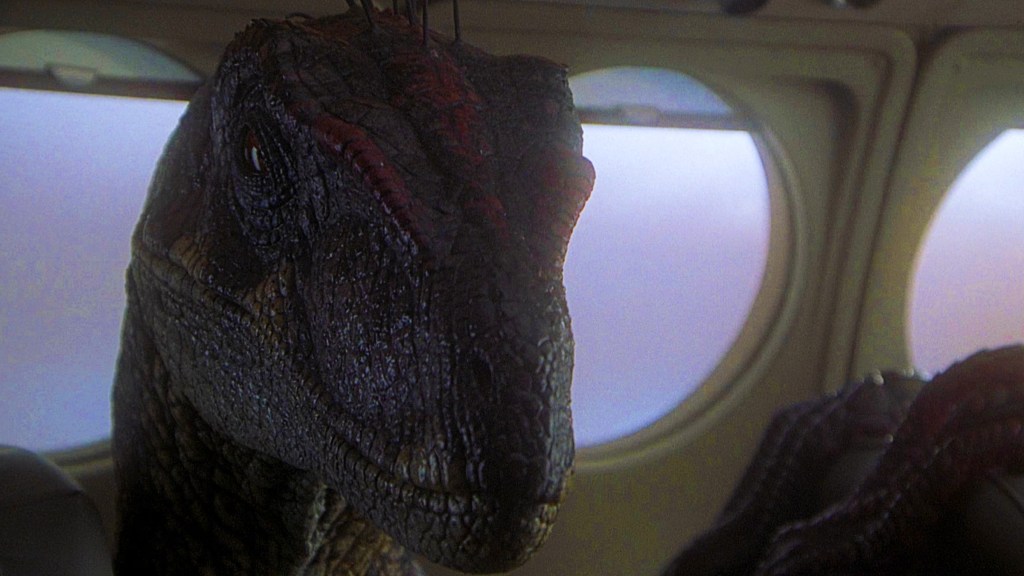
While dozing on the plane, Grant appears to wake up and find that no one else is present, and no one is even in the cockpit. When a familiar grunt catches his attention, he turns to his left to find none other than a velociraptor staring at him, only for the dinosaur to open its mouth and speak his name, “Alan.”
Though, of course, very quickly revealed to be a dream sequence, this moment is a bad joke in a film that by this point has already confirmed it has an incredibly sweaty premise. For fans of Jurassic Park who had grown up in the eight years since the original film, this was the moment that felt like Jurassic Park as a franchise had completely “jumped the shark.” Just two movies after the original masterpiece, the series has found a way to lean on tired tropes and lame gags while removing the teeth of its most sinister beast for the sake of making the audience laugh; hardcore fans couldn’t believe it.
Jurassic Park 3’s “Alan” Dream Is Nothing in 2026
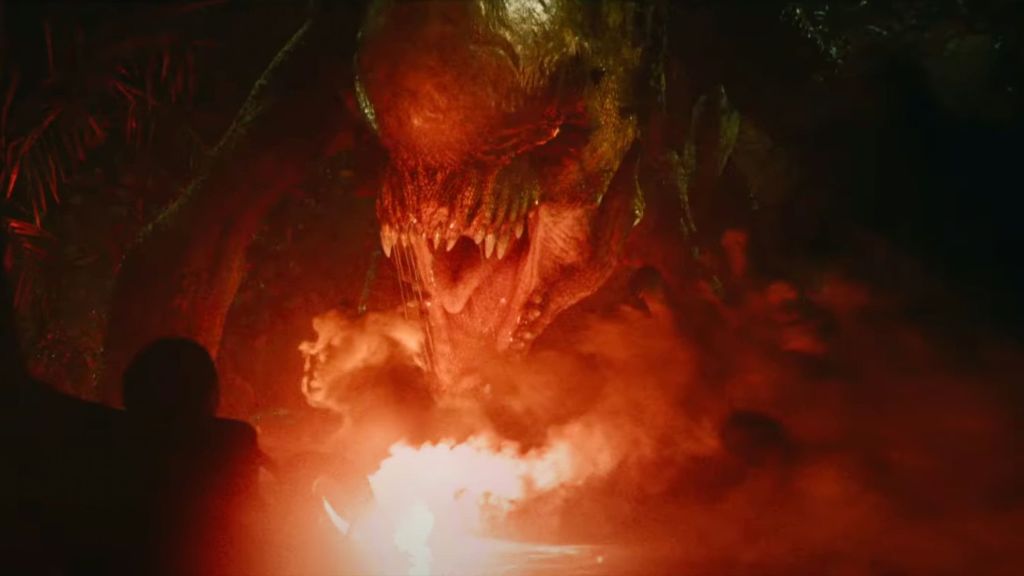
The “Alan!” dream sequence was just one moment in a larger sequel that fans weren’t thrilled with at the time of its debut. On top of that, the iconic Tyrannosaurus has only one scene in the movie where it’s killed by the all-new, big bad dinosaur, the Spinosaurus, and the end of the film has the U.S. Marines and Navy appear just in time to save everyone. At the time, it felt like the end of the road.
Even though Jurassic Park III was a hit upon its release, and a fourth film was developed (which would have somehow continued leaping over the shark), the series was dormant for over a decade until 2015’s Jurassic World revitalized the series and turned it into a billion-dollar film franchise that could rival new Marvel movies at the box office.
Though Trevorrow’s first film is littered with plot holes and inconsistencies that don’t track, the film has bouts of entertainment that made it a hit. Things only got worse from there, though, with the series delivering new retcons to the larger continuity like John Hammond’s “Secret partner” in Jurassic World: Fallen Kingdom, a plot centered entirely on locusts eating crops in Jurassic World Dominion (put together by the tertiary antagonist of the original film who only had one scene), and yet another retcon about InGen’s dinosaur labs, including a moment where a candy wrapper causes mass destruction, in Jurassic World: Rebirth.
Now, twenty-five years later, a dream sequence where a raptor says the lead character’s name feels like nothing compared to some of the things that have happened in the Jurassic Park franchise since then. In fact, we may have been way too hard at it at the time.