In Theaters 43 Years Ago, This Underrated Stephen King Adaptation Altered One of the Writer’s Darkest Endings
When adapting a book for the screen, there are bound to be changes. Whether it be cut characters, altered scenes, or entirely different endings, films take many creative liberties from their source material. Perhaps there’s no better example of this than in the work of Stephen King, who’s cinematic adaptations can range from very faithful to adaptations in name only, such as 1992’s Lawnmower Man. 43 years ago, one of the most underrated Stephen King adaptations hit theaters on August 12th, 1983, and became a cult-classic example of a now-celebrated horror sub-genre.
That film was Cujo, adapting King’s story of a rabid Saint Bernard. Compared to the novel, the Cujo movie is largely a faithful adaptation, retaining all the tension present in King’s book. The biggest alteration, however, comes in the film’s ending. Where Tad Trenton dies in the book, in the film he ends up surviving. As a result, the film dramatically alters one of King’s darkest endings — and by extension, the message of the whole story.
Cujo Is One of the Most Underrated King Adaptations

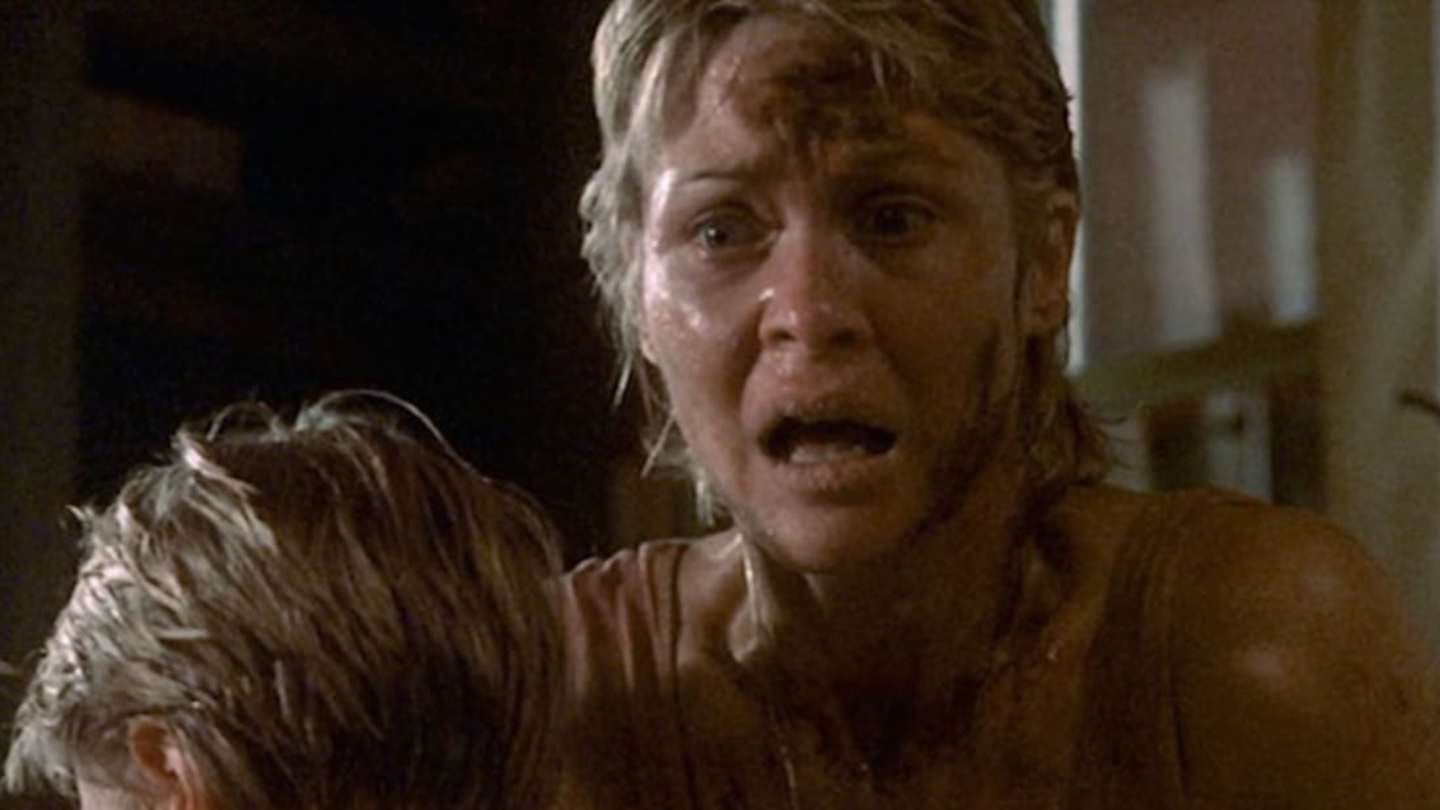
Based on Stephen King’s 1981 novel of the same name, Cujo — like a lot of King stories — is set in the small town of Castle Rock, Maine. The horror of Cujo begins when the titular canine, a Saint Bernard named Cujo, is bitten by a rabid bat. Following this, the dog goes on a rampage, killing his owner, and trapping mother and son Donna and Tad Trenton, inside their car. Being that the car is broken and there’s no one around to help them, the situation feels hopeless for the two, and Cujo is able to do a lot with a little. The car where we spend most of the film feels both claustrophobic and vulnerable, as though Cujo could break in at any second.
But it’s not just Cujo that’s the threat. Donna and her son face intense heat and dehydration; at one point, Tad almost succumbs to heatstroke. It’s in this way that Cujo serves as one of the best examples of “natural horror,” building terror not through monsters, but the natural world. In comparison to King’s other work, a rabid dog feels surprisingly realistic, and its adaptation proves that even his smaller-scale stories can be scary on the big screen.
Looking to the film’s production, which alternated between the use of real dogs and actors in costumes, Cujo feels like a movie that would be difficult to make today. At the very least, it wouldn’t be able to capture just how raw and visceral the original feels. While the book is just as violent, in many ways, it’s even bleaker — especially its ending.
Cujo Dramatically Altered King’s Original Ending (& Not For the Better)

As most film adaptations do, Cujo cut much of the novel’s fat – for instance, scenes that go into the perspective of other residents of Castle Rock. Other storylines are merely trimmed down, such as Donna’s infidelity and her lover’s attempt to expose her. In the ending of the novel, Donna’s husband, Vic, comes to their rescue, having been on a business trip, and kills Cujo. But Tad, who was on the verge of heatstroke, ultimately ends up dying too. It’s a dark ending — even for King — and one which leads to an epilogue of the Trentons trying to move on and grieve.
In comparison, while the film also sees a similar conclusion with Cujo’s demise, Tad survives the ordeal, and the movie ends with the Trentons reuniting. On one hand, the change is understandable: audiences don’t want to see a child die. But this difference also alters much of the novel’s original tragedy. As a story, Cujo is tragic because it’s about a dog driven to violence by rabies. As King’s novel reiterates, Cujo had no control over what happened to him. By having Tad die too, the novel has one tragedy lead to another. It’s cruel, yes, and certainly unfair, but that’s life, and that’s what King seems to be saying with his ending.
Of course, that doesn’t mean the movie has an entirely happy ending. The Trentons will still have to live with the trauma of what happened. But it feels too Hollywood for its own good. While Cujo stays true to the novel’s intensity, it fails to commit to its darkest moment when it matters most. As a result, 43 years later, Cujo still remains one of the most fascinating examples of a director altering Stephen King’s work.