Kenner Let Kids Become Ghostbusters, and These Toys Went Way Beyond Action Figures
Of all the classic films of the eighties, Ghostbusters is the one that really shouldn’t have worked. Dan Aykroyd’s original, unfilmable script was almost two hundred pages long. Original star John Belushi passed away before production could begin, and his replacement, Bill Murray had to be coerced into doing the film. And even then, Murray would only do it if Columbia Pictures would foot the bill for his next movie. It shouldn’t have worked, but it did, and Ghostbusters became the second highest-grossing film of 1984. Almost as big of a hit was ABC’s 1986 animated follow-up, the Saturday morning cartoon series The Real Ghostbusters. Beloved by fans of the franchise, the series ran seven seasons, and an equally-beloved and long-running line of merchandise from Kenner.
Kenner naturally produced an expansive action figure line, with endless variants of the four Ghostbusters, an array of ghosts to bust, the Ecto-1, and the impressive Ghostbusters Firehouse Playset. The most influential Ghostbusters toys ever produced, tributes and reproductions based on this line are still being made to this day by Hasbro. But to many eighties kids, the coolest thing about Kenner’s line wasn’t the chance to play with the Ghostbusters. It was the chance to be a Ghostbuster, thanks to Kenner’s just-as-comprehensive line of Ghostbusters roleplay items. The best-selling of these roleplay toys were based on the two most iconic props in the Ghostbusters franchise: the Proton Pack and the Ghost Trap. This week at Heritage, two of the only high-grade, mint-in-box samples of these toys are up for auction. The Ghost Trap is one of just twelve graded samples in the world, coming in at an AFA (Action Figure Authority)-graded 70 excellent condition, while the Proton Pack is graded at 75 near-mint.
The History of Kenner’s Real Ghostbusters
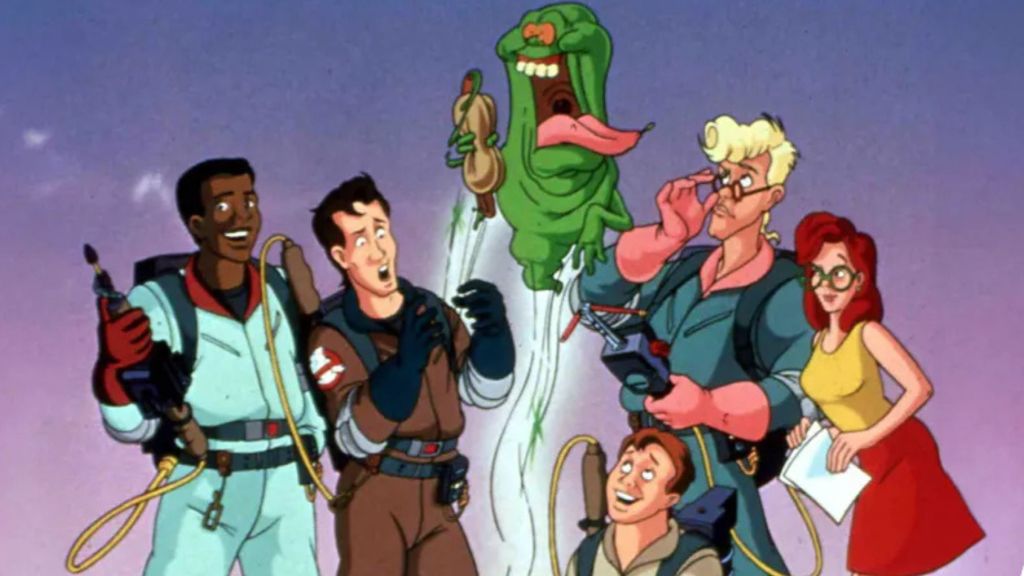
In a familiar story, Columbia Pictures was caught off-guard by the monster hit they had with Ghostbusters. Though they produced an array of merchandise throughout 1984 and 1985, no licensor was interested in a movie-based toyline, with the overriding concern being that the film was too adult for toys marketed to children. This changed when The Real Ghostbusters went into development for the fall 1986 season on ABC. The reason for the name was a perennial thorn in Ghostbusters‘ side: a pre-existing series called The Ghost Busters from the seventies. The trademark for the series was still owned by children’s TV studio Filmation, who capitalized by producing their own Ghost Busters cartoon that same year. The “Real Ghostbusters” name was a less-than-polite dig at Filmation.
With the cartoon, there was a new avenue to produce Ghostbusters toys, based on the kid-friendly animated series rather than the hard-PG film. Kenner launched the line with a modest first wave in 1986, leading with the four Ghostbusters and two movie-recognizable ghosts, Slimer and the Stay-Puft Marshmallow Man. They also produced their first roleplay item, significantly less elaborate than the Proton Pack, Ghost-Trap, and other items to come: the “Ghost Zapper.” Although a far-cry from movie or cartoon-accurate ghostbusting gear, the Ghost Zapper is a pretty cool toy in its own right. It features a built-in projector that, when illuminated, casts images of ghosts onto a surface. Complete with lights and sounds, the toy creates the illusion of finding and catching a ghost.
The initial 1986 wave was a hit for Kenner, and the line remained a top-seller through the eighties, bolstered by the release of Ghostbusters II in 1989. As the line progressed, the Ghostbusters would be joined by figures of Janine Melnitz and Louis Tully — and they would need all the help they could get, as Kenner also continued cranking out new ghosts. The ghosts are noted for getting pretty weird across the line’s six years on retail shelves. By the early nineties, with no third feature film on the horizon, public interest in Ghostbusters cooled, and the toyline’s sales began to wane. When The Real Ghostbusters ended its run in 1991, Kenner made the decision to end the toyline with it.
A Closer Look at Kenner’s Proton Pack & Ghost Trap
The Proton Pack joined the line in 1988, the same year that Kenner brought the Firehouse Playset to market. It’s their first effort at a screen-based roleplay toy, after the 1986 Ghost Zapper and the 1987 target-gun toy the “Ghost Popper.” The proton pack itself features adjustable straps to clip onto the user’s back (definitely designed for the under-ten crowd — sorry, big kids), along with the “nutrona blaster,” attached by a thin plastic hose. To enhance playability, the blaster comes complete with a removable foam blast effect at its end. Also included is the ghost-detecting P.K.E. Meter, a Ghostbusters-branded armband, and coolest of all: a Ghostbusters I.D. card. This blank I.D. card could be filled out with your name, certifying the toy’s owner as a literal card-carrying member of the Ghostbusters.
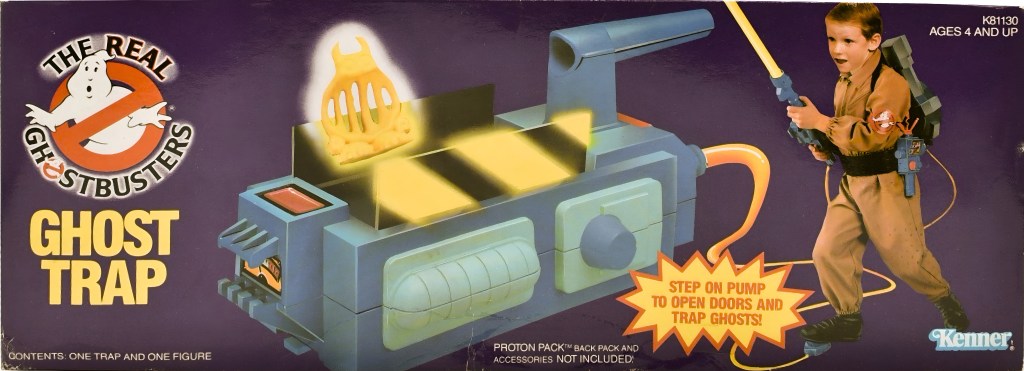
It took Kenner another year to produce the Ghost Trap, part of the two waves of product they put out in 1989 to coincide with Ghostbusters II‘s release. Though simpler in design than the Proton Pack, the Ghost Trap is packed with play features. The most ingenious is that the Ghost Trap is able to clip onto the Proton Pack just like in the movie. This a canny bit of thinking ahead on Kenner’s part, as they designed the Proton Pack the previous year with this action feature in mind. Again, like in the film, the Ghost Trap is operated by a foot-triggered pump, which sends a blast of air to the toy that triggers the trap’s doors to open. For another bit of enhancement, Kenner included a small, yellow plastic ghost for kids to “trap.” On loose samples, this is almost always missing.
That’s not a problem with the sample on auction at Heritage, which could have come right off a store shelf circa 1989. Due to their size, role-play items are found mint-in-box far less often than standard carded action figures. That makes the state of preservation on this Ghost Trap and the even-better condition of the Proton Pack a rare find, helping make them some of the most competitive listings in the auction. While the Ghost Trap is the technically rarer of the two items, as of writing, the bidding price on the Proton Pack is more than double that of the Ghost Trap. Although more likely explained by the vanishingly rare, certified near-mint condition of the Proton Pack, it could also be that bidders are vying for their chance to be card-carrying members of the Ghostbusters.
What’s your favorite toy roleplay item? Leave a comment below and join the conversation now in the ComicBook Forum!