Maypajo, Caloocan furniture makers strive to sustain their craft
MANILA, Philippines – Before Caloocan officially became a city in 1962, it was already known for its thriving furniture industry.
Along A. Mabini Street in Maypajo, a row of furniture shops seeks the attention of passers-by. Made of wood, metal, or polyester, the furniture wait for their new owners to bring them home.

Manong Jun, as he wished to be called, is 58 years old and has been in the furniture resale business for decades. While he observed a decline in their sales, he said customers keep coming back because they trust the quality of furniture made in the city.

Caloocan isn’t the furniture capital of the Philippines — the distinction belongs to Cebu, particularly Mandaue City — but it has been around for decades and has survived trying times. The question is, for how long?
Manong Jun inherited the business from his mother and he believes it will end with him. He said he wants his children to pursue a different path, hinting at employment in a more stable industry.
Furniture sales are low from February to August, but usually picks up come the “ber” months. The COVID-19 pandemic as well as online shopping, however, had taken a toll on the local industry, observed Barangay 21 Secretary Ferdinand Dado.
“Malakas dati ‘yan. Walang problema diyan lalo na ‘pag September. Ang lalakas na ng benta niyan. Noong tumuntong ang [COVID-19 pandemic], bawal lumabas ang mga tao. Isa-isang nagsara, walang bumibili. Isa ‘yun sa mga dahilan. Pangalawa, ‘yung mga nag-o-online,” Dado said in an interview.
(Those shops’ sales used to be strong, there was no problem especially when September came. Sales boom. When the COVID-19 pandemic happened, people couldn’t go outside their homes. The shops shut down one by one; no one was buying. That’s one of the reasons. Second is the online businesses.)
But despite these, the shops continue to exist, asserting both their cultural and economic significance to the city.
‘Tatak Caloocan’
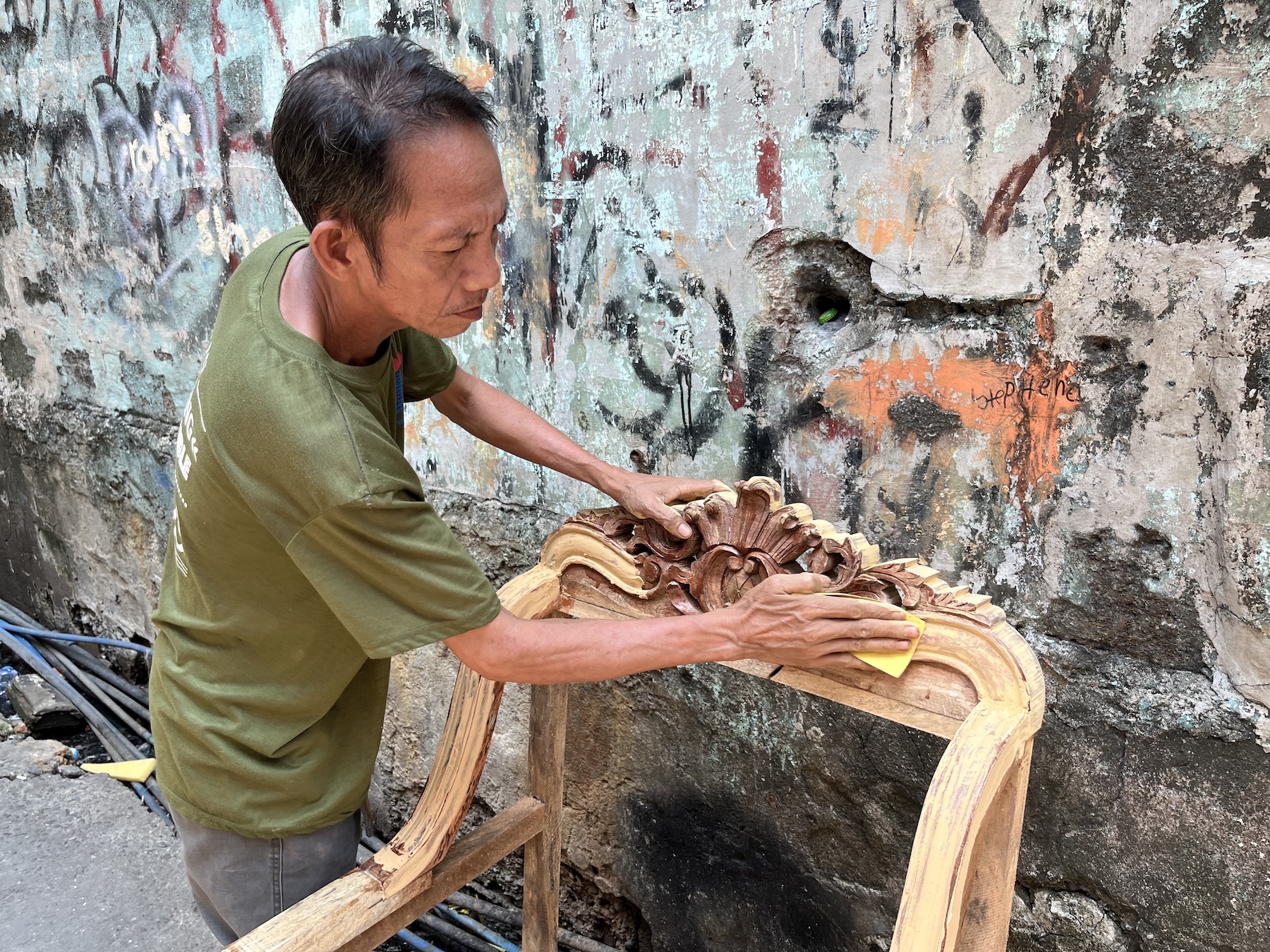
As you enter the alleys of the street just behind the shops, the sounds of hammers, saws, and sanders would welcome you, along with sawdust and the smell of varnish and cigarettes. Deeper into the alley, carpenters worked on their trade, a few of them without shirts to cope with the heat.
This was the daily routine of 42-year-old furniture carpenter and seller Edward Marukot for most of his life. He began working in the industry as a varnish painter in sixth grade, saving his money, and observing his uncles who were furniture makers until he eventually became one of them.
Today, Marukot’s furniture are not only found in Metro Manila, but also fnd their way in Mindoro, Cebu, Bohol, Zamboanga, and as far as the southernmost island-province of the country, Tawi-Tawi.
“Tawid-dagat ‘yan (That furniture crosses the sea),” his wife volunteered.
Marukot doesn’t have a physical store and sells furniture through online platforms, keeping up with competitors who had already navigated the digital world. He said he wants to tap TikTok too, to widen his reach.
Asked if he would encourage his children to follow his path, like Mang Jun, Marukot said: “Depende sa sitwasyon ngayon. Mahirap ang [buhay] ngayon, talagang hindi natin alam kasi sila ‘yung may buhay noon e. Hindi ko rin [pinipilit] sa kanila e pero tinuturuan ko rin naman sila paano mag-furniture.”
(It depends on the situation now. Life is difficult now and we really don’t know because it’s their lives. I don’t force them but I also teach them the business somehow.)
Marukot is fortunate as he has yet to experience a decline in sales. He is proud of the city furniture makers’ “King Louis” sala set which, he said, is “Tatak Caloocan” or proudly made in Caloocan. He said he would like the furniture industry in Caloocan, especially their signature sala sets, to be better promoted.
‘A better life for our children’
Dante Acain has been working in Caloocan’s furniture industry for the last 30 years, beginning at the age of 18. He would start work at 7 am, and end his day depending on the need to go overtime. Usually, he earns P700 per day, which he said is small but enough to meet his family’s needs.

Acain observed that customers flock to the shops around December, apparently in preparation for the holiday celebrations.
He has also never seen his industry receiving government support but he would be happy if workers like him would get any form of government “ayuda (aid),” especially at this time. For now, the only bonus he gets is in December — a Christmas bonus from his boss, furniture shop owner Jerry dela Cruz.
Dela Cruz said the furniture industry used to receive support from the now-defunct National Cottage Industries Development Authority. NACIDA was mandated to promote cottage industries, including assistance in financing, production, and marketing.
Asked if he would like his children to become part of the industry, Acain said he would rather encourage them to pursue whatever job they wanted.
“Siyempre, mahirap na trabaho ‘to. Tama na ‘to sa naranasan ko.… Gusto ko ‘yung magandang trabaho [para sa kanila], hindi maalikabok,” Acain said, noting that the amount of saw dust in their shop.
(Of course this is difficult work. It’s enough that I experienced it. I want a good job for them, not where you get exposed to dust.)

Caloocan has furniture workers and shop owners who have strived to preserve the city’s cultural heritage. Most of them have spent decades dedicated to a craft that some of them would not encourage their children to pursue. What can be done to prevent the industry from fading away? – Rappler.com
Eunicito Barreno is a 2026 Aries Rufo Fellow. He is a senior journalism student at the University of the Philippines Diliman, where he is also news staffer at the Philippine Collegian, the university’s official student publication.