
Lebanese troops move into first pilot zone as Isra…
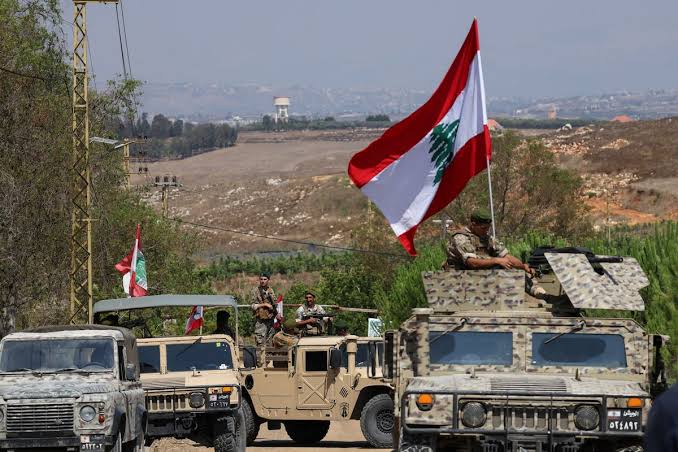
Lebanon’s army began deploying troops into a designated pilot zone in the country’s south on Tuesday, following an Israeli withdrawal from part of the area under a framework agreement reached last month with US backing. The army command said engineering units entered the village of Zawtar al Gharbiyeh in Nabatieh district on Tuesday morning. Later, the command reported that Israeli forces had opened fire near the troops. Israel’s military said its soldiers fired warning shots after Lebanese troops crossed into what Israel considers a security zone. The pilot zone arrangement envisions Israeli forces withdrawing from a limited portion of territory occupied during the conflict with Hezbollah, alongside the disarmament of the Iran backed Lebanese group. Tuesday’s deployment began ahead of a scheduled meeting in Washington between President Donald Trump and Lebanese President Joseph Aoun. Aoun was expected to press Trump to push Israel toward withdrawing from the remainder of southern Lebanon and to back the Lebanese army as it works to establish full control over areas currently under Hezbollah’s influence. Speaking to reporters in the Oval Office, Aoun said he told Trump he needed two things from him, political support and backing for the Lebanese Armed Forces. Trump, speaking alongside Aoun, pledged that the United States would help a country he said had been hit hard for decades, adding that Lebanon has been badly treated and deserves proper treatment and respect going forward. The US State Department announced Monday afternoon that pilot zone operations had begun in Zawtar al Gharbiyeh along with two other villages, Froun and Srifa, consistent with the trilateral framework agreed by Israel, Lebanon and the United States at the end of June. The department described the development as a milestone stemming directly from talks held last week between Israeli and Lebanese representatives in Rome. Later Monday, an Israeli military official confirmed that Israeli forces would adjust their posture in one of the pilot areas to allow the Lebanese army to carry out its mission, while also protecting Israeli soldiers and preserving the military’s right to self defense and to eliminate threats. The official said the goal of the pilot programme and the broader agreement remains the disarmament of Hezbollah and the removal of its illegal weapons, adding that Israeli forces would stay in the security zone, a strip of occupied Lebanese territory roughly ten kilometers deep along the border, for as long as necessary to protect communities in northern Israel. On Tuesday, Lebanon’s army command said its units began deploying to Zawtar al Gharbiyeh based on ongoing coordination with the Military Coordination Group for Lebanon, the trilateral body established to support implementation of the framework. The command urged Lebanese citizens to avoid traveling to the village until the security situation stabilizes and to follow instructions from deployed military units for their own safety. Later Tuesday, the army command said Israeli forces opened fire near these units and warned that the incident hinders progress on deployment across the pilot zones. Israel’s military said its soldiers fired warning shots into the air after Lebanese troops and an engineering vehicle crossed roughly 150 meters into the security zone and breached barriers in the neighboring area of Zawtar al Sharqiyeh. The military said Lebanese troops then withdrew from the area and that no injuries occurred. The Lebanese army said its troops were already carrying out missions in the nearby villages of Froun and Srifa following Monday’s announcement from Washington. An Israeli source told a regional newspaper that no Israeli troops remained stationed in those villages. Separately on Tuesday, Lebanon’s state news agency reported that Israeli forces caused two large explosions near the villages of Beit Yahoun and Kounine in Bint Jbeil district, along with blasts from Israeli controlled demolitions in the town of Majdal Zoun in Tyre district. In areas still under Israeli occupation, numerous villages have suffered extensive destruction from strikes and demolitions. Israel’s military says it has been dismantling Hezbollah infrastructure, though human rights organizations have said some of the destruction amounts to deliberate targeting of civilian infrastructure, potentially constituting a war crime. Hezbollah has rejected the trilateral agreement between Lebanon’s government, Israel and the United States, saying provisions linking Israeli withdrawal to its own disarmament cross what it called all red lines. Israel has said it will not fully withdraw from Lebanon until Hezbollah disarms completely. Trump said the United States has concrete plans to help Lebanon build the capacity needed to disarm Hezbollah, though he offered no specific details. He also said the Lebanese army is becoming increasingly self sufficient, and added that he would speak directly with Hezbollah representatives if Aoun requested it. Lebanon became entangled in the broader war between Israel, the United States and Iran on March 2, when Hezbollah launched rockets into Israel in retaliation for a strike that killed Iran’s supreme leader. Israel responded with a bombing campaign across Lebanon and an invasion of a significant portion of the country’s south. More than 4,300 people have died in Lebanon since then, including nearly 800 children, women and medics, according to Lebanon’s health ministry. Israeli authorities say 37 Israeli soldiers and four civilians have been killed on both sides of the border during the conflict. The pilot zone deployment marks the first tangible step toward implementing the trilateral framework since its signing, though continued friction between Lebanese and Israeli forces on the ground, along with Hezbollah’s outright rejection of the agreement’s terms, points to a difficult path ahead for a plan meant to end one of the region’s longest running conflicts.