Japanese

  • | |

    Tokyo’s shorts policy for office workers spa…

    Japanese men are showing more leg at work than ever this summer, as the Tokyo Metropolitan Government continues pushing employees toward casual attire that includes shorts alongside t-shirts and trainers. Tokyo Governor Yuriko Koike introduced the initiative, known as Tokyo Cool Biz, in April, aiming to build on her signature cooling campaign that has become a recognized annual tradition across the city each summer. Nearly four months into the programme, the newly permitted office shorts have drawn a mixed reaction from workers and commentators alike. Some people have welcomed the more relaxed dress code, saying it allows them to work comfortably despite the intense summer heat. Others argue the policy creates an unequal standard for women, who remain expected to wear tights even when showing part of their legs, while men can now go bare legged in shorts. A number of women have also described discomfort at having to see male colleagues’ leg hair in the office, a phenomenon some online commentators have labeled leg hair harassment. Noboru Watanabe, an environmental official with the Tokyo Metropolitan Government, said the goal is to give people more clothing options during severe heat rather than dictate what they must wear, adding that there should be no issue as long as workplace attire does not offend anyone. Casual dress has grown more common among Japanese workers in recent years, particularly at startups and technology companies, but this year’s government recommendation has made the shift more broadly acceptable across traditional workplaces as well. Even so, some men have reported feeling self conscious about exposing their leg hair for the first time in a professional setting. Dr. Akifumi Funatsu, director of Gorilla Clinic, said he has noticed a rise in clients visiting the clinic not purely for cosmetic reasons but out of concern for what he described as social etiquette when wearing shorts, suggesting the policy shift has begun influencing personal grooming habits among Japanese men beyond the office itself. The debate reflects a broader tension in Japan between longstanding workplace dress norms and growing efforts to modernize corporate culture in response to increasingly severe summer heat, with officials balancing calls for greater comfort against concerns about fairness between male and female employees navigating different expectations around appropriate office attire.

  • Seven Thai Youths Arrested Over Assault on Japanese Tourist in Bangkok

    BANGKOK, Thailand – Seven Thai youths have been arrested in connection with the physical assault of a Japanese tourist in a deserted area near the Makkasan Airport Rail Link station, police reported on Thursday evening. Tourist Assaulted and Robbed at ATM in Phuket At 7:20 PM, Din Daeng police investigators transferred the seven suspects to […]

  • |

     Why collectors pay millions for fractured porcelain

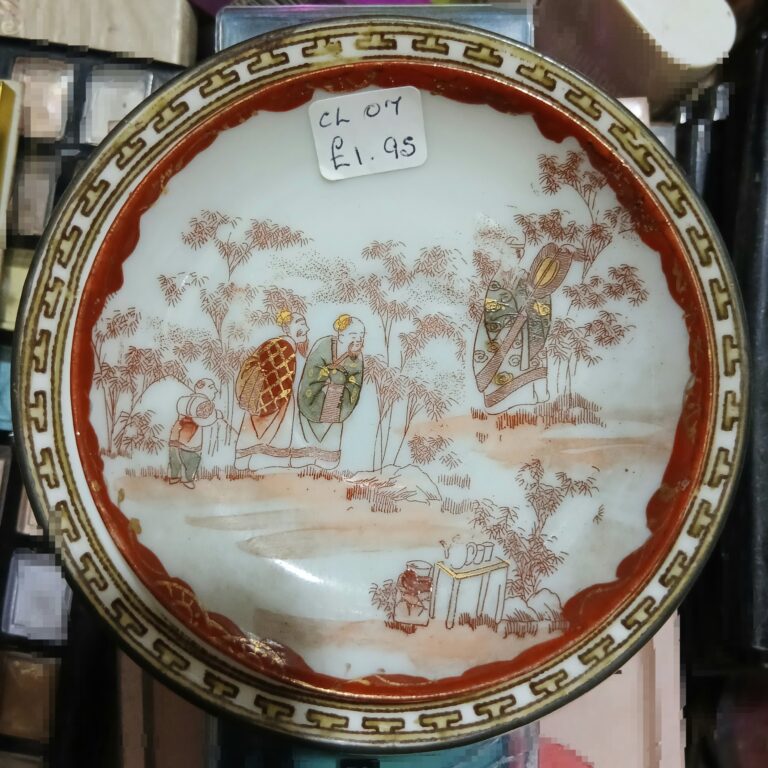
    There is a low-frequency hum inside an antique shop, an acoustic hush from dust and centuries of quiet survival. It is often the wounded object that commands the most reverence amidst the polished mahogany and gleaming silver. A spiderweb hairline fractured across the belly of a Qing dynasty jar; a cobalt Blue Willow plate stitched together with iron staples; a tea bowl held in delicate cohesion by golden veins of lacquer. In a modern economy obsessed with pristine surfaces and factory precision, these fractured ceramics defy logic. They do retain value despite their damage. Often, they derive their singular majesty precisely because they broke. The art market regularly bears witness to this quiet paradox. At major auction houses in London and New York, porcelain pieces bearing dramatic structural fractures, historic restorations or visible fractures routinely sell for astronomical sums. When a cracked 18th-century Chinese brush washer or a chipped Song Dynasty bowl is launched, purists do not turn away. Instead, connoisseurs see a vessel that has successfully negotiated with time. A pristine artifact can feel like an untouched relic in a glass museum case. A cracked ceramic, however, carries the irreplaceable friction of human history. This romantic obsession with fracture finds its deepest philosophical roots in the Japanese tradition of Kintsugi: literally, golden joinery. In 15th-century Japan, legend holds that the shogun Ashikaga Yoshimasa sent a damaged Chinese tea bowl back to China for repair. It returned bound by heavy and unsightly metal staples. Japanese craftsmen was displeased and sought a more poetic solution. He bonded the porcelain shards with Japanese lacquer dusting it with powdered gold. Rather than disguising the trauma, Kintsugi illuminated the break. This technique transformed a domestic accident into a radiant architecture of resilience. When collectors haunt dim antique parlors today for cracked celadon or worn earthenware, they are participating in a quiet rebellion against the disposable. We live in an era of engineered obsolescence where a small fracture on a smartphone screen renders the entire device wasted. Antique ceramics represent the opposite: fired earth that withstands centuries, absorbing the touch of generations, bearing scars as badges of longevity. A crack proves that the vessel was used, held, washed, dropped, mourned and salvaged. It shifts the object from a passive decoration to an active survivor. Even the historical methods of repair have become prized antiques in their own right. Before gold lacquer was widely available, 18th and 19th-century itinerant tinkerers repaired heirloom china using metal staples. They were drilling tiny holes on either side of a split and hammering in delicate bronze or iron rivets. To a contemporary eye, these industrial-looking stitches might seem like visual vandalism. Yet, to collectors of stapled china, those iron rivets are exquisite evidence of human ingenuity and resourcefulness from an era when nothing precious was ever casually thrown away.   Ultimately, the enduring value of cracked porcelain in antique shops lies in what it reflects about our own human condition. Perfection is intimidating, fragile and ultimately unfeeling. Rupture, on the other hand, is universal. When a buyer pays for a cracked jar, they are purchasing a physical manifestation of survival. They acquire a tangible reminder that broken things can be mended, that wounds can be highlighted with beauty and that time does not diminish value, but rather confers it.

  • Japanese Man Allegedly Stabbed by Transgenders in Pattaya

    PATTAYA — A Japanese man was reportedly stabbed by two transgender individuals in a Pattaya hotel early on March 9, triggering conflicting accounts of the incident that police are now working to untangle. French and British Citizens Stabbed in Dispute Over Thai Woman in Pattaya The incident occurred at a hotel in central Pattaya, where […]

  • Japanese Tourist Injured in Rider Gang Attack in Pattaya

    PATTAYA — A 25-year-old Japanese tourist was seriously injured after being chased and assaulted by a group of motorcyclists believed to be app-based riders in the early hours of Saturday, March 21, in an attack that has raised concerns about tourist safety in the popular resort city. Foreign Woman Assaulted by Transgender Group on Phuket’s […]

  • Bolt Permanently Bans Driver Following Viral Assault On Japanese Passenger In Bangkok

    BANGKOK, Thailand — Bolt Thailand has terminated and permanently banned a ride-hailing driver accused of physically assaulting a Japanese passenger during a fare dispute in Bangkok, the company announced on Wednesday. The ride-hailing platform also confirmed it is providing comprehensive assistance to the victim following the incident, which recently sparked widespread public scrutiny on social […]