
#Popular #artists

  • The relationship between past tradition and present innovation

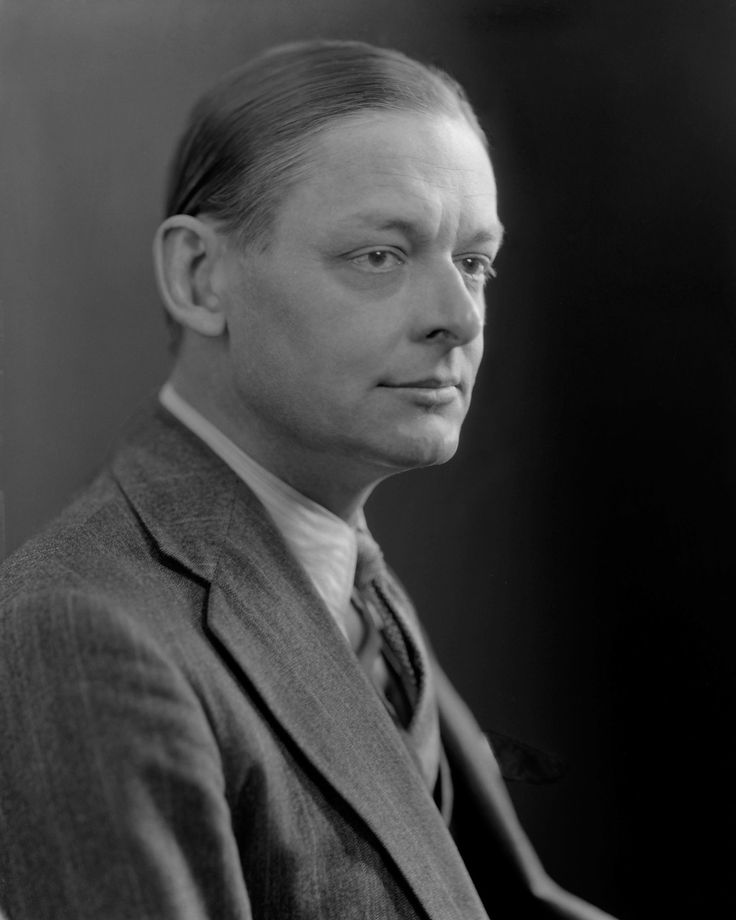
    In T.S. Eliot’s Tradition and the Individual Talent (1919), the relationship between tradition and innovation is conceived as a structural rejection of the Romantic rebels who came a century before. The English Romantics (Wordsworth, Coleridge, Byron, Shelley, and Keats) built an aesthetic identity on iconoclasm, intense individualism and radical rupture. In contrast, Eliot’s Modernist manifesto counters with historical humility, restraint and continuity. The Romantics operated as cultural iconoclasts. They emerged alongside the upheaval of the French Revolution. Poets like Shelley (Mont Blanc, Prometheus Unbound) explicitly rejected established institutional, religious and literary orthodoxies. For the Romantics, literature advances by breaking away from previous generations (especially Neoclassicism). The past is often viewed as a restrictive cage or a set of dead conventions that inhibit free human consciousness. Originality means creating something unprecedented from within the self. Authenticity is an act of poetic rebellion against tradition. In Tradition and the Individual Talent, Eliot argues that attempting to exempt oneself from the past is a delusion. Originality does not mean destroying past structures. In fact, it means acquiring a historical sense through arduous labor. Eliot reframes innovation as an internal readjustment of an existing system. A new poet cannot be rebellious in isolation. The poet’s work only gains aesthetic value when set among the dead poets of Western literature. It’s to see how it reshapes the entire dynamic order. Wordsworth famously defined poetry as the spontaneous overflow of powerful feelings. The Romantic movement centered the poet’s personal ego, subjectivity and unique psychological vision as the ultimate authority of art. The poet was a heroic prophet pouring out their soul. Eliot mounts a direct attack on this subjective expressivism. He famously counters: Poetry is not a turning loose of emotion, but an escape from emotion. It is not the expression of personality, but an escape from personality. To Eliot: The poet is not a heroic rebel, but a receptacle or catalyst (the platinum filament metaphor). The artist’s progress is a continuous extinction of personality and surrender to the literary heritage. Art should be judged as an autonomous, objective entity. It must be completely detached from the biographical life or emotional state of the human being who wrote it. Where the Romantic rebels viewed art as a wild, subjective act of liberation. Where the individual genius stands against society and past history. There and then, T.S. Eliot lowers the ego of the artist. Eliot redefines the individual talent not as a lone rebel storming the doors of literature. Individual talent is as ahistorically conscious craftsman who earns a place in the canon. This can only be by submitting to, learning from, and subtly altering the tradition that came before.  

  • Survey of Käthe Kollwitz’s legacy

    The Museum of Modern Art in New York  exhibits the first major museum retrospective devoted to the German printmaker and sculptor Käthe Kollwitz (1867–1945).The exhibition serves as reassessment of an artist who chose raw human emotion over abstract aesthetics. The survey features roughly 120 works on paper and evocative bronze sculptures gathered from private and public collections across North America and Europe. Käthe Kollwitz originally trained as a painter before turning to printmaking, etching, and charcoal drawing. She quickly realized that black-and-white graphic arts provided a far more direct, accessible, and potent medium for addressing the social injustices around her. She lived through the tumultuous transition of late 19th-century industrialization. The revolution followed by the political instability and devastating carnage of two world wars in Berlin. However, Kollwitz dedicated her career to giving form to the silent suffering of society’s most vulnerable. When many of her contemporaries were exploring radical formal abstraction, Kollwitz stayed firmly rooted in figuration. She viewed her artistic talent not as a path toward personal prestige, but as a moral imperative. As Kollwitz famously noted in her journal, she felt a profound duty to give voice to humanity’s immense burdens. It was a motivation clearly reflected in her emotionally charged compositions. The retrospective marks several crucial series and individual masterpieces that define Kollwitz’s career. Early landmark series included A Weaver’s Revolt (1890s) and Peasant War (1902–1908). They showed her skill in capturing collective resistance, class struggle, and the violent fallout of peasant rebellions. Her works like Woman with Dead Child (1903) and her recurring depictions of mothers shielding their young. This theme is also dominant in her famous Mütter (Mothers) lithographs. These works demonstrate her ability to channel deep personal empathy into universal symbols of protective instinct. Kollwitz produced woodcuts and sculptural works that transformed personal bereavement into universal anti-war statements. She was distilling the excruciating grief of losing her younger son, Peter, during World War I. Kollwitz’s artistic contributions extend far beyond historical interest. Kollwitz established herself as a genius of Expressionist printmaking. As a result, she achieved widespread international acclaim during her lifetime. More importantly, she radically prioritized the female experience, framing motherhood, domestic hardship. She expressed grief not as passive domestic occurrences, but as central, powerful forces within history and politics. Above all, she achieved all that during an era when the international art world was almost exclusively governed by male perspectives, MoMA exhibition underscores the artist’s meticulous process through rare working proofs and preliminary studies. Such an event exposed how she repeatedly refined line, shade, and texture to maximize the emotional potency of each scene. It was Curated by Starr Figura. In a world still facing economic disparity, displacement, and armed conflict, Kollwitz’s unflinching commitment to human dignity continues to resonate with undeniable relevance. Her skills were bold woodcuts, deep etchings, and heavy bronzes. However, they serve as a reminder that art can act as both a mirror to societal trauma and a compassionate voice for justice.  

  • |

    A portrait of the artist as a young man

    James Joyce published A Portrait of the Artist as a Young Man in 1916. He did far more than tell the story of a boy growing up in Dublin. He revolutionized the modern novel. As Joyce’s first published novel, Portrait serves as a crucial bridge between classical nineteenth-century storytelling and the radical experimentation of twentieth-century modernism. Over a century after its release, this intimate novel remains a timeless exploration of identity, intellectual rebellion and terrifying price of personal freedom. Sensory Stream of Consciousness The novel follows Stephen Dedalus who’s a thinly veiled avatar for Joyce himself from early childhood through his late adolescence and college years. The book opens not with traditional exposition, but with a sensory stream of consciousness. The baby talk, the texture of a bedsheet, the smell of oilcloth, and songs sung by his family. As Stephen grows, so too does the language of the book. Joyce evolves his prose style alongside his protagonist. He transforms the narrative voice from simple baby phrases into highly philosophical and poetic language as Stephen matures into a young scholar. Extreme Religious Devotion At its core, Portrait is a profound meditation on the heavy burdens of tradition. Growing up in a strictly Catholic, politically fractured Ireland at the turn of the twentieth century, Stephen finds himself trapped between competing pressures. He witnesses fierce family debates over Irish nationalism. He also suffers harsh physical punishments at strict Jesuit boarding schools. Ultimately, he struggles with agonizing guilt over his emerging teenage desires. A central turning point of the novel occurs during a harrowing religious retreat, where a priest delivers a vividly detailed sermon on the eternal torment of Hell. Paralyzed by fear, Stephen briefly attempts a life of extreme religious devotion, only to realize that spiritual conformity destroys his true self. Creative Freedom Over Compliance Stephen’s ultimate breakthrough doesn’t come from religiously pious self . It’s from art. In one of the most famous passages in modern literature, Stephen walks along the shore and catches sight of a young woman wading in the water. Stephen doesn’t see her through a lens of sinful desire or religious symbolism. Rather, he sees her simply as an embodiment of pure, mortal beauty. This aesthetic epiphany awakens his true calling. Now, he must break free from the traditional network of family, church, and nation that seek to hold him back. To become an artist, Stephen realizes he must embrace exile. Thus, he must chose solitude and creative freedom over compliance. Joyce’s genius lies in his ability to make Stephen’s internal struggles feel deeply universal. Anyone who has ever questioned the beliefs they were raised with, felt out of place in their own community. They strived to forge an independent identity will find a powerful reflection in Stephen’s journey. His famous declaration near the end of the book to forge in the smithy of my soul the uncreated conscience of my race is a bold rallying cry for personal independence. A Portrait of the Artist as a Young Man is not just the story of one young man’s transformation in turn-of-the-century Ireland, but a brilliant testament to the courage required to think for oneself and forge a truly unique voice in the world.