US

  • US Secretary of State Marco Rubio Sends Songkran Greetings to Thailand

    BANGKOK — United States Secretary of State Marco Rubio has issued an official greeting to the people of Thailand, marking the commencement of the Songkran Festival and the Thai New Year with a pledge of closer ties and a reaffirmation of the enduring alliance between the two nations. Thai PM Anutin Wishes Nation a Happy […]

  • American Fugitive Wanted for Drug Trafficking Arrested in Pattaya

    PATTAYA — A 34-year-old American national wanted for transnational drug trafficking has been arrested in a Pattaya condominium following a cross-continental operation involving Thai authorities and the US Drug Enforcement Administration, in a case that highlights the reach of international law enforcement cooperation. Nordic Mafia Boss Arrested in Phuket on Interpol Red Notice The suspect, […]

  • Thai FM Seeks US Tariff Exemption at ASEAN Summit Talks

    MANILA, Philippines / BANGKOK, Thailand — Thai Foreign Minister Sihasak Phuangketkeow has formally requested assistance from US Secretary of State Marco Rubio to secure an exemption for Thailand from a newly proposed 12.5 percent tariff on imports, a measure currently slated to affect Thailand and 59 other nations. The diplomatic engagement took place on the […]

  • | |

    US military depletes long-range missile stockpile …

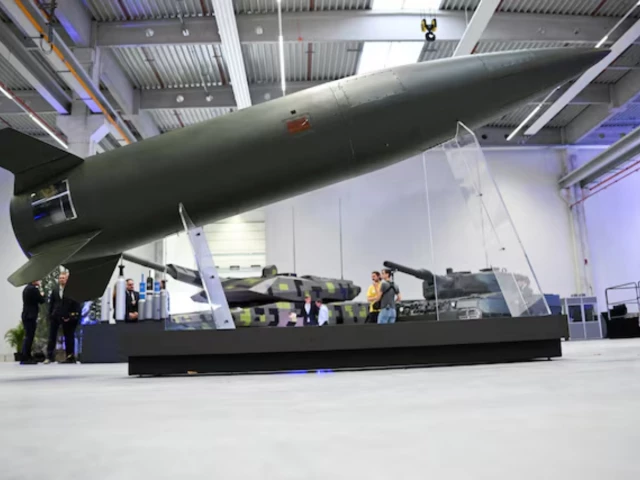
    The United States has burned through nearly all of its long-range precision missiles during five months of fighting in Iran, according to three people familiar with internal defense data, fueling concern inside Washington about military readiness for future crises. The weapons in question are primarily the Army’s ground launched systems, the Army Tactical Missile System and the newer Precision Strike Missile. Two of the sources said the military has expended virtually its entire supply of both. These munitions let forces strike targets accurately from a safe distance and have already proven vital in Ukraine, where American supplied versions allowed Ukrainian troops to hit targets deep inside Russian territory. The Precision Strike Missile represents a more advanced generation designed to eventually replace the shorter range ATACMS. Defense analysts note that such long-range munitions, each costing more than a million dollars, would also play a central role in any future confrontation with China. The sources declined to specify exact remaining quantities of either weapon. President Donald Trump launched the joint offensive against Iran alongside Israel in February, initially predicting a brief campaign. Instead, the conflict has stretched on for months, and the three sources said they worry that shrinking missile reserves could weaken the country’s ability to deter rivals such as Russia and China going forward. A fourth person familiar with the matter said Central Command, which oversees American forces across the Middle East, has nearly exhausted the land based missiles it held before the war started, though it has managed to replenish supplies by drawing from military stockpiles based elsewhere around the world. All four sources spoke on condition of anonymity. Asked to respond to the stockpile figures, the White House shared a statement from Trump asserting the country holds “far more munitions than anyone in the world” and more than it currently requires. He added that American defense manufacturers are producing at record volumes while also expanding factory capacity. Analysts largely agree that certain categories of weapons, including artillery shells and select missile types, are rolling off production lines at historic rates. Still, they caution that overall output may fall well short of what a prolonged conflict would demand. Lockheed Martin, which manufactures both the ATACMS and the Precision Strike Missile along with the THAAD missile defense system, did not respond to questions about the stockpile figures or the president’s remarks. Raytheon, maker of the Tomahawk cruise missile and the Patriot interceptor, also did not respond to inquiries. Chief Pentagon spokesperson Sean Parnell defended the state of American readiness, saying the military maintains a deep arsenal capable of protecting national interests and has carried out multiple successful operations across combatant commands. Internal debate over munitions The stockpile figures have circulated through federal government channels over the past week amid tense internal discussions about how much longer American forces can keep striking Iranian targets without depleting reserves needed to respond to crises elsewhere in the world. One source said the drawdown in ATACMS and Precision Strike Missile inventories reflects a deliberate choice by the administration to avoid riskier tactics, such as sending piloted aircraft to drop bombs directly over Iranian territory. Because these missiles allow strikes from a distance, analysts consider them especially valuable against an adversary with sophisticated air defenses, a category that includes China. A March assessment from the Center for Strategic and International Studies noted that these weapons have already been used against targets inside Iran. That same assessment found that Precision Strike Missile stocks started the conflict relatively low, since the weapon is still new to the arsenal, though the Army has placed large orders set for delivery in 2027. Military officials have said ATACMS production is winding down as manufacturing shifts toward the newer missile system. Military leaders have spent weeks warning the president that stocks of defensive weapons, including the Patriot interceptor system effective against ballistic missiles, are running low, according to two of the sources. Several news outlets reported last week that Trump opted against launching another large scale offensive inside Iran partly because military advisers raised concerns about dwindling supplies. A separate US official disputed that account, saying the president held off due to pressure from Gulf states rather than munitions concerns. The extended campaign has also reignited debate over the scope of presidential war powers, since no formal declaration of war or authorization for the use of military force has gone before Congress. Defensive systems also strained A separate assessment published last week by the Center for Strategic and International Studies estimated that the military used roughly 65 percent of its Patriot interceptor stock between February and July, while THAAD interceptor supplies fell by at least 38 percent compared with pre war levels. Two of the sources said those figures align with internal government data, though the underlying numbers could not be independently verified. The military has also used up close to half of its worldwide Tomahawk cruise missile inventory since fighting began, according to one source, a figure that likewise could not be independently confirmed. The Tomahawk, typically launched from Navy destroyers, cruisers and submarines, has long served as the primary tool for striking heavily defended targets without exposing pilots to risk. Raytheon, now part of RTX, has reached a preliminary multi year deal with the Pentagon to expand Tomahawk output alongside other munitions as officials work to rebuild depleted stockpiles amid the ongoing conflict.

  • | |

    Bessent says Hormuz shipping deal with Iran could …

    US Treasury Secretary Scott Bessent said on Tuesday that a deal to reopen the Strait of Hormuz to normal shipping traffic could be reached within a day or two, as diplomatic activity intensified across the Gulf region. Speaking in a television interview, Bessent said American officials are in active discussions with Iranian counterparts and expressed optimism about a near term breakthrough. “There is a chance we may have a deal today or tomorrow,” he said, adding that the goal is to move toward a more normalized posture in the conflict. Asked whether any agreement would let Iran charge ships a toll for using the waterway, Bessent said he expects the outcome to guarantee freedom of movement rather than a fee based system. He noted that vessel traffic through the strait has picked up in recent days despite lingering danger, and predicted that energy prices would ease once a deal takes hold. His comments followed a report from The New York Times saying Iran and Oman have moved close to an arrangement that would restore commercial shipping through the strait. Under the terms described in that report, inbound vessels would travel through a corridor close to the Iranian coast while outbound ships would use a route nearer Oman. Iranian officials told the newspaper that no formal tolls would apply, though they said a service charge tied to environmental protection, cargo security and staffing costs would be split evenly between Tehran and Muscat. A US official pushed back on that characterization, calling the Iranian version inaccurate and insisting any temporary shipping lanes would not need Iranian sign off or involve fees. The report also noted that some Pentagon officials worry the arrangement could look like a concession to Tehran, while some Iranian officials privately questioned whether it would actually stop further American strikes. Qatar’s Foreign Ministry said Tuesday that mediators including Doha, Pakistan and Oman continue to coordinate closely to bridge the gap between Washington and Tehran, exchanging draft proposals between the two sides. Ministry spokesperson Majed Al Ansari said there is still no clear timeline for a final agreement, and Qatar separately called for a return to normal conditions in the strait while diplomacy continues. Tension over the waterway remained visible even as talks progressed. A dry bulk carrier called the Minoan Pioneer, sailing under the Liberian flag, was struck by an unidentified projectile near Oman’s coast on Tuesday, according to maritime security sources. The strike reportedly hit the engine room and sparked a fire in the crew’s living quarters, forcing the entire crew to abandon ship. One crew member, the vessel’s third engineer, was reported missing. The ship’s Greece based operator did not immediately respond to requests for comment. The incident followed an earlier report from the UK Maritime Trade Operations center, which said a separate cargo vessel had broadcast that it was hit by an unknown projectile about 20 nautical miles northeast of Khasab, Oman. No group has claimed responsibility for either strike, and authorities have opened an investigation. In Tehran, President Masoud Pezeshkian used a televised address to reject reports that he had offered his resignation amid the ongoing standoff with Washington. “If I were going to resign, I would announce it publicly,” he said, denying any rift with Supreme Leader Ali Khamenei or the armed forces and insisting the leadership is working in full coordination. He separately said Iran intends to defend its territorial integrity but has no interest in expanding the conflict, while claiming Iranian missile and drone strikes had disrupted US military goals during a recent 17 day period of fighting. The regional picture grew more complicated elsewhere. Yemen’s Houthi movement claimed responsibility for a drone strike on Najran Airport in southern Saudi Arabia, with military spokesman Yahya Saree saying the attack struck its target accurately. He described the strike as retaliation for alleged Saudi drone incursions over Yemen’s Saada and Hajjah provinces and warned that further violations would draw a response. Saudi authorities had not commented on the claim as of Tuesday. In Lebanon, a seventh round of direct negotiations with Israel opened in Rome under American sponsorship, continuing talks tied to a framework agreement the two sides signed in June covering a phased Israeli withdrawal from Lebanese territory in exchange for Lebanese army deployment and the disarming of armed factions, a clear reference to Hezbollah. Hezbollah Secretary General Naim Qassem used a speech at an Arbaeen commemoration in Baalbek to criticize the talks, saying they have delivered only “shame, humiliation, despair and repeated concessions” for Lebanon. He accused Lebanese President Joseph Aoun of acting with bias rather than serving as a unifying figure and argued that only the earlier US brokered truce between Washington and Tehran had kept Israeli strikes at bay. Financial markets showed relief at the signs of diplomatic movement. Brent crude futures fell about 7 percent to near $83.77 a barrel on Monday, while the Dow Jones Industrial Average closed at a record high. Asian stocks and oil prices ticked higher again on Tuesday. In a Truth Social post, Trump described Iran’s leadership as “unbelievably duplicitous” while claiming more talks were scheduled for the near future. He also reasserted that the US Navy maintains full control over the strait, writing that nothing passes through unless Washington allows it. The exchange fits a broader pattern that has defined the conflict since it began roughly five months ago under the codename Operation Epic Fury. Trump has repeatedly threatened major military escalation only to step back and cite diplomatic openings, while Iran has publicly refused direct talks with Washington since a memorandum of understanding both sides signed collapsed in early July. Washington maintains that June’s memorandum obligated Iran to open the Strait of Hormuz to shipping, while Tehran insists the agreement preserved its authority over traffic through the waterway, a disagreement that continues to sit at the center of the standoff.