The End of Oak Street’s Ending Is Based on A Real Scientific Theory (And Is Shockingly Straightforward)
Dinosaurs in movies are nothing new; the trouble being that the 65 million years that separates them with modern humanity results in there needing to be a REALLY good reason for them to show up in a movie. Sometimes you get something like The Flintstones, or King Kong, or One Million B.C. that come pre-packaged with a solid explanation at its core. 1993’s Jurassic Park, however, perfected the formula for why dinosaurs could exist in a modern-set feature, with the science behind the film offering a clear reason that was able to be explained easily to the audience and allow them to just enjoy the ride. Few have been able to make that work since, though they’ve tried.
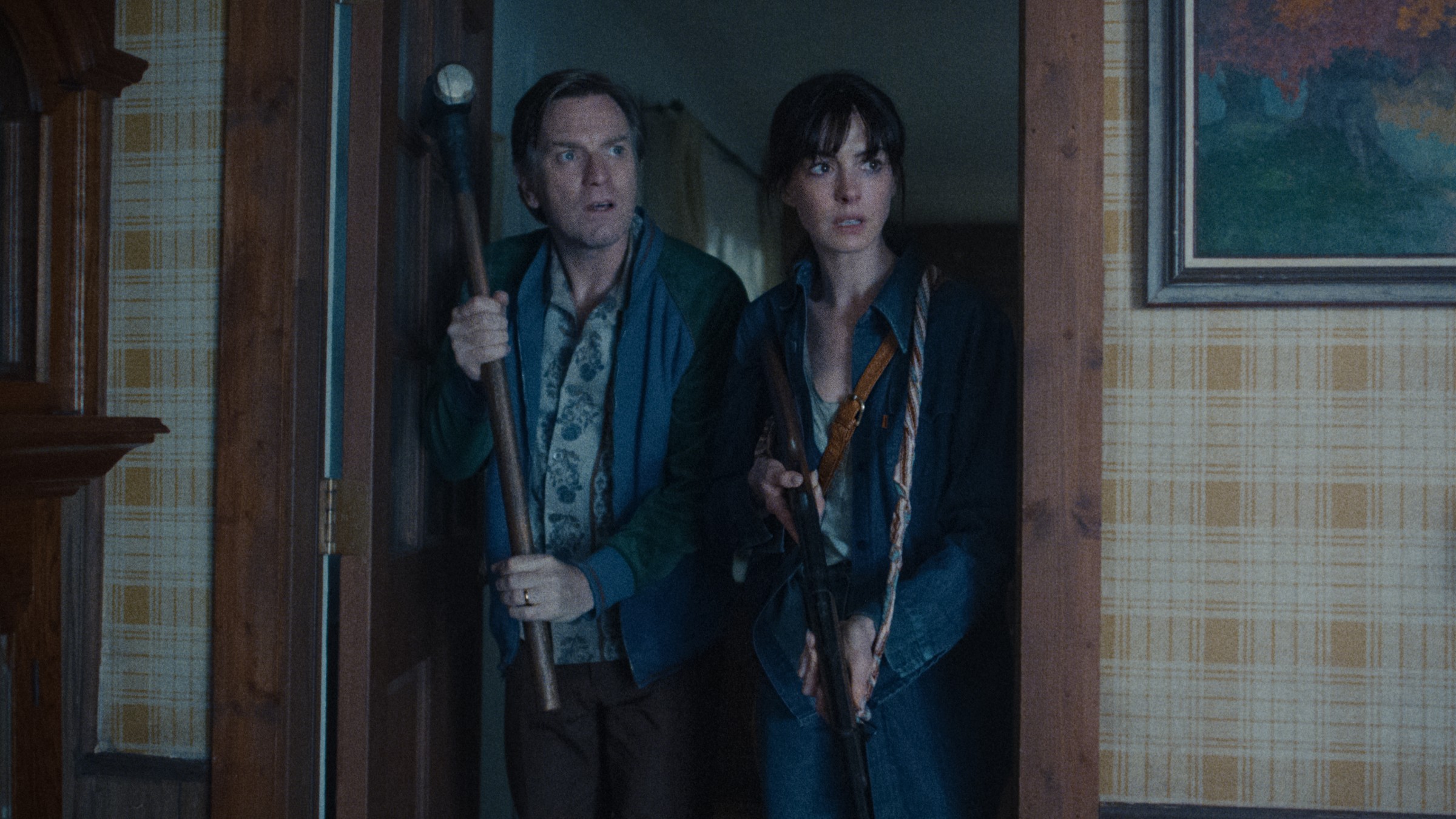
This week sees the debut of The End of Oak Street, the third feature film from writer/director David Robert Mitchell, which not only delivers dynamic dinosaur action to the big screen, but also comes pre-packaged with a fine reason for why it’s all happening. Ahead of its release, the tease of a film where dinosaurs were unleashed on a suburban neighborhood was already enough to pique fans’ interest, but now that the movie is here, we know how it pulls off its big plot developments. The most distinct thing about it is that it’s pretty simple and based on real science. Spoilers follow.
The End of Oak Street Ending Explained
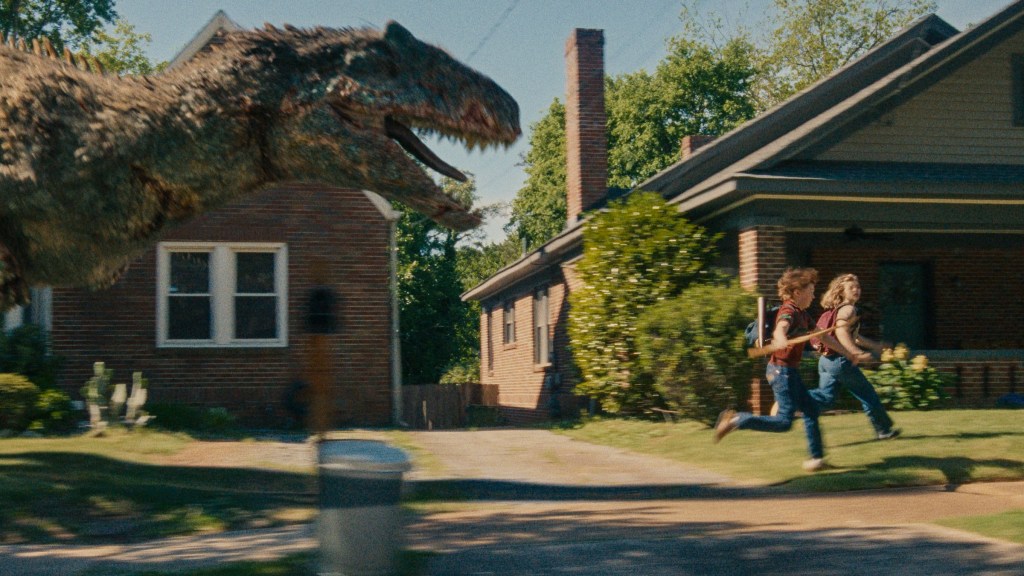
When Jurassic Park was first written as a book and then brought to life on the big screen, the gene-splicing at the heart of it all was clearly science fiction. Over time, and in no small part thanks to the inspiration of the story, it has become something closer to reality. The End of Oak Street, however, roots its storyline in a scientific theory that has been around for decades, though one that was somewhat new at the time the film is set in 1982.
Early in the film, Maisy Stella’s Audrey Platt reveals that after high school she would like to go to Cornell so that she can study science under Carl Sagan. Audrey’s love for science is clear throughout the film, to the point that when the mysterious glowing lights begin to populate their neighborhood and start bringing in plants (And piles of crap) from millions of years ago, the idea isn’t that suspect to her.
Once it becomes clear that these balls of light are what’s bringing things from the past to the present day, that leads to the biggest ball yet, one that swallows two miles of their town and sends it back to the prehistoric era. After encountering the danger in their neighborhood, Audrey Platt poses a theory that these balls of light are simply wormholes, a concept she read about from who else, Carl Sagan. As Audrey notes, the wormholes are like one you might find in an apple, an entry and exit that connect two points in space, but also in time.
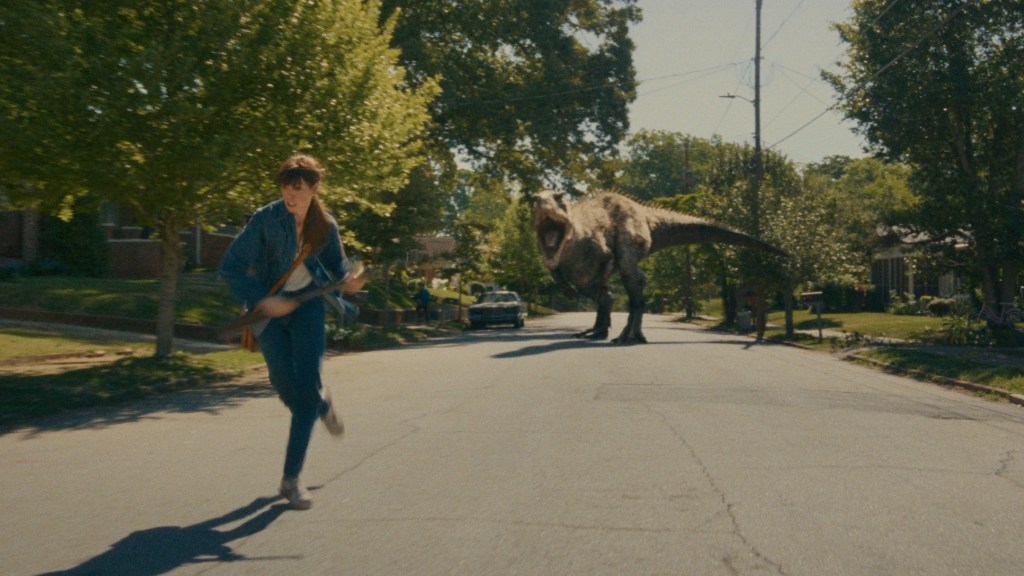
As a result, the reason Oak Street and the Platt family’s neighborhood is going through this time displacement is because of these wormholes that are popping up, and the movie leaves it at that. The End of Oak Street offers no explanation for WHY or HOW these wormholes are opening up. In the end, it doesn’t matter, but the time displacement offered by the mysterious wormholes gives the family two things: 1. A way out, and 2. A way to undo the death of Ewan McGregor’s Greg Platt.
Chomped on the leg by an Allosaurus, McGregor’s death is a stunning development for the film, but as the surviving Platts find and leap through one of the wormholes, they find themselves back in the present and arrive just minutes before the original wormhole, allowing them the opportunity to save him from a grisly end.
The End of Oak Street then leaps ahead two years, confirming that the government captured or killed any of the dinosaurs that were sent to the present and that the Platts managed to save several of their neighbors from being stuck in the past. It also concludes with the reveal that Anne Hathaway’s Denise Platt wrote a book about the event, called The End of Oak Street, and that Audrey was able to attend Cornell and study with Carl Sagan.
Does The End of Oak Street Have a Post-Credit Scene?

The ending of a movie like this no doubt has fans wondering if a Marvel-like surprise awaits them at the end of the credits, be it one that teases another adventure with the Platts and wormholes or even just a funny gag about a dinosaur still roaming the wilds of Michigan. That said, there is no post-credit scene at the end of….The End of Oak Street.
The film wraps up its story, puts a button on the status of the Platt family two years later, and that’s all. There’s a nice dedication at the end, though, with a dedication to David Robert Mitchell’s dad, Robert Allen Mitchell, who died in 2024.
The End of Oak Street is now playing in theaters.