These Secret Wars Figures Are Collector Holy Grails, but Almost Nobody Had the Chance to Buy Them
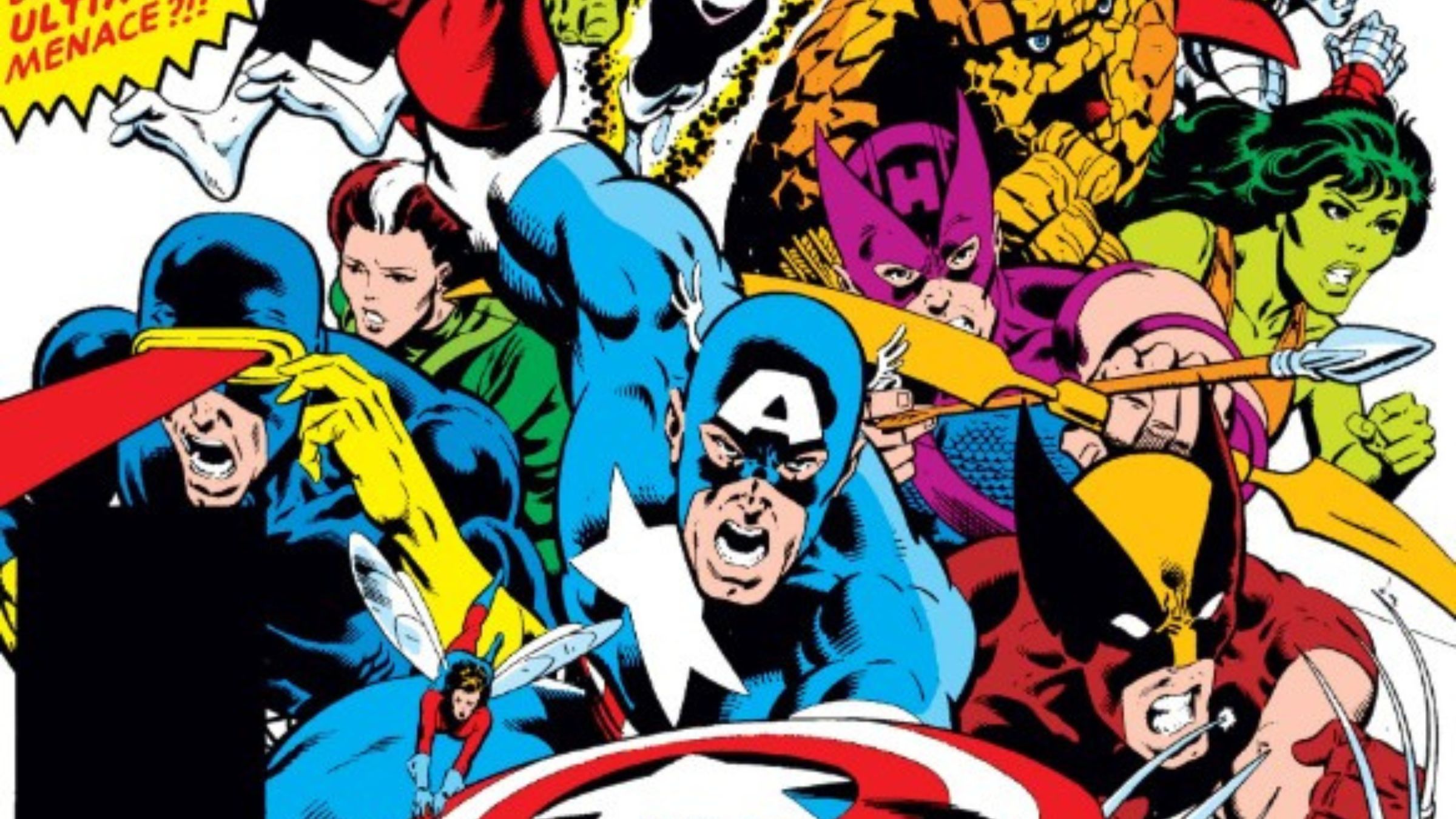
Long before it would serve as the basis to a company-wide crossover film, Marvel Comics’ original Secret Wars storyline would be the basis for a company-wide crossover comic more ambitious than anything the publisher had ever attempted. While Marvel’s heroes had been crossing paths since the dawn of the silver age, Secret Wars represented the largest scale team-up in Marvel history, bringing together characters who had never encountered each other before. On the page, it was motivated by the all-powerful cosmic entity known as the Beyonder, who teleports an assortment of the Marvel Universe’s greatest heroes and villains to a world of his own making to battle for his amusement. But the impetus for Secret Wars came from off the page, and outside the doors of Marvel’s offices altogether. Secret Wars started with a toy deal between Marvel editor-in-chief Jim Shooter and the executives at Mattel.
Mattel was interested in producing a Marvel Comics toyline, but wanted a comic book tie-in to go along with it. Secret Wars was the result, with Marvel’s comic arriving at comic stores and newsstands in 1984 at the same time as the first wave of Mattel’s toys arrived at stores. A second series followed in 1985 before the line was cancelled due to poor sales. Prior to cancellation, Mattel went into production on three new figures – Iceman, Electro, and Constrictor – that suddenly had no American distributor. The figures were instead shipped to Europe, becoming some of the rarest and most desirable Marvel action figures ever produced. To many collectors today, they represent the barrier to a complete set of Secret Wars figures, making listings like this upcoming Heritage auction an event. Up for auction are carded samples of Electro and Iceman, a rare chance to own two of these grail figures at once.
How Mattel Helped Shape Secret Wars
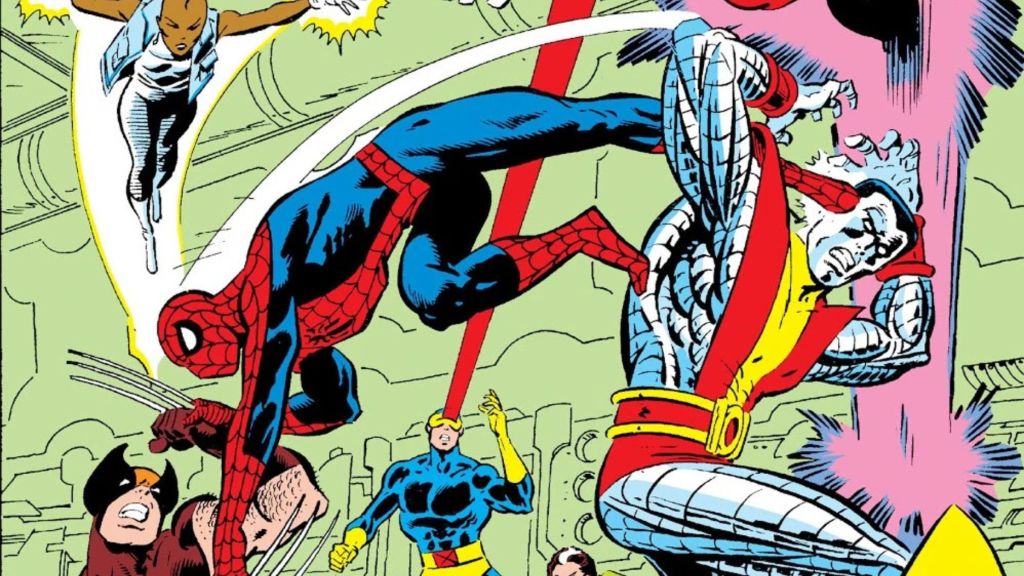
When rightsholder Mego went bankrupt in 1982, the master toy licenses for Marvel and DC Comics were up for grabs. Kenner claimed DC, still the more established of the two brands at the time, and began developing their iconic Super Powers line. Mattel, not wanting to be outdone, acquired the master license to Marvel. As Mattel began early planning for their Marvel line, they reached out to Jim Shooter about a tie-in comic. They were concerned that, unlike DC, Marvel lacked instant recognizability. Mattel felt that while the general public “had heard about Spider-Man,” they wouldn’t be familiar with Marvel’s other heroes. Shooter was receptive to the idea, as Marvel had found success in the late seventies and early eighties with other toy tie-in comics like ROM for Parker Brothers and the Micronauts for Mego. Most recently, Marvel and Hasbro had a runaway hit with their revamped G.I. Joe: A Real American Hero comics and toys.
Mattel’s only request was that the comic feature all of Marvel’s major (most merchandisable) players, and it be titled “Secret Wars,” as these two words had tested best with children in focus groups. Shooter obliged, and developed a comic around the name. The concept evolved from the strong sales of 1983’s Contest of Champions, a three-issue limited series with a similar plot, and from Marvel’s readers. As Shooter recalled, “In the fan mail, about 10 or 12 people a day would suggest that we have one giant storyline with all the major villains and all the major heroes in one story together.” Shooter took on writing Secret Wars himself, with the comic’s twelve issues published between January and December of 1984. The first wave of Mattel’s action figures were released in the midst of the comic’s run, meaning that kids could read the latest issue and then rush to stores to buy their favorite character.
A Look at the First Wave of Mattel’s Secret Wars Figures

The first wave of eight figures was taken – with one odd exception – direct from the pages of Secret Wars. These eight figures were an even split of four heroes and four villains: Spider-Man, Wolverine, Iron Man, and Captain America for the heroes; Doctor Doom, Doctor Octopus, Magneto, and Kang for the villains. Unlike his wavemates, Kang is not featured in Secret Wars, making him an unusual choice for the first wave, especially given Mattel’s concern that the comic was necessary to familiarize customers with Marvel’s characters. All eight figures were built off of a five inch, five point-of-articulation sculpt. Parts reuse was heavy across figures, which were built off of three basic molds: a smooth torso and limbs for characters like Spider-Man, flared gloves and boots for Captain America, and an armored sculpt for Iron Man. Doctor Doom sports a redesign that was requested by Mattel, who felt his classic armor would not appeal to children as a toy.
Most characters included few or no accessories, with the exception of the “lenticular shields,” later parodied in Deadpool comics and homaged by Hasbro in their recent Secret Wars figures. These were plastic clip-on shields included with each Secret Wars figure, that came with interchangeable holographic art depicting the characters’ secret identities and battle scenes between them and other Secret Wars characters. Famously, every character featured on the holograms was either included or intended to be included with the line, which would later provide a clue about cancelled figures for its third wave.
The shields were a bizarre inclusion, especially when Captain America came packaged with one of these in place of his signature red, white, and blue vibranium shield. Besides the lenticular shields, the only accessories in the first wave were claws for Wolverine, a laser rifle for Doctor Doom, and a laser gun that was shared between Iron Man, Kang, and Doctor Octopus. The initial wave was met with enthusiasm by Marvel fans as the first-ever action figures based on characters from the massively popular Uncanny X-Men, as well as the first-ever toys for major villains Doctor Doom and Doctor Octopus.
A five figure second wave came the following year, boasting a notoriously-odd character selection. Spider-Man was reissued, this time in his black costume (introduced during the Secret Wars storyline), and was the only character in this wave to actually appear in Secret Wars. The remaining four: Daredevil, Falcon, Hobgoblin, and Baron Zemo. It is unknown why Mattel chose these characters, but they were welcome additions, as like the first wave, they represented first-time action figures for Daredevil, Hobgoblin, and Zemo. Greater pains were taken with this assortment to include comics-accurate accessories: Daredevil is given his signature billy-club, Falcon boasts new wings and a sculpted Redwing, and Hobgoblin includes a massive, elaborate glider, as well as a newly-sculpted cape. Baron Zemo includes the laser gun from wave one, making its fourth appearance in the line.
How the Final Three Secret Wars Figures Were Saved from Cancellation
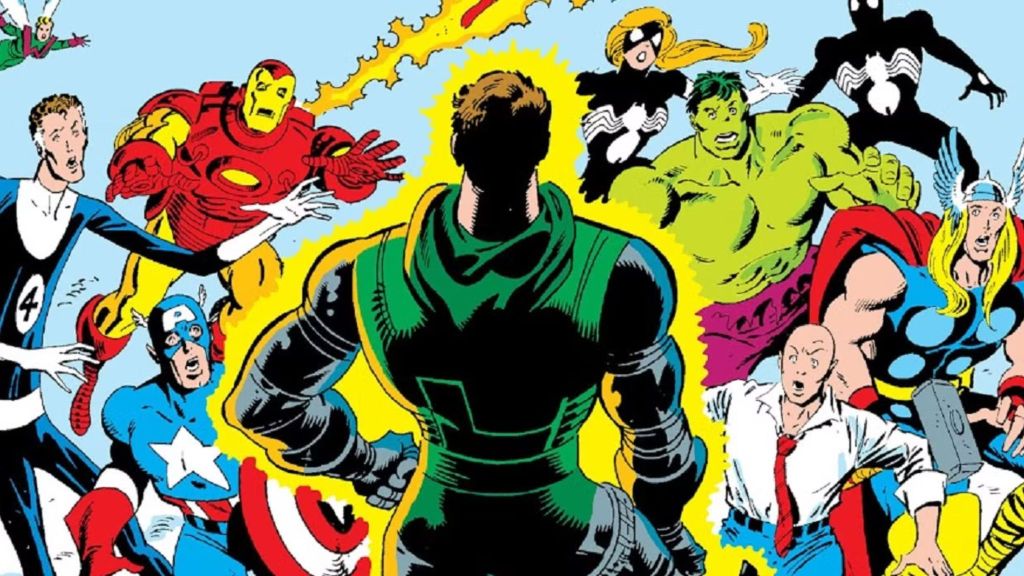
The second wave figures were the last Secret Wars toys released domestically, seeing uneven distribution throughout 1985. Sales were underwhelming, and Mattel decided to halt development on a planned third and fourth wave. An unknown number of additional characters were designed, with several semi-confirmed by the discovery of lenticular shield artwork for a Dazzler figure. Depicted in the art were Mystique, Abomination, and Annihilus. It’s likely the significant tooling investment these characters would have necessitated was instrumental in Mattel’s decision not to move forward with them. Conversely, the almost total lack of tooling on Iceman, Constrictor, and Electro likely was the reason their brief production run was greenlit.
The reason these figures were only sold overseas was due to a contractual obligation, one that has seen the international market become a haven for many end-of-line figures. Retailers in some other countries paid for American toys through a letter of credit. Functionally, this means they have paid upfront, creating mutual obligation: Mattel has to ship them product, and since the store has already paid for it, they might as well stock it. But just because they’re stocking it doesn’t mean that the toys sold any better there than here, and these last wave figures were almost always available for a brief window before being briskly clearanced. That’s how characters like these Secret Wars figures become grail items, each worth an estimated $1-2k mint on card. With almost two weeks still left to bid, the Heritage Iceman and Electro lot is already up to $400, indicating that they’re likely to sell for that same price.
Do you collect Mattel’s Secret Wars figures? Leave a comment below and join the conversation now in the ComicBook Forum!