Motorola Moto G87 overview: A phone that makes no sense
At a glance
Expert’s Rating
Pros
- Solid build quality
- Clean, slick software
- New, larger display
Cons
- Major price hike
- Performance worse than before
- Annoying preinstalled apps
Our Verdict
The Moto G87 struggles to find a place in the company’s increasingly crowded line-up. It’s significantly more expensive than its predecessor, which brings it perilously close to the more premium Edge range. Meanwhile, it lacks any significant advantages in performance, display, or stamina to stand out among the more capable company it has suddenly found itself in.
Price When Reviewed
This value will show the geolocated pricing text for product undefined
Best Pricing Today
Best Prices Today: Motorola Moto G87

Motorola appears to be in the midst of a fascinating transition from a company that’s known for making impressive cheap phones to one that’s known for making competitive premium phones. The Moto G87 is an unfortunate casualty of that process.
On the face of it, this is another solidly built, cheap phone with robust plastic construction, a perfectly fine camera, a decent display (for a cheap phone) and adequate performance.
The only catch is, it isn’t actually a cheap phone. Not compared to previous models, at least.
With a price tag that carries it perilously close to – and perhaps even into – mid-range territory, the G87 finds itself bumping awkwardly into the more premium Edge roster, not to mention some accomplished rivals.
Design & Build
- All-plastic build
- IP68/IP69 dust and water resistant
- Tough phone with MIL-STD 810H rating
Motorola’s smartphone range might now be one of the biggest in the business, but it’s also one of the most unified in terms of aesthetic.
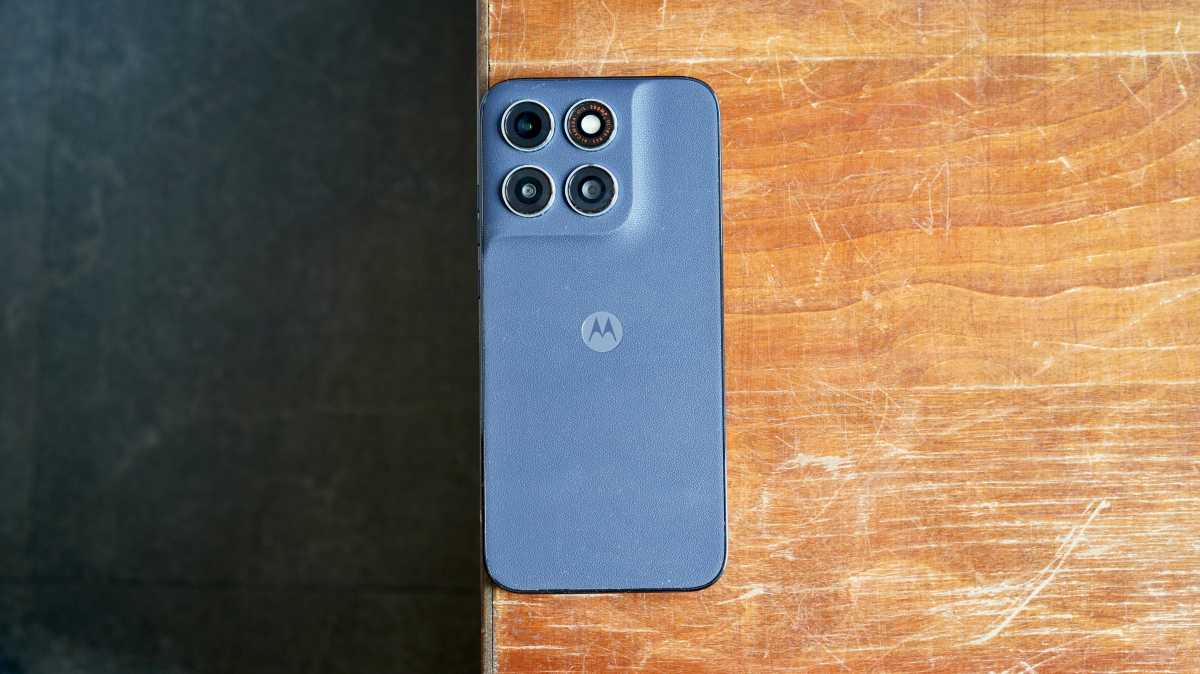
The Moto G87 obviously bears a strong resemblance to last year’s Motorola G86 5G, but it also shares attributes with the flagship Motorola Signature, the mid-range Motorola Edge 70, and even the sub-£100 Motorola E15.
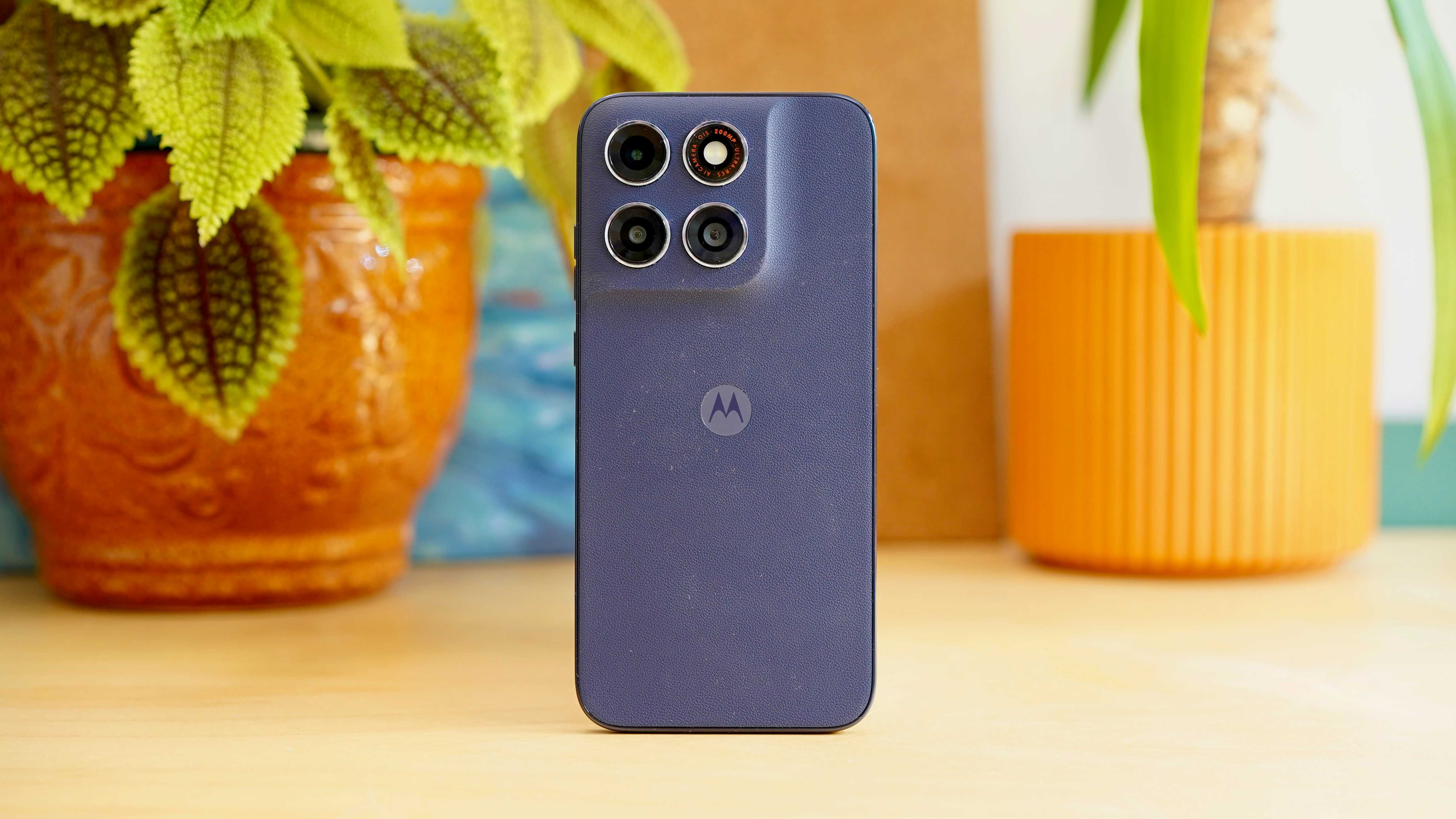
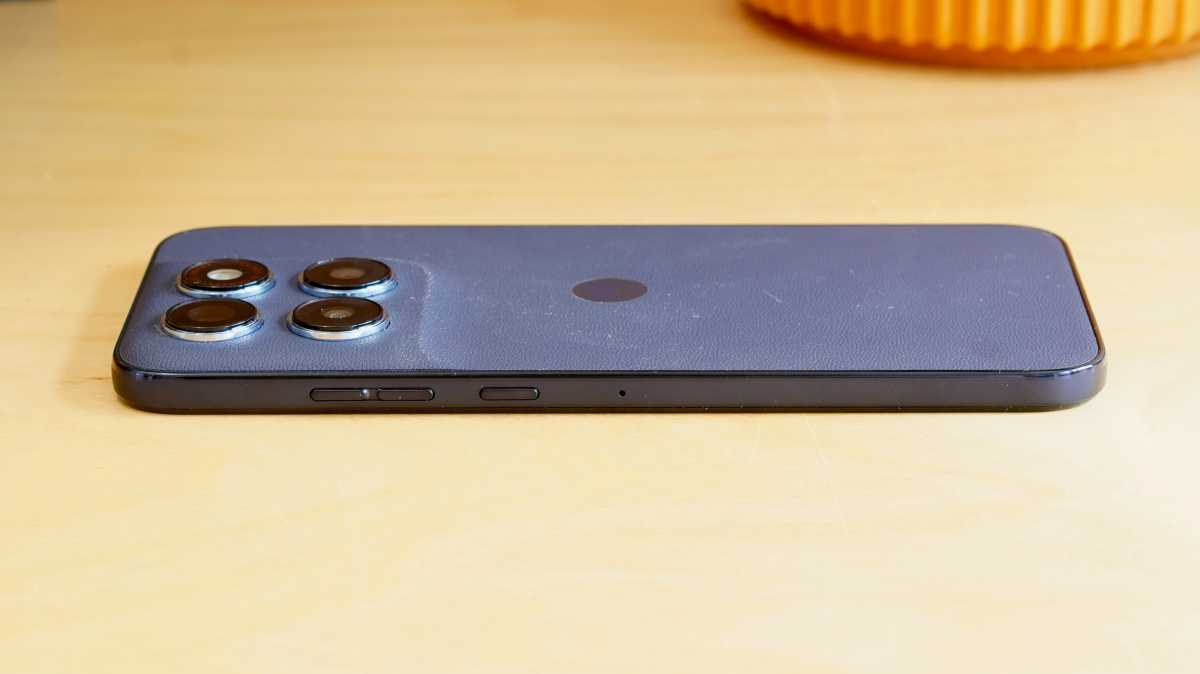
It’s got that signature material-effect (or “leather-inspired”) rear panel in Pantone Overture (my model) or Pantone Blue Atoll, which gently curves out to accommodate the square camera module.
Jon Mundy / Foundry
Unlike the more premium Edge line, however, it has a flat display without so much as a hint of curved glass. Said glass is formed from Corning Gorilla Glass 7i, which can be found on more premium mid-rangers including the Google Pixel 10a.
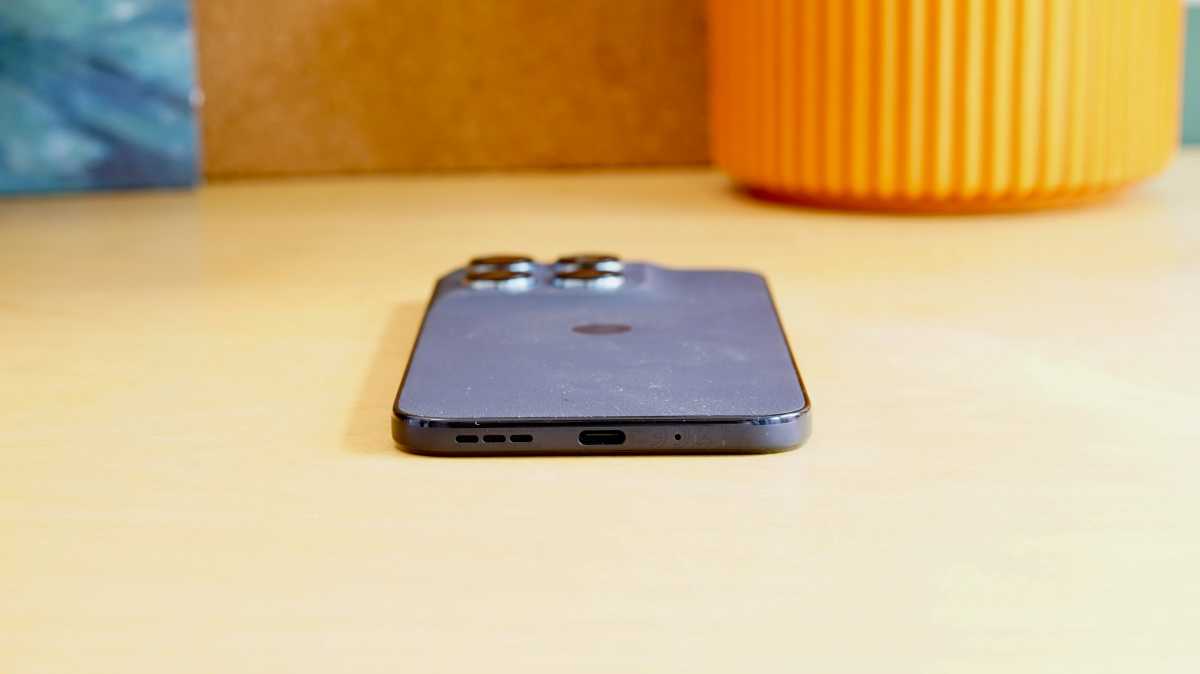
The body is entirely made of plastic, which is unsurprising in a sub-£400 phone, as are some slightly chunky and non-uniform bezels. What’s less typical is the G87’s IP68 and IP69 rating, which provides a level of dust and water resistance that exceeds many flagship phones. You don’t have to worry about submerging it in freshwater (like all modern phones, it’s still vulnerable to seawater) or a sandy beach.
the G87’s screen is comfortable to use in all everyday lighting conditions – including bright sunlight
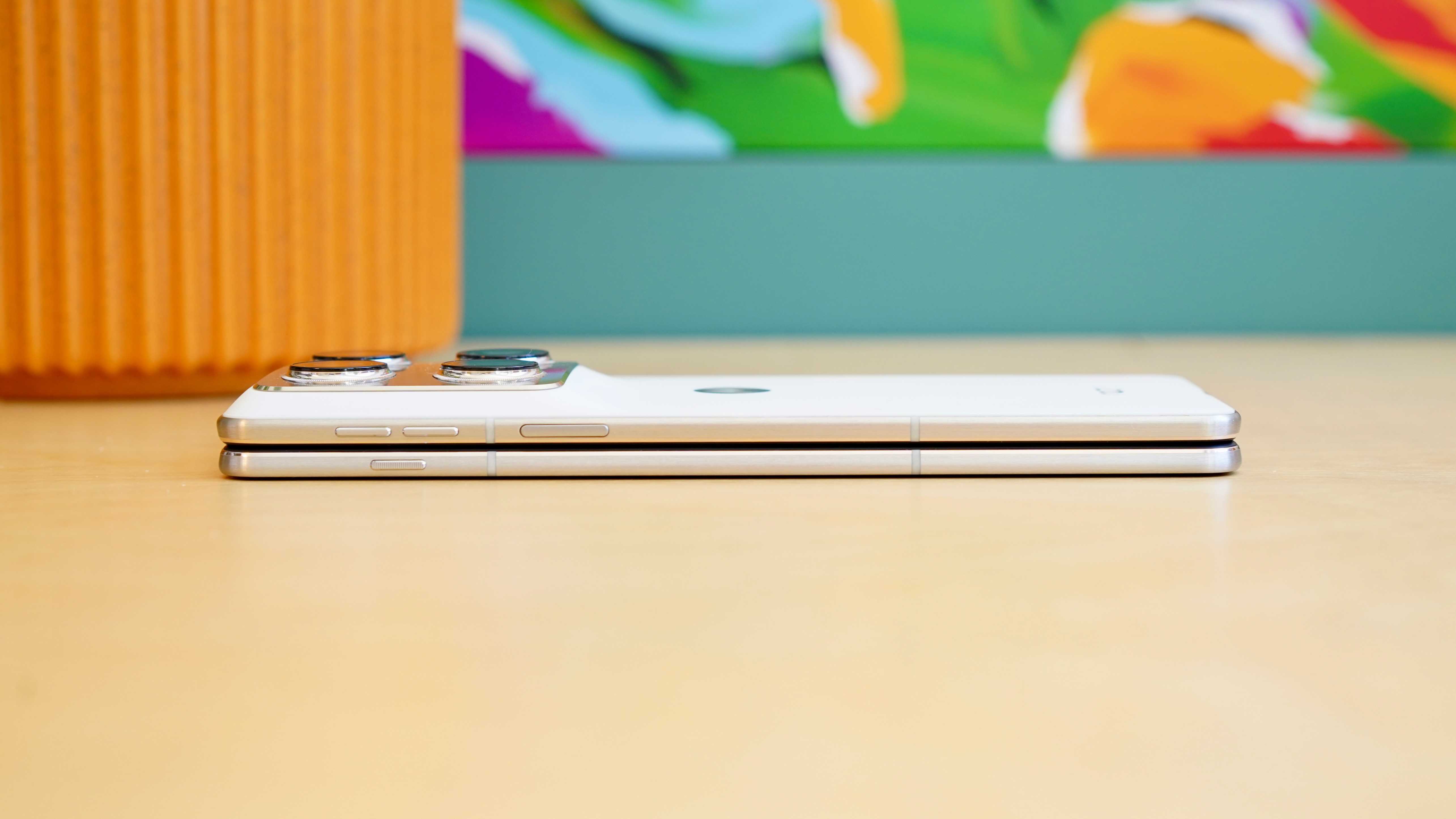
Motorola has given the G87 MIL-STD 810H certification too, which certifies it as a very drop- and temperature-resistant phone. It’s also a nicely proportioned device, despite its large display, with a 7.3mm-thick body and a weight of just 183g. No complaints here.
Screen & Speakers
- Larger 6.78-inch 120Hz AMOLED
- 1272 x 2772 or 1.5K resolution
- Stereo speakers
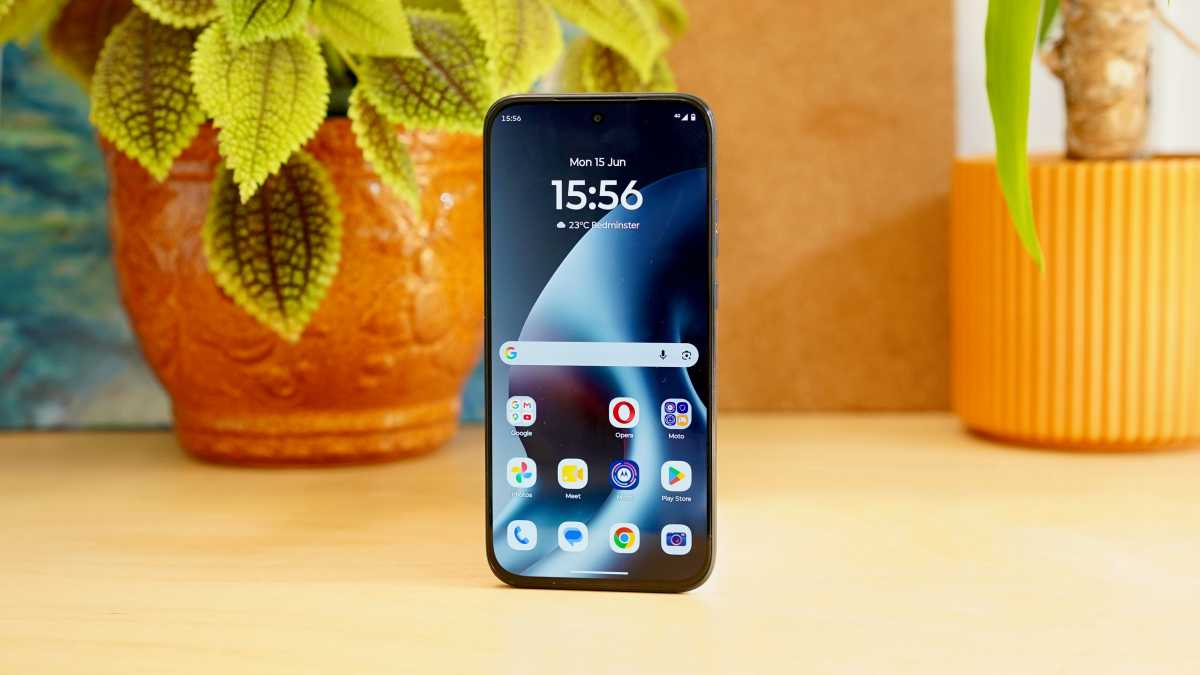
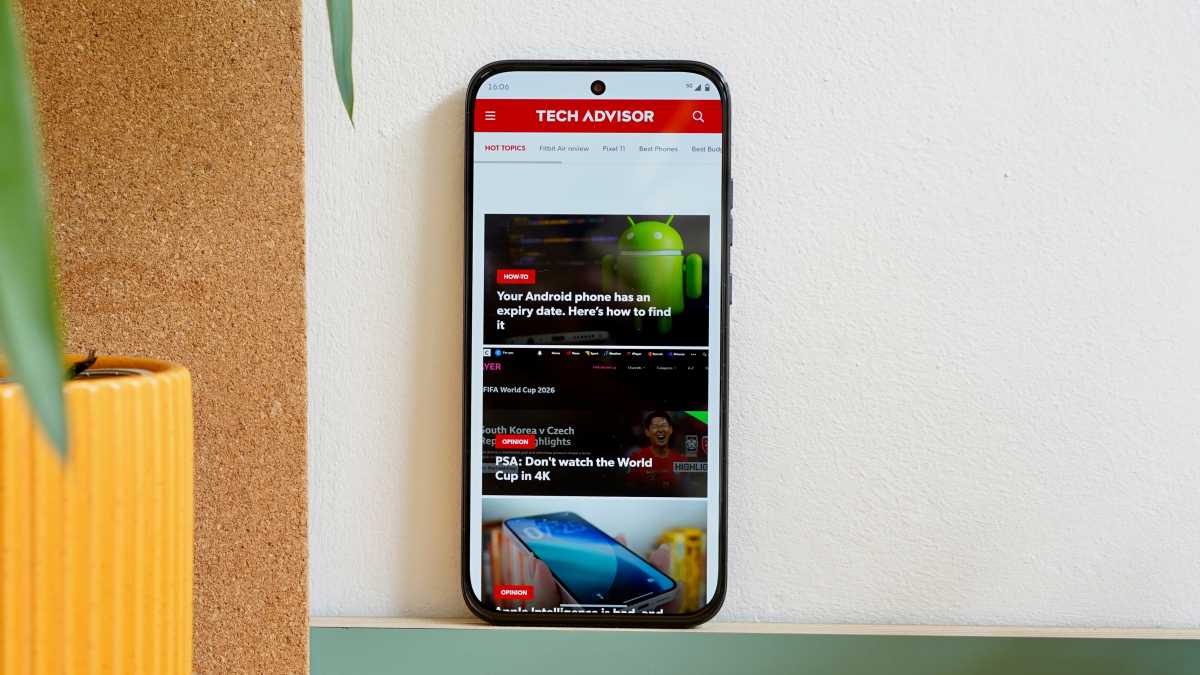
Motorola has equipped the Moto G87 with a 6.78-inch AMOLED display – that’s significantly larger and higher-quality than the 6.67-inch P-OLED found on its successor.
Very capable it is too, with a 120Hz refresh rate, a sharp 1272 x 2772 (aka 1.5K) resolution, and a peak brightness of 5000 nits.
Not that it’ll get anywhere near that bright in regular usage. With auto brightness switched off, it won’t even hit 500 nits, though that’s far from unusual. The most important thing is that the G87’s screen is comfortable to use in all everyday lighting conditions – including bright sunlight.
Jon Mundy / Foundry
There’s a solidly reliable optical fingerprint sensor stashed under the display, which never let me down. It’s the main biometric unlocking option here, with only a basic 2D face unlock on board.
The default ‘Vivid’ colour mode was a little punchier than I would like, but as ever, Motorola provides ‘Natural’ and Radiant alternatives to offer a more muted, less eye-scorching tone.
Curiously, Motorola has rolled back the performance level of the G87 from its predecessor
In terms of audio, the G87 has a pair of speakers on hand to offer proper stereo separation. They’re a little lacking in low-end depth, but they’re clear and loud enough for general video playback.
Specs & Performance
- MediaTek Dimensity 6400: a curious regression
- 8GB RAM
- 256GB storage plus microSDXC slot
Curiously, Motorola has rolled back the performance level of the G87 from its predecessor, the G86 5G. Its MediaTek Dimensity 6400 chip is a clear downgrade compared to the Dimensity 7300 you’ll find on the G86 5G.
Built using an inferior 6nm production process, it’s less efficient than the chip used last year (more on that later), and also less potent.
Significantly so, in fact. In the usual Geekbench test, I recorded a 28% drop in multi-core CPU performance from the Motorola G86 5G, and a 35% drop-off from the Nothing Phone 4a, a contemporary rival facing exactly the same component pricing pressures.
Jon Mundy / Foundry
It wouldn’t even run the GPU-focused Wild Life Extreme Stress Test, which is potentially quite damning in itself.
Needless to say, the identically priced Poco X8 Pro absolutely beasts the G87 in every respect, though it’s a bit of an outlier in this department.
but shots taken in daylight could be somewhat muted, with limited HDR compensation
In practical use, the Moto G87 performs adequately. It’s not the snappiest to unlock or fire up apps, but nor does it try the patience, while navigating between screens and menus remains fairly fluid.
Destiny Rising defaults to medium-ish graphical settings, though it’s not possible to push the frame rate beyond the minimum ‘Standard’ mode. In the hands, the shooter feels playable, if not silky smooth.
Motorola Moto G87 benchmarks
Cameras
- 200Mp f/1.8 main
- 8Mp f/2.2 ultra-wide
- 32Mp f/2.2 selfie
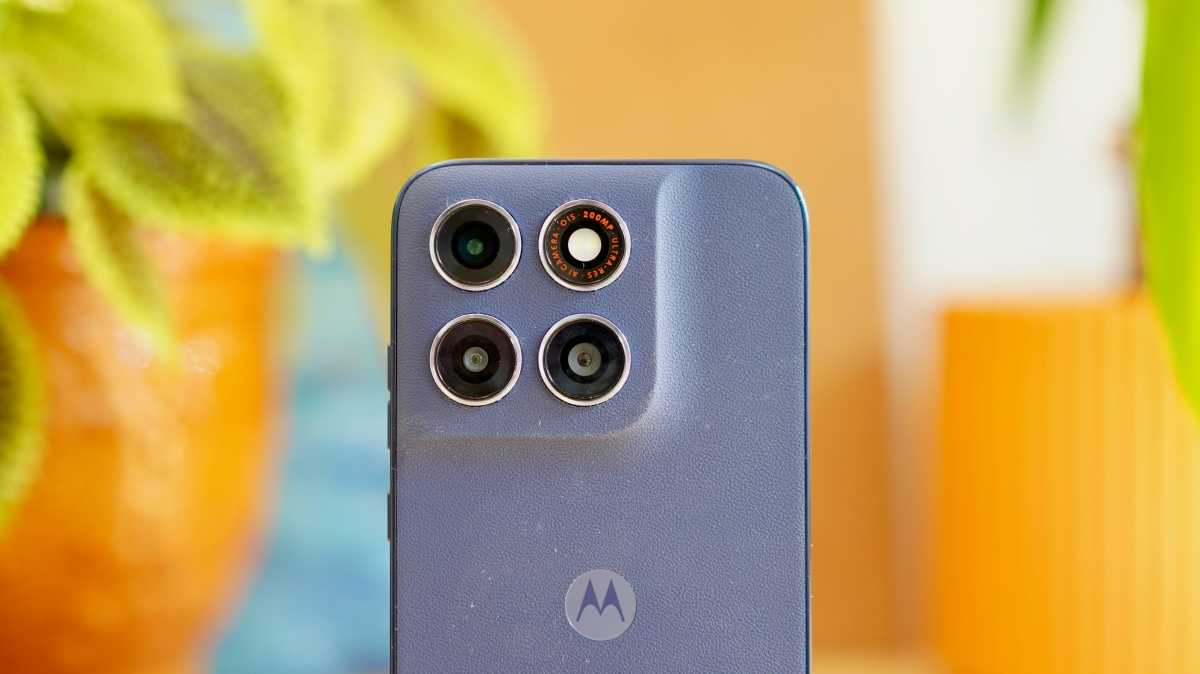
Motorola has mixed things up on the camera front, moving from a 50Mp main camera in the G86 5G to a 200Mp one in the G87.
Otherwise, the G87 packs in the same underwhelming 8Mp ultra-wide camera and the same 32Mp selfie cam. There is no dedicated telephoto camera, with Motorola using those extra pixels on the main camera to improve the quality when you crop in… in theory, anyway.
That main camera might have a 4x higher megapixel count, but it doesn’t yield especially outstanding results. I found detail to be decent and colour reproduction to be reasonably natural, but shots taken in daylight could be somewhat muted, with limited HDR compensation.
Jon Mundy / Foundry
It struggled with exposure on a couple of occasions, bleaching out highlights when there were shady elements elsewhere in the scene.
To Motorola’s credit, night shots avoid that uncanny over-brightening effect that many manufacturers go for these days, though such low-light photos aren’t particularly hot on detail either.
The 8Mp ultra-wide camera is a poor performer. Shots taken with this secondary sensor lack sharpness, and I spotted clear signs of grain in some of the blue skies that I captured.
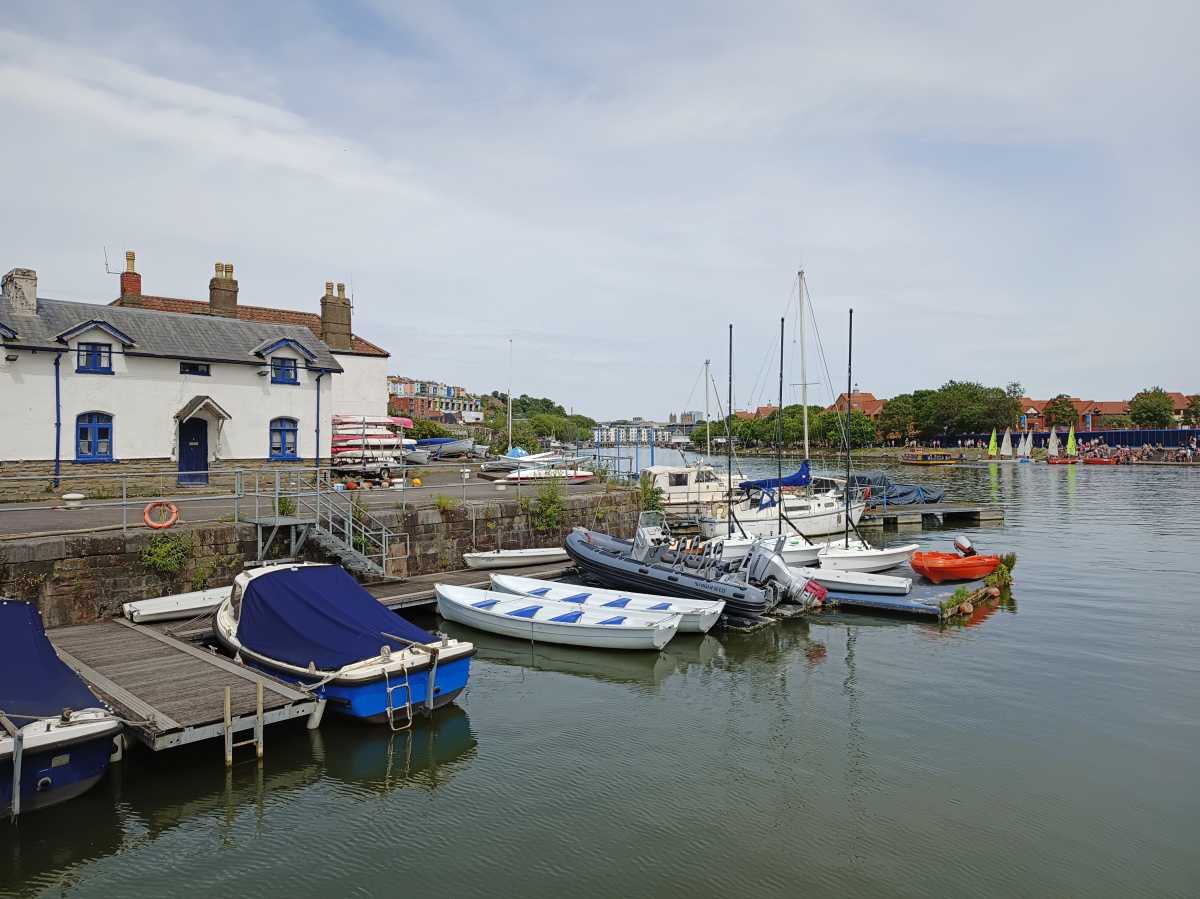
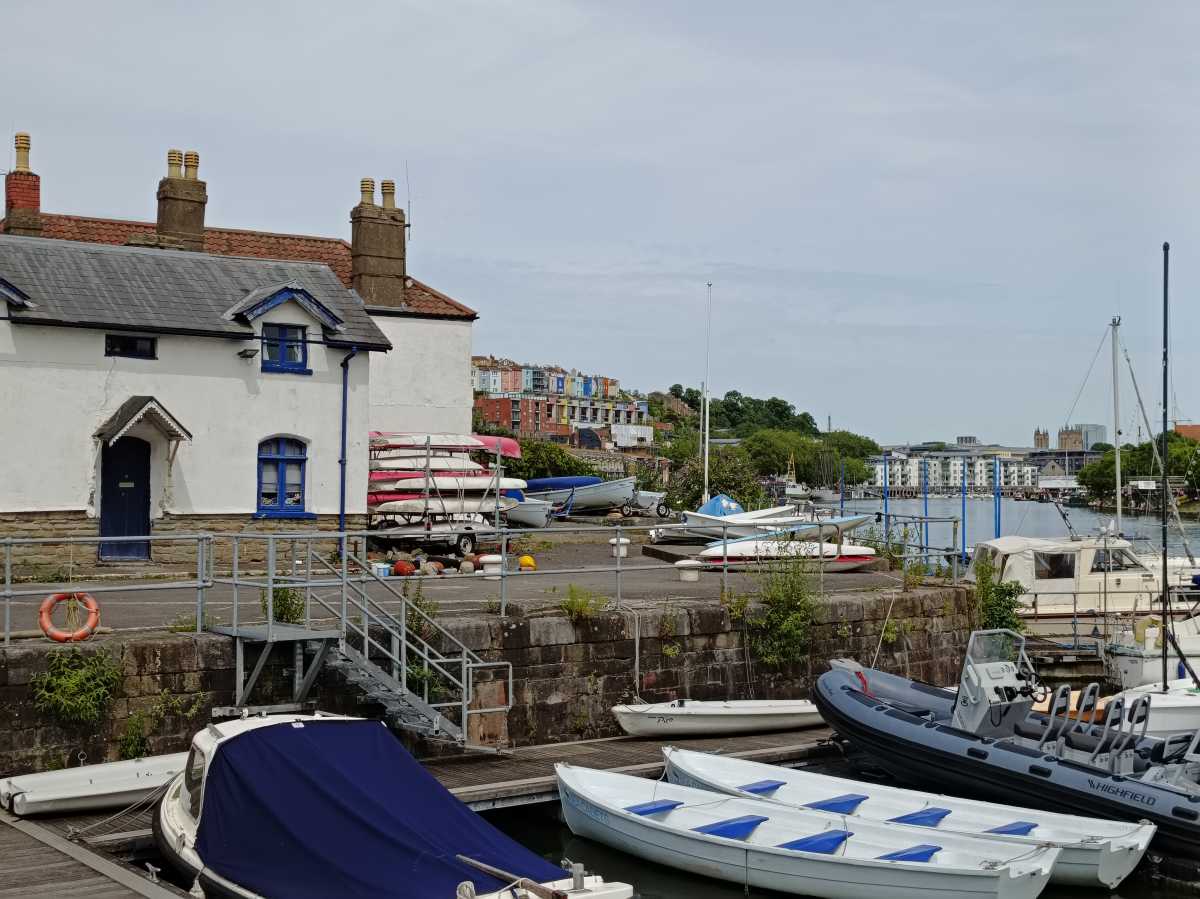


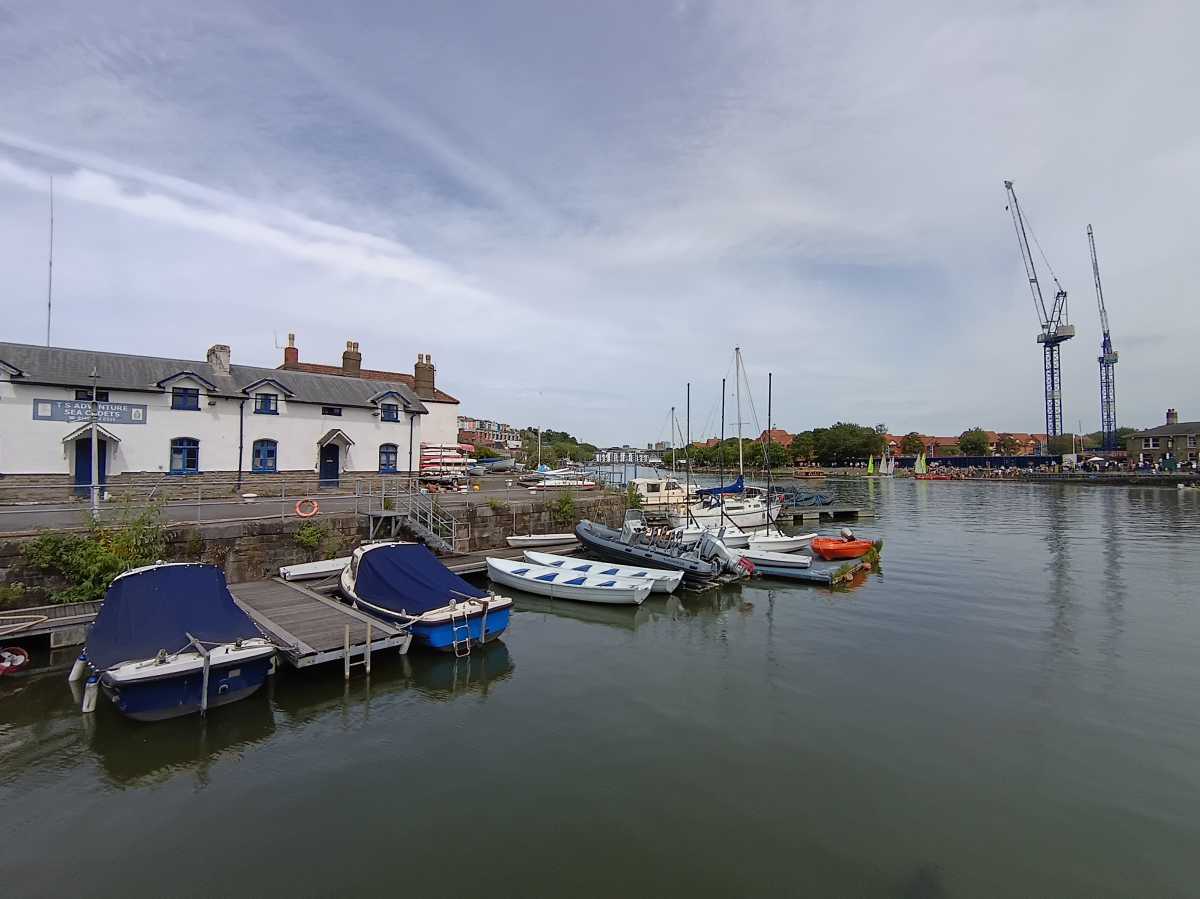




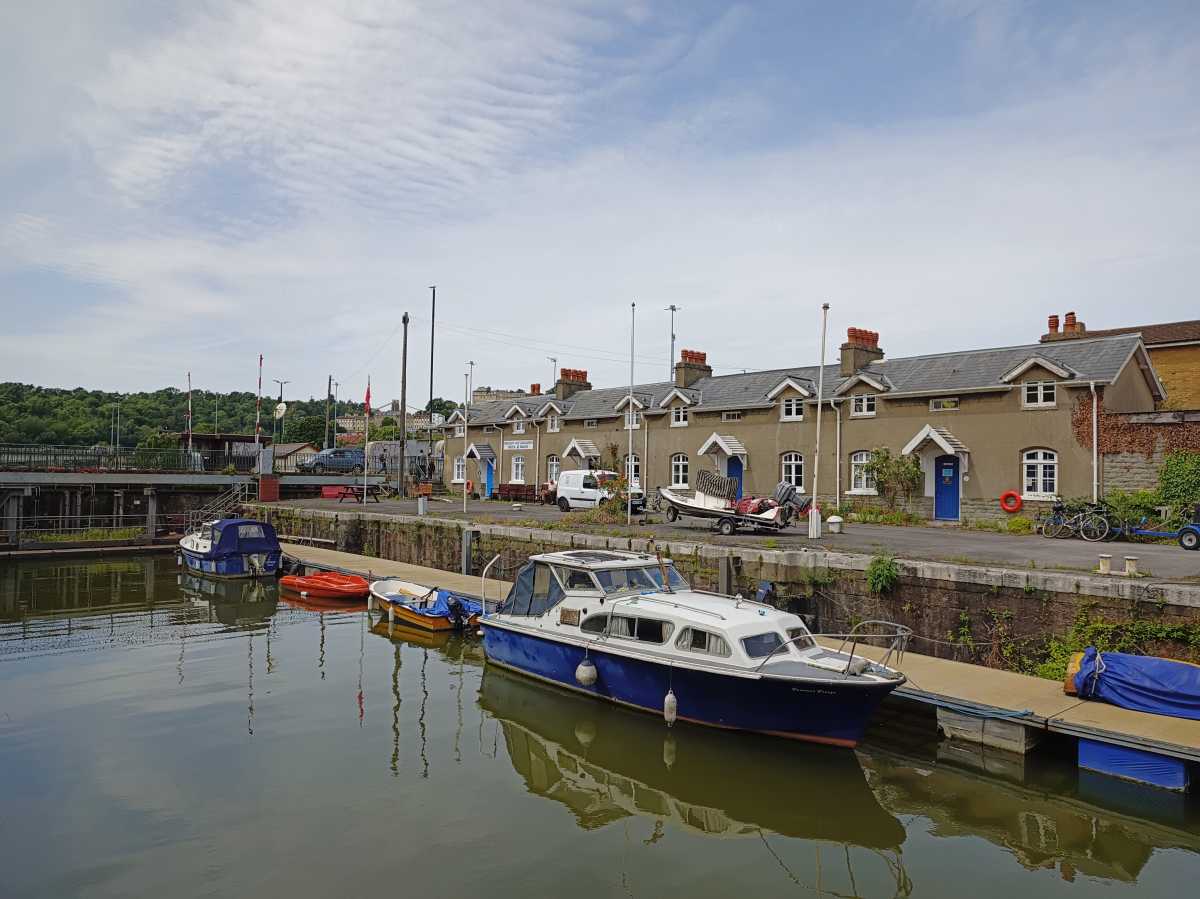





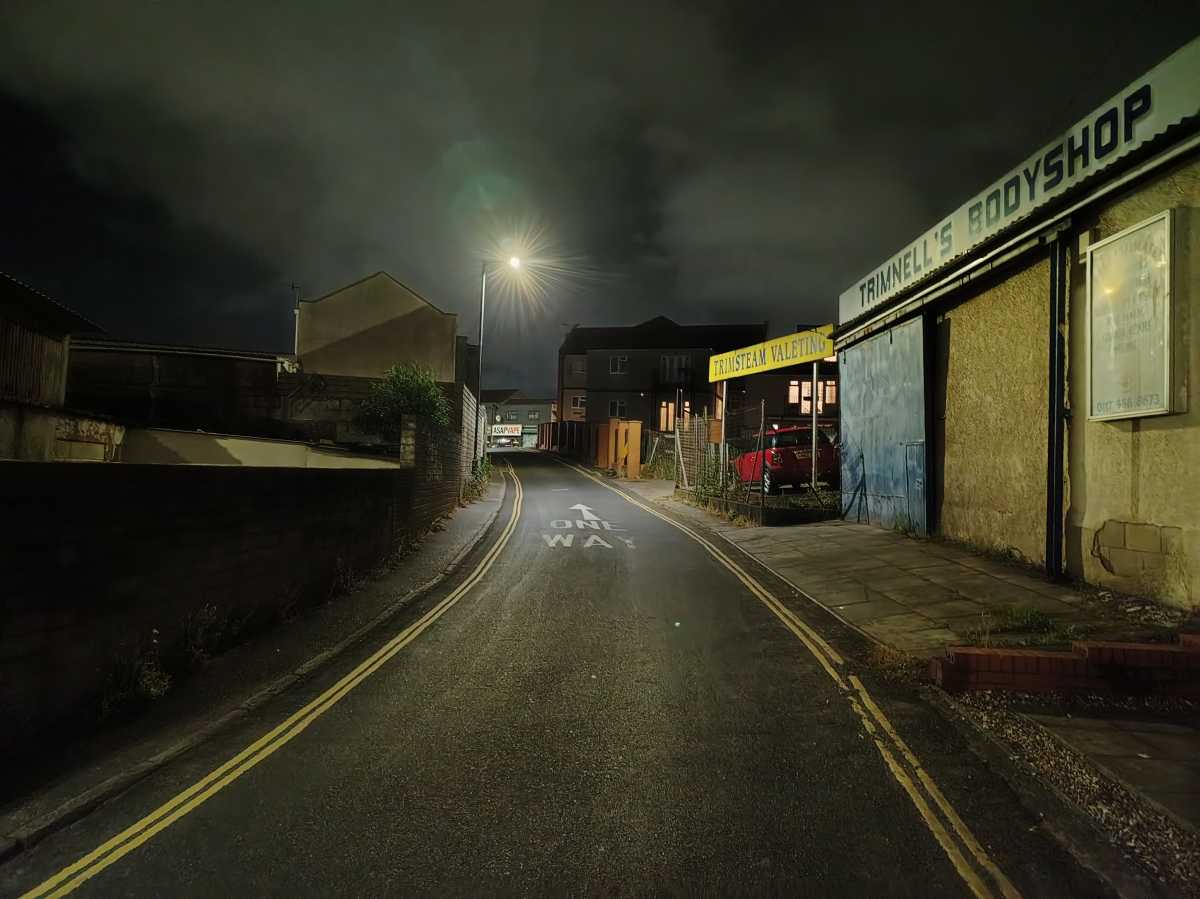


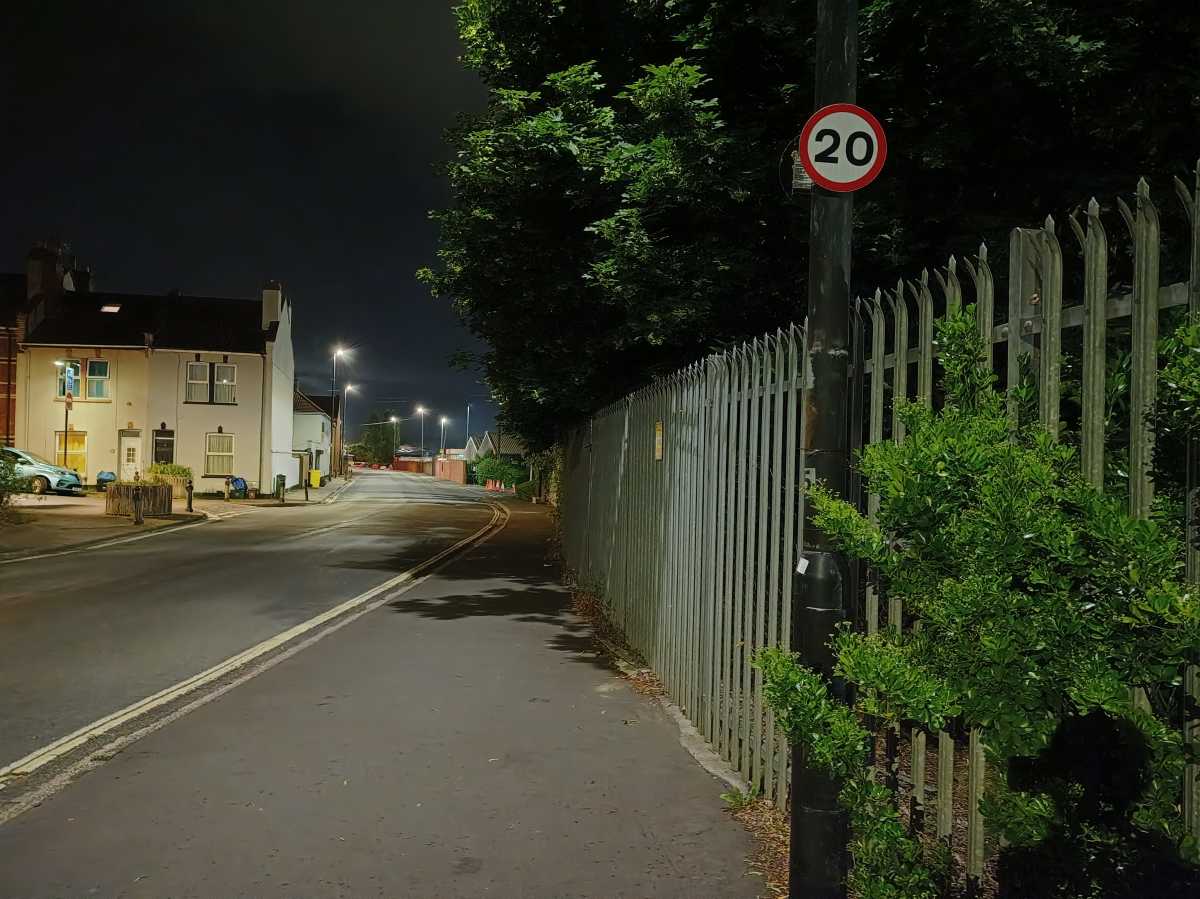

In lieu of a dedicated telephoto camera, the G87 is required to crop in on that pixel-packed main sensor. It works up to a point, with 2x and 4x shots broadly maintaining the look of 1x shots. Zoom right in to the 10x limit, however, and detail suffers.
Selfie shots from the 32Mp front camera aren’t terrible, and I appreciate the slightly wider view. However, the camera struggles a little with dynamic range, and the edge detection on subjects in portrait shots is far from the best.
the 5200mAh battery will get you through a full day without fuss
Motorola hasn’t managed to improve upon the G86 5G’s poor video provision of 1080p at 30fps, which is unsurprising given the downgraded processor.
Overall, it’s a very mixed camera experience, and not recommended if you’re serious about high-quality photography or videography.
Battery Life & Charging
- 5200mAh battery
- 30W charging
- All-day performance
Battery life has gotten slightly worse on the Moto G87 compared to its predecessor – at least judging from our PC Mark 3.0 battery test, which simulates a sustained mixed workload.
If I were to hazard a guess as to why that might be, I would point to the combination of a less efficient 6nm processor and a bigger display. It also falls way behind the Nothing Phone (4a).
Jon Mundy / Foundry
Otherwise, the 5200mAh battery (the same size as the G86 5G) acquits itself reasonably well, and will get you through a full day without fuss.
I wasn’t especially impressed by the Moto G87’s 30W wired charging. It’ll get you from empty to just north of 50% in 30 minutes, which is merely fine.
Motorola’s Hello UI interface is so lightweight, you won’t even find it mentioned in most places
All in all, it’s a perfectly fine battery and charging provision, but one that palls next to the Poco X8 Pro with its 6500mAh battery and 100W charging.
The Nothing Phone (4a), meanwhile, gives you a slightly smaller battery than the Moto G87, but far better 50W wired charging.
Software & AI
- Android 16
- Lacks the AI bloat of more expensive Motorola phones
- 3 major OS upgrades, 4 years of security updates
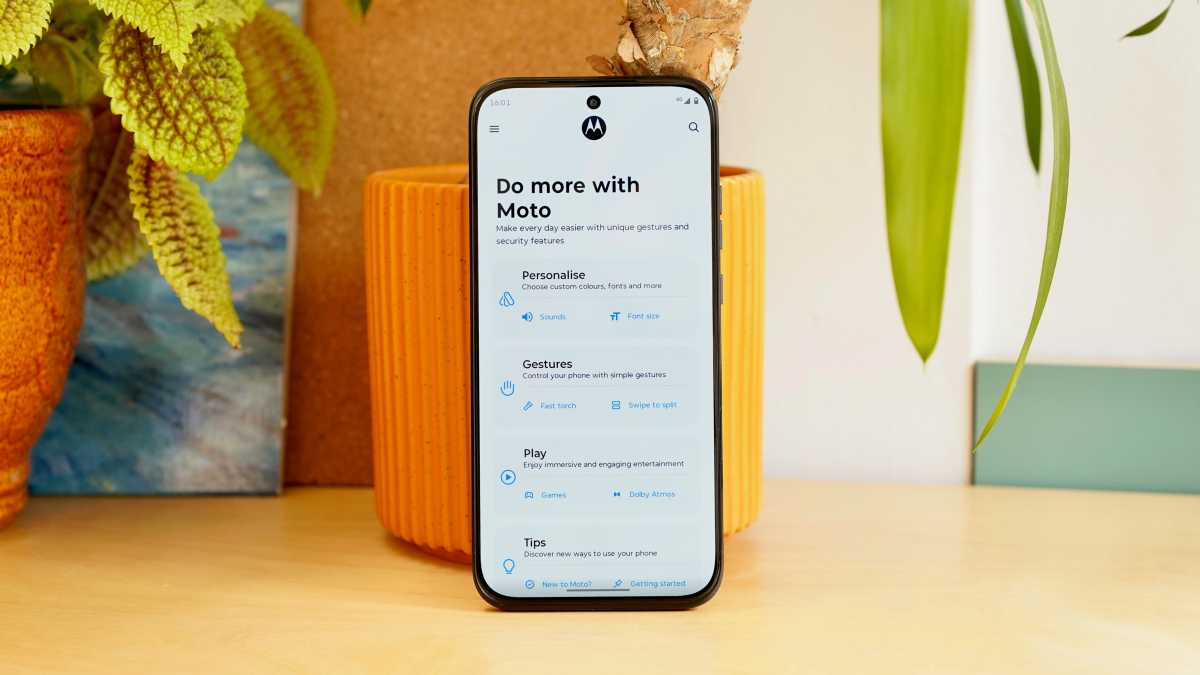
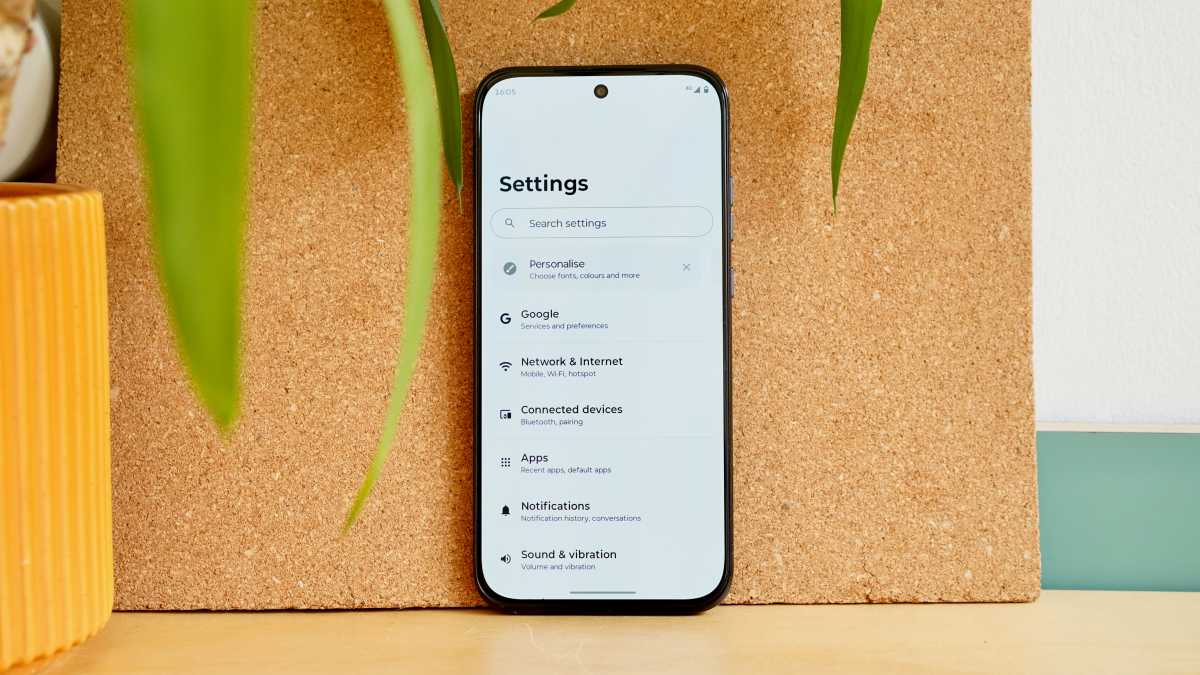
Motorola’s Hello UI interface is so lightweight, you won’t even find it mentioned in most places – unlike many of rivals. This is a relatively clean take on Android, with menus that stick closely to Google’s way of doing things.
Embellishments have started to creep in over recent years, however.
Motorola’s own home brewed apps are, as ever, some of the most tasteful around. I mention it often, but the Moto app is a great example of how to introduce an audience to the core features of your phone in an intuitive yet unobtrusive manner.
Jon Mundy / Foundry
It’s here that you’ll learn about Motorola’s brilliant gesture system, which lets you activate the camera with a twist and the torchlight with a double chop.
The list of preinstalled third party apps is still longer than I would like, though. Assuming you’re not a committed user of each and every one of TikTok, Booking.com, LinkedIn, Amazon Music, Facebook and Instagram, you’ll need to perform a little light home screen pruning at set-up.
I’d recommend every single option in our best mid-range phones guide over the Moto G87
Motorola continues its habit of preinstalling the Opera web browser in addition to Chrome, and there’s a quietly stashed away folder filler with throw-away games.
Jon Mundy / Foundry
Thankfully, Motorola’s scattered approach to AI hasn’t made its way over from its more premium phones. Indeed, there’s very little AI blurb here at all, aside from a preinstalled Copilot app.
The promise of three major OS upgrades is an improvement on the G86’s two, while the four-year security update commitment is unchanged. Neither are anywhere near being best in class.
Price & Availability
Now we come to the crux of the issue. Motorola has ramped up the price of the G87 quite alarmingly. Even acknowledging the spike in memory component prices, it’s a bit of a head scratcher.
There’s just the one model on offer here, with 8GB of RAM and 256GB of storage, and it costs £349.99 on the Motorola website.
That represents a significant 25% price hike over the £280 Motorola G86 5G with the exact same RAM and storage spec. It’s not available in the US, but if you’re based in the States, you really aren’t missing much.
Even more concerningly, the Moto G87 is often now more expensive than the regularly discounted Google Pixel 9a – and it trails that phone quite badly in a number of key areas.
Jon Mundy / Foundry
You might think it unfair to compare the G87’s pricing with two phones that launched in 2025, before the current pricing squeeze took hold. But the G87 doesn’t look like such great value when pitched against its contemporaries, either.
The Nothing Phone (4a) costs basically the same for a phone with a more interesting design, superior performance, and a more flexible camera system, albeit with a lower starting storage capacity of 128GB.
It’s the same story for the Poco X8 Pro, which offers far better performance, a superior display, and a far more impressive battery and charging set-up.
It’s difficult to understand quite where the Moto G87 sits in the current range, and why it needs to exist
Perhaps the crucial comparison here, though, is with the Motorola Edge 70 Fusion. The company’s own mid-range entry point costs £369.99 – just £20 more than the G87 – for an all-round classier package.
Ultimately, I’d recommend every single option in our best mid-range phones guide over the Moto G87.
Should you buy the Motorola Moto G87?
Almost certainly not. The Moto G87 is another so-so affordable phone from a company that seems to have become distracted by its quest for flagships and foldables.
It’s a perfectly pleasant phone to use, with commendably solid build quality and a clean UI among its key strengths.
However, a significant price hike means that the G87 has drifted into far more competitive waters, and it’s simply found wanting against punchier and more premium-feeling opposition.
The likes of the Nothing Phone (4a) and the Poco X8 Pro offer much more for the same money, while Motorola’s own Edge 70 Fusion is a classier customer for just a little more more.
It’s difficult to understand quite where the Moto G87 sits in the current range, and why it needs to exist.
Specs
- Android 16
- 6.78in, 1.5K, OLED, 120Hz, flat display
- In-display fingerprint sensor
- Mediatek Dimensity 6400
- 8GB RAM
- 256GB storage
- 200Mp, f/1.8 main camera
- 8Mp ultra-wide camera
- Up to 1080p @ 30fps rear video
- 32Mp front-facing camera
- Stereo speakers
- Dual-SIM
- Wi-Fi 802.11 a/b/g/n/ac
- Bluetooth 5.4
- 5200mAh battery
- 30W charging
- 164.5 x 77.3 x 7.3mm
- 183g
- Launch colours: Pantone Overture, Pantone Blue Atoll