I’ve used the Motorola Signature 27 and it could be the standout phone of the year
Just a few months back I called the Motorola Signature 27 “the most exciting phone of 2026”.
It was admittedly a rather bold claim. But following several hours of hands-on time at a launch event in Tromso, Norway – including 15 minutes or so with a test unit under the harsh lights of a showcase floor and more time with my own review unit – my level of excitement remains more or less unwaivering.
Motorola is making an explicit push into the premium smartphone market with this year’s model, going even further than last year’s stylish Motorola Signature in every key department. Make no mistake – it’s gunning for the big boys.
Now I’ve held the Signature 27 in my hands, here are my initial impressions.
It’s striking to look at
The Motorola Signature 27’s daring design split opinion when it was revealed back in September, with some taking exception to its faintly spidery camera module.
I was always in the camp that rather liked how it looked, and spending a little quality time with the phone has only reinforced that view.
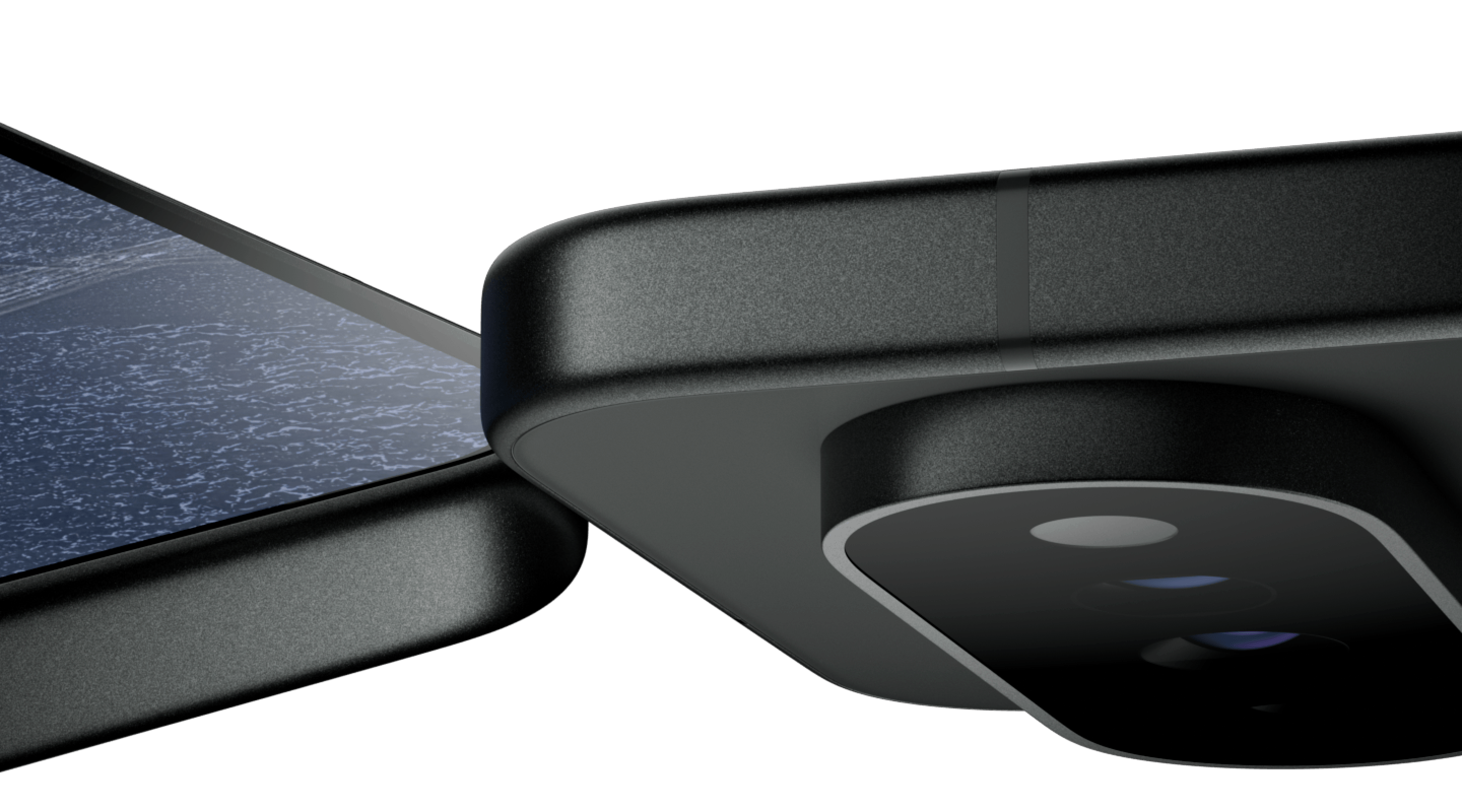
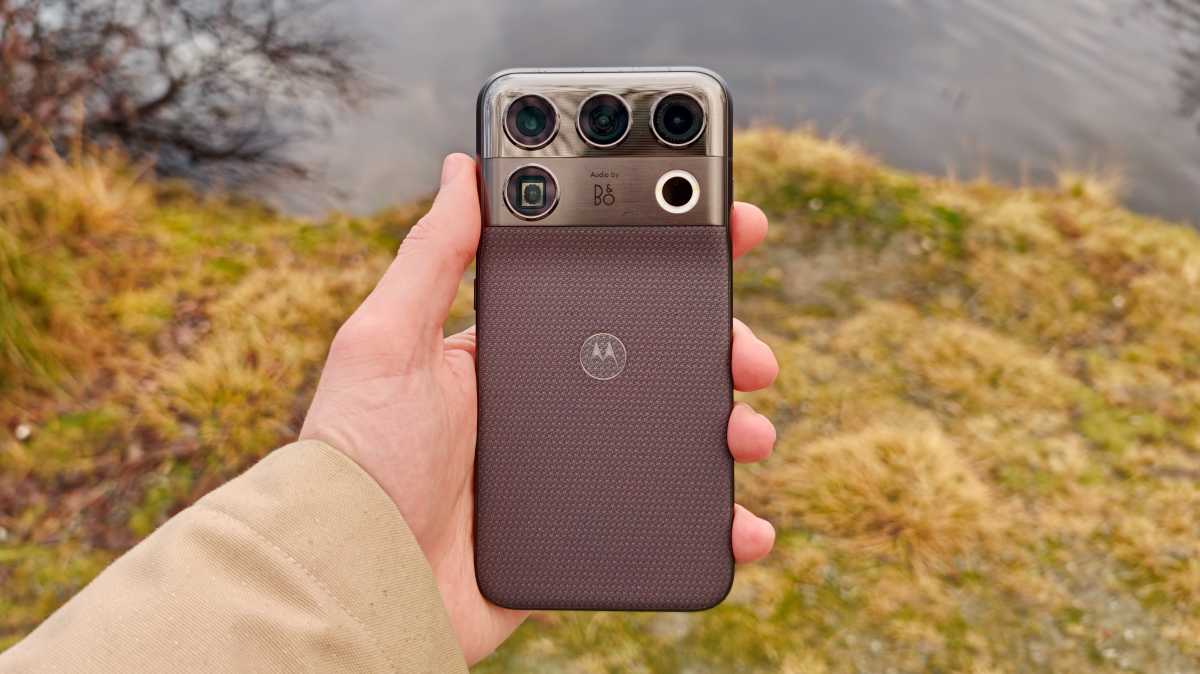
First things first: this is a beautiful phone to hold and behold. Little flourishes such as a tightly grooved metal frame with chamfered edges, or the way the body gently curves up to the width-spanning camera module, set it apart from the iPhone-worshipping crowd.
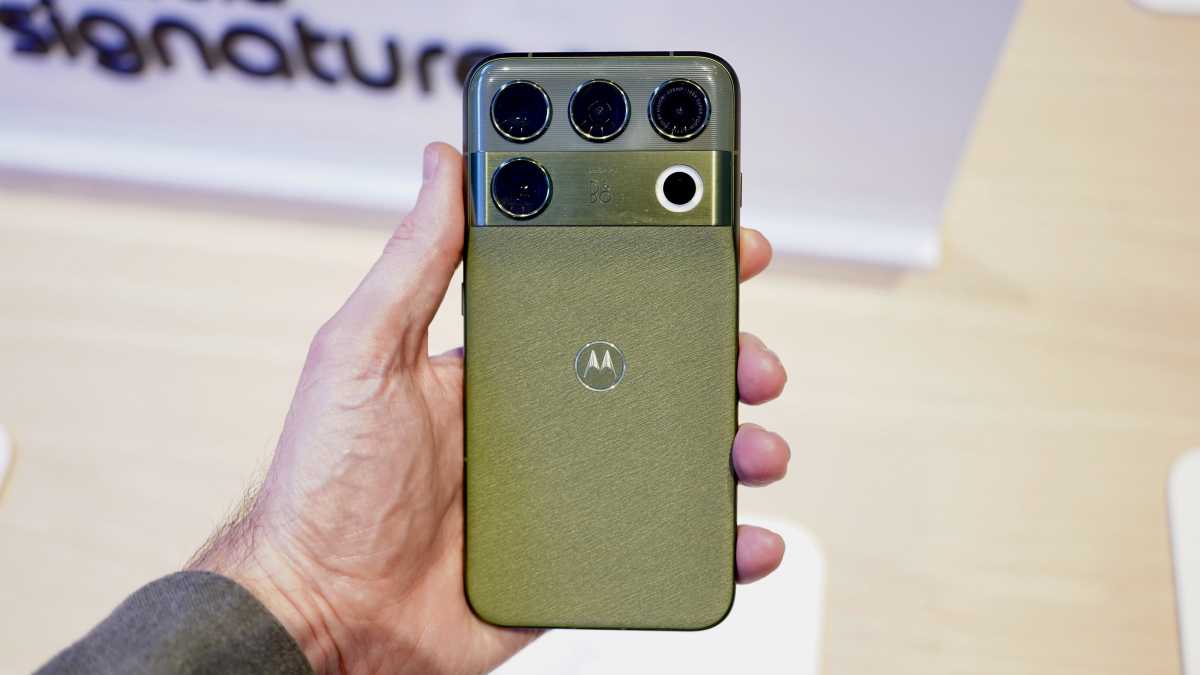
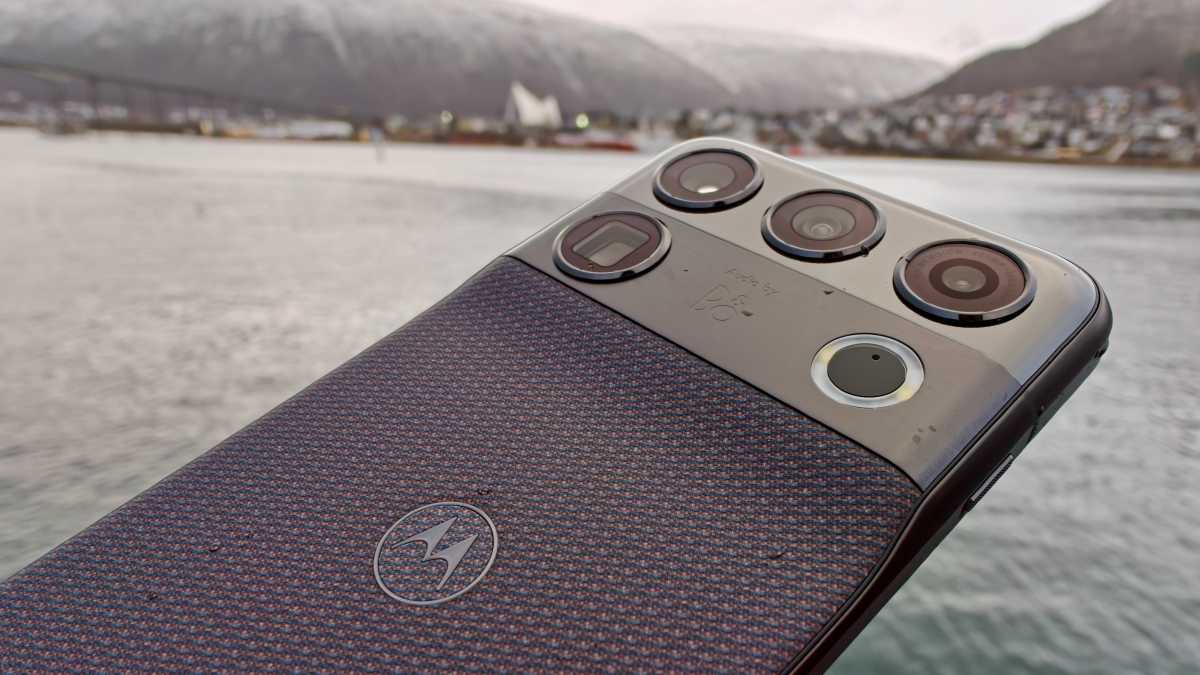
Motorola’s signature choice of tactile materials for the back panel is in play once again

Jon Mundy / Foundry
It vaguely reminded me of a whole number of other sharply designed, premium-feeling phones of yesteryear, from the Sony Xperia Pro-I to the pre-face-lift Google Pixel 7 Pro. The curved 2.5D display also feels like a design flourish from a time before everything fell a bit flat (quite literally).
Motorola’s signature choice of tactile materials for the back panel is in play once again. My early preference is for the warmer look and feel of the Capulet Olive version, which I spent only a brief amount of time with. But my Coal Smoke model has a stealthy, professional appeal of its own with its ‘tactical weave’ finish. It’s growing on me.
Jon Mundy / Foundry
The camera module itself combines ceramic and metal materials to pleasing effect. It’s perhaps not as pure or iconic a look as, say, Google’s Pixel design, but it looks and feels sufficiently high-grade.
These various points of interest do a good job of distracting you from the fact that this is actually a rather large device, not least with a considerable weight of 227g. It doesn’t feel it, but there’s a chance it could start to wear on me over time. We’ll see.
I’m going to need to spend a lot more time with the phone to see if it’s pleasant to live with as my day to day phone, but initial signs are positive.
One thing is for sure, Motorola is one of the only phone makers right now going in its own direction.

Jon Mundy / Foundry
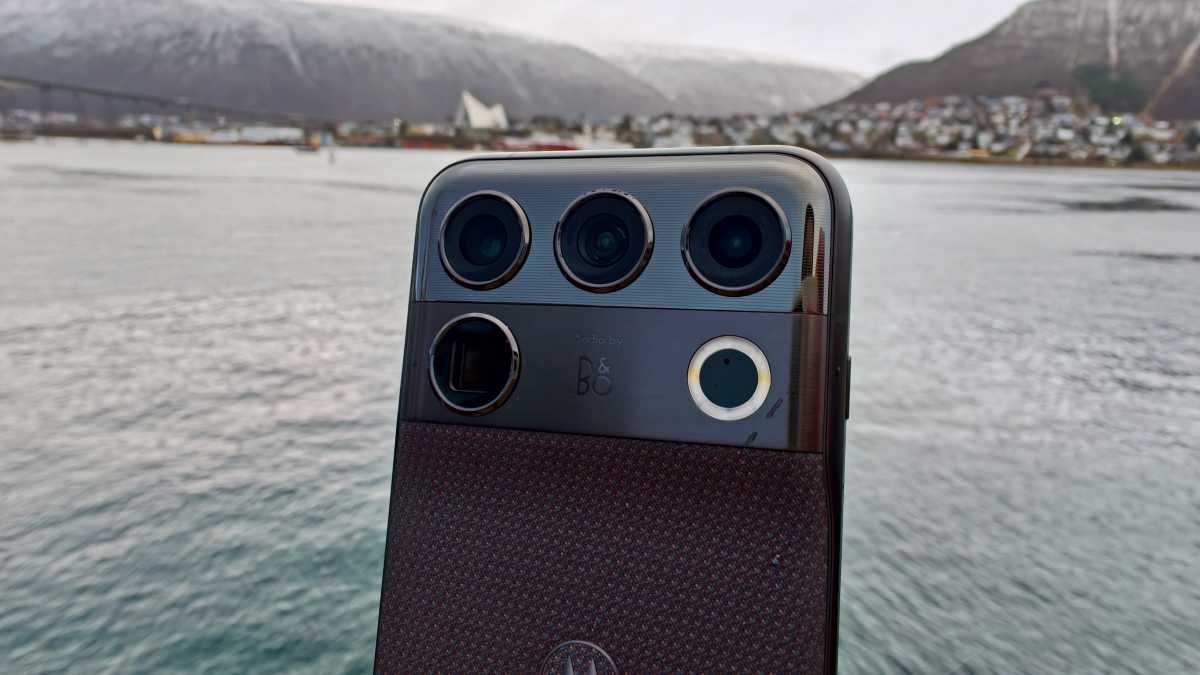
Motorola is really pushing things with its camera
The past year of high-end Motorola phones has led to a bit of a low key revelation – the company is actually quite good at cameras now.
The Motorola Signature and its bendy cousin the Motorola Razor Fold presented a pair of well-rounded camera systems, but the Motorola Signature 27 is aiming for higher accolades – as evidenced by a 2026-topping DxOMark score of 173.
Whether that metric means much to you or not, there’s a clear level of ambition on display here. The main camera is based around a 50Mp 1/1.28-inch sensor, with an f/1.6 aperture and LOFIC technology for that extra HDR push.
I haven’t had time to load up the images and really pore over the results, but my initial impressions are good – certainly in terms of the natural, almost film-like tone that Motorola seems to be achieving here.
Perhaps the most interesting sensor, though, is a new Event Vision Sensor (EVS). We haven’t seen this on a phone before
Jon Mundy / Foundry
200Mp periscope cameras are all the rage in 2026, and the Motorola Signature 27 has it own 3x variant, promising up to 100x Super Zoom shots.
My early impressions of this are that Motorola has hit upon a good performer right up to 10x and even 30x, with further zooming yielding increasingly noisy results. I don’t think I’m jumping the gun too much to declare 100x shots here a rather pointless exercise.
There’s a solid 50Mp ultra-wide too, as well as a 50Mp front camera. Perhaps the most interesting sensor, though, is a new Event Vision Sensor (EVS). We haven’t seen this on a phone before, but the idea is that it’s dedicated to accurately sensing motion.

Jon Mundy / Foundry
The idea is that it assists the main and telephoto cameras to capture moving subjects, which Motorola says will also assist with the sharpness and clarity of low light action shots. These claims will need thorough testing, so keep them peeled for our full review.
The display gets seriously bright
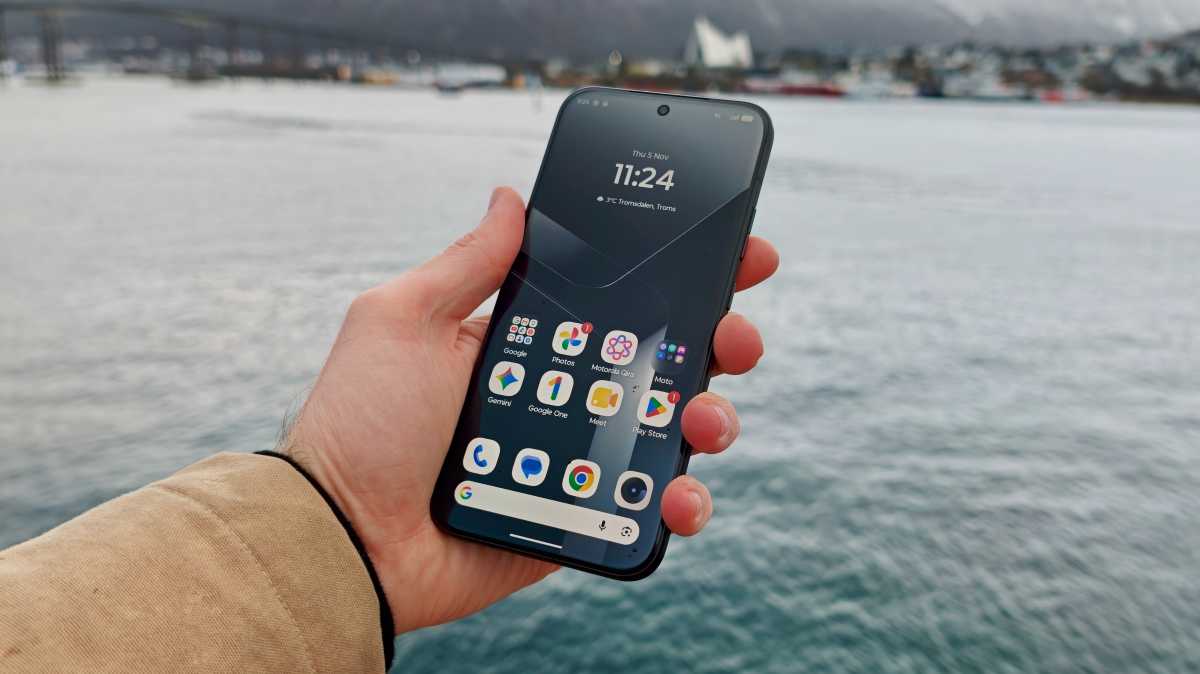
Another eyebrow raising spec is the Motorola Signature 27’s 6.78-inch display. The company has applied Tandem OLED technology, which we saw recently in the new Apple MacBook Pro.
boosting brightness to a staggering peak of 12,000 nits
Jon Mundy / Foundry
This dual-layer approach has the benefit of boosting brightness to a staggering peak of 12,000 nits – the highest we’ve ever seen from a phone, at least on paper.
In practice, I didn’t detect an unusual level of eye-scorch from the Signature 27’s screen – but then, I’ve been testing it in the far northern Norwegian city of Tromso, which gives up on daylight soon after lunch time right at this time of year.
Autobrightness was never going to crank things up to the max in such a scenario. It’s certainly nice and bright in regular conditions, and I noticed a nice amount of pop and contrast in the Tidal app (which offers white text and colourful album art on a black background).
There should be real benefits to this dual-layered OLED panel when it comes to HDR content.
What else is new?
The Motorola Signature 27 runs on Qualcomm’s latest and greatest Snapdragon 8 Elite Extreme Gen 6 chip.
This is an off the shelf component that we’ve seen (and indeed will be seeing) in other phones from rival manufacturers since it’s launch in September (Motorola semi announced the phone at Qualcomm’s annual summit), but its inclusion is still noteworthy.
Motorola has been opting for slightly-less-than-top-tier processors in flagship phones for a long time, so this marks a shift. We’ll have to see if can stand up to its rivals in performance terms – and crucially, whether it can remain cool and consistent while doing so.
It’s also worth noting, though it’s one for the more nerdy user, that the Signature 27 supports Graphene OS and is the first phone to do so outside of the Google Pixel range.
One thing the company is not ignoring is audio output, with Bang and Olufsen’s involvement proudly emblazoned on the back
Jon Mundy / Foundry
Another competitive spec is a 7000mAh battery, which is significantly bigger than the 5200mAh cell in the original Signature. I couldn’t drawn any conclusions from my limited time with the phone, but that Tandem OLED display is supposed to be pretty efficient, so I’m cautiously optimistic.
90W wired and 50W charging also form part of the package, though Motorola is another manufacturer continuing to eschew Qi2 magnetic charging. Maybe next year, eh?
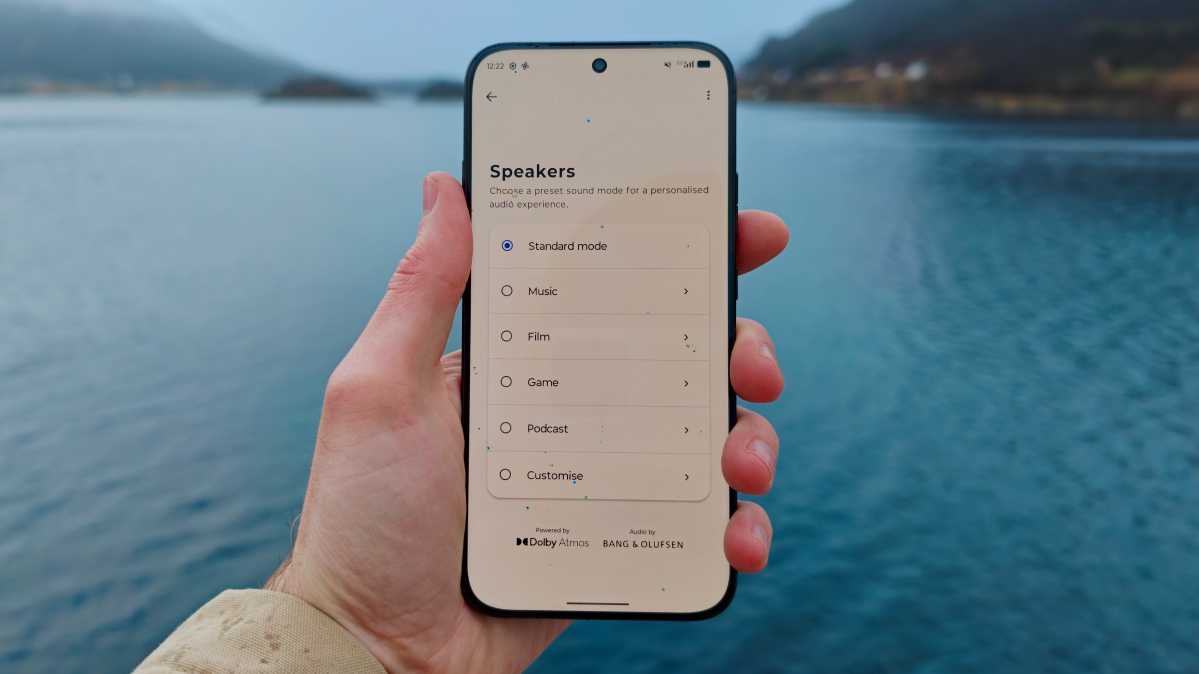
One thing the company is not ignoring is audio output, with Bang and Olufsen’s involvement proudly emblazoned on the back of the phone. Motorola was at pains to point out this was a co-development deal rather than a simple endorsement, with genuine B&O engineers working on a range of bespoke Signature 27 sound profiles.
Jon Mundy / Foundry
These involve distinct profiles for specific media types, including Music, Film, Game, and even Podcast. You can also customise your own using a handy EQ, completely with added bass and treble boost options.
Don’t expect a revelatory experience – these remain inherently small and thus limited speakers, and there’s nothing like the Poco F9 Ultra’s dedicated sub-bass hardware here. But they seemed crisp and clear in my initial use, with each profile offering a different inflection.
What you need to know
The Motorola Signature 27 enters pre-sales on 16 November ahead of a 3 December release date, with prices starting from £1,299.
In the US, it costs $1,599 and goes up for pre-order on 19 November ahead of its 26 November release date.
That’s a whole lot more money than last year’s Motorola Signature, which debuted at £899.99. We definitely have our concerns.
But it’s worth emphasising that the Signature 27 is shooting for a higher target, and when you compare it to the £1,500 late-2026 crowd (including the Oppo Find X10 Pro Max and, probably, the Xiaomi 18 Pro Max), it doesn’t seem so extortionate.
That’s providing the Motorola Signature 27 can make good on its undoubted promise and actually compete with those elite phones where it matters.
Jon Mundy / Foundry