Nvidia proves it’s too big to fail
Good morning. Today I’m deciding whether the final Avengers: Doomsday trailer passes the “people just standing around” test, trying the new Material 3 Expressive Claude app on my Android devices, and stocking up on discounted XTEINK e-readers for Christmas gifts.
Inbox is the tech newsletter that goes beyond the news cycle. We cover the most important 9to5Google stories from the last couple of days along with a few highlights from around the web. We publish every Tuesday and Thursday, and if you like what you read, please subscribe.

Inbox is written by Daniel Bader. Read previous issues here, and then catch up with Ben Schoon’s excellent Weekender column published every Sunday.
⭐️ Starred
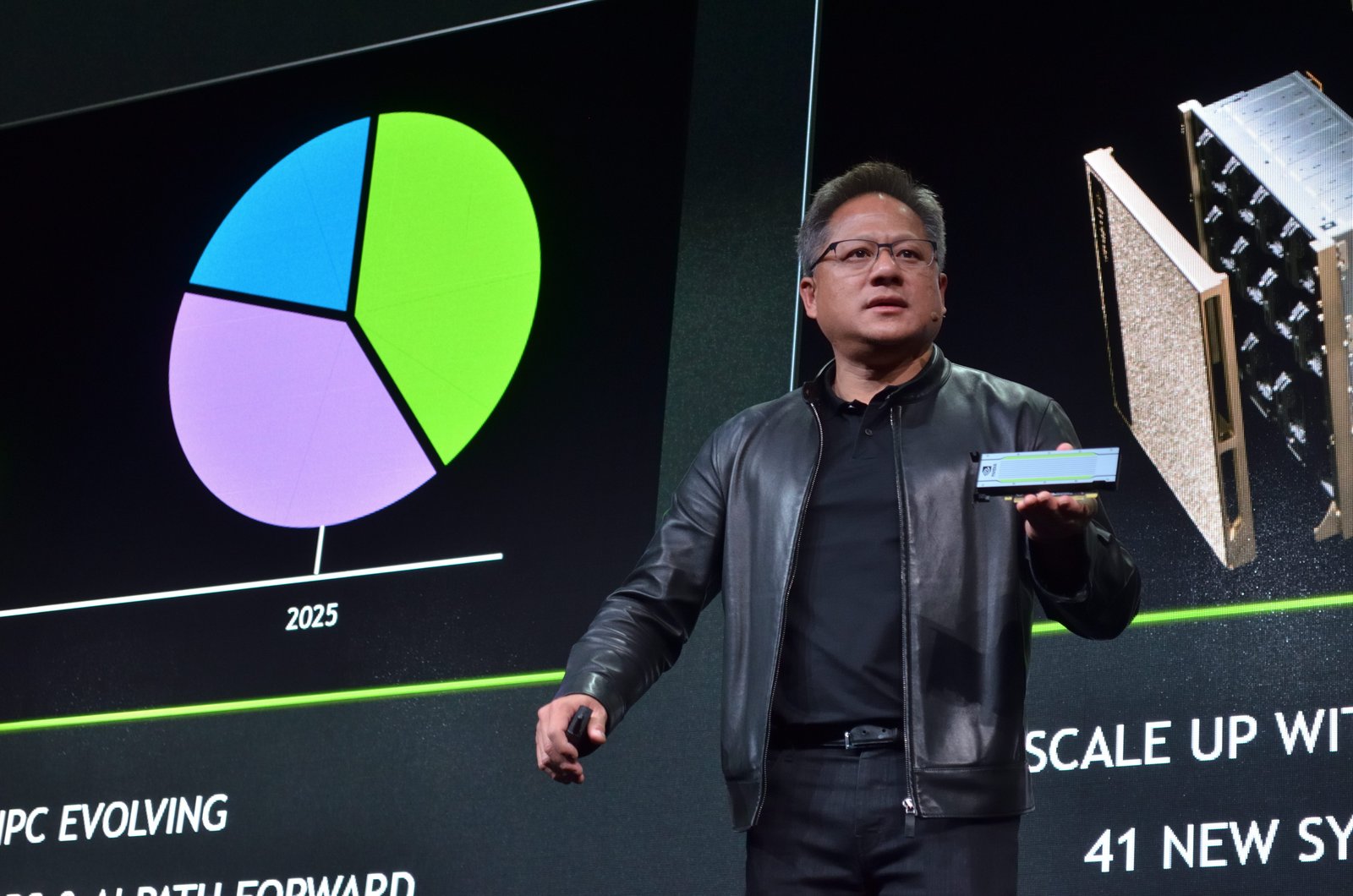
Eleven days after leaving Nvidia, Jensen Huang is back as president, CEO, and a board director. The board voted unanimously to reinstate him on Monday, saying it was satisfied with his candor and ability to lead following a series of meetings. It also said input from senior levels of the US government left it confident that his reinstatement poses no national security risk.
I didn’t see this coming. Huang was dishonest to the public and to his board. He admitted to having affairs not only with an alleged Chinese spy, but also with an employee who directly reported to him. He is accused of facilitating the sale of Nvidia AI chips to companies like Megaspeed that knowingly purchased them with the intention of smuggling them into China, a contravention of US trade restrictions.
As recently as November 17th, the board chair, Harvey Jones, reiterated that the company had no intention of bringing back Huang as CEO. But things changed quickly on Sunday as President Trump reportedly reassured the board that Huang’s reinstatement posed no security risk to US intelligence, something that the new Democratic-led Congress will be sure to test via repeated subpoenas in the new year.
As Huang walked into the atrium at Nvidia’s headquarters, staff gathered around to cheer his return, and he addressed the crowd by saying he would be a “better CEO the second time around,” as if 11 days of unemployment had given him sufficient time to evaluate his past behavior.
Nvidia’s stock was up over 30% on Monday, rebounding from a disastrous end to last week that wiped out $4 trillion in Nasdaq value. It’s hard not to see Huang’s return as a direct response to this short-term disruption, which also hinted at a much more serious correction in the stock market. Nvidia’s stock had already fallen 24% between the day Huang resigned and Friday’s crunch, and with looming regulation from Congress in 2027, a rudderless AI industry could have been disastrous for the US economy writ large.
Though things may appear to be back to normal, or as normal as possible given the insanity of the past couple of weeks, Huang has returned to a very different trade environment. While he was away, Nvidia’s board formed a National Security and Export Control Committee to investigate whether the company’s actions violated any US embargoes. And as part of Huang’s return, Nvidia has committed to hiring its first chief compliance officer, an executive who will ostensibly not report directly to the CEO.
I was pretty gobsmacked when I saw the news of Huang’s return come across the wire at 9am ET yesterday. I’m still wrapping my head around it. Is Nvidia too big to fail, or just a symptom of a larger interdependency between the US executive branch and Big Tech? Huang promises to be a better leader this time around, but to whom: his employees, his customers, or his shareholders? Because he appears to be a very different person to each of those groups.
This newsletter is sponsored by Waterdrop Filter
Better-tasting water for your morning coffee, everyday cooking, or a house full of holiday guests? Waterdrop Filter’s Black Friday sale has options for all three, from high-capacity under-sink reverse osmosis systems to installation-free countertop models. Upgrade your kitchen with the X12 under-sink system for $899, save space with the compact G6A6 for $189.99, or skip the plumbing with the M6HG countertop system for $299, which delivers filtered hot water for coffee and tea in seconds.

Whichever setup fits your routine, use code 9TO5GBF26 to take an extra 5% off those sale prices. Waterdrop’s offers also extend to whole-home filtration and replacement refrigerator filters, giving you plenty of ways to upgrade without stretching your holiday budget. Shop Waterdrop’s Black Friday deals on Amazon before the sale ends November 30th.
✉️ Inbox
- In Ben’s Weekender essay, he speaks the truth: The Google Home app is better than Nest alone ever was, mostly.
- Motorola Razr Flex leaks in real life with Fold 8 and iPhone Duo shape, mystery chipset. Based on the tepid reception to the Signature 27 and its $1,600 price, I have low expectations for this one, but Motorola knows how to make a good foldable.
- Gemini app for Mac adds computer use to control desktop apps. It took its sweet time, but Gemini now competes directly with Claude and ChatGPT where it counts: being able to accidentally delete all of your files.
- Google homepage rolling out AI-focused redesign that includes your Gemini chats. This is a bigger deal than it lets on, since it’s the next step in Search’s inevitable slide into obscurity.
- Google’s 3D emoji has wild Android spec requirements: 10GB of free space, 6GB RAM. Most Android phones have these specs now, so I disagree that the requirements are “wild.” But do we really need emoji that go this hard?
- Google Search adds a clever Easter egg for Robert Pattinson’s James Bond casting. Cute.
- Alleged Pixel 11 Pro prototype had HiLight and a temperature sensor. I return to my theory that it was price, not usage, that killed the Pixel’s temperature sensor.
- Expect Samsung’s good-value Galaxy devices to get more expensive, report says. The cheap phone is dead, dead, dead.
- Google Pixel held its ground in the US despite a middling Pixel 11 launch. What is considered a good Pixel launch anymore?
- Hands-on: Sony’s Walkman-revival USB-C headphones are back in stock and worth a look. I can’t justify these terrible-sounding headphones, but damn do they bring back some memories.
- Clicks Communicator hits a supply chain snag, and it isn’t because of RAM. Click, click, boom.
- Google retiring Nest app and Google Assistant on speakers, displays in 2027. I know the “Killed by Google” folks are going to be all over this, but this announcement has been inevitable for two years.
- Google Health 5.13 rolling out: Improved food search, more swimming controls
- Samsung might copy the iPhone’s Dynamic Island soon, but it actually looks good [Video]. I’m not mad about this; the Dynamic Island is a great feature that has changed how useful ongoing notifications are.
- ‘Galaxy Watch 10’ won’t launch in 2027 as Samsung tries to slow RAMageddon losses. I think Samsung’s phones should take a year off, too.
- This Fitbit Air app buzzes your wrist with phone notifications, finds a lost tracker, more. I wear my Fitbit Air to avoid all of these things, but you do you, I guess.
- Kodak SlideTag is a $35 Android & iPhone tracker with an E-Ink display to show your photos and more [Gallery]. Oh. My. Goodness. I’m buying 20 of these.
- Gemini 4 Carbon is now available in Google Antigravity for AI Pro. Gemini 4 Carbon isn’t getting the same positive reception as its little brother, Neon, but it’s still a very good near-SOTA model, and now it’s available to the rest of us.
🛍️ Black Friday: the deals worth a look
Since it’s Black Friday week, I figured I’d round up some of the best deals we’ve found so far.
A discounted Pixel: The Pixel 10 at $600 is a really good deal. Recent software updates have closed some of the feature gaps with the Pixel 11, and the hardware is still solid even a year after launch. If you want better cameras, the Pixel 11 Pro at $749 is an absolute steal.
The gaming-tablet deal: The Legion Tab Gen 5 at $599 makes much more sense than it did at $899: an 8.8-inch 165Hz display, a 12GB/256GB configuration, and an included folio. It’s a good fit for someone specifically seeking a compact Android gaming machine.
The last-generation watch: The 40mm Galaxy Watch 8 at $199 is the sort of older smartwatch worth considering when annual upgrades are modest. And because the Watch 9 is basically identical, I’d go for the Watch 8. If you are looking at Samsung’s latest and greatest, the Galaxy Watch 9 is $379 with a free $50 Amazon gift card, which is a decent deal, too.
A deal on the year’s best Android foldable: The Galaxy Z Fold 8 is showing up at $1,499.99 for some lucky shoppers and $1,549.99 for the rest. Either way, it’s Samsung’s best product of 2026, and my current favorite gadget.
Some more great Black Friday deals:
- This portable monitor is great for DroidDeck, and now it’s down to $85
- First Googlebook discount takes $300 off HP flagship for Black Friday
- All my favorite XREAL glasses are at their lowest price ever for Black Friday
- Google Store Black Friday 2026: Refurb Pixel discounts, Fitbit Edge trade-in, more
- Black Friday streaming deals start going live: Paramount+ for $2.99, Apple TV+ for $6.99, more
- Nest Wifi Pro is 65% off right now, just $70
- Proton Pass is up to 60% off for Black Friday—and it does way more than just store your passwords*
- Keychron’s keyboards and dock are perfect desk accessories, and they’re up to $48 off
- Which Waterdrop water filters are actually worth buying this Black Friday?*
- Give your eyes (and wallet) the break they need with these TCL NXTPAPER Black Friday deals
- Just $161 reclaims all that space GTA VI stole on your PS5 with this M2 SSD deal
- Quit worrying about storage and get a UGREEN NAS for up to $160 off right now
- Moto Tag 2 hits its lowest price ever at $18.99, undercutting the Pixel Tag
- Waterdrop Filter’s Black Friday sale brings big savings on under-sink, countertop, and whole-home systems*
- The two best kids’ smartwatches are $50-$64 off ahead of Black Friday
- Nintendo Switch 2-ready smart glasses from Viture are at their lowest price ever (up to $160 off)
- Pixel Watch 4 & 5’s handy USB-C travel charger drops to $18.99
- You’ll be aura farming with this amazing $100-off Oura Ring 5 deal
- Boox is giving away my favorite e-reader during Black Friday
- TCL’s Picture Frame TVs with Google TV are up to $800 off this week
*Sponsored
➡️ FWD:
Google’s latest mid-sized sedan AI model is taking the world by storm. Gemini 4 Neon is technically the middle sibling in Google’s lineup, with Carbon at the top and Hydrogen at the bottom, but everyone seems to agree it absolutely cooks.
If you’ve spent any time on X over the past few days (I hate myself for writing that), you’ll likely have seen an uptick in fervor over Google’s latest model, which seems to outperform Claude Opus 5.5, and even Gemini 4 Carbon itself, in many benchmarks and real-world tests. Even Google is providing some helpful guidance about when to use one or the other.
One thing I’ve read again and again about Neon is how adept it is at writing. I’m of two minds about this: the better an AI gets at doing my job, the less necessary I am at said job. On the other hand, I’m so tired of obvious AI slop that a model that actually writes well sounds like a relief. At least when I’m unemployed, I won’t be yelling at the screen all day about why the robot yet again used negative parallelism.
I didn’t get to play much GTA VI over the weekend, but I know a few (million) people who did. Publisher Take-Two says the game generated $3.79 billion in first-day retail sales. That’s an incredible number in any industry, but a truly mind-blowing one in the video game world. Rockstar also released its first patch for the game on Monday to fix a modest number of bugs with the launch code.
If you follow open-weight AI models, you’ll likely have heard of how influential Z.ai’s GLM-5.2 was when it launched in June. Now the company has released GLM-5.4, and it’s novel as much for its architecture as it is for its benchmarks.
Its Loop Transformer reuses a block of layers to do more computation without adding parameters. The company is pitching applications beyond software, including games, visual work, and CAD. The 750-million-parameter model reportedly performs at the level of a 2-3 trillion parameter non-looping equivalent, but we’re still waiting on a broader release for real-world testing.
In browser news, Ladybird’s first public alpha is now downloadable for macOS and Linux. It’s built with a brand-new engine that eschews many of the legacy decisions made by Google’s Chromium team. And the project has the backing of big names like Shopify, Cloudflare, and Proton. It’s still pretty rough, and features are paltry, but any new competition in the browser space is a win in my book.
Like what you just read? Subscribe to Inbox today and get it in your email every Tuesday and Thursday morning. Got feedback? Send us an email.
You can also support us by becoming a 9to5Google Pro member, starting at just $5/month. You get bonus podcast episodes, access to our members-only Discord server, and lots more.
Thanks for reading, and have a great day. I’ll talk to you on Thursday.
—Daniel