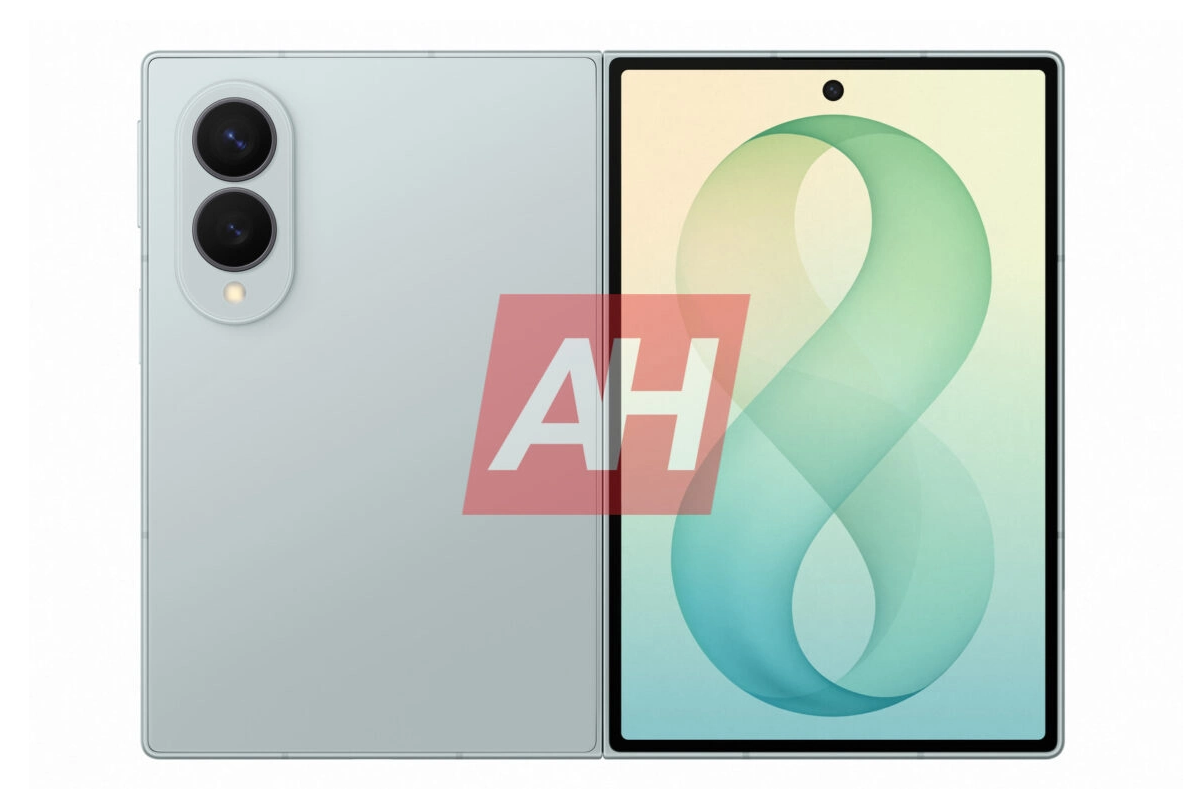
Samsung Galaxy Z Flip 8 overview: Slimmer, lighter and more versatile
At a glance
Expert’s Rating
Pros
- Lighter, thinner and more comfortable
- Improved battery life
- More feature-rich external screen
Cons
- Limited camera
- Semi-fast charging
Our Verdict
The hardware updates aren’t game-changing, but the new Flip is slimmer, offers better performance and battery life, and Samsung now gives users more control over the outer screen. That’s much appreciated.
Price at time of review
This value will show the geolocated pricing text for product undefined
Best Price Today
Price When Reviewed
$1,199.99
Best Prices Today: Samsung Galaxy Z Flip 8



For several years, Samsung has made one of the best foldable phones in the larger Fold format, but its smaller Flip has faced stiff competition from Motorola, which impressed with sharper hardware, a smarter design and a better, more flexible system that’s better suited to the format.
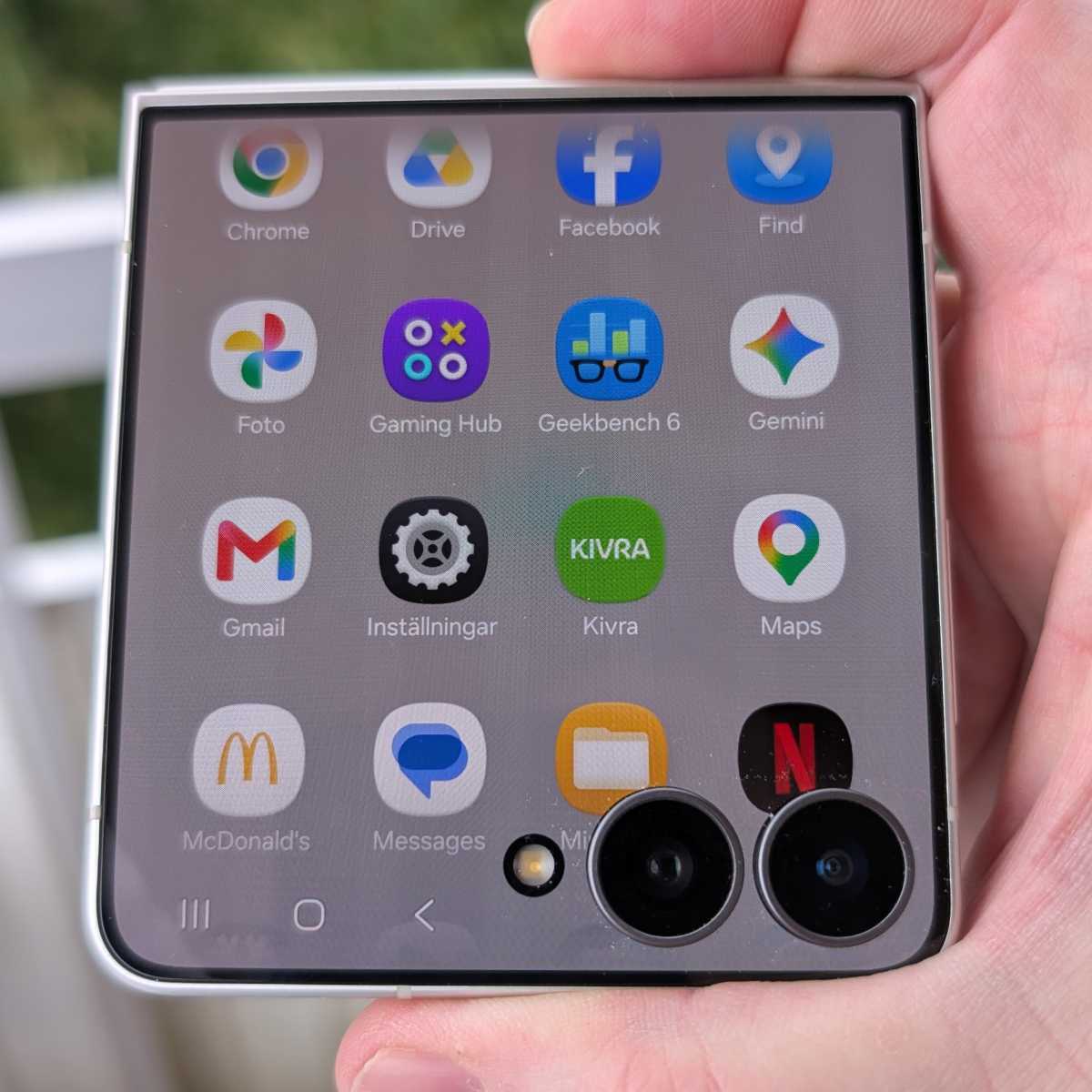
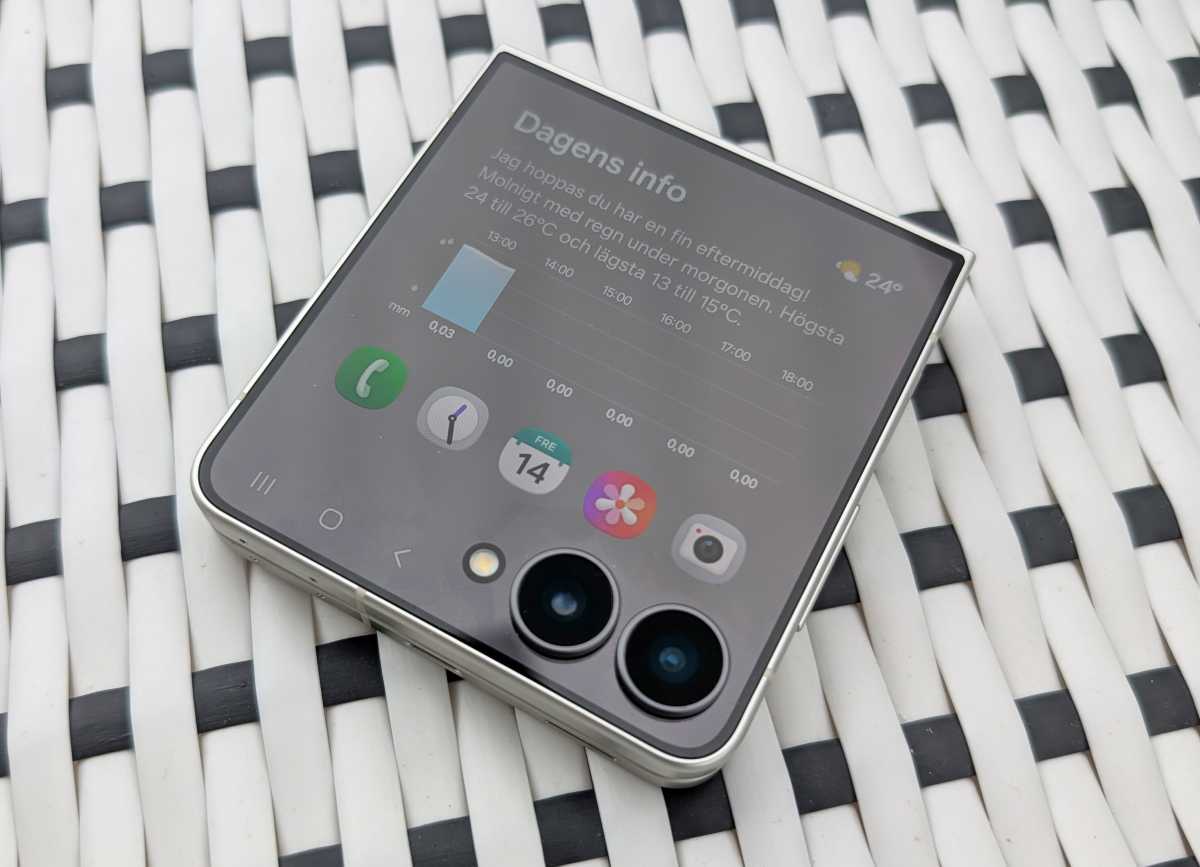
With the eighth generation of the Galaxy Z Flip and the One UI 9 interface, Samsung has finally delivered what I’ve been asking for for several years. They’re opening it up and making the outer screen more useful. From the outset, it was a very limited interface with only a handful of selected functions and widget screens that could be run. A few more were added over the years.
But things have changed. Now, when I use the phone in the closed position, I see the same panel-based interface as always, but also a prompt on the screen to install an app called Good Lock.
Mattias Inghe
Apps everywhere, almost
Once I downloaded Good Lock, I could then pick from among my installed apps which ones should also appear on the external screen, in a start menu that slides in from the bottom. I may not be able to choose from every single one, but the vast majority are available. I can also decide the layout of the app on the external screen between a squarer, full-screen view or portrait mode with cropped sides.
It’s not perfect, and not all apps handle resizing and running in small formats equally well. But this isn’t a Samsung-specific drawback, and you have the freedom to try it out with most of them. I appreciate that. An active app nicely follows over to the large screen if I choose to open the phone, but not the other way round – in this case, I have to actively switch over to it.
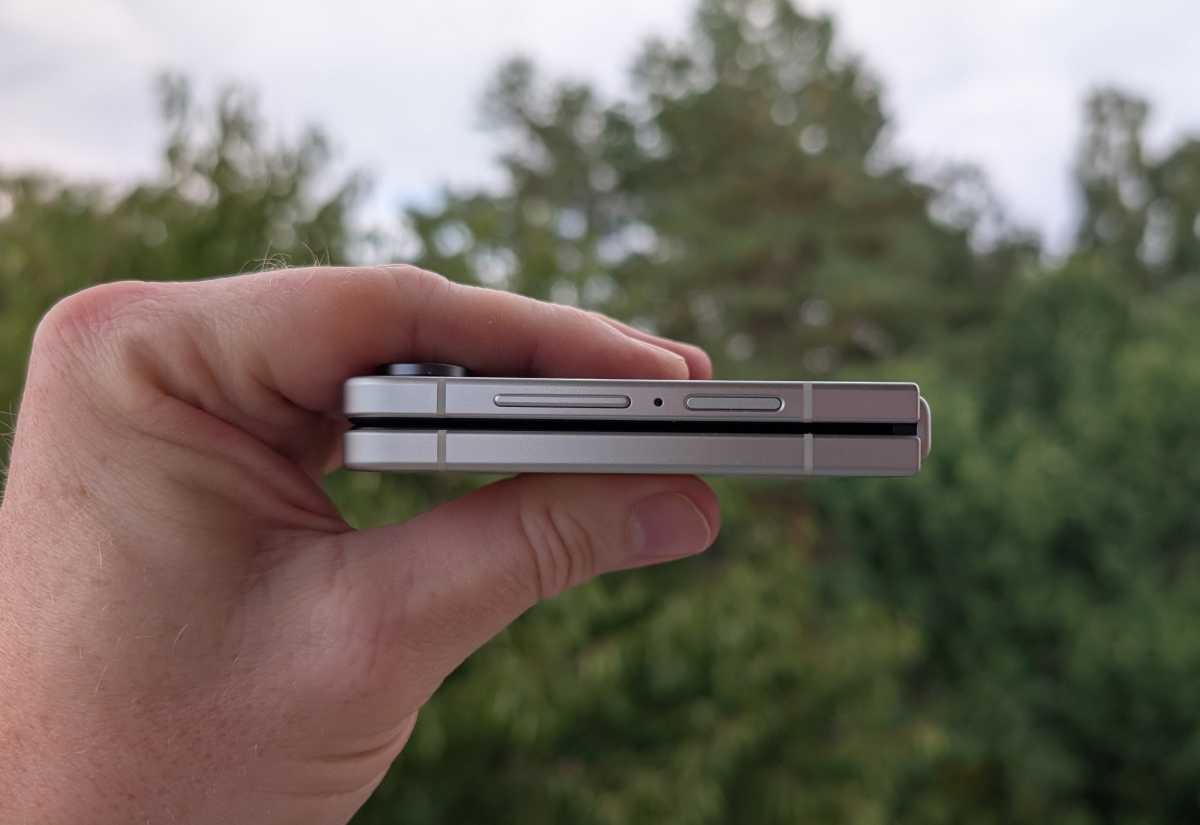
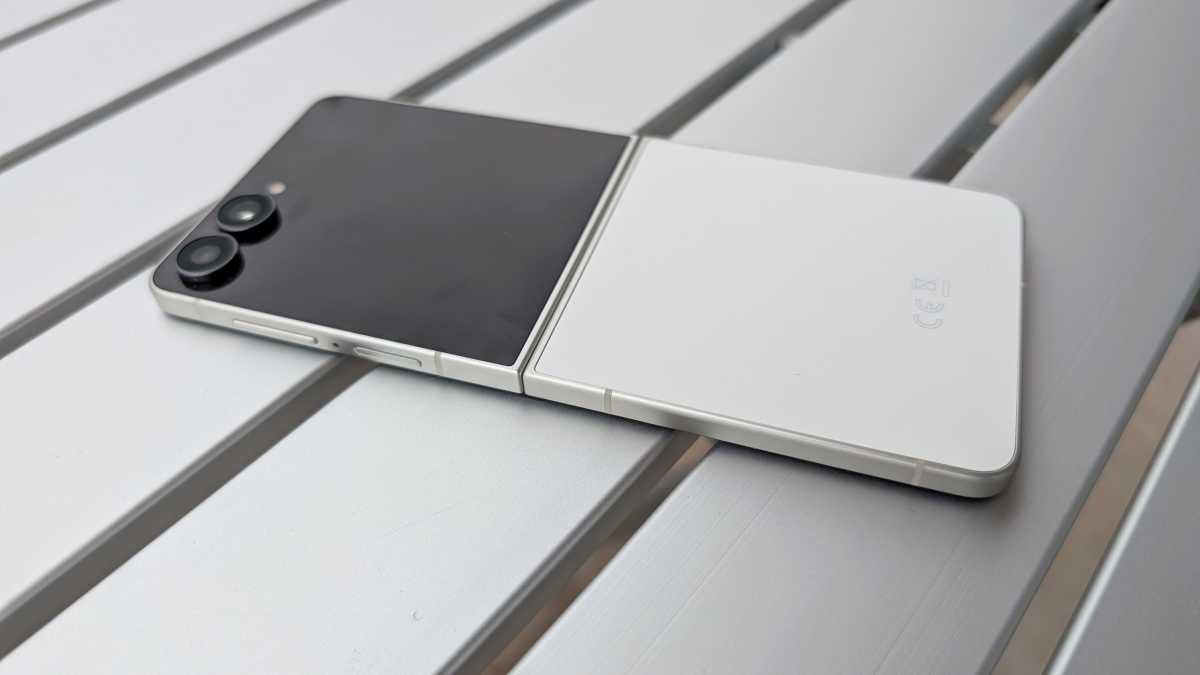
The design is familiar from previous models, with a slim profile, straight Armor Aluminium edges and a full-screen display on the outside when folded, featuring cut-outs for the large rear cameras in one corner. The hinge is said to have been upgraded for better flexibility and durability, and the whole design has been trimmed down slightly. It is half a millimetre thinner when unfolded, which means it’s almost a whole millimetre thinner when folded.
Mattias Inghe
Easier to flip open
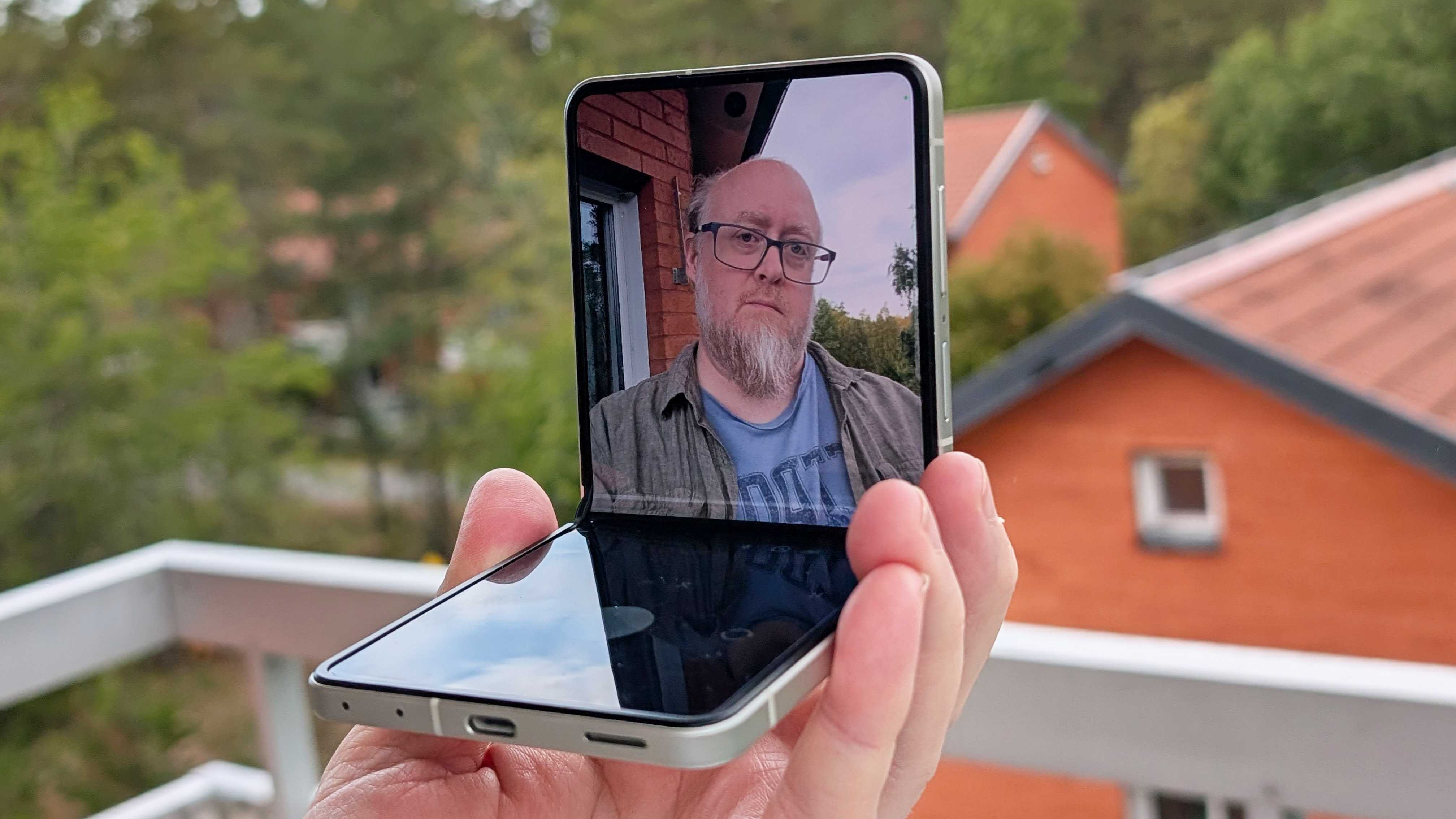
Samsung has also rounded off the edges slightly, making it easier to slip your thumb between the halves and flip the phone open. I can now do this with one hand without any trouble. It’s still not quite as rounded, stylish or comfortable as a Motorola Razr, but definitely better than before, without Samsung having to compromise on the design it’s chosen.
Otherwise, most things are much the same. There’s One UI, with its many clever and useful AI features and numerous Samsung-exclusive apps – both with and without AI – the Bixby voice assistant, its own parallel app store, the browser, the Health and Wear apps (for those with a Galaxy Watch or headphones), and much more. As always, this has its pros and cons. It’s nice to have the extra features, but it can feel a bit excessive at times if you just want to make calls, browse the web and use a handful of your favourite apps.
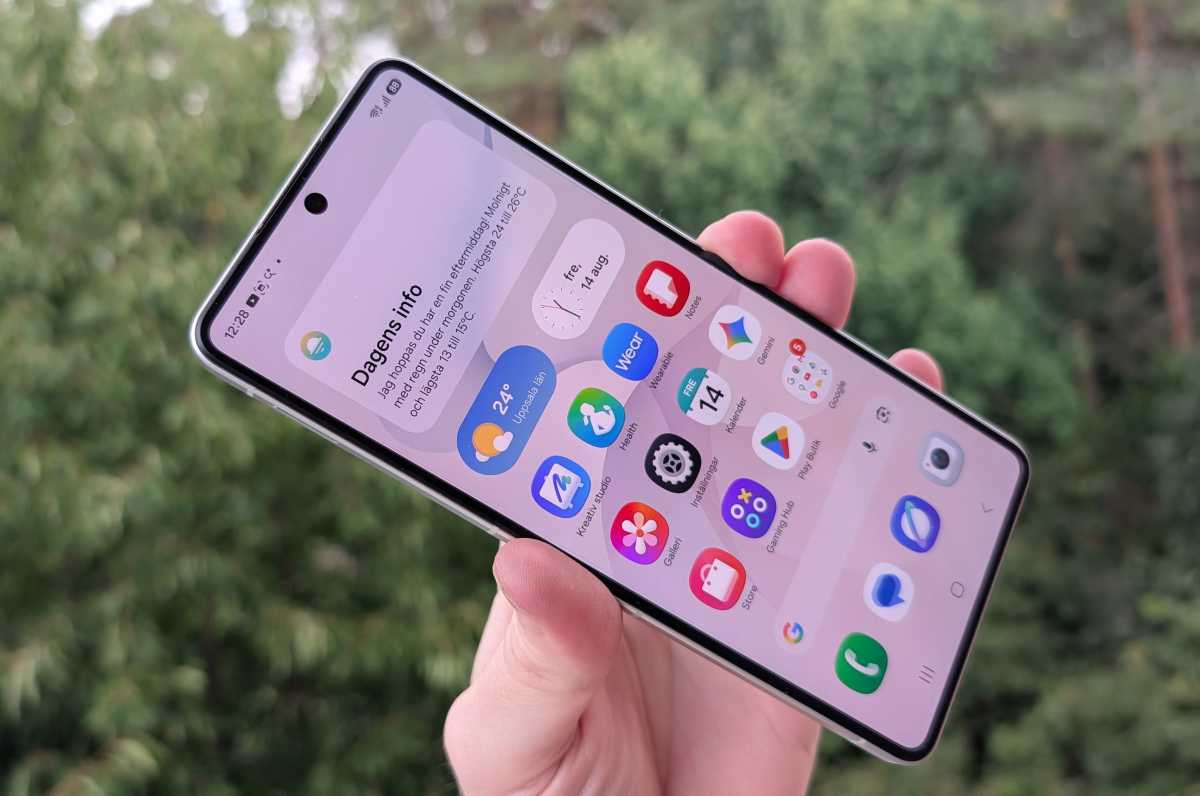
Unlike the two Fold 8 phones, the Galaxy Z Flip 8 isn’t powered by the Snapdragon 8 Elite Gen 5, but by Samsung’s own Exynos 2600. In other words, by the same chip found in the Samsung Galaxy S26 and Galaxy S26 Plus. It’s a smart chip, well-equipped for Galaxy AI features, and remains relatively cool and energy-efficient thanks to its 2nm manufacturing process.
Mattias Inghe
Fast enough, but not the fastest
You won’t achieve true super-performance, but that doesn’t matter too much as you won’t with the Z Fold 8 models either. They’re limited by their slim design and lack of heat dissipation, and neither of them can compare to, say, the Galaxy S26 Ultra. So perhaps it would have been wiser for all three to use this Exynos chip instead.
Still, it’s fast enough that it never feels sluggish; the Xclipse graphics can handle most games without lag, 12GB of RAM is more than enough and, without an extra-large screen, there’s no real need for extensive multitasking capabilities. Connectivity is fast over Wi-Fi and 5G, as is data transfer.
It’s also energy-efficient. Despite a relatively small 4,300 mAh battery, I can use apps non-stop from morning to night, and it doesn’t seem to make much difference which screen I use. Streaming films uses less CPU power, but I do so with the screen brightness set higher to get HDR, which means it all evens out.
Mattias Inghe
It has the same-sized – small – battery as its predecessor, but the new system-on-chip, Android 17 and One UI 9 manage power more efficiently, which extends the battery life. However, charging is just as slow. The Z Flip 8 hasn’t received the same power upgrade as the Fold 8 models. It’s still 25 watts via USB and 15 watts wirelessly.
The screens are the same as in the previous generation: excellent AMOLED panels with a 120Hz refresh rate that are bright enough for most tasks. There are better ones out there, but they were good last year and there’s no compelling reason to upgrade. The same goes for the sound, which was good on the Flip 7 and is just as good here. But no better.
The same old cameras
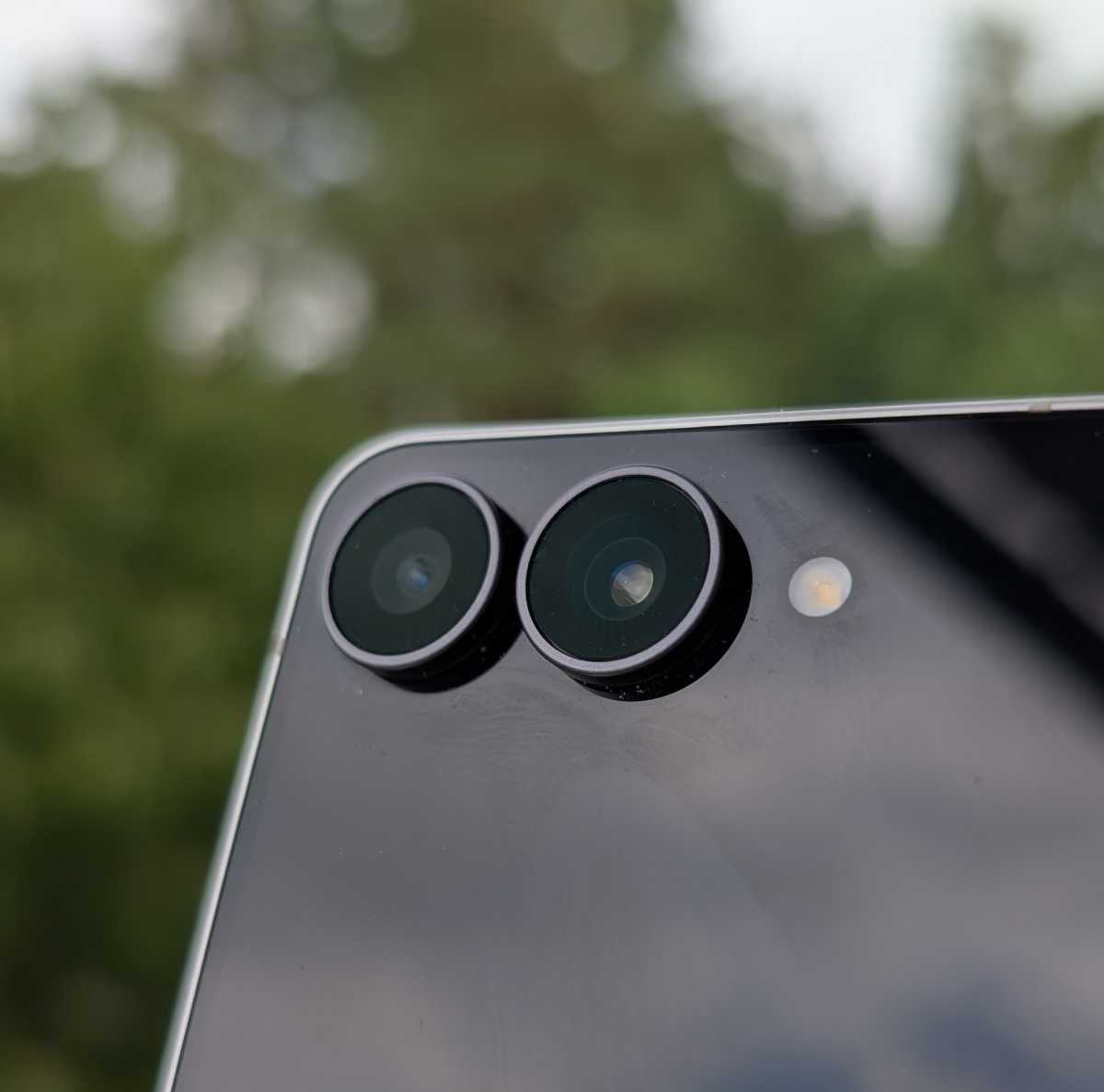
The cameras are the same as in the previous model: there’s a good 50-megapixel main camera, a slightly limited 12-megapixel wide-angle lens and a small 10-megapixel camera for selfies via the inner screen.
Mattias Inghe
The photos are perfectly acceptable, but there’s still some way to go to reach that true top-tier quality we’ve come to expect from Samsung. There are limitations in the dynamic range of the wide-angle lens, and taking photos and filming at night works better on other Galaxy models – colours can appear washed out and details can be lost.
I only use the front-facing camera for video calls, and it does the job well. I prefer to take selfies with the rear camera, and the interface is feature-rich enough for most purposes, even on the small external screen. Some features, such as pro modes, slow-motion video and a food photography mode, are missing.
The price is creeping up
The Galaxy Z Flip 8 has become a little more expensive, at £1,149/$1,199 compared to £1,049/$1,099 for the Galaxy Z Flip 7 at launch, for the same model with 12GB of RAM and 256GB of storage. It’s available from Amazon in the UK and Amazon US, as well as other retailers and your usual network operators.
The price hike may well be down to rising memory prices, but it also makes it a little harder to recommend than last time. I still prefer the Motorola Razr 70 Ultra, but Samsung is definitely closing the gap now.
Mattias Inghe
Partly, that’s because Samsung has addressed my main complaint about the Z Flip 7: the inflexible interface for the outer screen. This bodes well for the future, and there’s hope that further improvements may be on the way, such as further refinement of how scaled apps are handled.
You’ll have plenty of time for that, as Samsung provides system updates for seven years. This is an advantage that could be decisive for many when choosing between the Galaxy Z and the Razr.
To see all our top foldable recommendations, see our round-up of the best flip and fold phones. You can also read our review of the Galaxy Z Fold 8.
Specifications
Product name: Samsung Galaxy Z Flip 8
System-on-chip: Samsung Exynos 2600
Processor: 1 x C1-Ultra 3.8 GHz 3 x C1-Pro 3.25 GHz 6 x C1-Pro 2.75 GHz
Graphics: Xclipse 960
NPU: 32K MAC Dual
Memory: 12 GB
Storage: 256 GB, 512 GB
Internal display: 6.9-inch AMOLED, 1080 x 2520 pixels, 120 Hz LTPO, 2,600 cd/m² (peak)
External display: 4.1-inch AMOLED, 948 x 1048 pixels, 120 Hz, 2,600 cd/m² (peak)
Cameras: 50 MP 12 MP with LED flash (rear), 10 MP (front)
Connectivity: USB-C Gen 3
Connectivity: 5G, Wi-Fi 7, Bluetooth 5.4, GPS, Galileo, NFC
Operating system: Android 17 with One UI, 7 years of updates
Other: Side-mounted fingerprint reader, nano-SIM and e-SIM, waterproof (IP48), support for Dex (wireless)
Battery: 4,300 mAh, Approx. 16 hours’ video streaming (screen up, high brightness, 60 Hz), 15 hours 40 mins’ mixed use (PCMark Work 3.0 200 cd/m², screen up, 120 Hz LTPO), 14 hours 45 minutes mixed use (PCMark Work 3.0 200 cd/m², lid open, 120 Hz)
Battery charging: 25 W USB (QC 2), 15 W wireless (Qi). Charger not included. 25% in 15 mins, 50% in 30 mins with a 45 W universal charger.
Dimensions: 16.69 x 7.54 x 0.61 cm when open, 8.57 x 7.54 x 1.31 cm when folded
Weight: 120 grams
Performance
Antutu Benchmark, overall performance: 2,449,936 points
Geekbench, CPU all cores: 10,540 points
Geekbench, CPU single-core: 2,981 points
Geekbench Compute, GPU: 26,846 points
3DMark Wild Life Extreme, gaming graphics: 7,184 points
Read speed, storage: 3,748.7 MB/s
Write speed, storage: 3,002.4 MB/s