Xiaomi 18 Pro review: iPhone rival with Samsung-style display
At a glance
Expert’s Rating
Pros
- Compact, premium design
- Very capable camera system
- Useful rear display
- Solid performance
Cons
- Ultrawide camera isn’t great
- Privacy Display isn’t as effective as Samsung’s
- It’s pricey
Our Verdict
If you want a compact smartphone with fantastic cameras, especially if you take a lot of selfies or make vlogs, you’re sure to love the Xiaomi 18 Pro. It’s a fantastic all-rounder with strong performance, a great screen and speakers, and very decent battery life. It’s easy to write off the rear screen as a gimmick, but for content creation, this turns your phone into a much more powerful tool, and I absolutely love it.
Price When Reviewed
This value will show the geolocated pricing text for product undefined
Best Pricing Today
Best Prices Today: Xiaomi 18 Pro

Last year, Xiaomi introduced the 17 Pro and 17 Pro Max, both of which had very iPhone-like designs, with an integrated rear screen that could be used as a camera monitor. I thought these were some of the coolest phones of 2025, but there was a big problem: they never launched outside of China.
Now, though, the Xiaomi 18 series has arrived, and people globally can get a look at those rear screens. Much like Apple, the main difference between the Pro and the Pro Max is the screen size and the battery capacity. Both phones have the same camera specs. However, there are a few other important differences, such as the fact that the Xiaomi 18 Pro Max has a more powerful processor and an improved speaker system.
I’ve been using the smaller option for the past week to see how it performs in the real world. Is the Xiaomi 18 Pro enough? Or do you have to shell out for the Pro Max to get the full experience? Here’s what I think.
Design & Build
- Built-in rear display
- 198g, 8.5mm thickness
- IP68 dust and water resistance
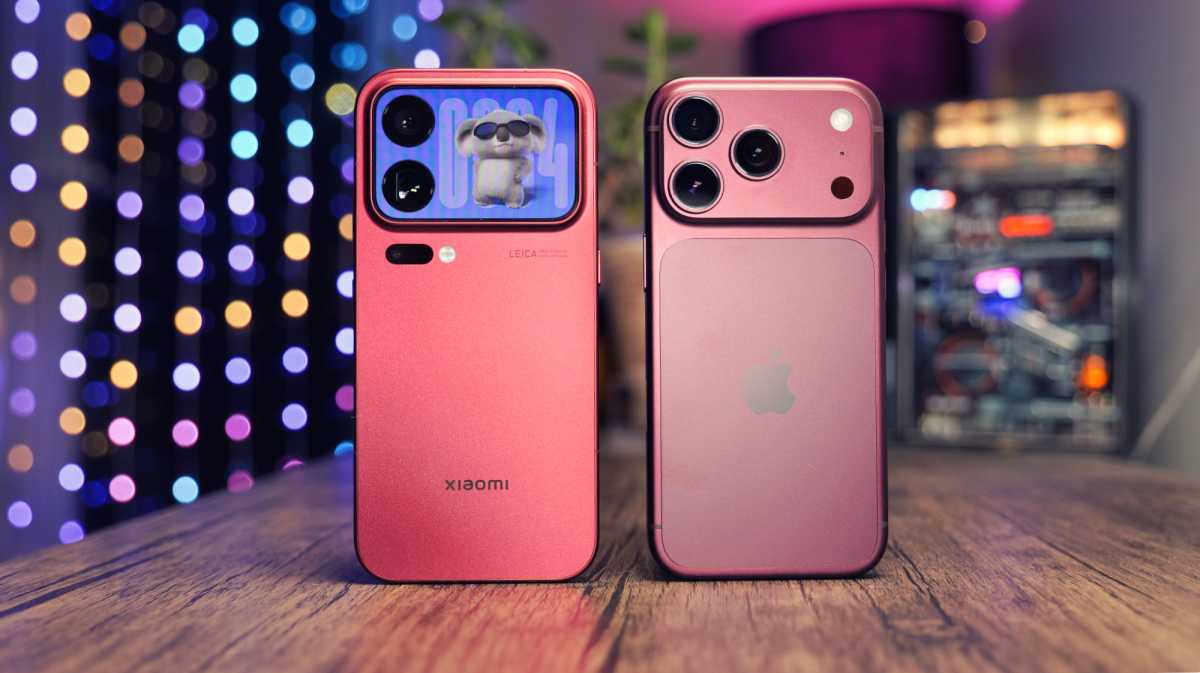
From the first look at the Xiaomi 18 Pro, the source of inspiration is clear. It’s almost identical in size to the iPhone 18 Pro, and my version, in Velvet Red, is very similar to Apple’s Burgundy colourway.
Luke Baker
If you needed any more evidence, Xiaomi even went as far as skipping a number (there was no Xiaomi 16) to make their model numbers match Apple’s. Of course, there’s at least one big difference with this phone, and that’s the screen on the back, which we’ll explore later.
The Xiaomi 18 Pro is a refreshingly compact phone, and those with smaller hands are sure to love the size
The Xiaomi 18 Pro is a refreshingly compact phone, and those with smaller hands are sure to love the size. Held side by side, it’s noticeably lighter than the iPhone 18 Pro, and it also has slightly sharper edges, as the side frame doesn’t curve quite so much into the rear panel. The Velvet Red colour is a bit more vibrant than the iPhone’s burgundy, and personally, I prefer it.
On the right-hand side, you get the usual volume rocker and power button combo, while on the left you have Xiaomi’s answer to the Action Button, which is mysteriously called the AI Button.
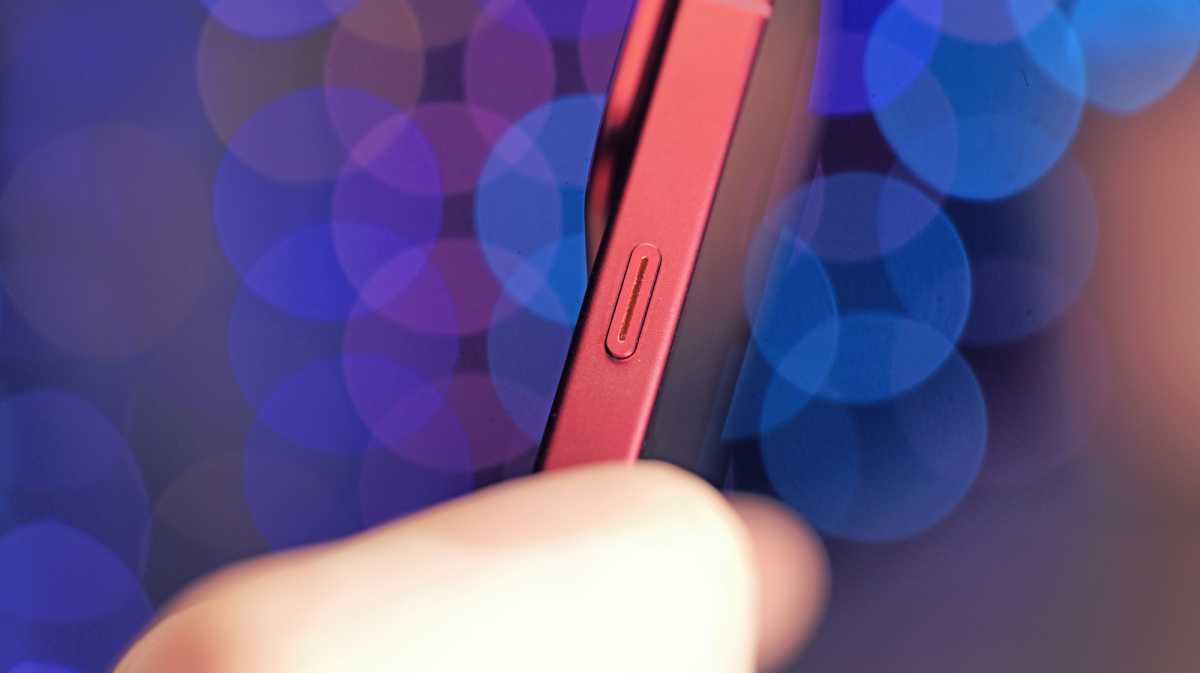
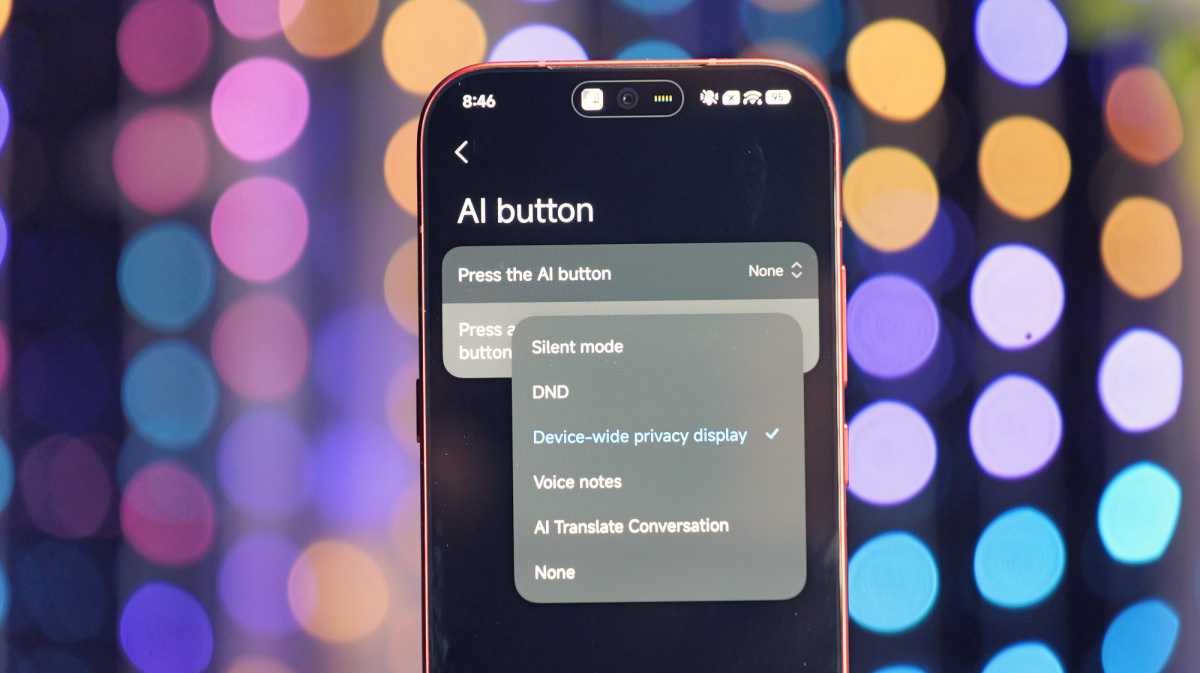
I was disappointed with the limitations of this new button. You can set it to toggle silent mode or do not disturb, you can enable the Privacy Display, open voice notes, or open AI translate – and that’s it. Weirdly, the only AI-related feature is translation.
The AI Button can’t activate the torch, which is what I would normally set it to do, and it can’t open any third-party apps or shortcuts. I’m all for additional buttons, but please, Xiaomi, let me do more with it. Apple’s Action Button is in a different league.
The phone is IP68-rated for dust and water resistance, and Xiaomi has gone as far as saying you can submerge it at up to 6m depths for 30 minutes. Pretty impressive stuff. You also get Xiaomi’s Shield Glass 3.0 on the front and Gorilla Glass Victus 2 on the back, which should help protect it from scratches and cracks. Last but not least, the phone comes with a factory-applied screen protector (front and rear) and a basic TPU clear case, too.
Screens & Speakers
- 6.4-inch 1120 x 2436 120Hz LTPO OLED
- Secondary 2.7-inch LTPO OLED rear screen
- Privacy Display
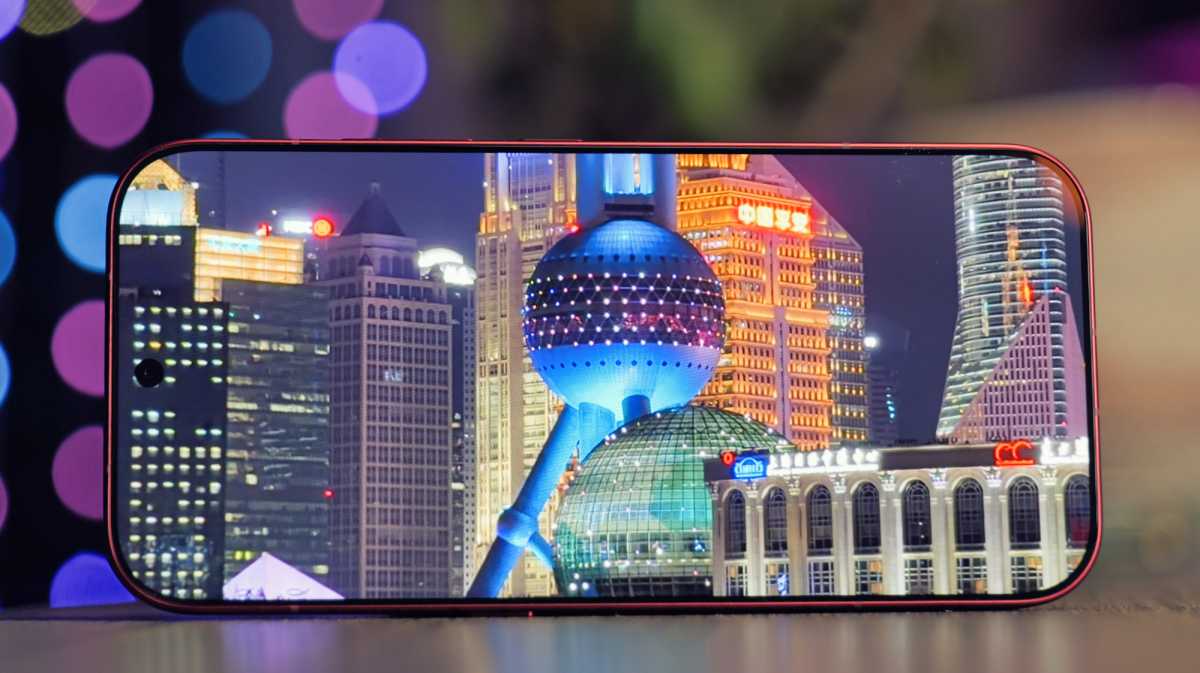
Somewhat unusually, we have two displays on this phone. The 6.4-inch display takes up almost the entirety of the front, with a slim, even bezel around it, and an adaptive 120Hz refresh rate. It has an ultrasonic fingerprint scanner nestled underneath, and a small punch-hole cutout for the selfie camera.
Luke Baker
It’s a great screen with vivid colours, boasting a whopping 4000 nits of peak brightness, 2160Hz PWM dimming, along with Dolby Vision and HDR support. Despite the stacked spec sheet, though, it’s the secondary display that I found more exciting.
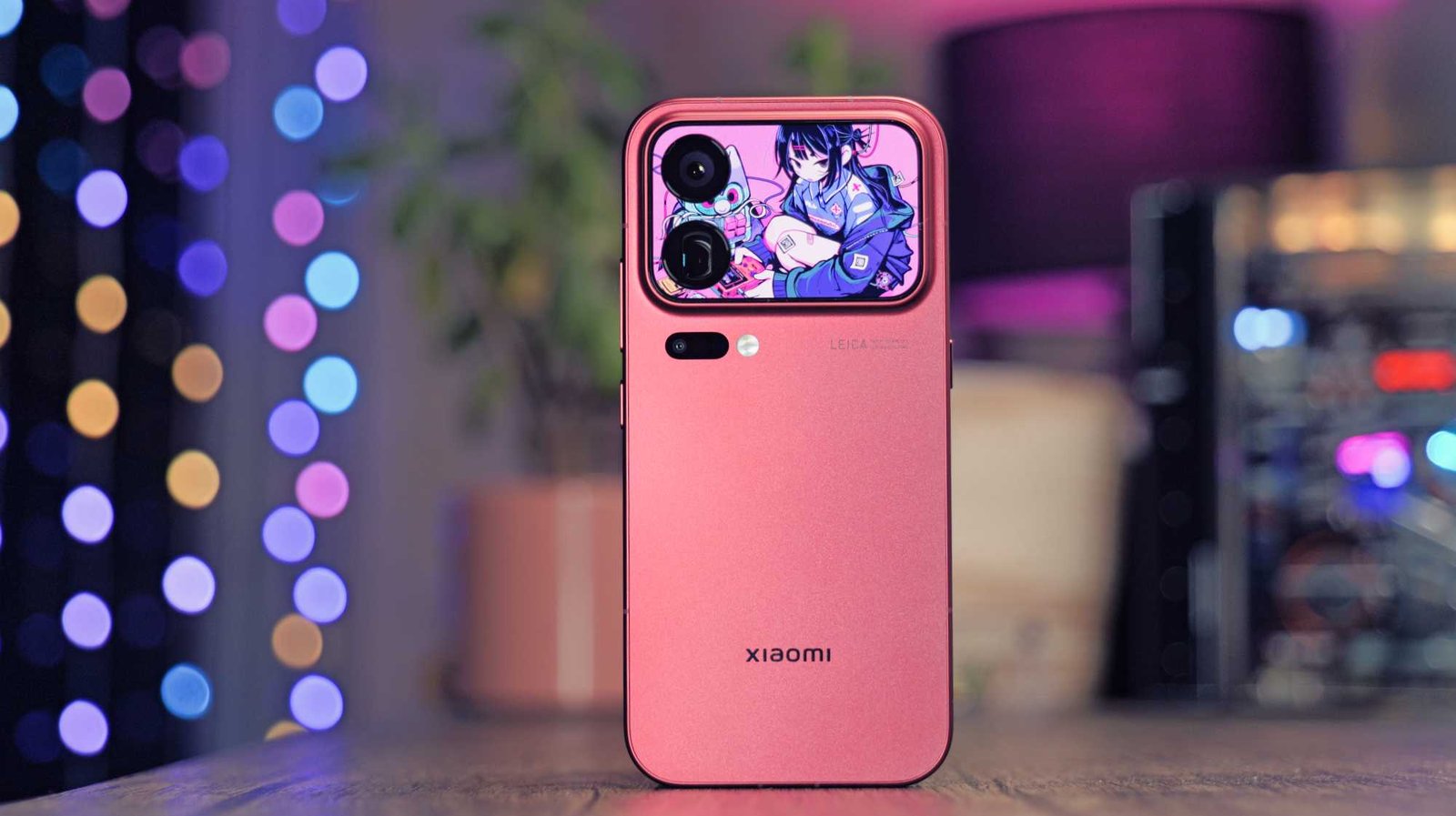
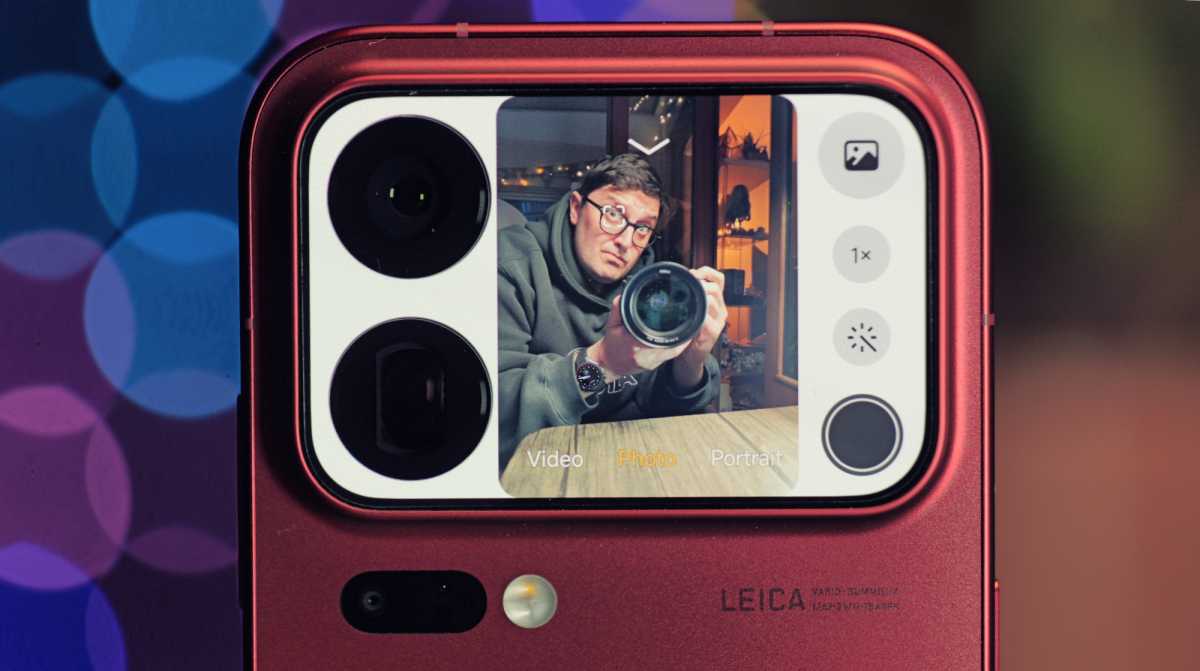
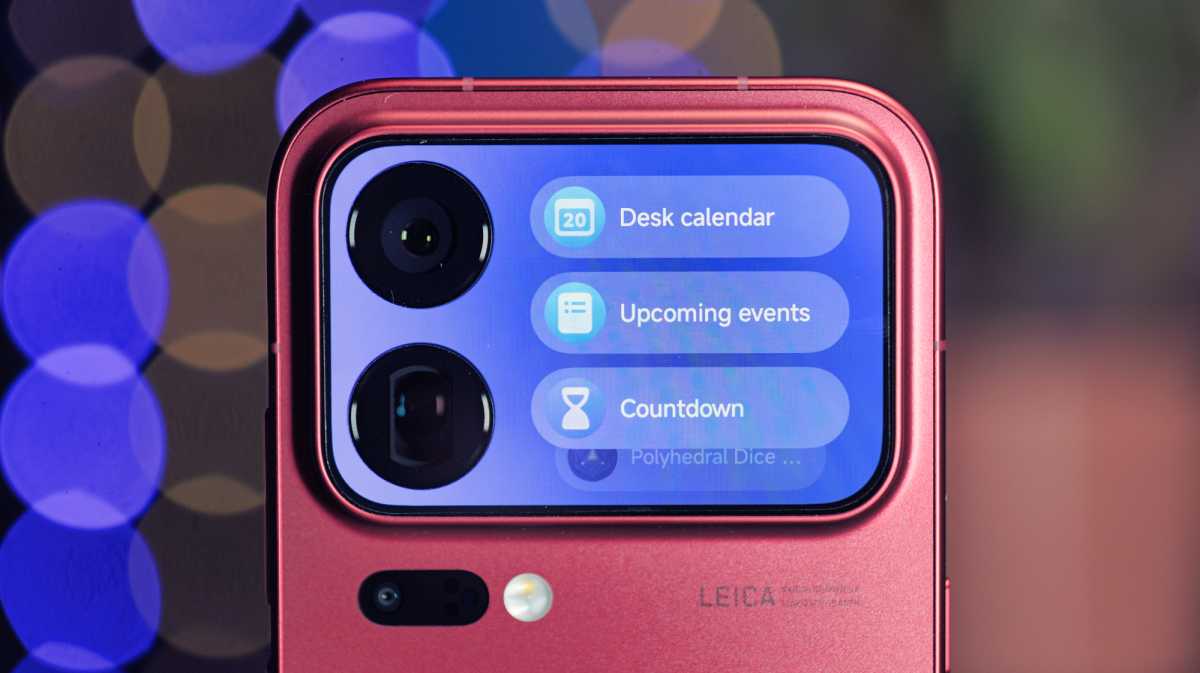
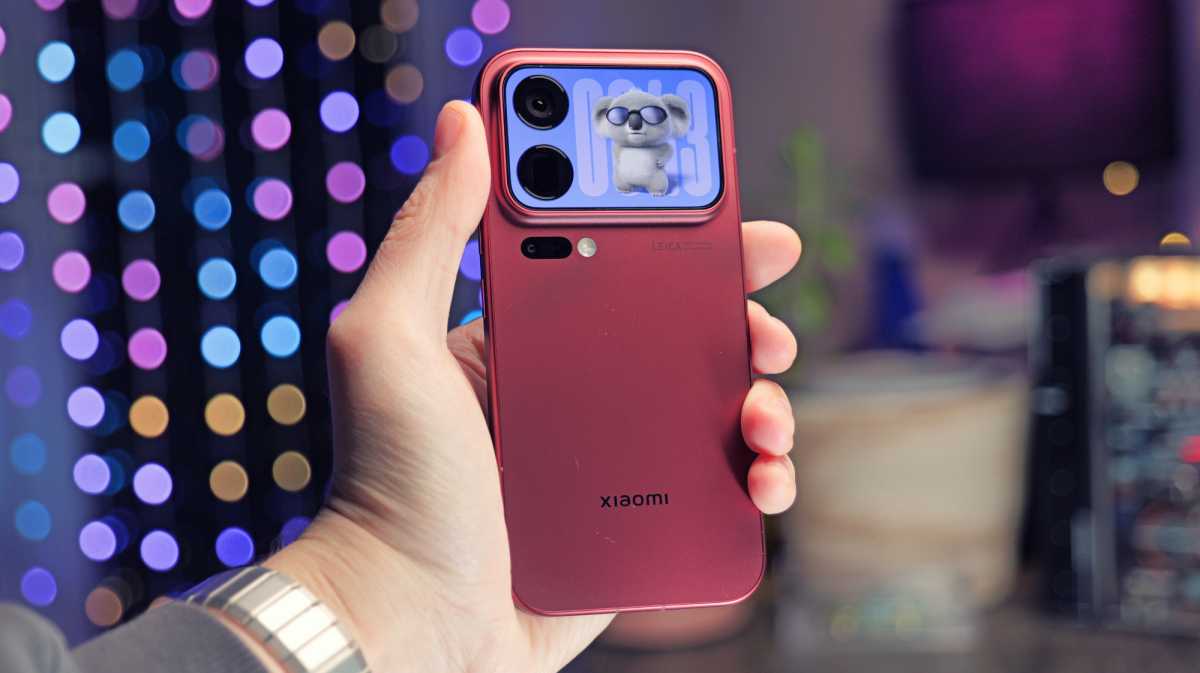
On the back of the phone, you get a 2.7-inch OLED panel with cutouts for the main and telephoto cameras. In contrast to Apple’s plateau, this screen adds some extra functionality to the raised area on the back.
The main use case is that this display works as a selfie monitor or a vlogging screen. It means you can use the higher quality rear cameras to shoot photos and videos of yourself, rather than relying on the weaker selfie camera.
Luke Baker
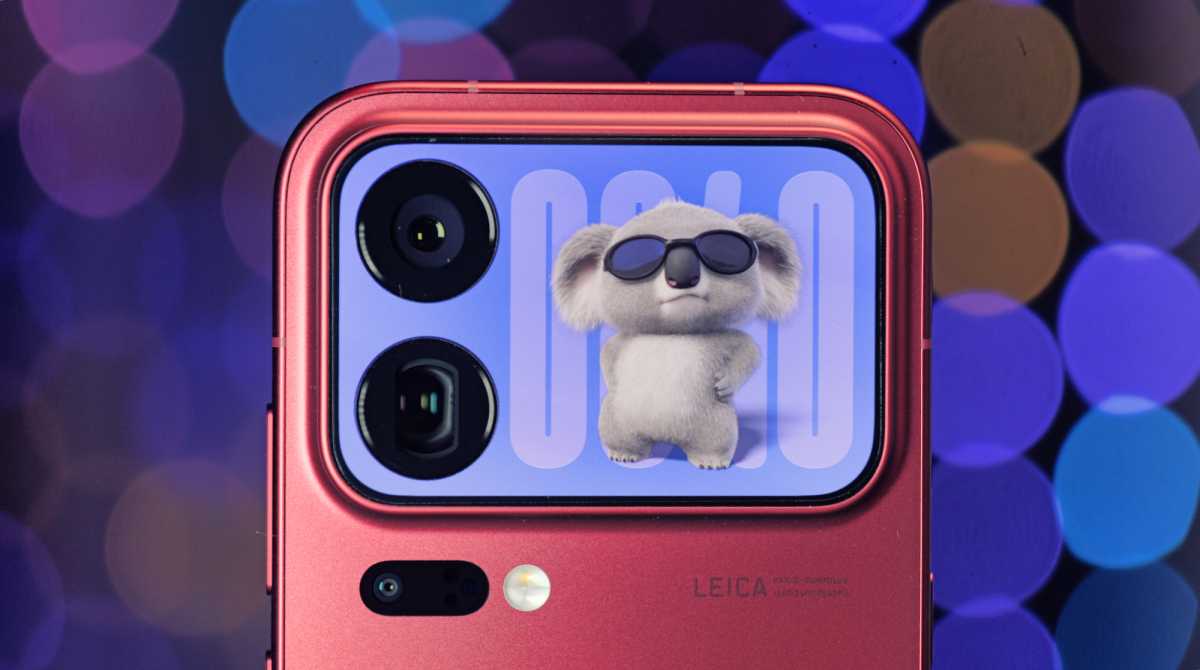
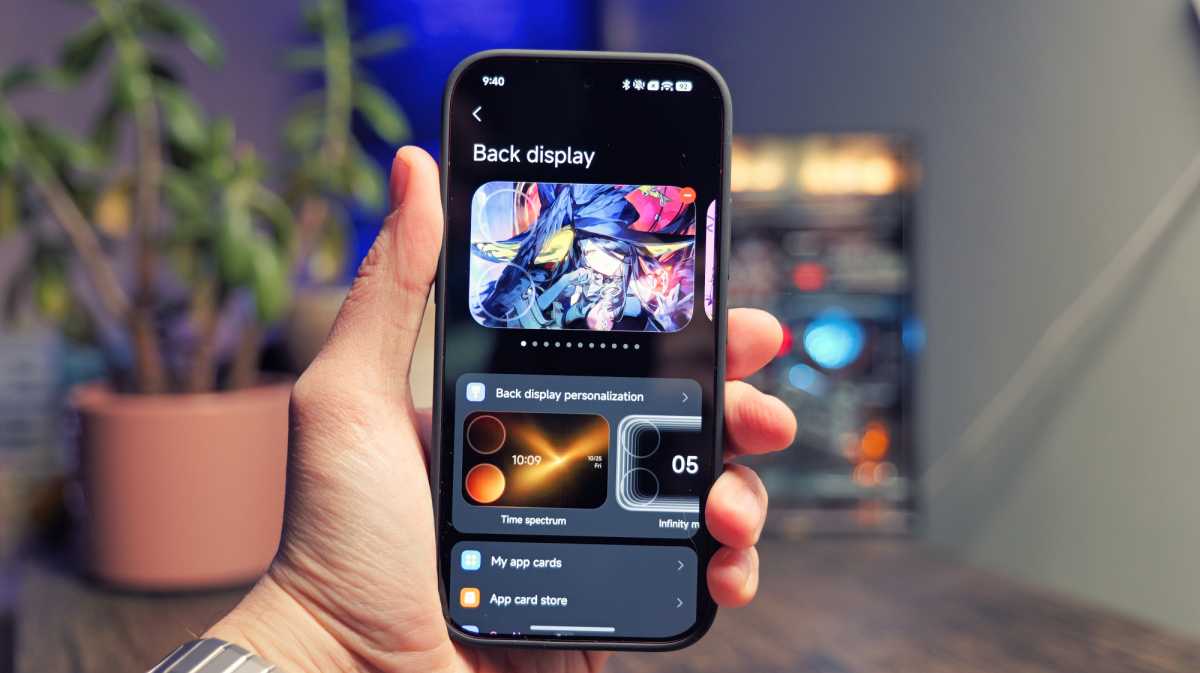
That said, Xiaomi has added plenty of other features to explore with this rear panel. It will display a clock by default and, with a couple of swipes, you can easily set it to show your next calendar event. There are also some cute 3D-animated animals that can hang out here, as well as plenty of other animated wallpapers to choose from in the system settings.
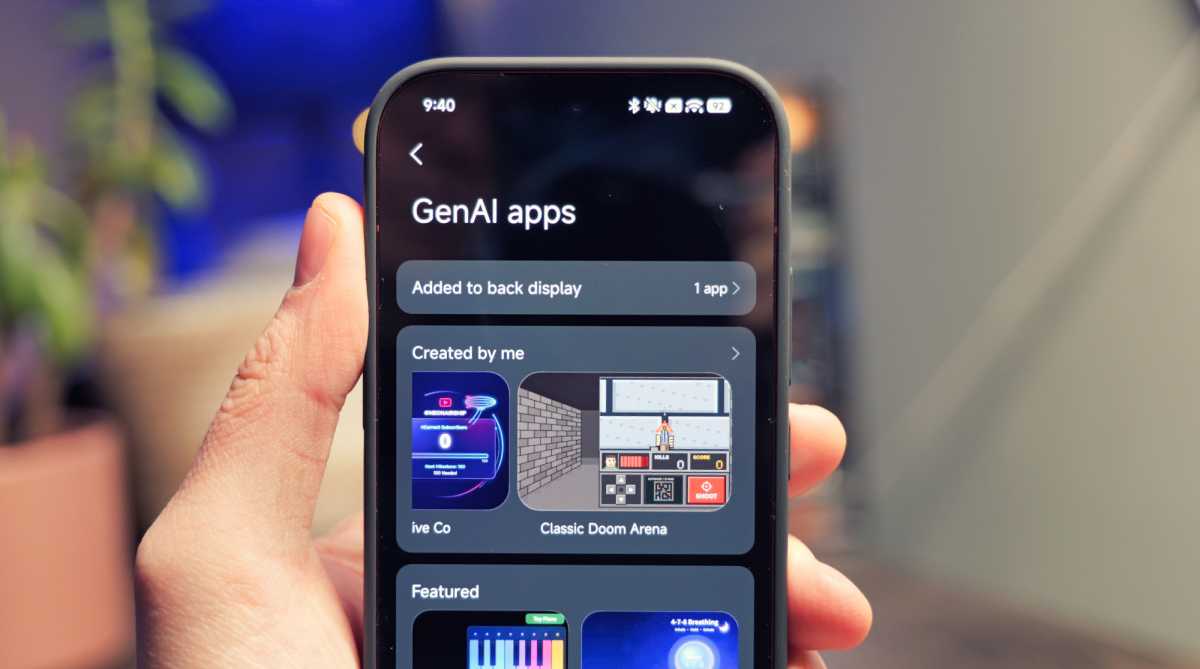
By typing just a sentence or two, you can generate an app for this rear display that does just about anything
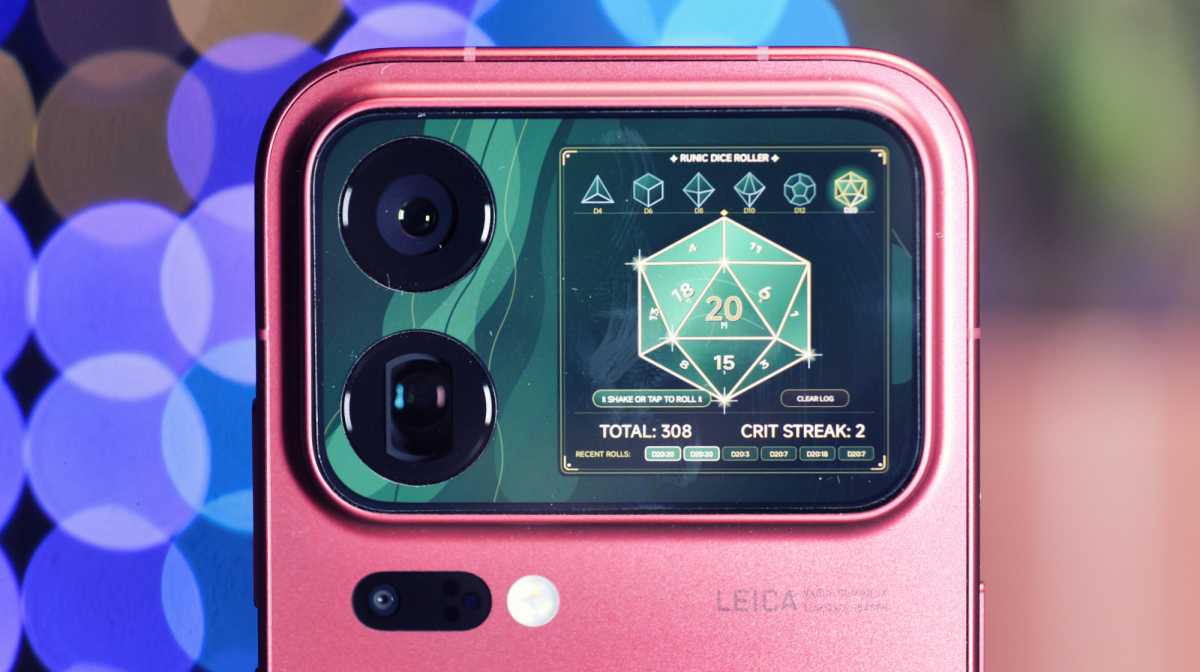
If you want to customise your phone, you can set any photo you like as the wallpaper on this rear display, or even add a message with custom text. If you want to take things a step further, though, you might be interested in the new generative AI app builder that Xiaomi has developed.
By typing only a sentence or two, you can generate an app for this rear display that does just about anything. To try it out, I made a polyhedral dice roller that’s activated by shaking the phone. The AI built it on the first try, with virtually no guidance. Really, the only limitation is your imagination. I think this is one of the coolest uses of generative AI I’ve seen on a phone so far.
Another really interesting thing about the Xiaomi 18 Pro screen is the fact that it has a Privacy Display feature. It’s quite similar to the one we saw on the Samsung Galaxy S26 Ultra, and it only works on the front, not the rear.
Just like Samsung’s implementation, you can choose to activate it with a shortcut (or the new AI button), or you can have it automatically activate when you open a specific app. It can also partially block the display, for example, protecting only your notifications.
Xiaomi’s version is simultaneously better and worse than Samsung’s. When the Privacy Display is activated, you don’t get the same dramatic drop in resolution (it still exists, but it’s far less noticeable), and the display brightness doesn’t drop as significantly, either.
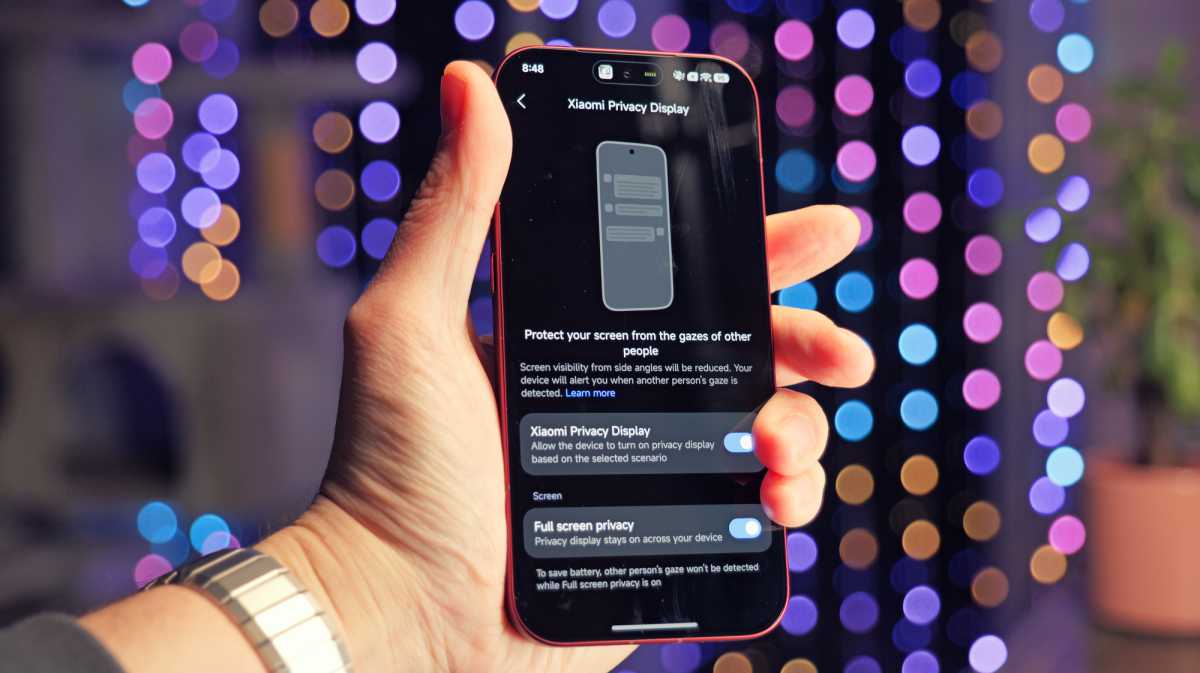
Another cool feature of Xiaomi’s Privacy Display is that it can detect when someone is looking over your shoulder. It uses the selfie camera to recognise unwanted onlookers and can automatically activate the feature in such scenarios. You can also set it to activate based on your location.
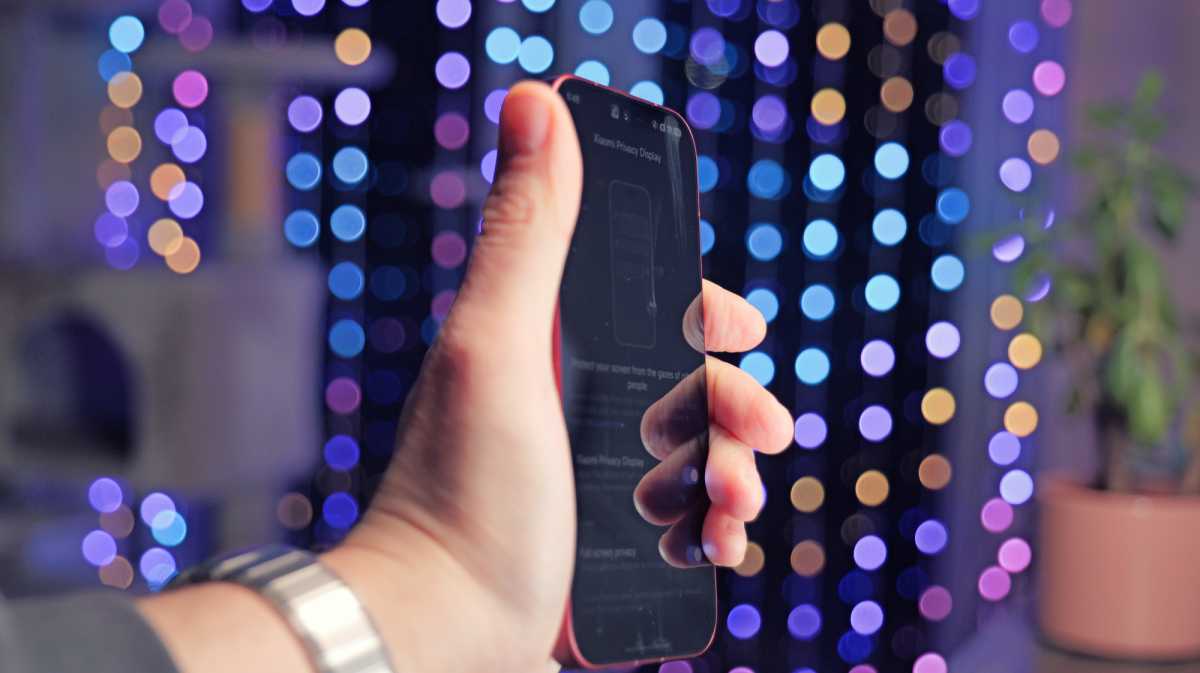
The big drawback is that this version only works from the left and right side (when the phone is held vertically) – the top and the bottom are unaffected. So if you’re holding the phone in landscape to watch a Netflix show, for instance, the privacy effect won’t work from the sides (but it will from above and below).
The display dims a lot, and it is challenging to see at an angle, but you can still just about make out what’s on screen
The privacy effect is definitely not as strong as Samsung’s. The S26 Ultra’s Privacy Display, when set to maximum strength, makes the screen look like it’s completely off. With the Xiaomi, the display dims a lot, and it is challenging to see at an angle, but you can still just about make out what’s on screen.
Luke Baker
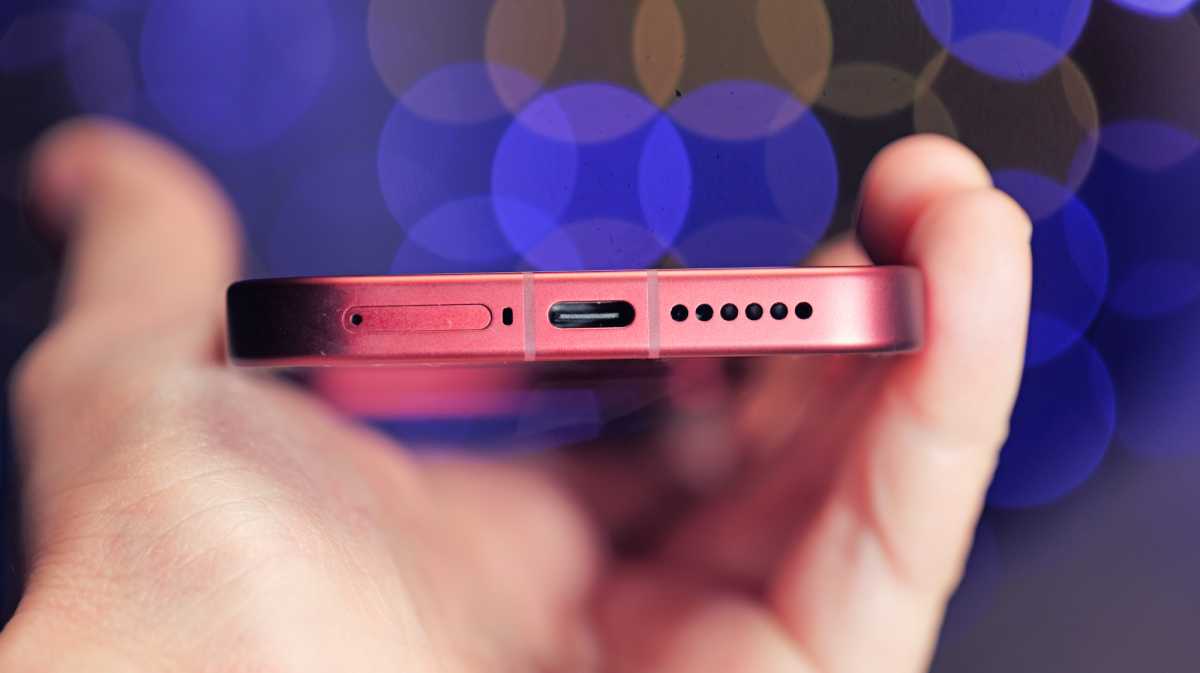
When it comes to speakers, there’s a grille on the base, and the earpiece doubles up as a second stereo speaker. This setup can often result in an unbalanced sound, but Xiaomi’s implementation is impressive. The phone delivers a solid stereo effect, and can kick out loud volumes, too. There’s a bit of weight to the low end, which prevents the speakers from sounding tinny.
The problem is that these speakers are completely overshadowed by the Xiaomi 18 Pro Max, which adds a dedicated subwoofer on top for an unmatched bass response. Most people will be completely satisfied with the Xiaomi 18 Pro speakers, but when you hear them side by side, the Pro Max is in a different league.
Specs & Performance
- Qualcomm Snapdragon 8 Elite Gen 6
- 12GB RAM
- 256GB or 512GB UFS 4.1 storage
The Xiaomi 18 Pro is powered by the Qualcomm Snapdragon 8 Elite Gen 6 processor, and the global version comes with 12GB of RAM and either 256GB, 512GB, or 1TB of storage.
Luke Baker
This is one of the biggest differences between the Xiaomi 18 Pro and the Xiaomi 18 Pro Max. The Pro Max gets the full fat Snapdragon 8 Elite Extreme Gen 6, while this phone gets the regular non-extreme version.
The Xiaomi 18 Pro feels incredibly quick in use
In reality, I think most users will struggle to tell the difference: the Xiaomi 18 Pro feels incredibly quick in use. Apps open in an instant, multitasking is no problem, and you can run almost any game available at relatively high settings.
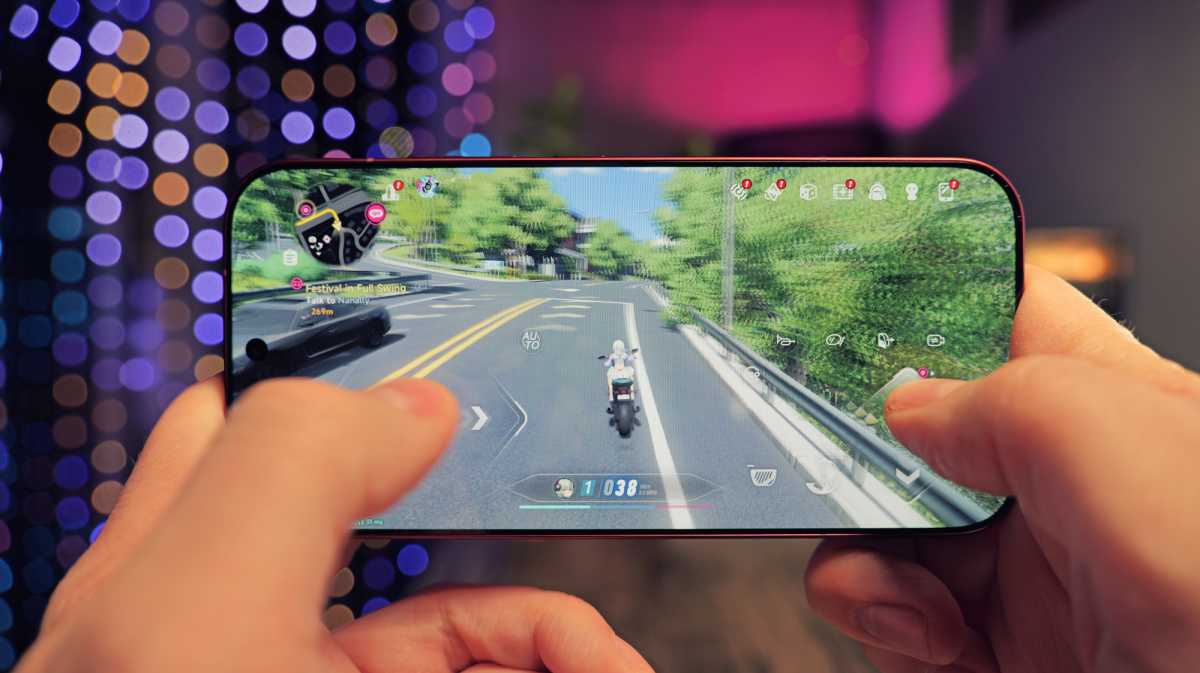
When playing NTE, a very graphically demanding open-world title, I was able to max out the graphics settings and maintain frame rates that hovered around the 60fps mark. I saw the occasional stutter, but lowering the graphics preset by one notch eliminated them entirely.
Luke Baker
The 18 Pro Max offers a smoother experience in the same scenario, thanks to its more powerful chipset – but the difference is slight. Unless you’re gaming competitively, you don’t need to feel like you’re missing out on much.
The frame of the phone gets pretty toasty during longer gaming sessions, but that’s just the vapour chamber doing its job. The performance keeps up well and, if you use a case or a controller, it’ll help to keep that heat away from your palms.
Benchmarks:
- Geekbench 7 multicore – 9077
- Geekbench 7 single core – 2820
- 3DMark Wildlife Extreme – BLOCKED
- 3DMark Wildlife Extreme Stress Test – BLOCKED
- PCMark for Android battery test (screen set to suggested 200 nits brightness) 24 hours 32 mins
- Charging with an official charger from 0% in 15 minutes – 30%
- Charging with an official charger from 0% in 30 minutes – 58%
Cameras
- 200 Mp f/1.7 main camera
- 200 Mp f/2.4 3.2x telephoto
- 50 Mp f/2.4 ultrawide
- 50 Mp f/2.2 selfie camera
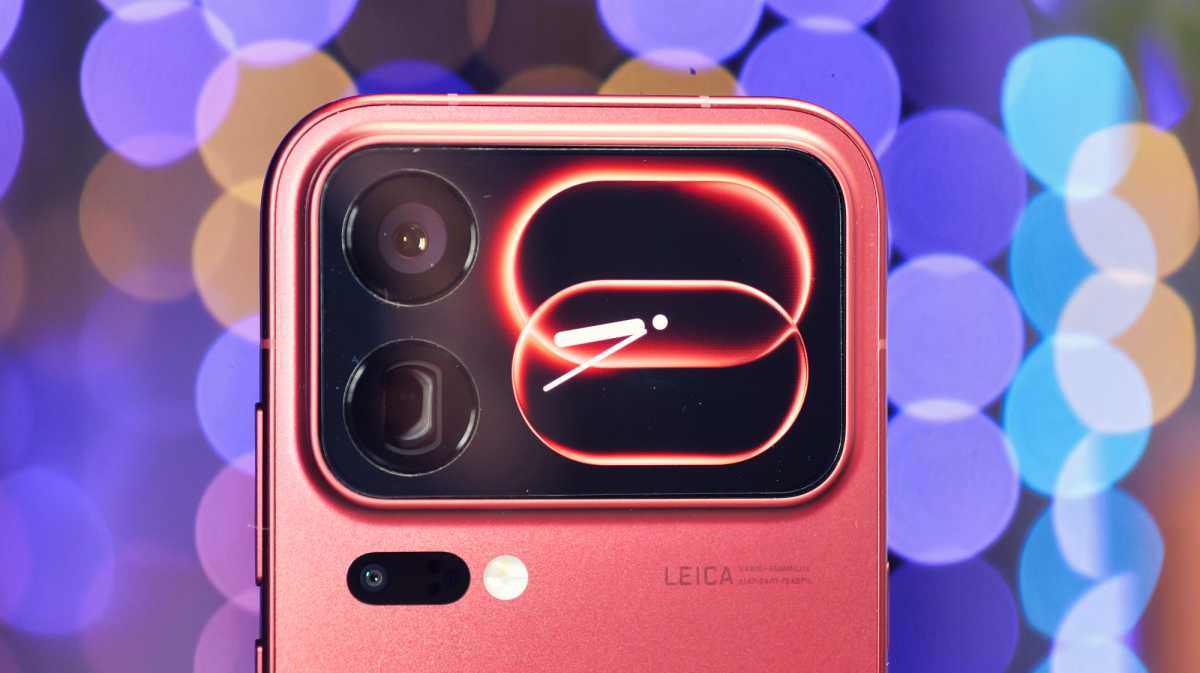
The Xiaomi 18 series phones take the opposite approach to the Oppo Find X10 Pro Max. While Oppo boosted the specs of the ultrawide to match the other lenses, here it feels like the ultrawide has been forgotten about. It’s massively overshadowed by the other cameras.
Luke Baker
You can see this in the design of the phone. You get large lenses for the main and telephoto cameras, whereas the ultrawide is tucked in a little pill-shaped cutout below the main camera unit.
In good lighting, it’s a decent enough camera, but it’s the field of view that lets it down. It’s 17mm equivalent in full-frame terms, and that’s just not especially wide (many rivals are 13mm equivalent). It also has a pretty small sensor, so in low-light conditions you can expect grainy images that lack detail.
The main and telephoto cameras, though, are both stunning. They both have large sensors, so they look great in all lighting conditions, and they’re both 200 megapixel, which means they can capture incredible levels of detail.
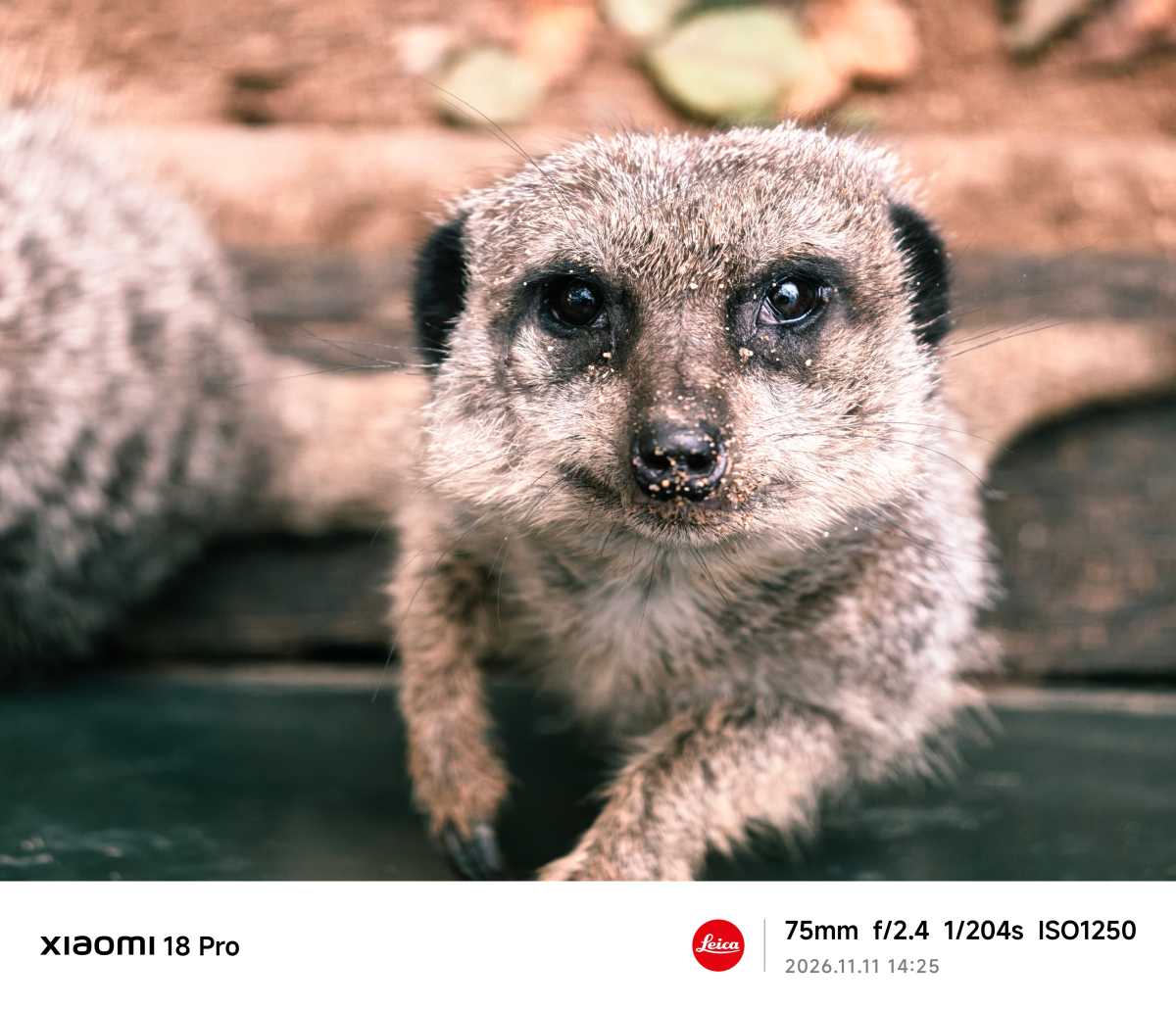
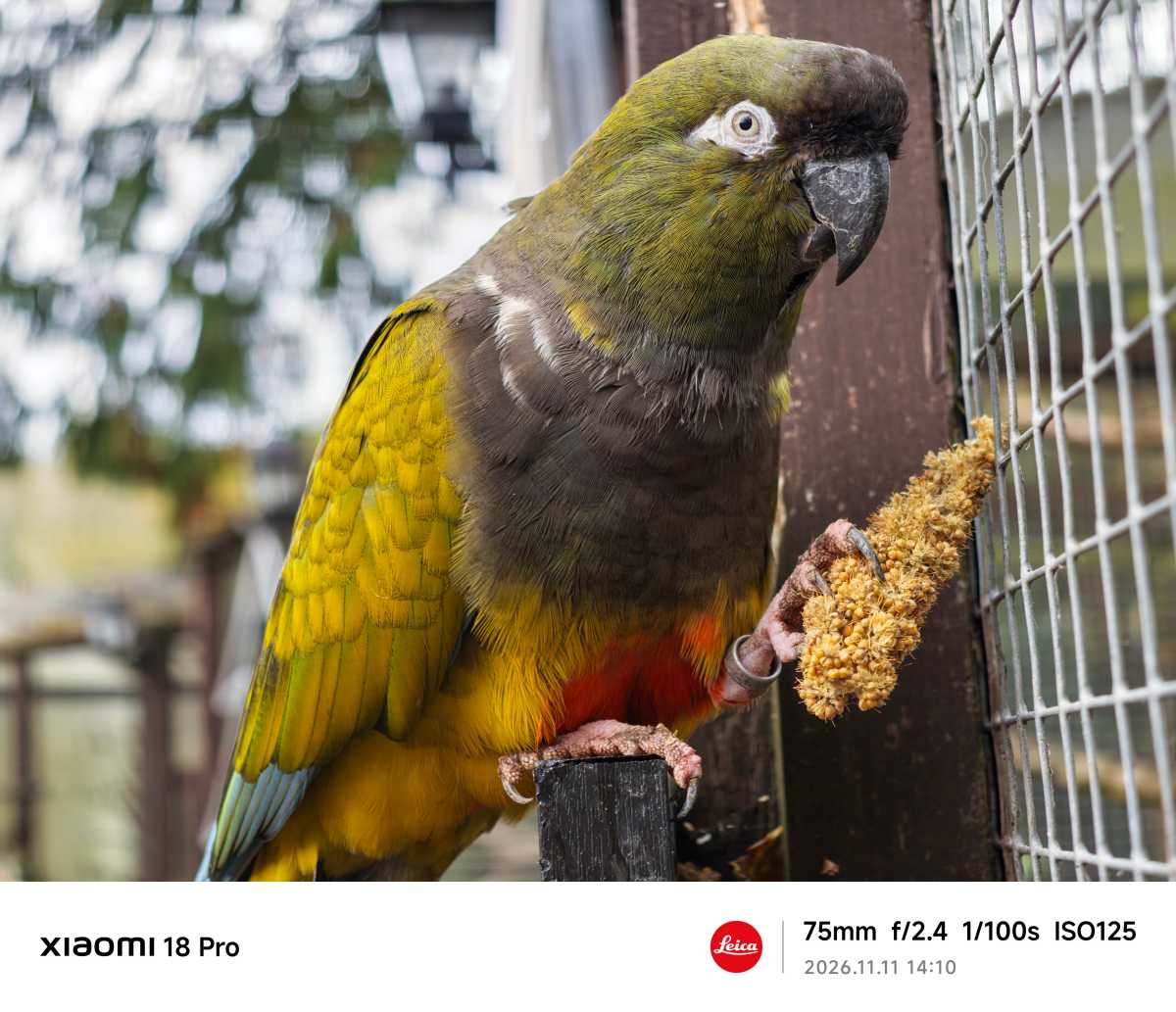
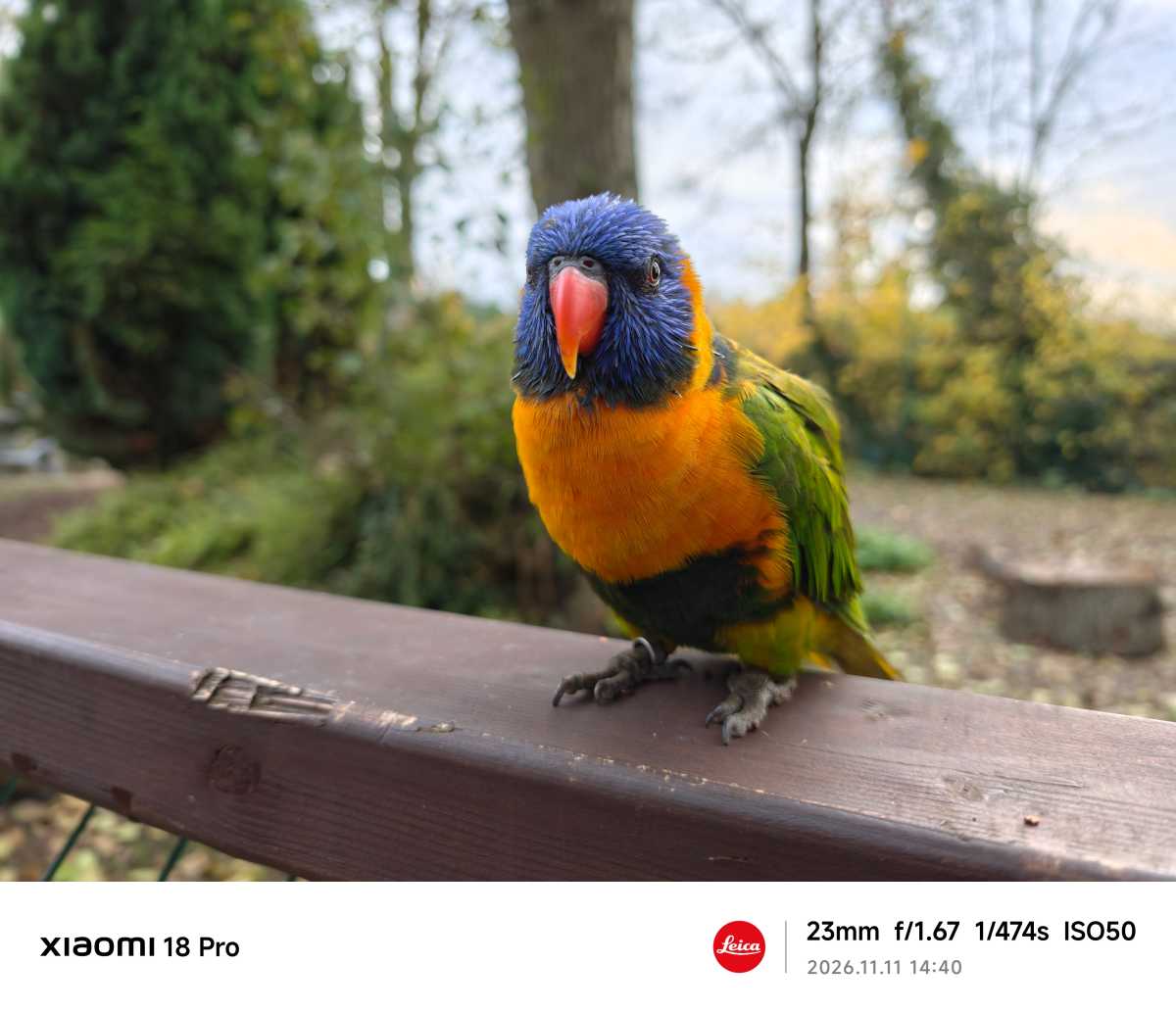
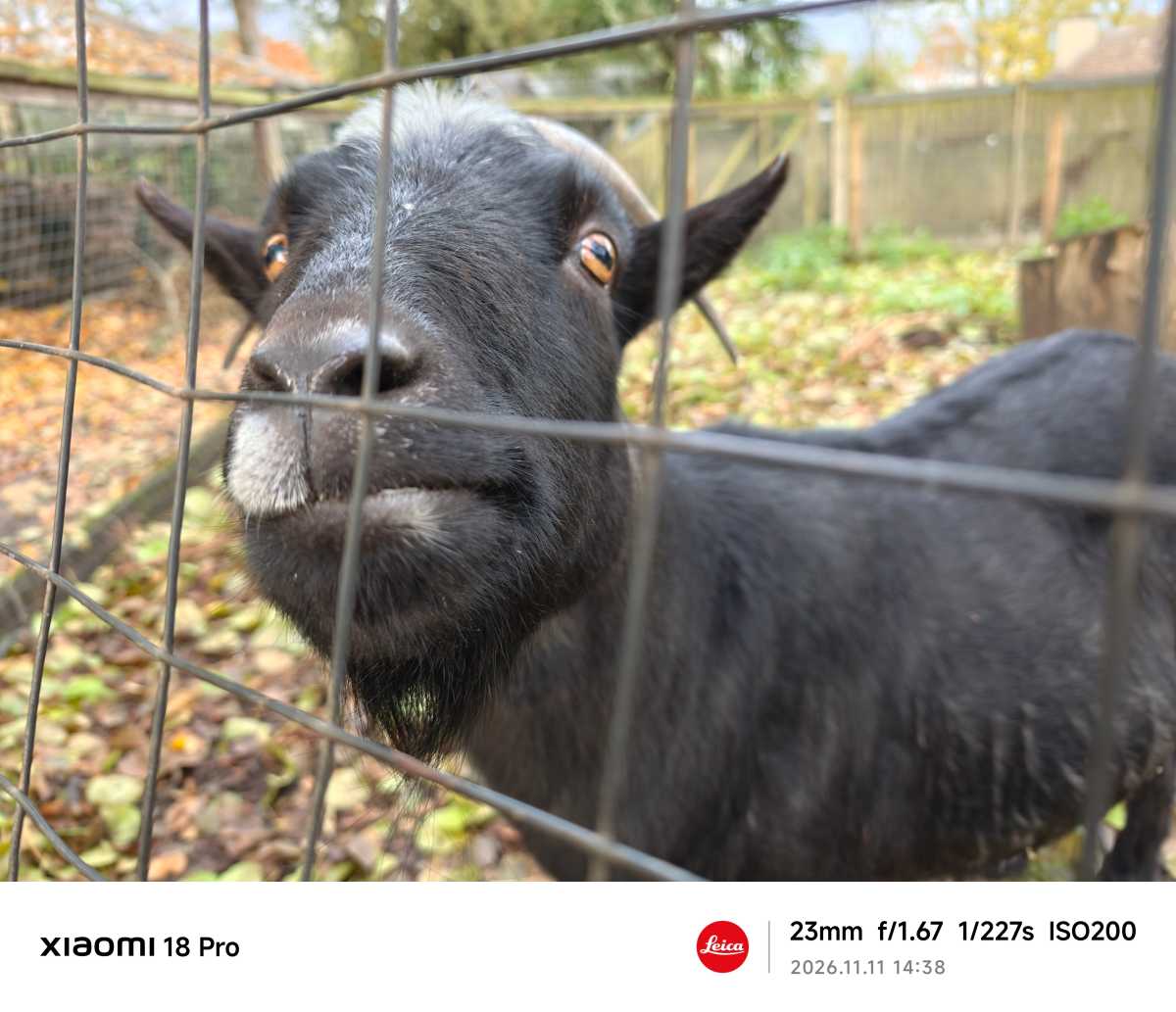
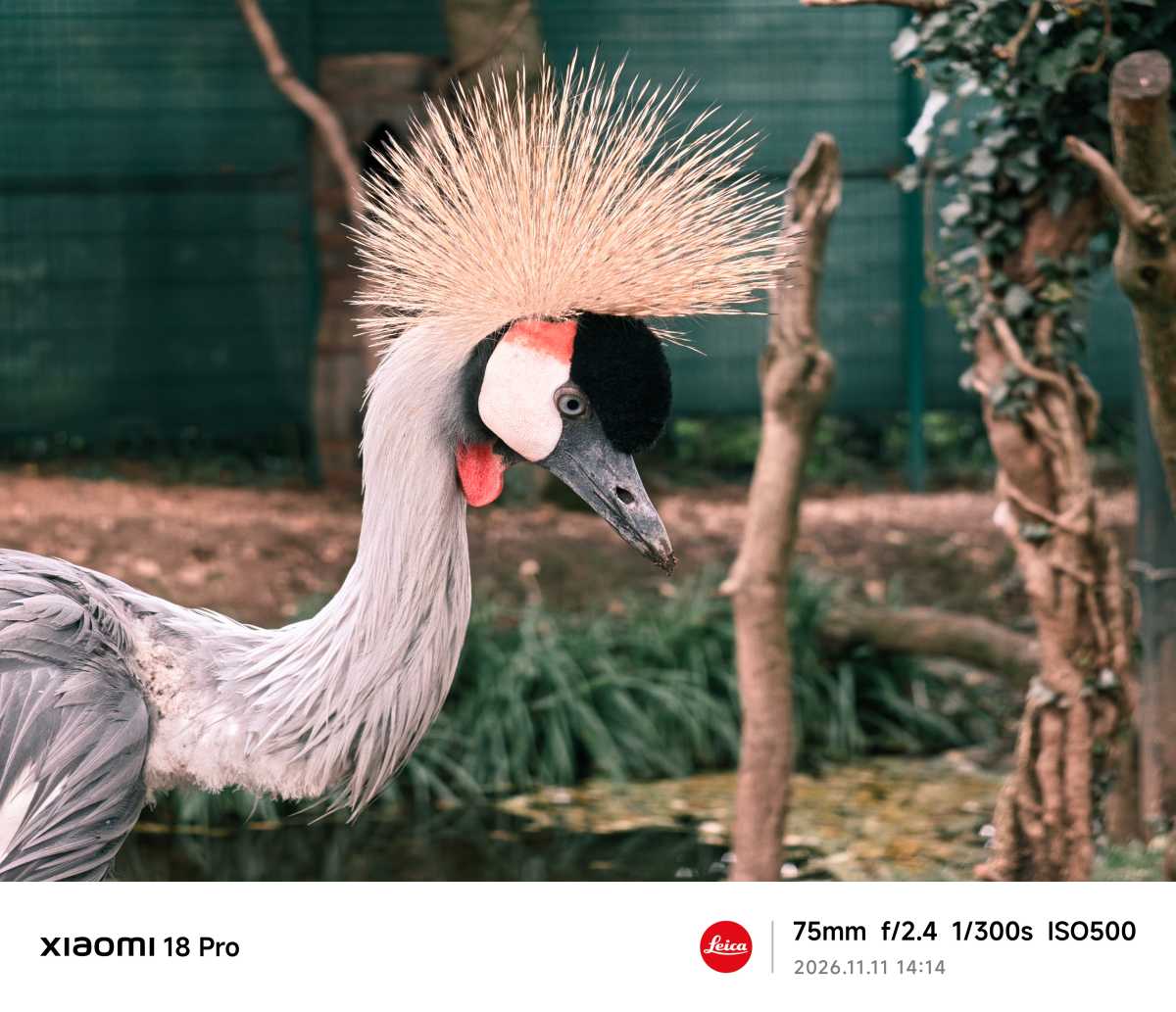
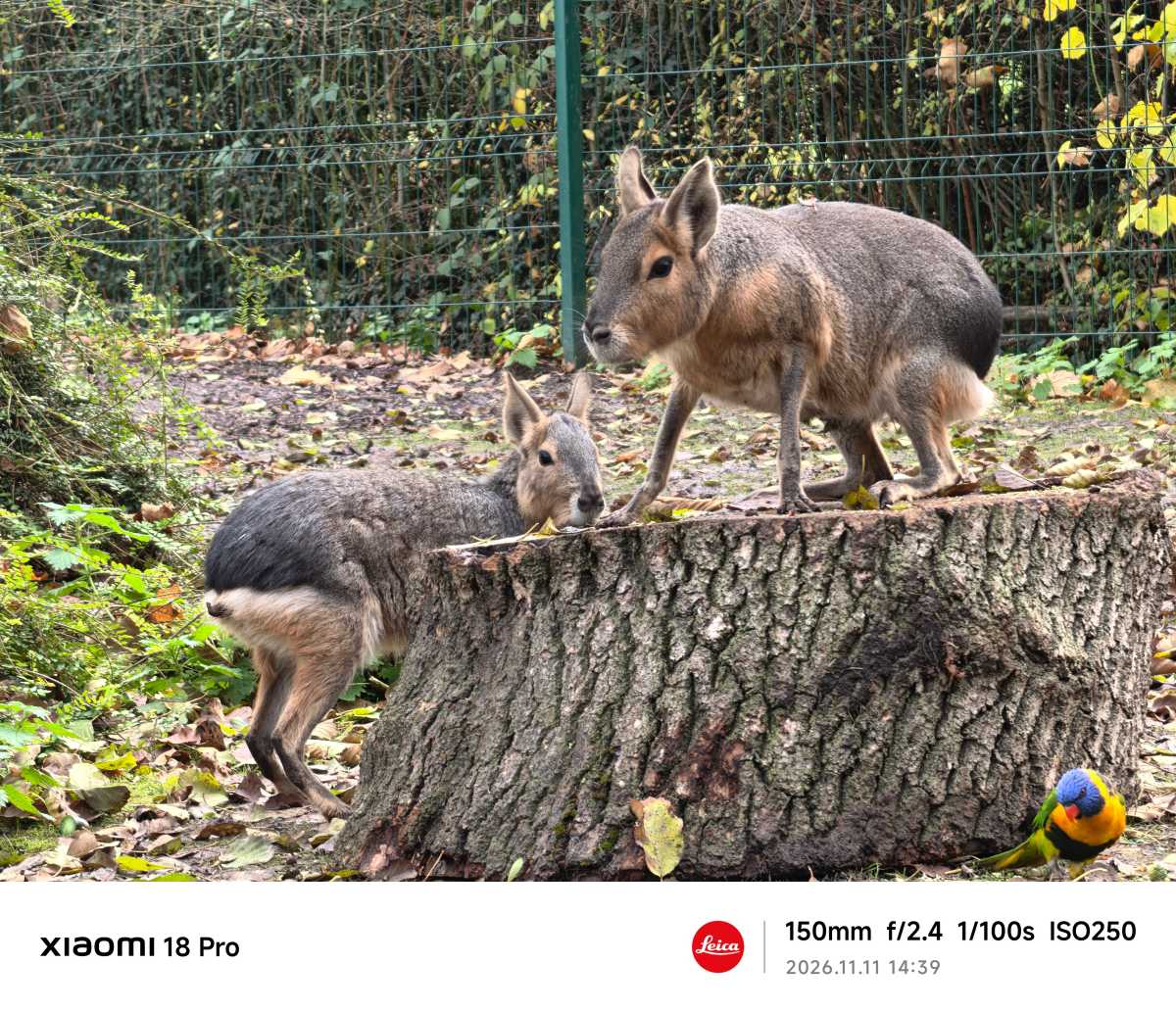
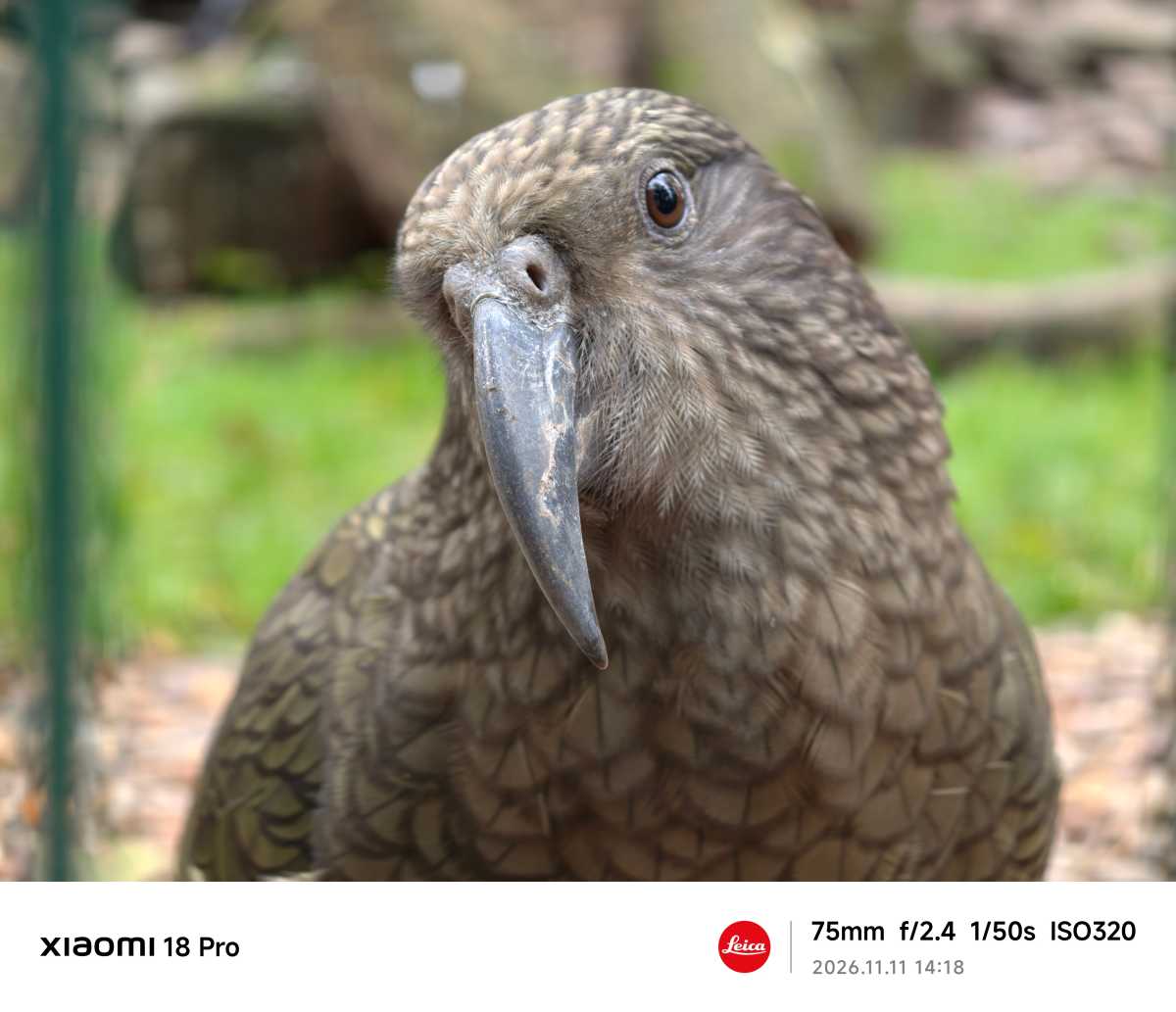



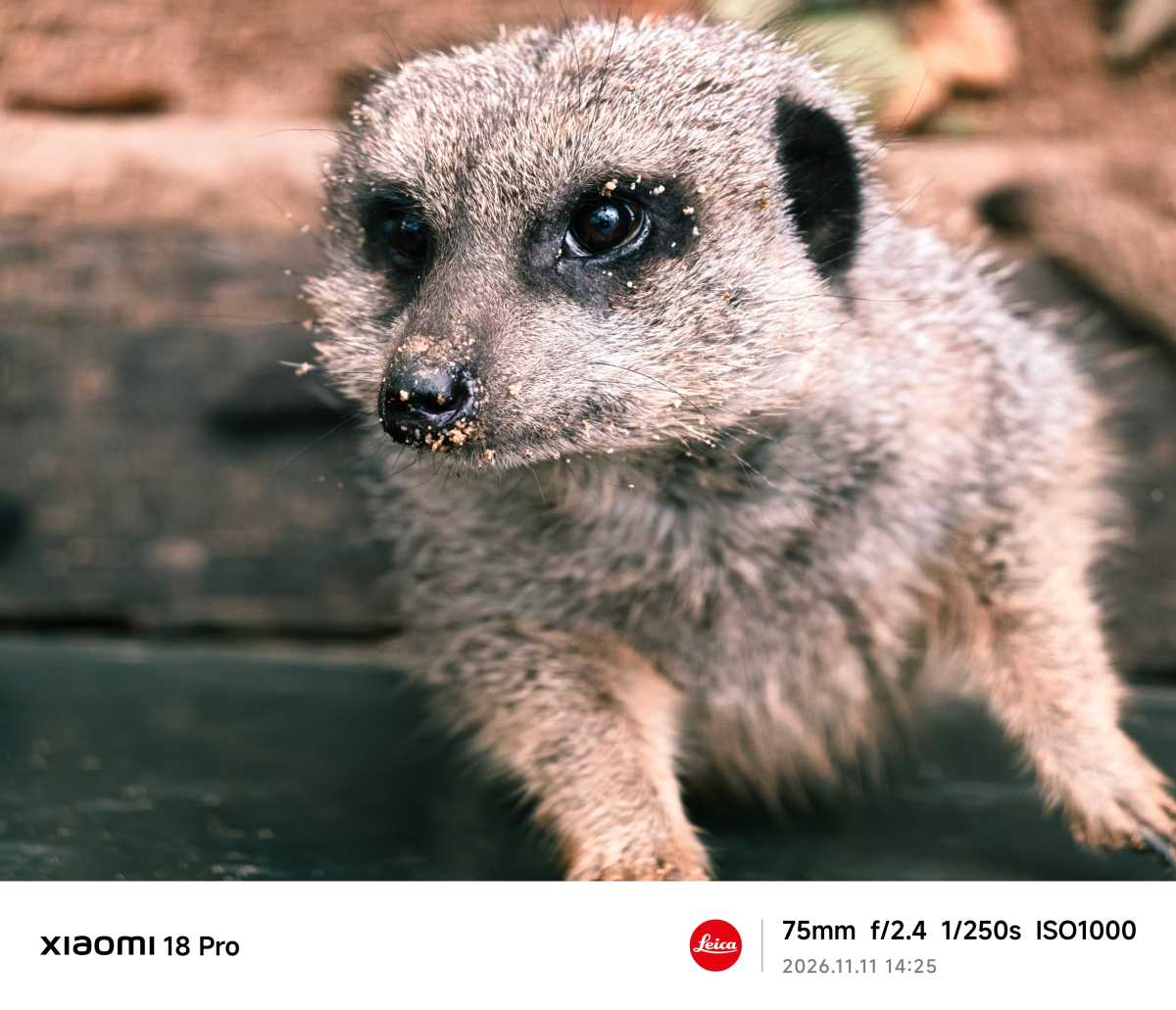
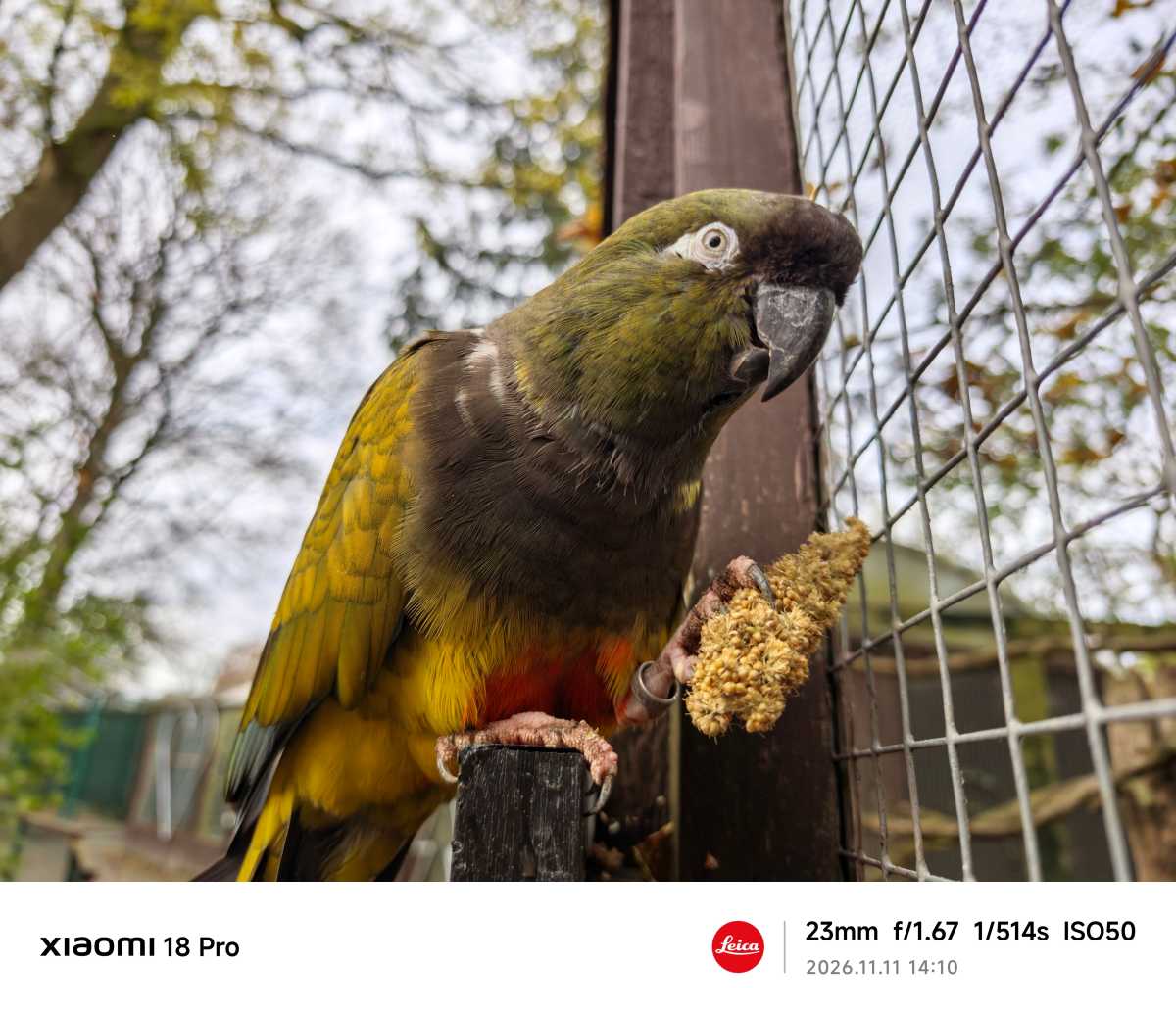
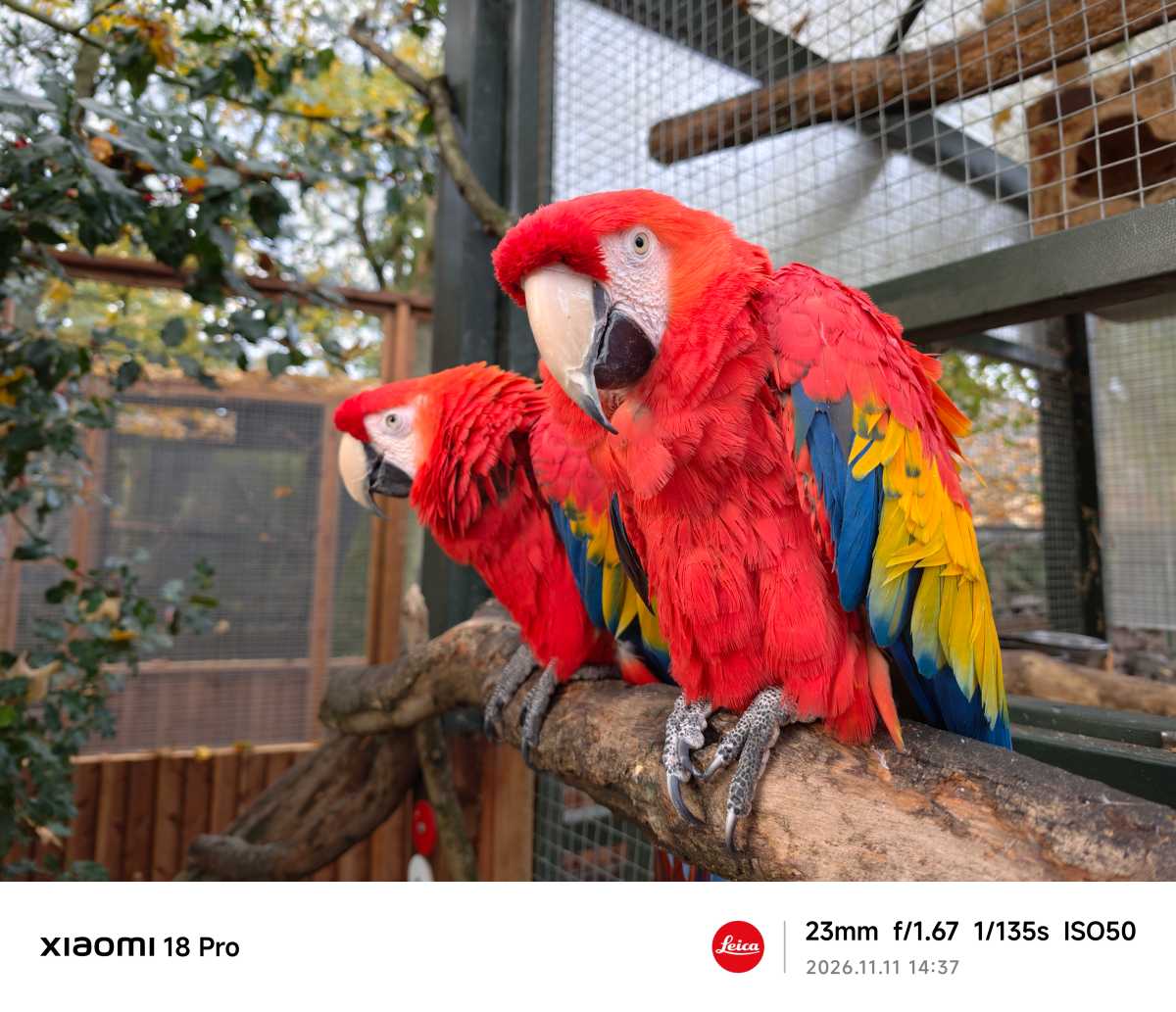
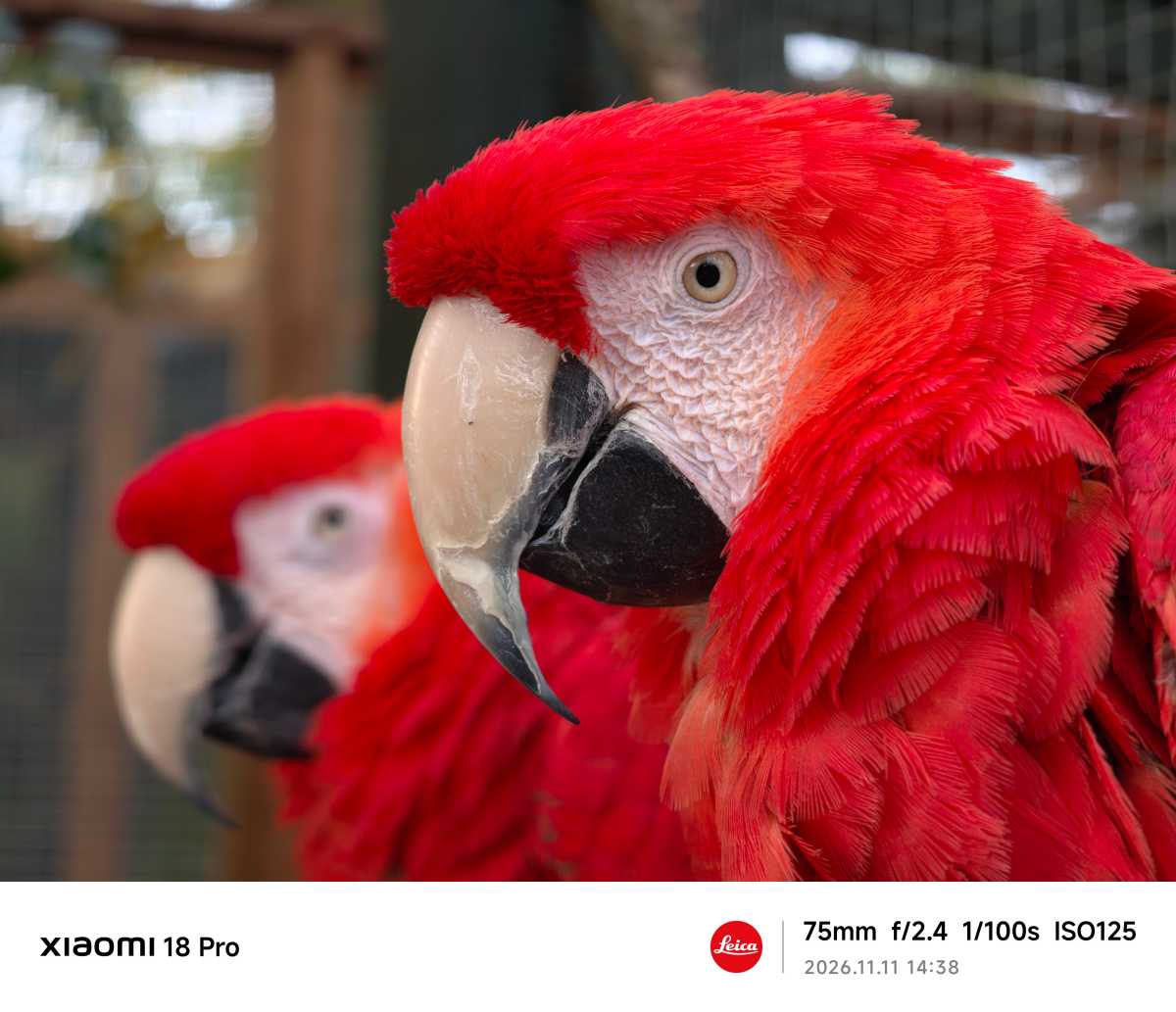
One of my favourite things about this setup is the minimum focus distance of the telephoto camera. It can focus from just 10cm away, so you can get fantastic macro shots. When you do so, you’ll get an impressive compression effect and some lovely natural bokeh.
It can focus from just 10cm away, so you can get fantastic macro shots
The selfie camera is quite decent, and I was pleased to learn that it has autofocus, but it’s nothing to write home about. In fairness, with a screen on the back, you may as well just flip the phone around and use the superior main camera over the selfie camera, and that’s what I would recommend doing most of the time. On the other hand, it’s important to have a selfie camera for video calls and face unlock, and this is more than sufficient for either.
Xiaomi has once again teamed up with Leica for the image processing. You can select from Original, Leica Vibrant and Leica Authentic as your default image style. There are loads of excellent filters to play with, and a new Essential Moment mode, which uses an on-device AI model to replicate the look of classic cameras.
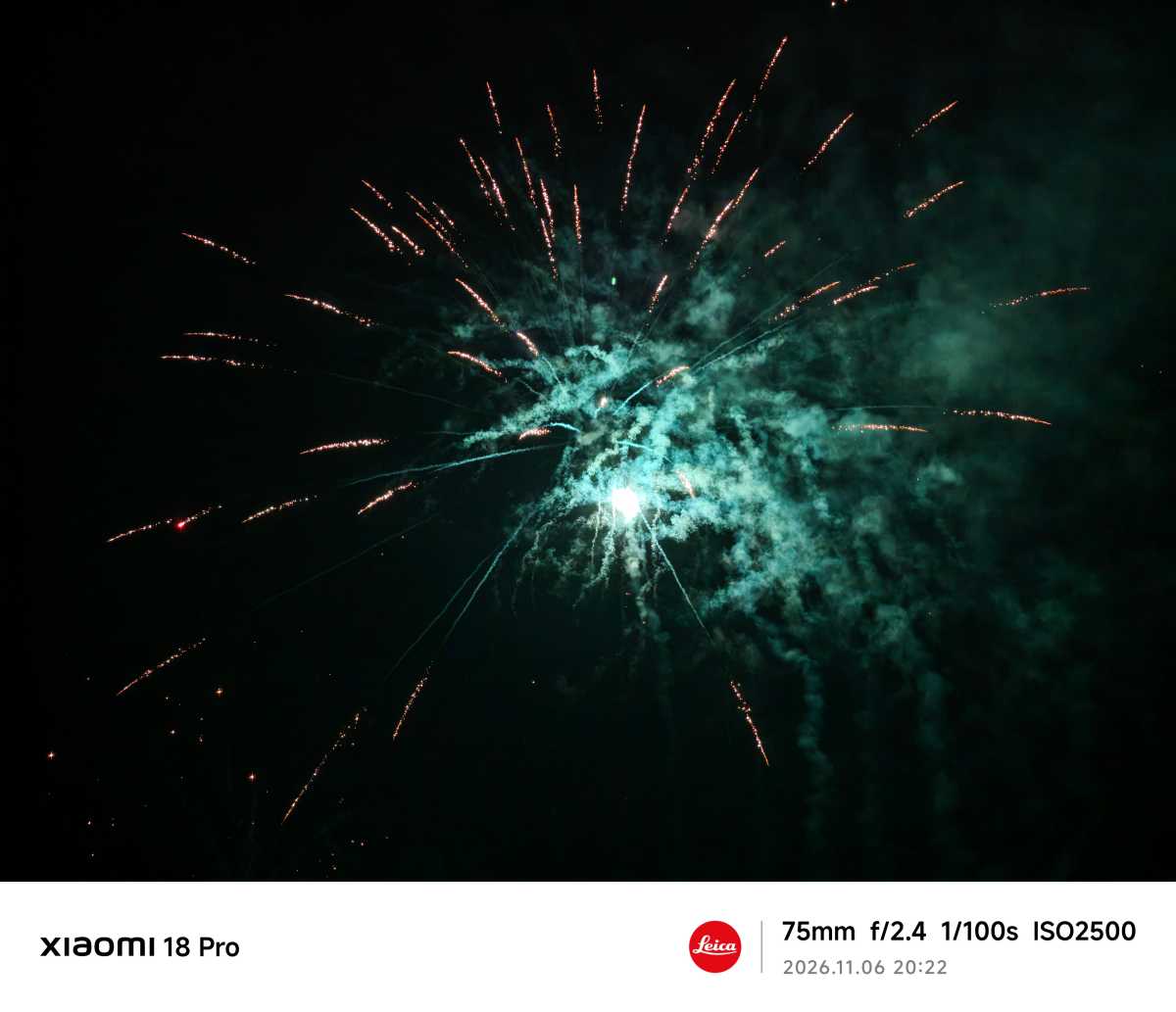

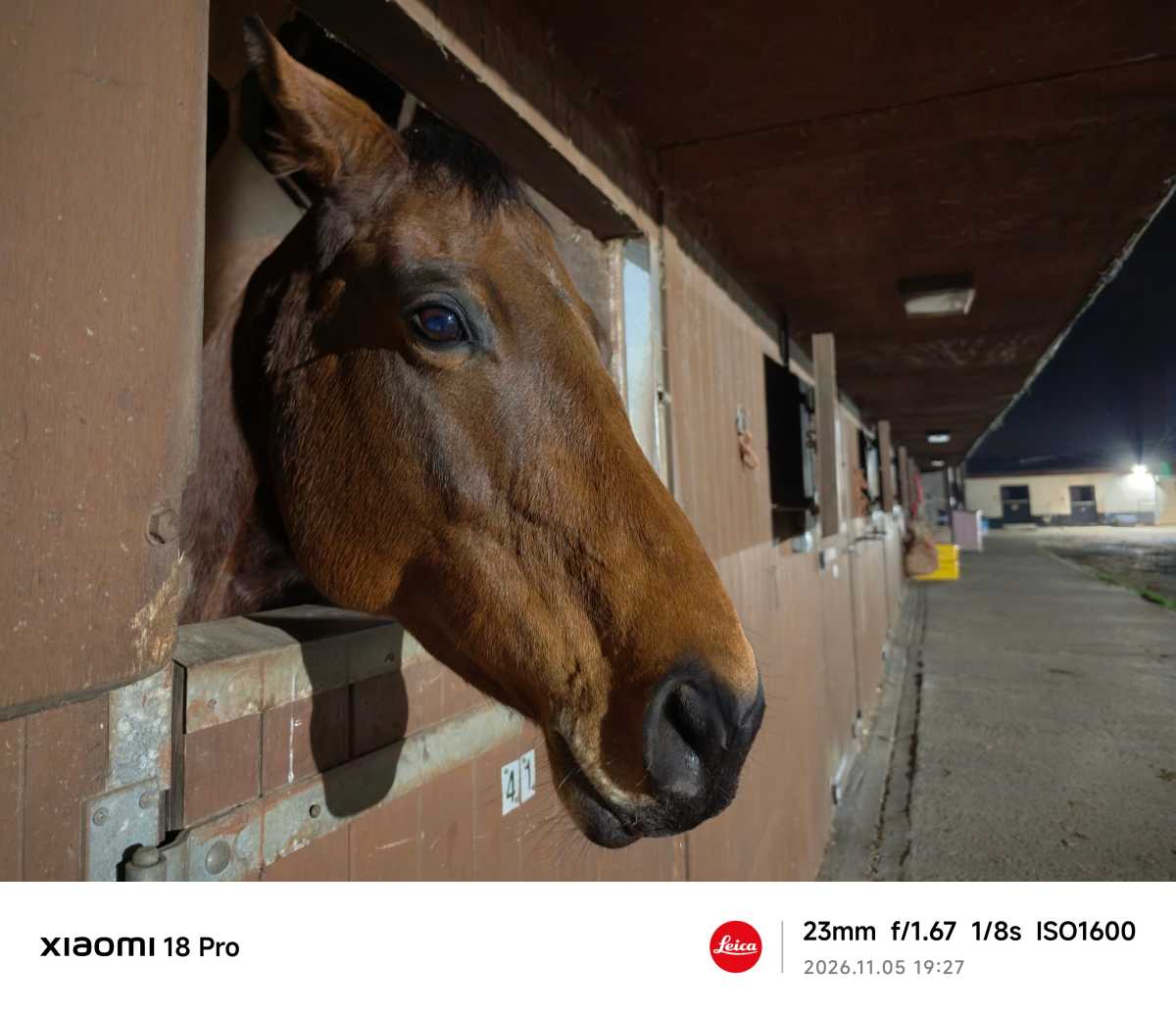
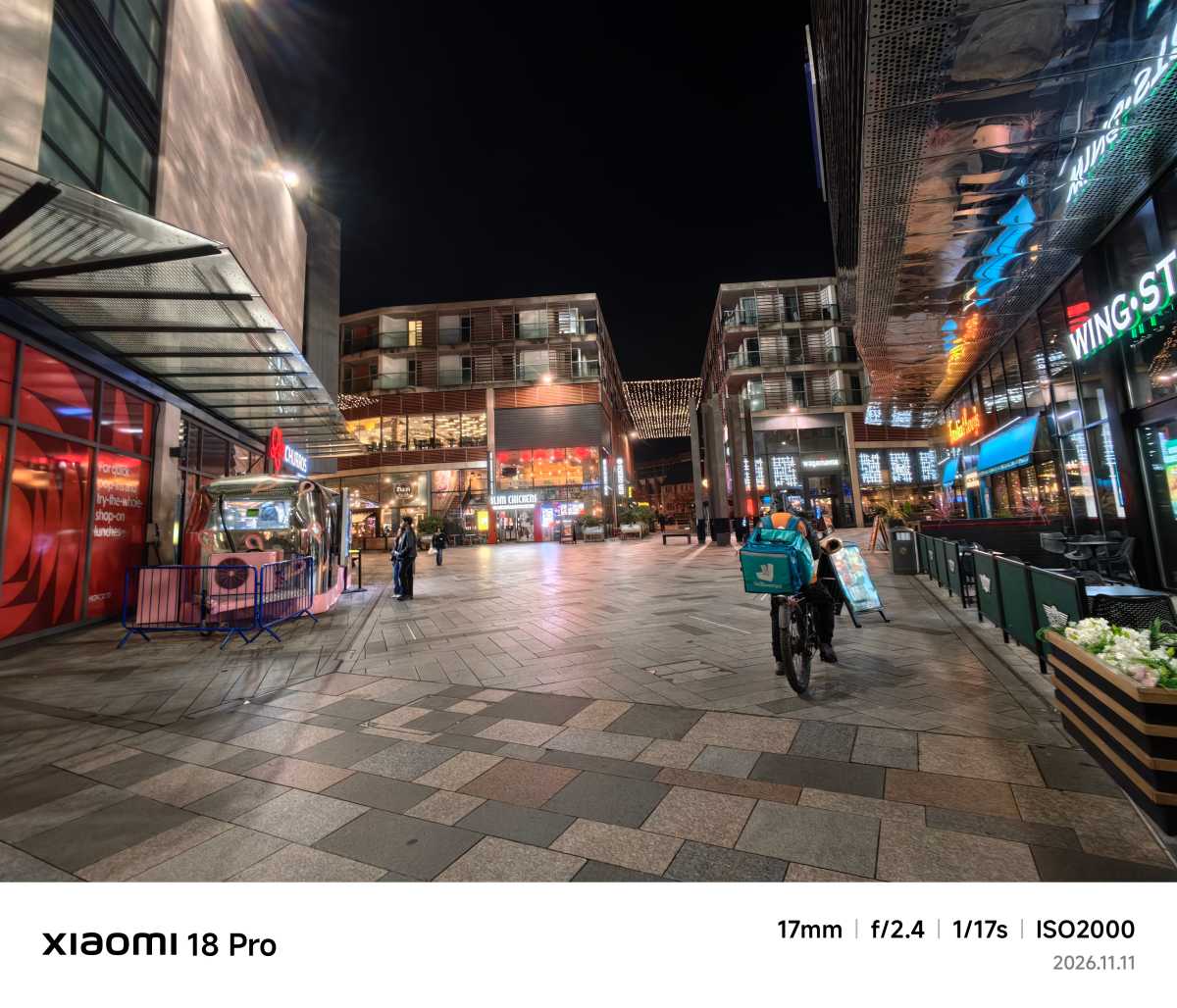
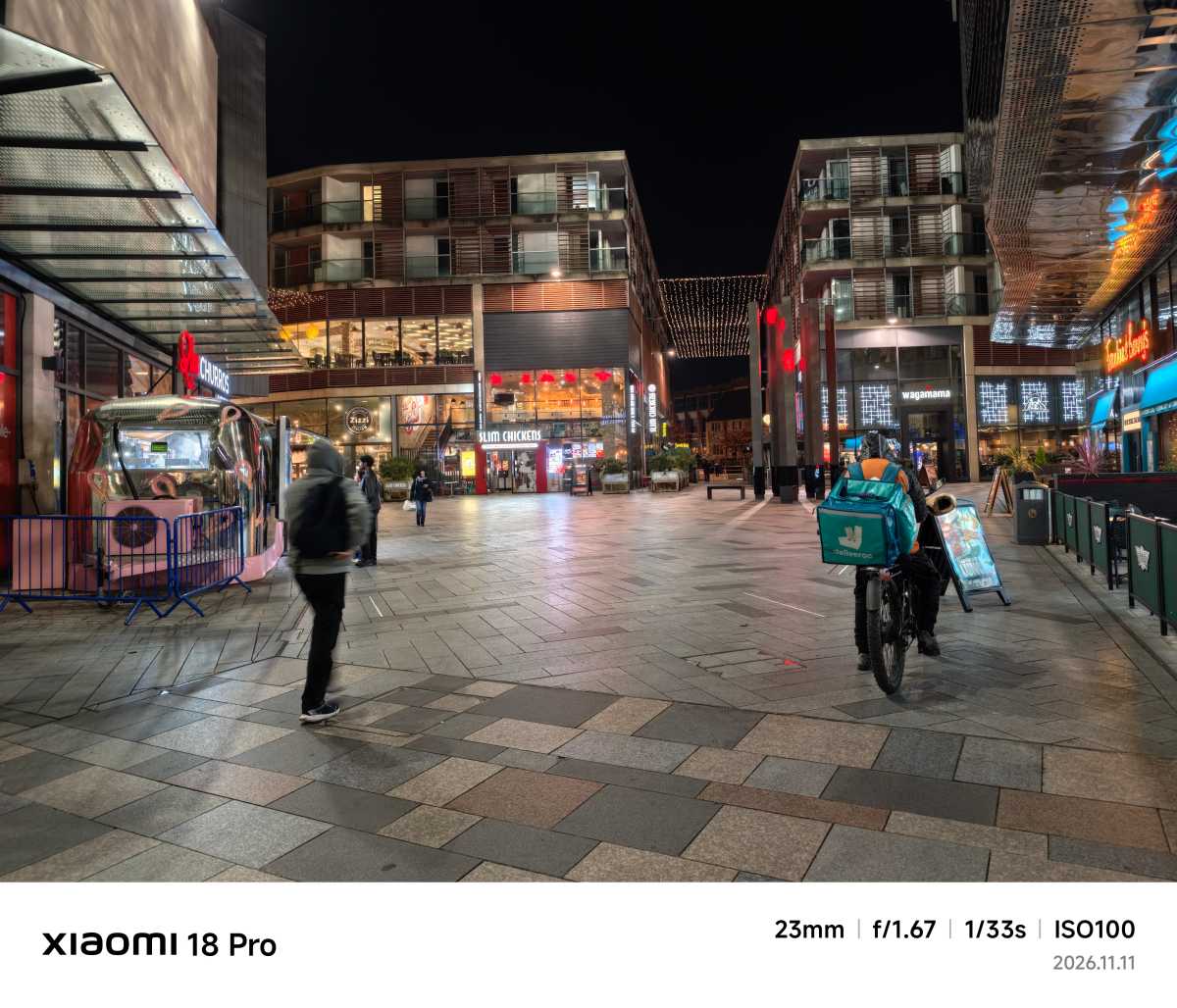
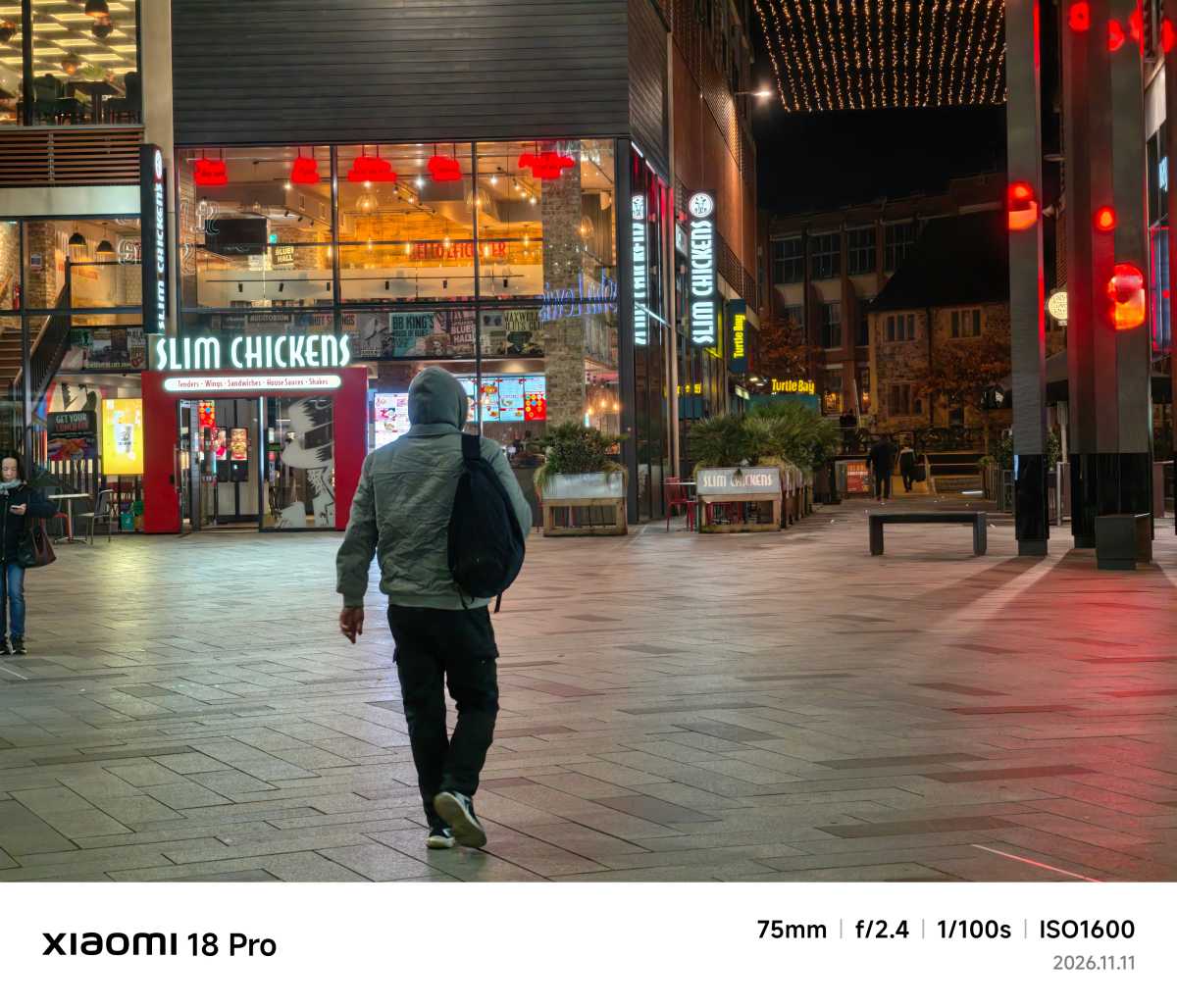
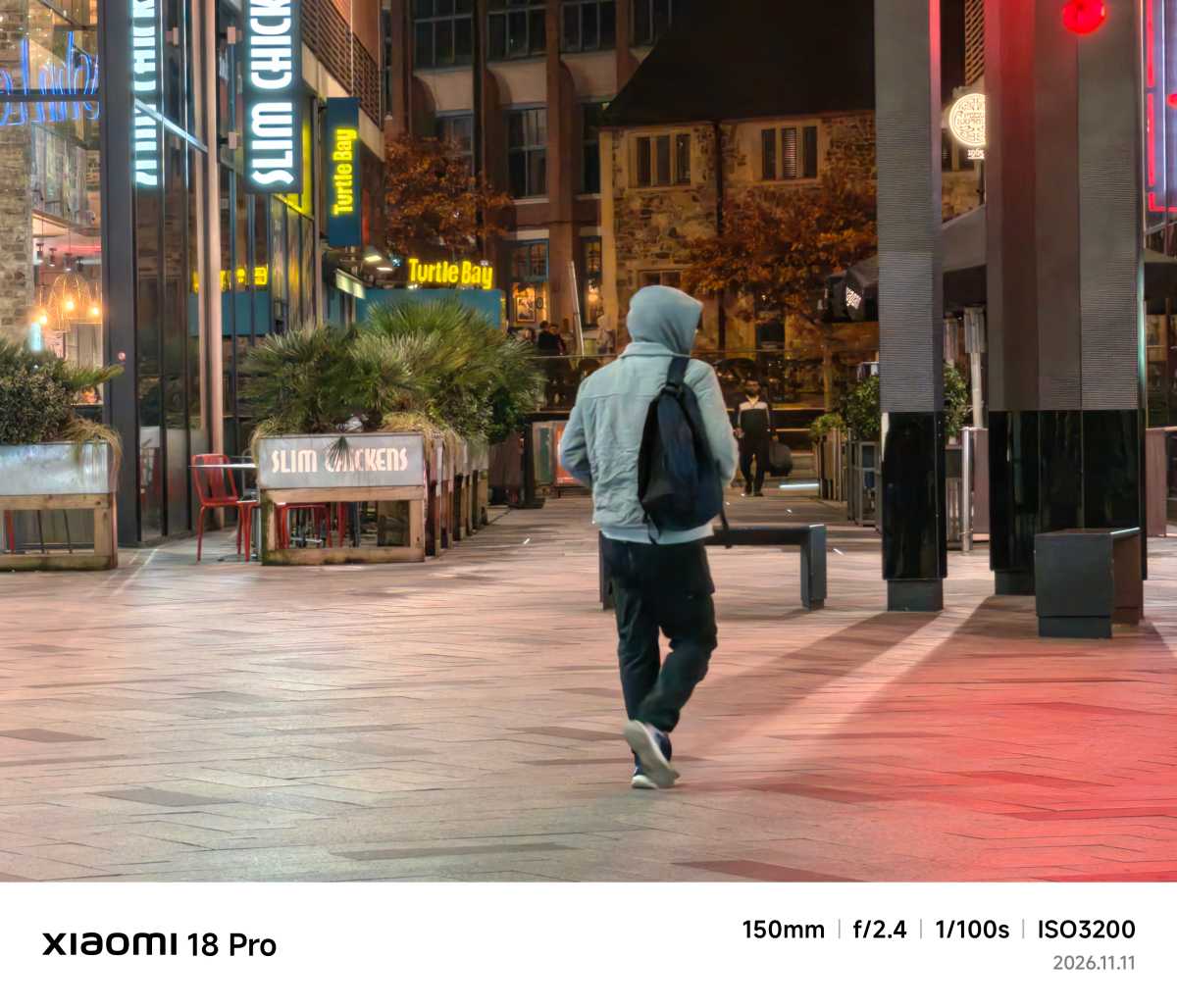

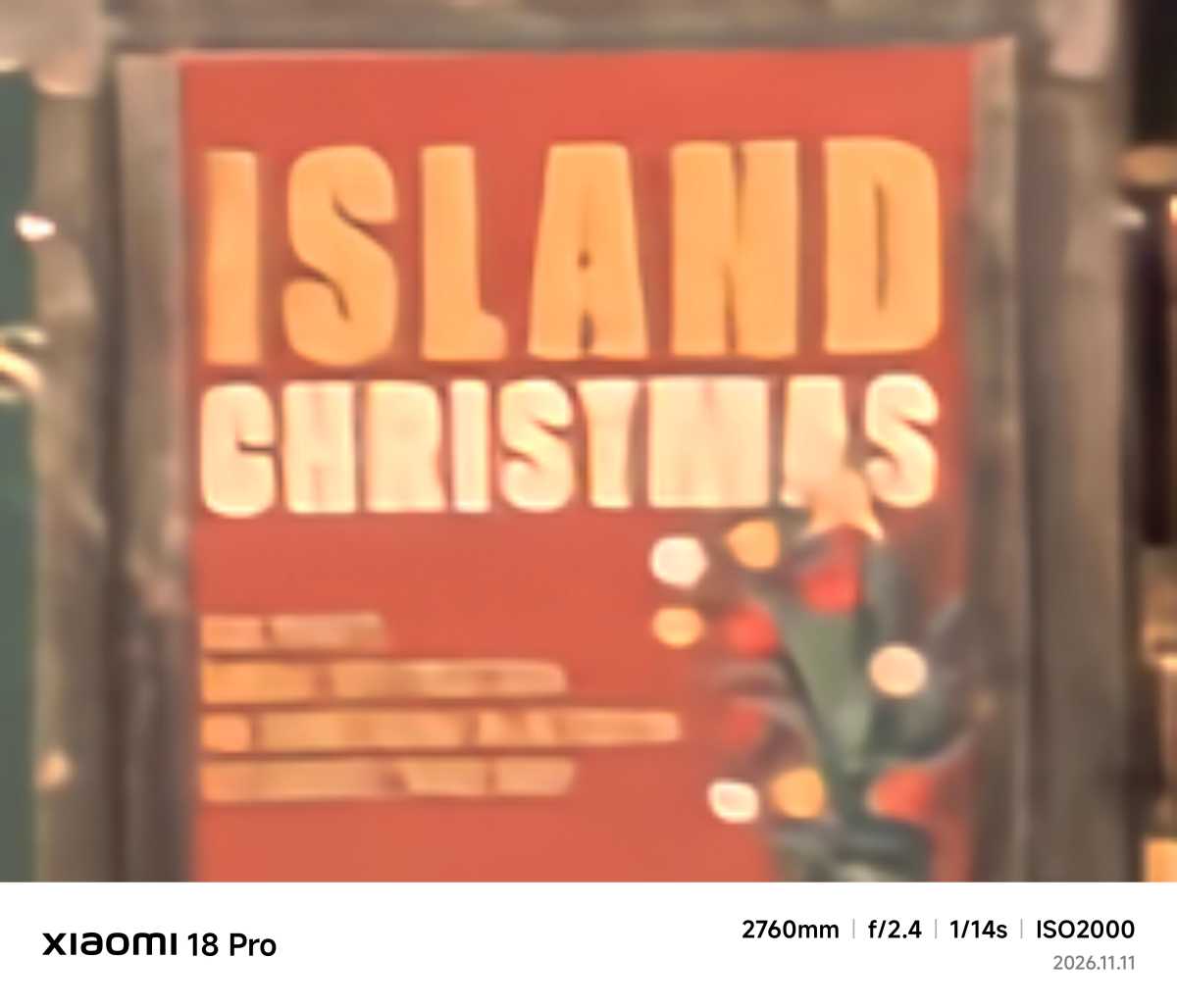
I’m always a little wary of AI-driven imaging features, but this one surprised me. The results are almost the opposite of what you’d expect. Essential Moment dials back the processing a lot, so rather than your typical hyper-sharp smartphone photos with super-wide dynamic range, you get something that looks a bit more like it was shot on a traditional camera. I really enjoyed using this mode, and while it doesn’t have as many filter options as the standard photo mode, the three options here all look fantastic.
The Xiaomi 18 Pro is no slouch in the video department, either. It supports up to 8K30 or 4K120 recording on its main and telephoto cameras, while the other cameras all max out at 4K60. There’s also a very capable Log profile, and the ability to use LUTs in Pro Video mode.
Battery Life & Charging
- 6000mAh Silicon-carbon battery
- 90W wired charging
- 50W wireless charging
As is often the case, the global version of the Xiaomi 18 Pro gets a significantly smaller battery than the Chinese version. It’s not exactly Xiaomi’s fault: shipping regulations across the world make it very difficult to ship these larger cells. Still, it stings a little bit for global fans of the brand.
The Chinese model has a 7,000mAh pack, while the global version gets a 6,000mAh capacity. The charging speed is also slightly reduced at a maximum of 90W wired, compared to 100W.
I could usually expect about a day and a half on a charge
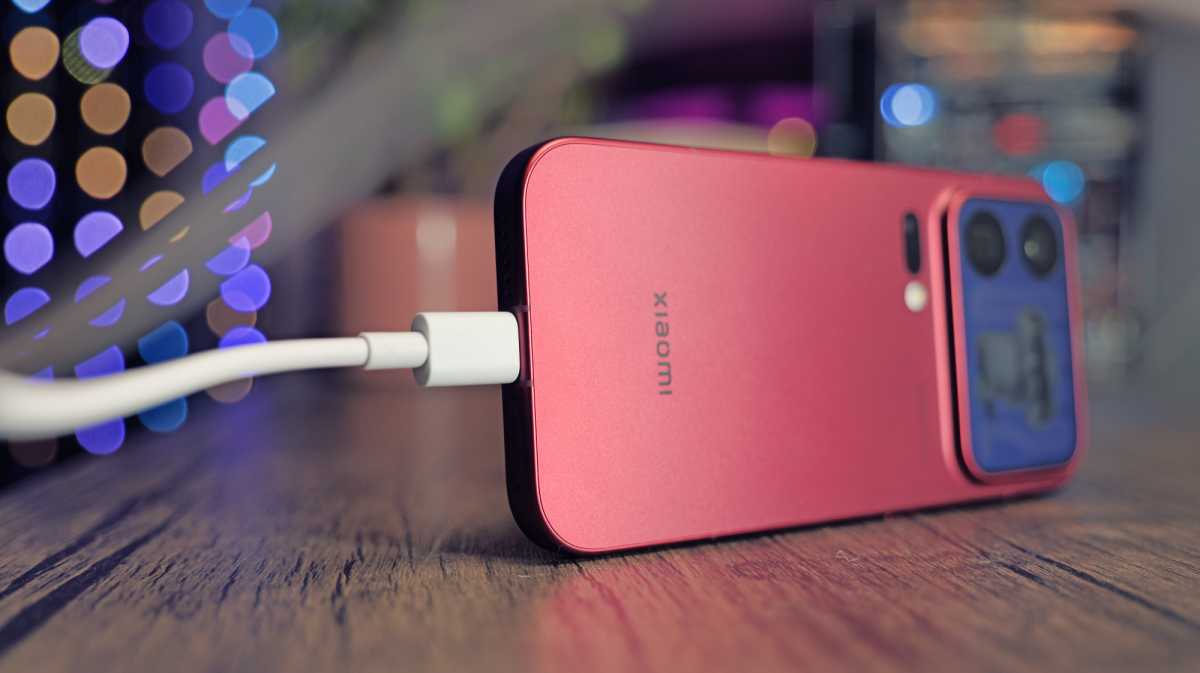
Still, 6000mAh is nothing to be sniffed at, and I found the battery life was very good throughout my testing. It never failed to get me to the end of the day; I could usually expect about a day and a half on a charge. Considering the fact that this phone has to power two screens, rather than one, that’s impressive stuff.
Luke Baker
The Xiaomi 18 Pro also did well in our usual PCMark battery drain test, surviving for over 24 hours. It’s a long way behind the Oppo Find X10 Pro Max (which lasted over 30 hours), but that’s a bigger phone, with a much bigger battery, and that should be expected.
Charging speeds are decent, too. If you use an official Xiaomi charger you can expect to get from fully dead to about 60% charged in just half an hour. 50W wireless support means you should be able to juice up quickly without plugging in, but you’ll need an official Xiaomi wireless charger to get the top speed.
There’s no charger included in the box, at least in the UK, you just get a USB-A to USB-C cable. Thankfully, Xiaomi is one of the best at supporting third-party charging protocols. So long as your charger supports the PPS standard, you can still get the maximum 90W wired charging speed.
Software & Apps
- HyperOS 4, based on Android 17
- Notably iOS-inspired design
- Newly optimised for speed and smoothness
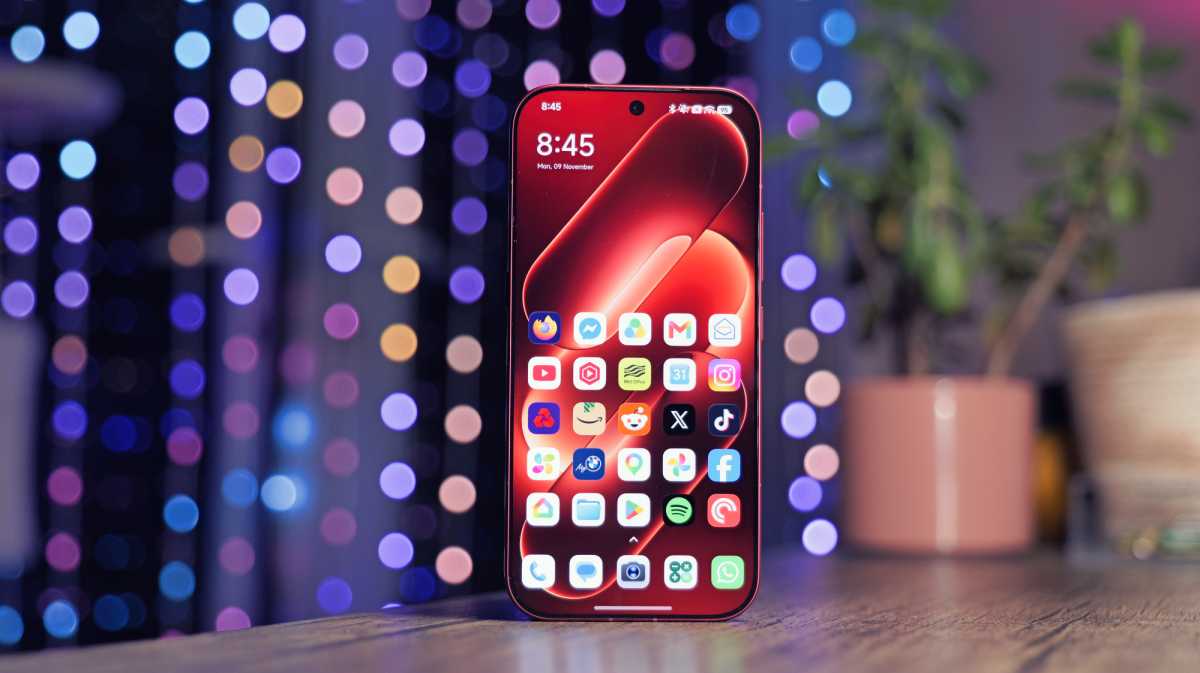
The Xiaomi 18 Pro runs HyperOS 4, Xiaomi’s latest custom software built on Android 17. If you’ve used recent Xiaomi, Poco or Redmi phones, you’ll have a good idea of what to expect, but the latest version tweaks some of the styling and adds some handy new features.
Luke Baker
Just like everything else about the Xiaomi 18 Pro, the software has a lot of Apple influence. Xiaomi has its own version of the Dynamic Island, there are (new and improved) Liquid Glass effects throughout the OS, and the quick settings shade looks extremely familiar.
There are ads in the wallpaper and theme menus, which really cheapens the feel of the OS
While it might lack some originality, there’s no denying it looks great. Plus, Xiaomi gives you loads of customisation options, so if there’s anything you don’t like the look of, or anything that behaves in a way you’re not onboard with – it’s very easy to change most of it.
Most of the changes this generation are purely aesthetic, but tweaks to the underlying architecture mean that the OS should feel smoother, and apps should open more quickly. There are also some minor new additions, such as improved AI summaries in the Notes app, but they didn’t have much impact on the way I used the phone.
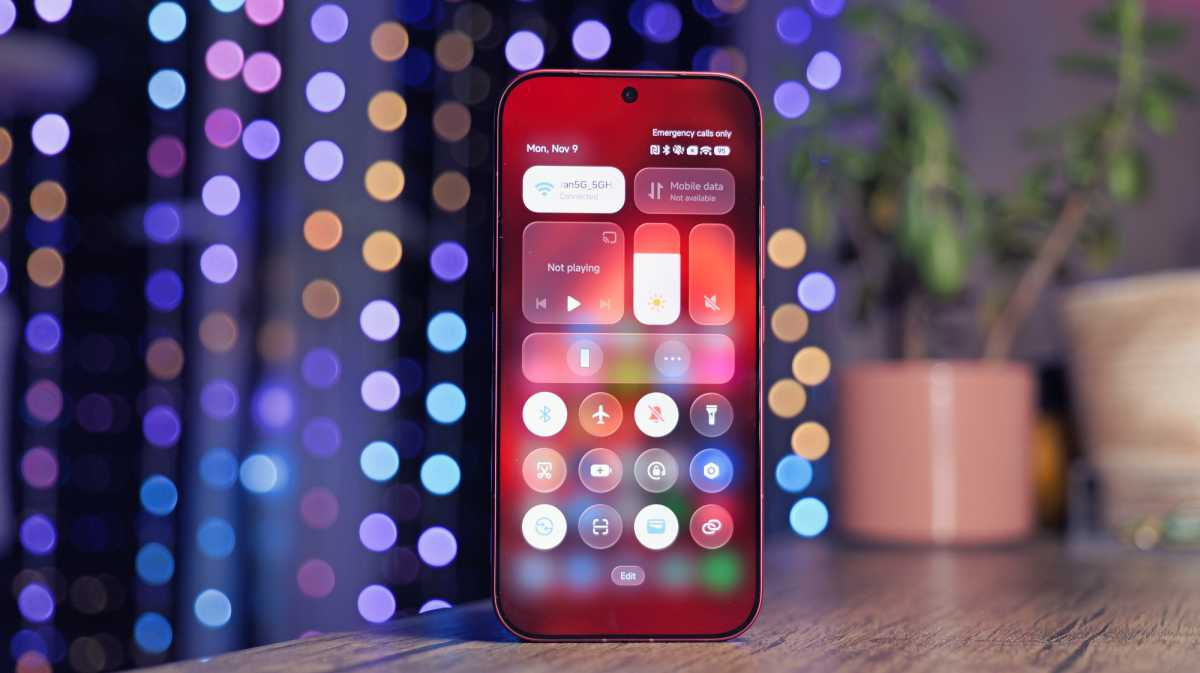
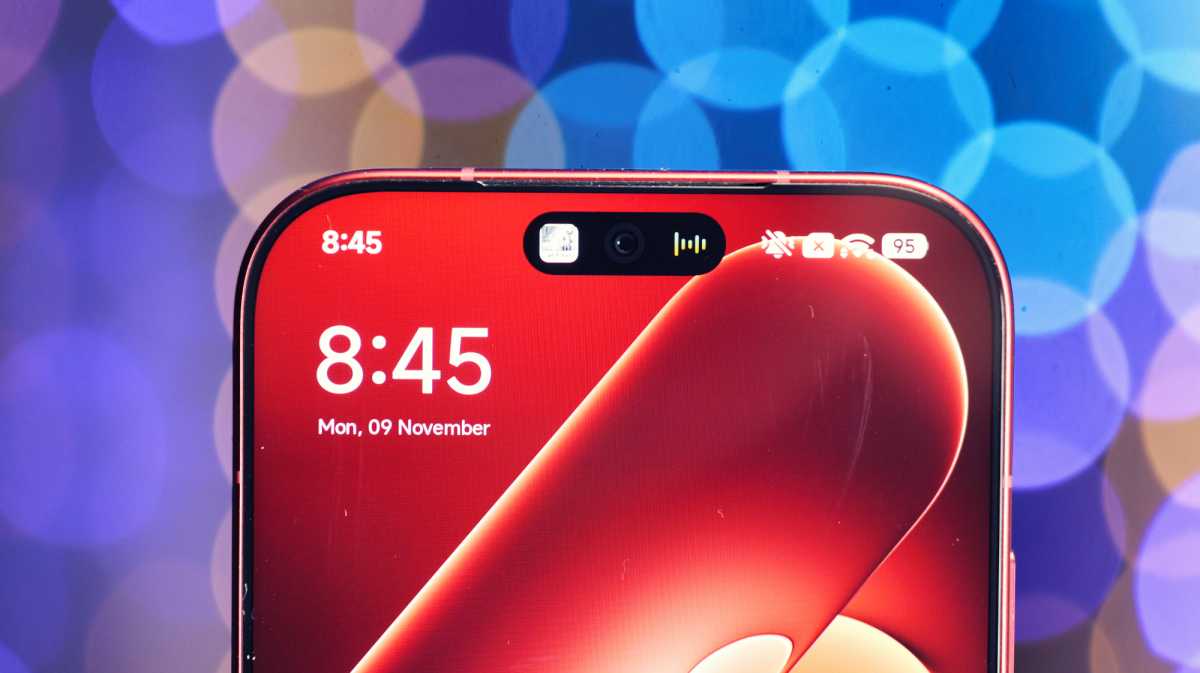
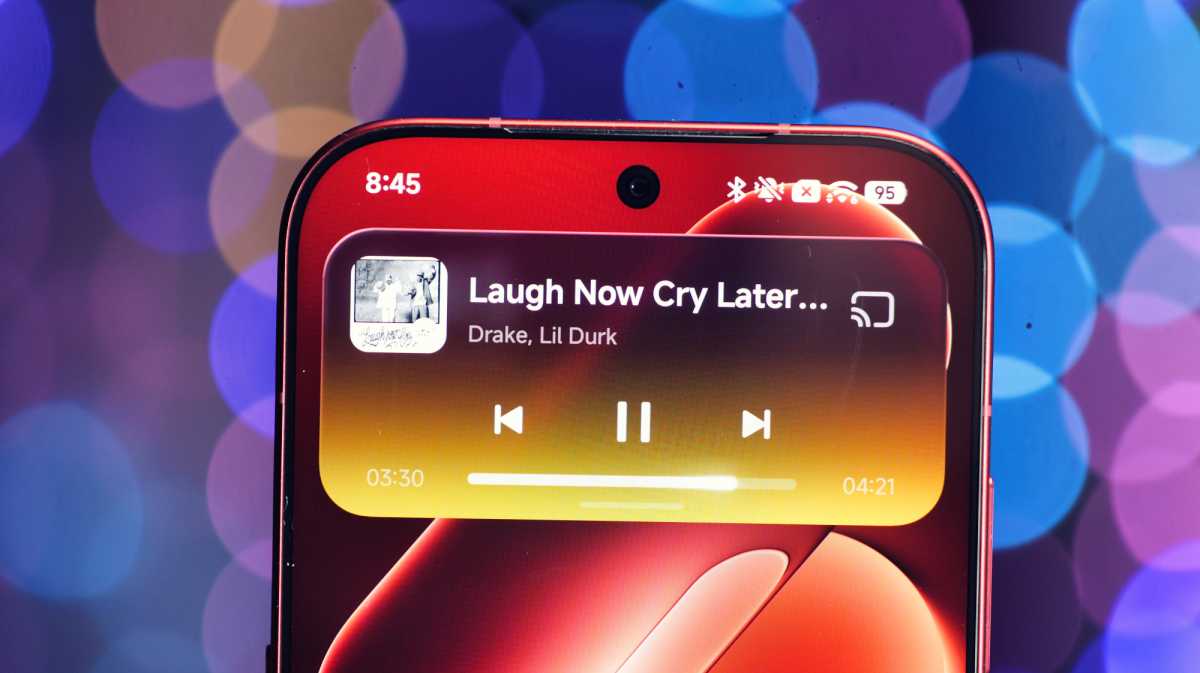
On the whole, I found HyperOS 4 very stable, speedy and easy to live with. But I have a few gripes, which have been the same for the last few generations of this software. The first is that there are ads in the wallpaper and theme menus, which really cheapens the feel of the OS.
Plus, there are a handful of apps that come pre-installed, such as WPS Office and AliExpress. You shouldn’t really have any bloatware on a device at this price. It only takes a couple of minutes to clean it up, but I’d rather not see any of it.
Price & Availability
- 12GB+256GB £1,199
- 12GB+512GB £1,399
- Not sold in the US
The Xiaomi 18 Pro is available to order now in most regions around the world, but as ever, the US is excluded from that list. If you were hoping for a bargain, I’m afraid I have bad news. The Xiaomi 18 Pro starts at £1,199 in the UK, the same price as the equivalent iPhone 18 Pro.
It’s not much of a shocker, rising component costs across the industry mean that all phones are getting more expensive, but while Xiaomi may have once been seen as a cheaper alternative, that’s definitely no longer the case.
In fairness, though, the 18 Pro Max is offering dual screens and a larger battery, so I think its iPhone-equivalent pricing is fair. Plus, knowing Xiaomi, there will be some tempting offers and bundles to sweeten the deal.
At the time of writing, you can buy it from Xiaomi for £1,199. If you’re unsure whether to go for the Xiaomi Pro or Pro Max, the close pricing of the two models does mean you’ll need to carefully consider. We’ve compared the models in a dedicated article.
Should you buy the Xiaomi 18 Pro?
The Xiaomi 18 Pro is one of the most fun phones I’ve tested this year. It’s easy to write off that rear display as a gimmick, but I’ve found that it has genuine utility. As a content creator who often needs to film himself, having a screen on the back of my phone is invaluable.
That’s not to mention how easy it is to customise your phone. You can slap whatever artwork you like on there, and really give your phone a bit of personality. But of course, it’s not all about that rear screen, because the Xiaomi 18 Pro is excellent everywhere else, too.
The performance is great, the screen and speakers are solid, plus you get a Privacy Display for the first time outside of a Samsung phone (even if it’s not as good). The cameras are fantastic, too. The ultrawide lets the team down a little, but the rest of the cameras are among the best around.
There are plenty of great phones at this price point but, if you want something compact, you value a good telephoto, and the idea of a rear screen appeals, this is really the only choice. It’s an excellent device.
Specs
- HyperOS 4, based on Android 17
- 6.4-inch, 1120 x 2436, LTPO AMOLED, 120Hz
- Secondary rear display: 2.7-inch LTPO AMOLED
- Under-display ultrasonic fingerprint sensor
- Qualcomm Snapdragon 8 Elite Gen 6 (2 nm)
- 12GB RAM
- 256GB / 512GB UFS 4.1 storage
- Cameras:
- 200Mp f/1.7 main sensor (OIS)
- 50Mp f/2.4 ultrawide
- 200Mp f/2.4 periscope telephoto (3.2x optical zoom, OIS)
- 50Mp f/2.2 selfie camera
- Up to 8K @ 30fps rear video
- Stereo speakers
- Dual-SIM (Nano-SIM)
- Wi-Fi 802.11 a/b/g/n/ac/6e/7
- Bluetooth 6.0
- 6000mAh battery
- 90W wired charging
- 50W wireless charging
- 151.8 x 72 x 8.5 mm
- IP68 certified
- 198g
- Colours: Black, White, Velvet Red, Cosmic Blue