Deutsche Bank starts Nio LiDAR supplier Seyond at buy, sees 60% upside: A Practical Look

- Deutsche Bank expects Seyond’s revenue to grow nearly five-fold to $718 million by 2028, when the company is expected to turn profitable.
- The bank forecasts Seyond’s LiDAR shipments to rise from 332,000 units in 2025 to 2.8 million units in 2028.
Deutsche Bank has initiated coverage of Seyond (HKEX: 2665), expressing optimism about the long-term prospects of the LiDAR supplier to Nio Inc (NYSE: NIO).
In a research note on Tuesday, the bank’s analyst team led by Wang Bin assigned Seyond a buy rating with a target price of HK$4.00, implying 60% upside from the current share price.
Seyond is the fourth-largest LiDAR maker in China, holding a 15% share of China’s ADAS (advanced driver-assistance system) LiDAR market in the first five months of this year, the bank said, citing data from NE Times.
The team forecasts Seyond’s total LiDAR shipments to increase from 332,000 units in 2025 to 2.8 million units in 2028, representing a compound annual growth rate (CAGR) of 104%.
The growth will be driven mainly by three factors: the fast-rising LiDAR penetration rate in China, volume growth and an expanding customer base from its primary customer Nio, and opportunities in the robotics LiDAR market, according to Deutsche Bank.
Seyond’s revenue is heavily reliant on Nio. In 2025, Nio Inc accounted for about 95.4% of the company’s ADAS LiDAR shipments, the note pointed out.
Its ultra-long-range, front-facing Falcon LiDAR series is used in all models of the Nio main brand, while the Robin series is used in vehicles from Onvo, Nio’s mass-market sub-brand.
Deutsche Bank views LiDAR as an essential sensor for high-level autonomous driving (Level 2+ and above), given its superior precision over millimeter-wave radar and better performance than cameras in diverse lighting conditions.
The bank expects China’s ADAS LiDAR sales volume to surge from 3.3 million units in 2025 to 50 million units in 2030, a five-year CAGR of 72%, primarily driven by the continuously rising penetration of high-level vehicle autonomy.
Specifically, Deutsche Bank expects the penetration rate of “Level 2+ and above” autonomous driving systems to climb from 29% in 2025 to 88% by 2030.
Supporting factors include declining costs of intelligent-driving components. For example, Hesai’s (HKEX: 2525) ADAS LiDAR average selling price (ASP) has dropped from 11,000 yuan ($1,620) in 2021 to about 1,660 yuan in 2025, and is expected to fall further to about 1,200 yuan in 2026.
On the regulatory front, a mandatory national standard for L3/L4 autonomous driving systems, set to take effect on July 1, 2027, also serves as a tailwind, according to Deutsche Bank.
The standard requires systems to safely execute a Minimal Risk Maneuver even in conditions such as bright light, heavy rain, dense fog, or a single-point camera failure, which is expected to ignite demand for high-end sensors such as multi-LiDAR setups.
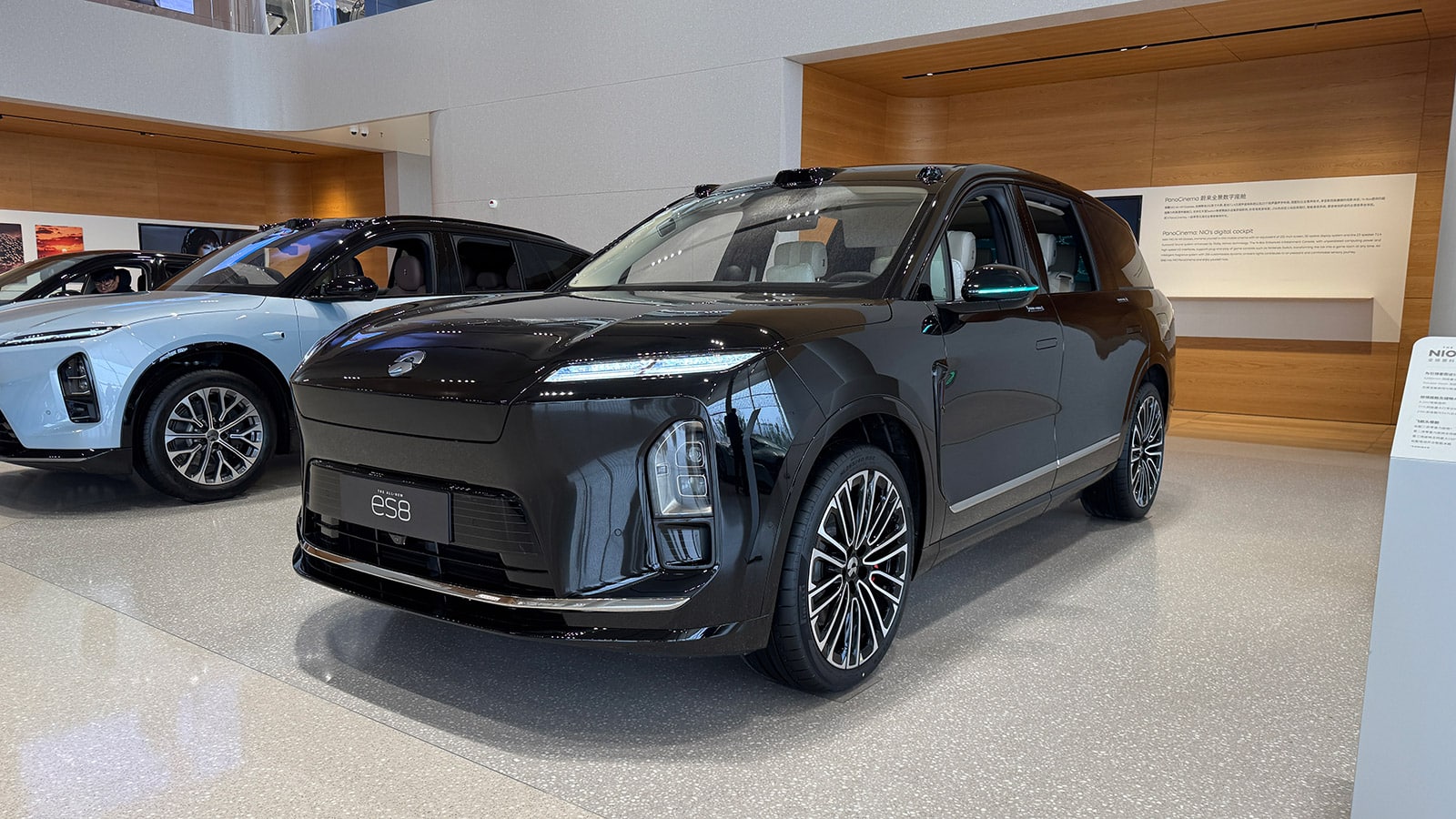
Deutsche Bank noted that high-end models such as the Li L9, Nio ES9, Zeekr 9X, and Aito M9 are transitioning from a single forward-facing LiDAR to multi-LiDAR configurations that include blind-spot LiDARs.
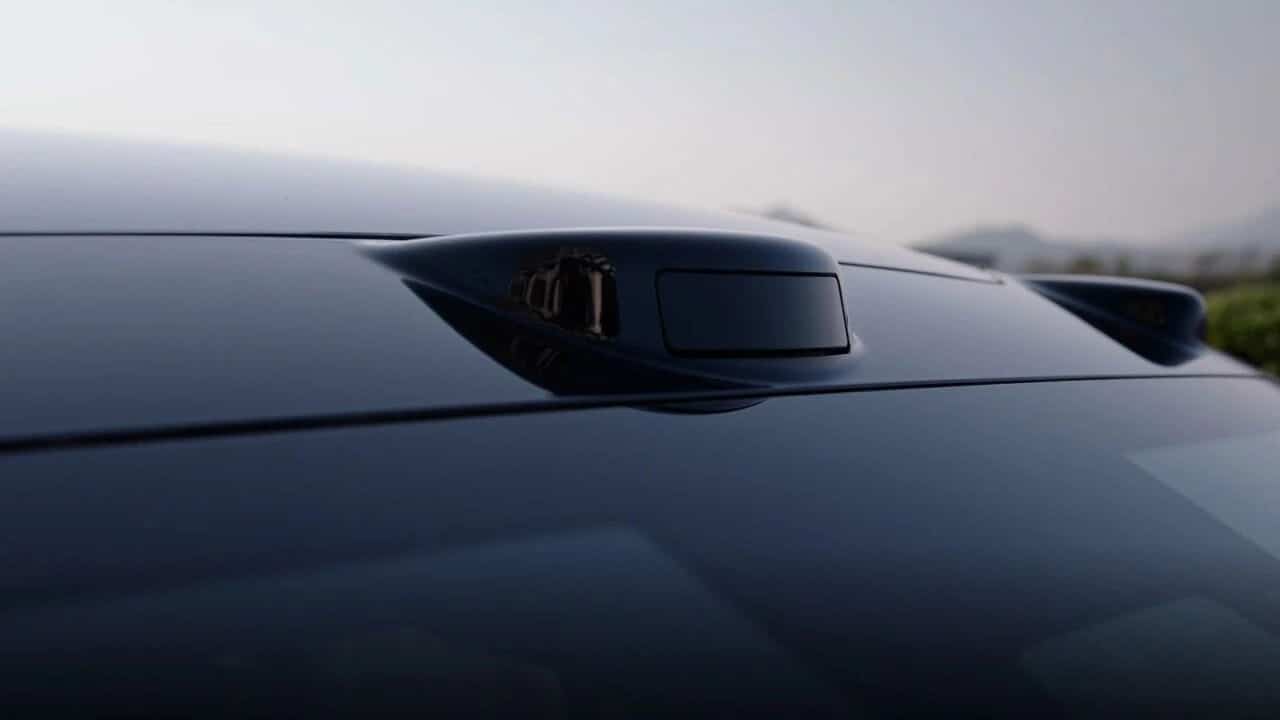
Nio’s flagship SUV, the ES9, is equipped with three Seyond LiDARs, including one Falcon front-facing LiDAR and two Robin W mid-range, wide-angle LiDARs.
On the customer diversification front, Seyond is building partnerships with 17 other automakers and autonomous driving solution providers, including GAC, SAIC, Dongfeng, and Leapmotor (HKEX: 9863).
Its robotics LiDAR business is also expanding rapidly, with customers spanning robotic lawnmowers (Positec, Husqvarna), robovans (Zelos, Rino.ai), robotrucks (Deepway, Eacon, CiDi), robotaxis (Pony AI), general robotics (Kusa, X-Mover), and smart infrastructure solutions (Aventi).
Deutsche Bank expects robotics LiDARs to account for 14%, 18%, and 19% of Seyond’s total shipments in 2026, 2027, and 2028 respectively, with ADAS LiDARs contributing the rest.
On the financial side, the bank expects Seyond’s revenue to grow nearly five-fold to $718 million by 2028, when the company is expected to turn profitable.
The bank expects Seyond’s operating cash flow to turn positive in 2026 at $55 million, followed by $84 million in 2027 and $176 million in 2028.
Considering rising capital expenditure for capacity expansion, the company’s free cash flow is not expected to turn positive until 2028, at $56 million.
Key downside risks include significant reliance on the single customer Nio, with no guarantee of maintaining the relationship or securing future orders; customers’ bargaining power and competitive in-house solutions, which could weigh on profitability; and rapid technological iteration in the LiDAR market, which may weaken the competitiveness of existing products.
Seyond reported earlier this month that its second-quarter LiDAR shipments reached about 271,100 units, up about 385% year-on-year, bringing its first-half cumulative shipments to more than 450,000 units.
Founded in 2016, the company went public in Hong Kong in December 2025 through a merger with a Special Purpose Acquisition Company, becoming the third LiDAR maker to list in Hong Kong after RoboSense Technology (HKEX: 2498) and Hesai.
($1 = 6.7933 yuan)