What to Know About bYD overhauls overseas brand structure, betting on channel integration and flash charging network

- BYD will integrate its Dynasty and Ocean lineups into the BYD brand overseas, merge operations for Denza and Fang Cheng Bao, and keep Yangwang independent.
- The company plans to build 6,000 flash charging stations overseas by the end of March 2027, supporting its overseas sales target of 1.5 million vehicles.
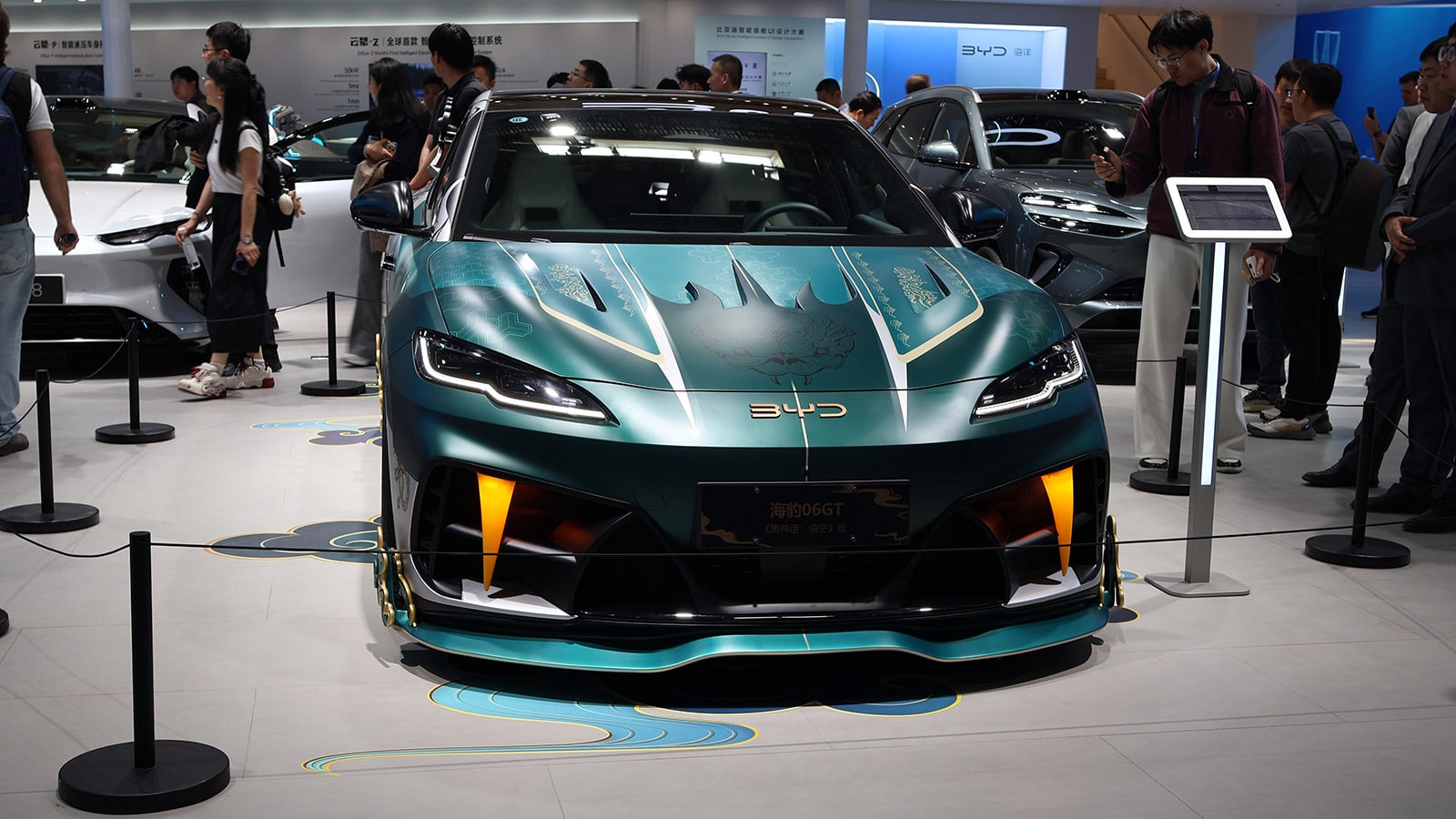
BYD (HKEX: 1211) is overhauling its overseas brand structure, seeking to support its global expansion with a clearer brand portfolio, more concentrated channel resources, and a faster buildout of charging infrastructure.
China’s largest new energy vehicle (NEV) maker will integrate its Dynasty and Ocean lineups into the BYD brand in overseas markets, merge operations for Denza and Fang Cheng Bao, and keep Yangwang independent.
The adjustment will help focus resources and integrate sales channels, local media outlet The Paper said in a report on Tuesday, citing comments by Li Yunfei, BYD’s general manager of brand and public relations, in a media interview.
For a company that is moving from being China’s sales champion to a global competitor, the move suggests its overseas strategy is entering a new phase.
In China, the Dynasty and Ocean lineups are part of the BYD brand, but they have separate sales networks and managers.
BYD’s rapid growth over the past few years has mainly relied on the domestic market, its vertical integration capabilities, and its two mainstream product lineups, Dynasty and Ocean.
But in overseas markets, too many sub-brands may increase cognitive costs and dilute channel and marketing resources.
For many markets that are only beginning to learn about Chinese EV brands, a simpler main brand may be more effective than a complex set of product lineups.
The merger of Denza and Fang Cheng Bao operations shows that BYD wants to improve efficiency in the premium and personalized vehicle segments.
Denza is gaining exposure in Europe’s premium market, while Fang Cheng Bao is more focused on personalized and off-road demand. Sharing an overseas operating system may help BYD establish a differentiated image more quickly.
Keeping Yangwang independent continues BYD’s positioning of the brand as its technology and brand flagship. The role of the brand is not just about sales, but also about showcasing the upper limits of BYD’s capabilities in electric drive systems, chassis control, and premium intelligent technology.
The overseas adjustment also echoes an internal brand restructuring that BYD has been pushing forward.
Last month, a local media report said that BYD plans to make its sub-brands responsible for their own profits and losses, with each brand entity using group resources such as research and development, production, and procurement as needed and settling those costs independently.
That mechanism could change BYD’s long-standing centralized development model. In the past, its automotive engineering academy uniformly defined and developed models, helping the company build scale advantages in batteries, hybrid systems, and electric-drive technologies. But as the number of brands increases, the centralized model may also make products under different brands look too similar.
Sales pressure has also made this adjustment more urgent. Li reiterated that BYD’s overseas sales target for this year is 1.5 million vehicles, and the company has already sold 790,000 vehicles in the first half of the year. Its overseas sales last year totaled 1.04 million vehicles.
In the medium to long term, the company hopes domestic and overseas sales will each account for half of its total volume, and it will gradually increase the overseas share, Li said.
That means overseas markets have shifted from being a supplementary business to a core source of growth.
BYD’s overseas sales of passenger NEVs reached a record 175,349 units in June, contributing more than 43% of its total NEV sales for the month. Overseas sales in the first half totaled about 792,300 units, up more than 70% year-on-year.
2024
2025
2026
By contrast, the domestic market is still facing competitive pressure. BYD's domestic sales in the first half fell nearly 40% year-on-year, showing that China's price war and demand volatility are pushing the company to look overseas more quickly for incremental growth.
2024
2025
2026
Flash charging infrastructure buildout
Beyond brand integration, infrastructure buildout is also becoming a key part of BYD's overseas expansion.
Li said BYD plans to build 6,000 flash charging stations overseas by the end of March 2027, including 3,000 in Europe, 2,000 in the Americas, and 1,000 in the Asia-Pacific region.
BYD unveiled its next-generation flash charging facility in March, with a maximum single-gun charging power of 1,500 kW, 50% higher than the first-generation flash charging pile released in March 2025.
The company said at the time that it planned to build 20,000 flash charging stations in China by the end of this year. As of the end of June, BYD had built 7,018 flash charging stations covering 325 Chinese cities.
BYD's flash charging solution includes an energy storage system, which can store electricity at night when power prices are lower and discharge during the day when prices are higher.
The company hopes this approach will reduce charging costs, while using an experience comparable to gas refueling speeds to ease consumers' concerns about EVs.
At the same time, BYD is also advancing localized manufacturing. The company is already operating a passenger vehicle plant in Hungary and may plan a second factory in Europe in the future, though the site has not been decided, according to Li.