Understanding tesla brings ByteDance’s Doubao AI model to its cars in China

- It marks a substantive step in Tesla’s efforts to localize its cabin experience in China.
- The voice assistant can chat, sing and tell stories, but it can’t yet control the vehicle.
Tesla (NASDAQ: TSLA) has begun rolling out its latest infotainment software update to owners in China, bringing a third-party large language model to its locally sold cars for the first time.
The 2026.14.13 update started going out in batches on July 31, covering all of Tesla’s models in China, including the Model 3, Model Y, Model S and Model X.
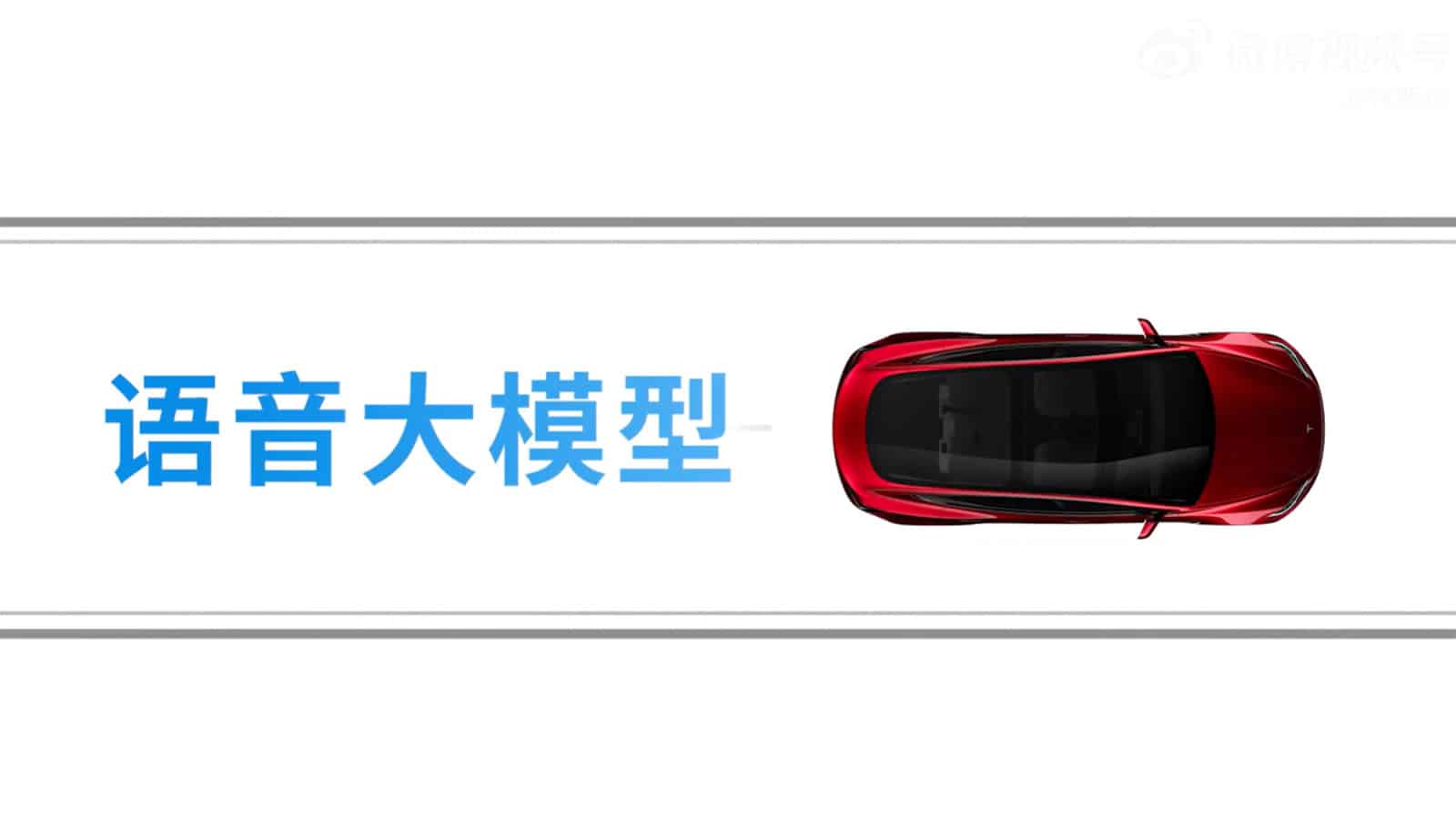
The key change is the integration of ByteDance’s Doubao AI (artificial intelligence) model, which now powers the voice assistant in the vehicles.
“It doesn’t just chat — it can also sing, debate and tell stories,” Tesla said in a Weibo post on Friday. “Time on the road, even driving alone, no longer feels lonely.”
The intelligent voice assistant can provide real-time information and hold natural conversations, supports multiple voice options and can be paired with personalized personas, according to Tesla.

Using the feature requires a Premium Connectivity subscription, which currently costs 9.99 yuan ($1.47) a month in China.
The new voice assistant cannot control vehicle functions for now. The update applies to vehicles with HW 3.0 and earlier hardware, meaning models not equipped with AI4 hardware.
It marks a substantive step in Tesla’s efforts to localize its cabin experience in China. Local electric vehicle (EV) makers equipped their cars with smart voice assistants early on and have further strengthened them with AI capabilities over the past year, leaving Tesla’s cabin interaction long seen as a weak spot.
Tesla previously struck a partnership with Volcengine, ByteDance’s cloud unit. In the terms of service for the Model Y L, launched last August, Tesla disclosed that it would tap both Doubao and DeepSeek, with the former handling voice commands and vehicle controls and the latter providing AI chitchat.
In the US, Tesla’s vehicles use Grok, developed by xAI, the artificial intelligence company owned by CEO Elon Musk.
Separately, local media outlet China Star Market reported on Friday that Alibaba’s Qwen large language model has entered in-depth testing in Tesla’s vehicles in China and is close to going live.
Qwen has already completed extensive testing in Tesla’s real-world vehicle environment, and “listening and answering, controlling the car, navigating and getting things done are all in the plan,” according to the report.
What Qwen will eventually be able to do in Tesla’s vehicles may go well beyond the definition of a simple “voice assistant,” the report said.

($1 = 6.7894 yuan)