
A step-by-step warm & cool still life acrylic painting using only 2 colours
This is the final post in this limited palette painting series using acrylics, I have been posting a weekly video on my YouTube channel so that you can follow along at home. It’s free to subscribe to the channel so you can keep updated with the painting progress…
The final 7 steps
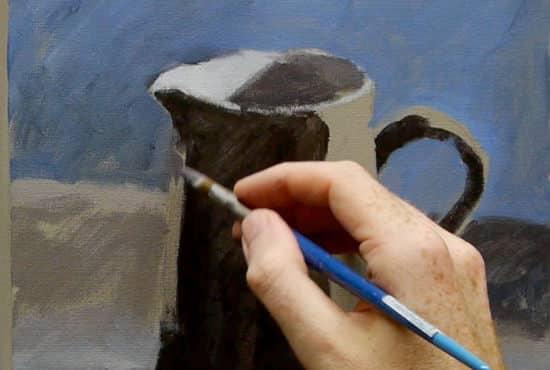
Step 1 – Washing in reflected Light.
The main light source is a cool blue light, this is bouncing off a wall out of view to the left. This gives a subtle blueish light on the edge of the jug that is in shadow.
So I mix a watery grey, just to wash over this area so the lighter tone of the underpainting doesn’t affect our judgment as much when we add the warmer Burnt sienna in the next stage.
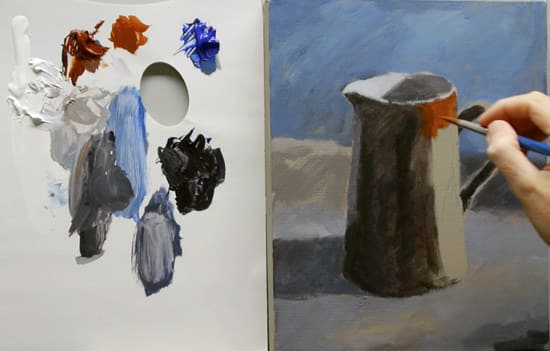
Step 2 – Blocking in Burnt sienna
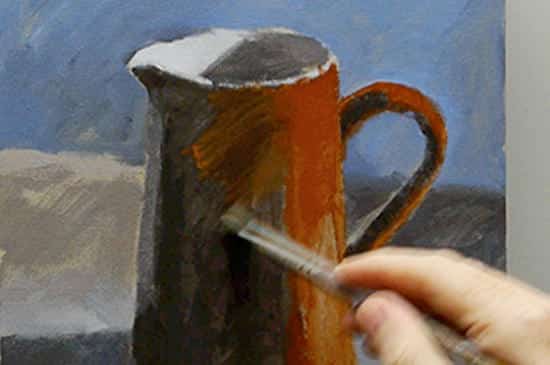
I dilute the paint slightly with water and then paint the top of the jug. The Burnt sienna hasn’t been mixed with any other colours at this point, I’m just changing the consistency of the paint to reflect the different tones I can see in the jug. The thinner the paint the lighter the result.
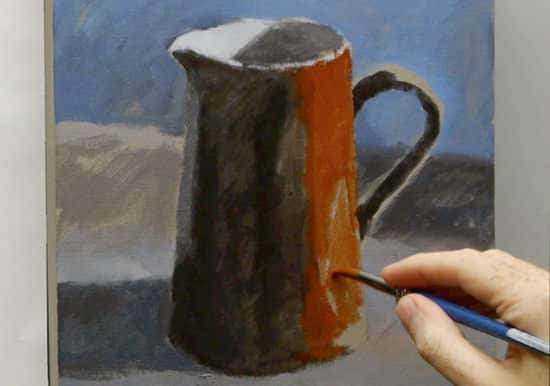
Notice how the colour looks lighter at the bottom of the jug due to the lighter underpainting showing through the watery thinner mix.
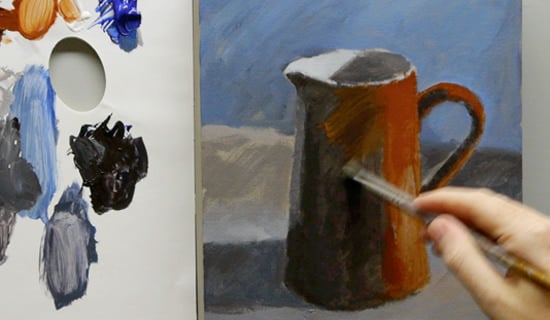
Step 3 – Glazing the Jug
I then mix in some Acrylic Glazing Liquid (gloss) with the Burnt sienna and glaze it over the shadow side of the jug. This helps to form a unity to the jug and enable a subtle optical mixing of the colours on the viewers eye.
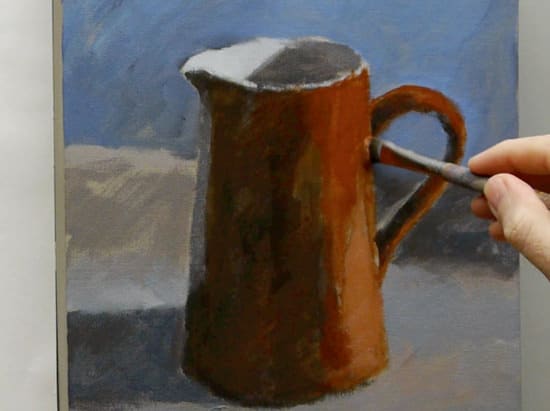
I then enhance the lighter area by adding a touch of white to the Burnt sienna. White always cools down the colour so is perfect for this part of the painting.
Pro tip: A glaze is always the warmest version possible of a pigment.
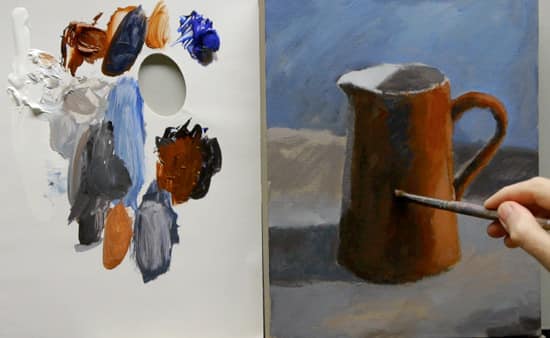
Step 4 – Refining the darks & Drawing
Working with a thicker mix of the black we mixed in Part 1 I check the drawing of the jug and make the shadow side a more solid black.
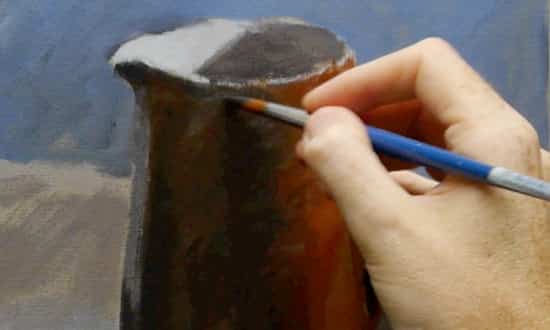
Notice how the spout of the jug now has a crisp dark line, this really helps draw your eye to that part of the jug and gives an elegant shape.
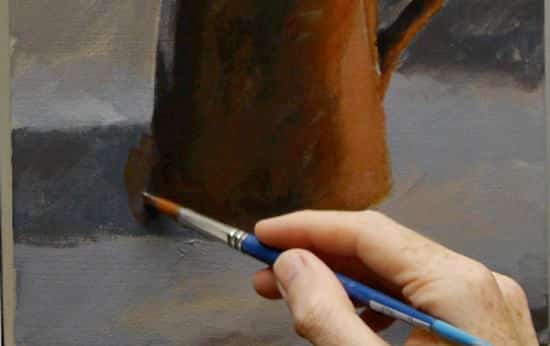
Step 5 – Warm shadow Glaze
I now blush a thin glaze of the Burnt Sienna over the cast shadow of the base of the jug, this helps to soften the edge and throw a warmer light onto the first part of the shadow.
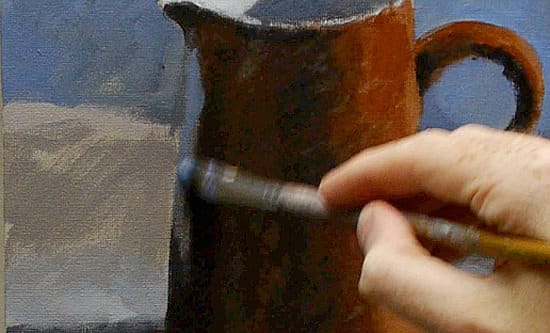
Step 6 – Reflected Light
I revisit the reflected cool light as I can now judge the colours better (as we’ve painted in the warmth of the jug) I add a muted light blue so it helps to contrast against the warm glaze we’ve just put in.
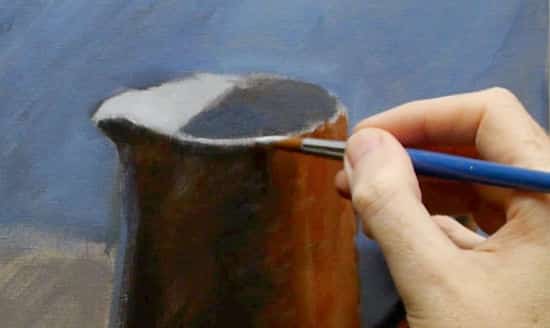
Step 7 – Adding Highlights
Now I refine the edge on the top of the jug and add a few bright white highlights, these have been left until last – so they sit on top of the form underneath.
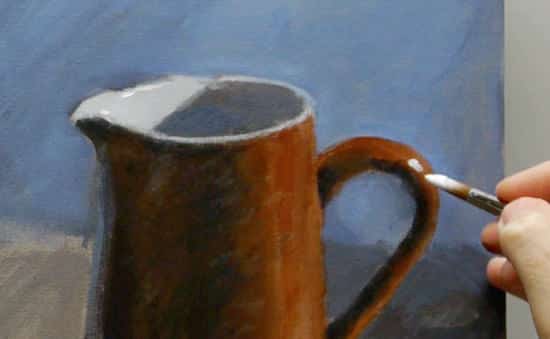
It is tempting to paint them in sooner but if you can resist the urge it will help you now.
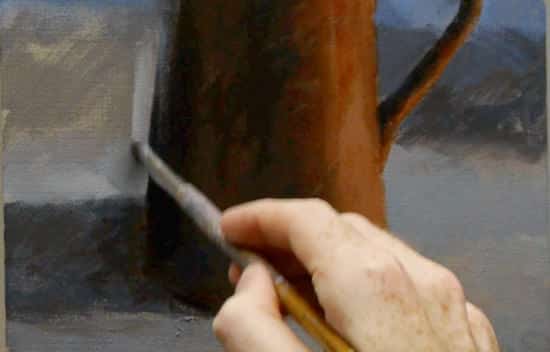
The final tweaks to the background are just to readjust any drawing that grabs your eye and soften any lines that you’ve painted in too hard to start with.
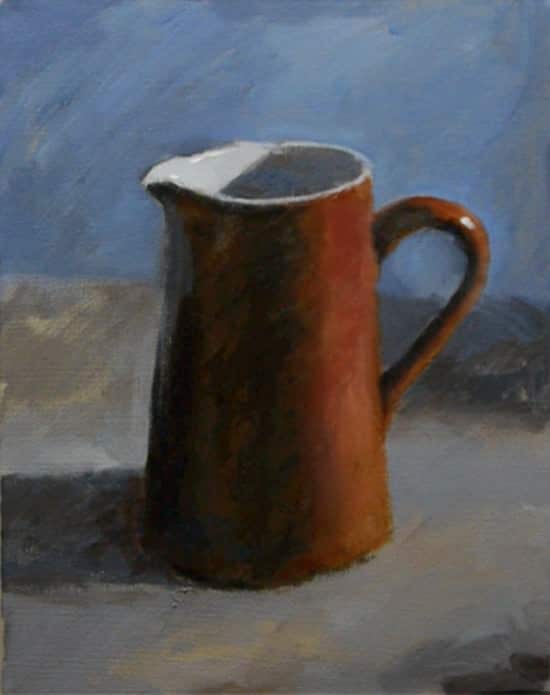
The finished painting, time for a brew!
Limited Palette still life acrylic painting – Free video Course | Part 3
The video below shows the final steps in the acrylic warm & cool still life painting.
urlInvalid URL in url
detect_provider_and_id_from_url method needs url.
If you want to take your still life painting further you should have a look at my Still life Painting Course
You might also like:
1. How to paint a warm & cool still life painting (using only 2 colours) – Part 1
2. How to paint a warm & cool still life painting (using only 2 colours) – Part 2
3. How to balance warm and cool colours


