
Time lapse preview for New painting course The Art of Acrylics with Will Kemp
“The Art of Acrylics” Painting Course
Developing your artists eye
When I was first learning to paint my results were often disheartening, the apple looked too flat, the greens looked garish and harsh and I was generally getting more and more frustrated.
I often took a large palette knife to the canvas and smeared the entire painting.
The result?
My new abstract period!!!
The problem with learning to paint is that you have an inbuilt ‘taste’ meter. You know a good painting when you see one. You don’t have to be art educated or have studied the classics, you just need to trust your own judgments.
So when you attempt your first painting and it goes wrong, you know it is wrong.
You just might not know why…
You don’t need to understand how something is produced to appreciate the aesthetic, you just have to have the faith in yourself that new skills and techniques can be learnt.
The two customers from our gallery that always commented on paintings with sharp analysis were my window cleaner and my builder.
They didn’t have trained eyes, they had keen eyes.
An artist’s apprenticeship
A trained eye can help you progress rapidly, rather than you giving up too soon.
The Old Masters trained for years as apprentices, working directly under someone who knew the principles that worked.
- John Singer Sargent began his art studies with the portrait artist Carolus-Duran.
- Leonardo da Vinci studied under Andrea del Verrocchio the great sculptor and painter.
- Caravaggio studied his apprenticeship with Simone Peterzano who himself had trained under Titian.
So take on board principles rather than gimmicks or tricks and let your style develop.
Don’t be disheartened by your ‘mistakes’ when you are learning to paint, they might just have the key to your future.
Art of Acrylics: – Still life painting course
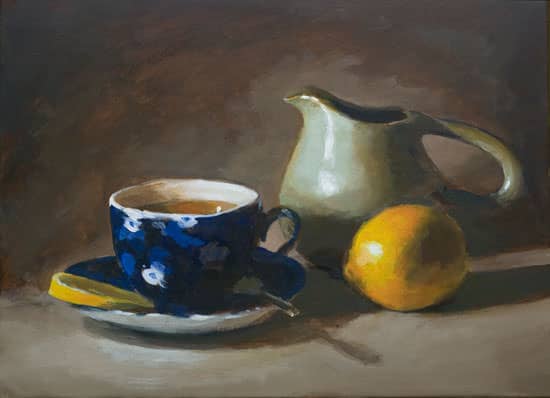
Will Kemp, The Art of Acrylics painting course, completed still life.
That’s the reason I’ve made this easy to follow, 12 part on-line video course to help aspiring artists fast track their learning.
Rather than offering quick tips and gimmicks, that can sometimes do more harm than good, I wanted to create a video learning experience, so you can actually see every single brush stroke of a painting from absolute start to finish.
You’ll learn classical principles that are the building blocks of all great paintings alongside invaluable tips that I use in my every day painting practice.
I call these my 7 painting principles:
1. Colour ground
2. Contrast
3. Composition
4. Colour mixing
5. Perspective
6. Negative space
7. Glazing
These initial 12 lessons will provide you with a complete methodology for creating professional, beautiful, still life acrylic paintings.
So if you follow the simple step by step instruction you will create paintings you didn’t think you could… but you can!
Please note: This Course is currently being updated, the Floral Still Course covers the same colour palette and principles.
Cheers, Will


