americans mark years
|

Americans mark 25 years since September 11 attacks amid enduring grief, reflection

Twenty-five years after the deadliest attack on US soil, Americans paused on Friday, September 11, to commemorate the nearly 3,000 people killed when hijacked planes slammed into the World Trade Center, the Pentagon and a field in Pennsylvania — and to wrestle with the consequences of September 11 that reverberate to this day.

In New York, family members of the victims, many carrying pictures of their loved ones, joined Vice President JD Vance and four former US presidents at Ground Zero in lower Manhattan. The ceremony began, as always, at 8:46 am with a moment of silence to remember the shocking instant when American Airlines Flight 11 struck the World Trade Center’s North Tower.

Shortly after, victims’ family members began reading aloud the names of all 2,977 people who died on September 11, as well as the six people killed in the 1993 World Trade Center bombing, a somber recitation that will last for hours. In a reminder of the time that has passed, some readers were children who had never met the relatives they lost in 2001.

Other moments of silence, marking when the other three airplanes crashed and the two towers collapsed, will follow. For the first time, a seventh silence will be observed to honor the thousands who have died since 2001 from illnesses tied to the toxic dust that poisoned the air for months afterward.

Gregory Carafello came to the ceremony to honor the memory of his lifelong friend James Martello, who worked at Cantor Fitzgerald, the financial firm that lost more than 650 employees in the attacks. Carafello himself was on the 18th floor of the South Tower but managed to evacuate.

“Everyone should realize that it was a very bad, catastrophic day for many families,” he said. “These were not warriors. These were people like you and me going to work.”

In Arlington, Virginia, senior military leaders gathered amid heavy rain early on Friday to watch the unfurling of an American flag at the west side of the Pentagon where American Airlines Flight 77 hit, killing 184 people in all. President Donald Trump is expected to speak there later in the morning.

Mourners were also gathering in Shanksville, Pennsylvania, at the crash site where passengers brought down one of the four hijacked jetliners, United Airlines Flight 93, that had been headed for Washington.

The attacks shaped generations of Americans who lived through the day or grew up in its aftermath, influencing US foreign policy, domestic politics and public attitudes toward security.

But for many whom the attacks directly affected — the victims’ families and friends, first responders and rescue workers — the anniversary is a tribute to the lives lost on a clear blue day a quarter century ago and the heartbreak that followed.

Caroline Ogonowski’s father, John, was the captain of Flight 11, which took off from Boston 47 minutes before striking the North Tower.

Ogonowski, now 39, had her first baby this year and named him after her father. She brought him her father’s grave last week and attended a memorial ceremony in Boston on Friday.

“This year, there’s this new sadness in knowing that they won’t ever get to know each other,” Ogonowski, who has worked in disaster relief and humanitarian assistance, said in a phone interview. “My father will never know his grandson. And my son will never know his grandfather.

“We owe it to my father and all the others that we lost on that day to make sure that we continue to teach future generations about what happened, about who these people were, who these heroes were, how our country came together and became stronger because of it,” she added.

Generational pain

A generation of Americans has grown up since 2001 who are too young to remember the attacks but whose lives were fundamentally altered by them.

The attacks initiated the “war on terror,” which led to the US invasions of Afghanistan and Iraq that lasted years. The resulting public backlash helped fuel Trump’s rise a decade ago, when he vowed not to start new foreign entanglements — a promise being tested by the current Iran war.

At home, Americans expressed deep solidarity and patriotism, as well as sorrow, in the immediate wake of the attacks.

At the same time, however, Muslim Americans and immigrants from Muslim-majority countries faced a rise in prejudice and hate crimes. Public polls have found 9/11 colors Americans’ perceptions of Muslims to this day. New York Mayor Zohran Mamdani, the city’s first Muslim mayor, has faced calls from some Republicans to skip Friday’s ceremony, which he rejected.

Casualties were not limited to those who perished on September 11. Many rescue workers who spent weeks or months at the site afterward, as well as nearby residents and others, were sickened by toxins in the air and eventually died.

The New York City Fire Department lost 343 members on September 11. More than 600 additional firefighters, including some retired members who took part in the rescue effort, have died of 9/11-related illnesses since then, department figures show.

Twenty-six have died this year alone. – Rappler.com
Similar Posts

  • |

    US Court blocks Trump plan to end immigrant work permits

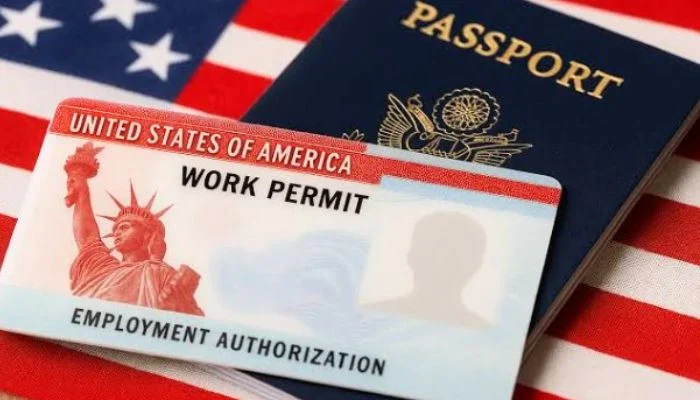
    BOSTON: A US federal judge has temporarily blocked the Trump administration from enforcing a policy that would have revoked work permits for thousands of immigrants and asylum seekers across the United States. The ruling allows affected individuals to continue working legally while the legal challenge against the policy proceeds in federal court. The decision was issued by US District Judge Nathaniel Gorton in Boston after immigrant rights organizations and labor unions filed a lawsuit challenging the administration’s immigration measures. The judge ruled that the policy should not take effect until the court fully reviews its legality. The disputed policy was introduced as part of the Trump administration’s broader immigration agenda following legislation passed by Congress in 2025. The law imposed new fees on asylum applications and introduced stricter rules governing employment authorization for people protected under Temporary Protected Status (TPS). If implemented, the new policy would have affected tens of thousands of immigrants who are legally living in the United States under humanitarian protections. Many of them were at risk of losing their legal right to work, making it difficult to support themselves and their families. Among those expected to be affected are TPS holders from El Salvador, Sudan, and Ukraine, many of whom have lived and worked in the United States for years. The policy was scheduled to come into effect this week before the federal court stepped in to halt its enforcement. The lawsuit argued that the US Citizenship and Immigration Services (USCIS) acted unlawfully by implementing the new restrictions without following the proper legal process. The plaintiffs said the policy would cause severe financial hardship for thousands of families and disrupt businesses that rely on legally authorized immigrant workers. Judge Gorton’s order temporarily prevents federal authorities from cancelling work permits while the case remains under judicial review. The ruling does not permanently strike down the policy but ensures that existing work authorizations remain valid until the court reaches a final decision. The Trump administration has consistently pursued tougher immigration policies, including efforts to end Temporary Protected Status for people from several countries. Officials argue that TPS was intended as a temporary humanitarian measure and should not become a permanent immigration pathway. Earlier this year, the US Supreme Court allowed the administration to move forward with ending TPS protections for certain groups of Haitian and Syrian immigrants. However, the latest ruling prevents another major immigration measure from taking immediate effect. Immigrant advocacy groups welcomed the court’s decision, saying it protects vulnerable workers from losing their jobs and income while the legal dispute continues. They argued that the ruling provides temporary relief to thousands of families facing uncertainty over their future.

  • |

    Man admits transporting body of Scottish woman in suitcase in Athens

    Greek authorities have arrested a 26-year-old man who confessed to transporting the body of 38-year-old Scottish woman Elisabeth-Jane Ross in a suitcase to an abandoned building in Athens. The victim’s body was discovered on 18 July in the Kypseli district following a missing person report, with subsequent investigations leading police to identify the suspect via video footage. Law enforcement officers arrested the suspect on suspicion of manslaughter, robbery, and weapons offences after finding he had used the victim’s bank cards and seized a knife and replica pistol at his home. Greek police are fast-tracking toxicology reports to determine the precise cause of death while continuing efforts to trace American acquaintances Ross was scheduled to visit before her disappearance. The Scottish Government confirmed it is providing official support to the victim’s family alongside the Foreign, Commonwealth and Development Office.

  • | | |

    X blocks Houthi military spokesman Yahya Saree’s…

    SANAA: Social media platform X has reportedly suspended the account of Houthi military spokesman Yahya Saree, removing an important online channel used to communicate statements and announcements by the Yemen-based group. The account had more than 121,500 followers and was widely used for posts concerning the Houthis’ military activities and claims of attacks in the Red Sea and surrounding waters. According to the report, visitors to the account were shown an “Account Suspended” notice. X’s standard message on suspended accounts says the platform takes action against accounts that violate its rules. The specific reason for the suspension was not immediately clear. Saree has been a prominent public voice for the Houthi movement, frequently appearing in televised statements and issuing announcements concerning military operations. His statements have included claims about attacks on vessels in the Red Sea as well as operations targeting Saudi Arabia and other regional adversaries. The suspension could therefore affect one of the group’s most visible channels for communicating directly with its supporters and the wider public. Saree’s online presence has faced restrictions before. His earlier Twitter account was suspended in 2022, after which another account was created for continued communication. Historical reporting also shows that Houthi-affiliated accounts have faced changes to their verification status and other platform restrictions. The latest reported action comes amid continuing tensions surrounding Yemen and the Red Sea, where Houthi attacks on shipping have drawn international attention. The group has repeatedly said its operations are linked to the wider regional conflict and has issued statements claiming responsibility for attacks against vessels. The Houthis’ military statements are often closely watched because they provide the group’s own account of operations, although claims about attacks and damage are not always independently verified. The reported suspension also raises broader questions about how social media platforms handle accounts belonging to armed groups and their spokespeople, particularly when those accounts are used both for political messaging and military announcements. While the immediate reason for the latest action remains unclear, the removal of Saree’s account could make it more difficult for the Houthi movement to communicate through one of its established social media channels. For now, attention is likely to remain on whether X provides a specific explanation for the suspension and whether Saree or the Houthi authorities establish another account to continue distributing official statements.

  • |

    Gulf nations back Omani plan for voluntary transit payments to resolve Hormuz maritime crisis

    Gulf Cooperation Council member states have formally endorsed a diplomatic initiative proposed by Oman to introduce voluntary service fees for commercial vessels transiting the Strait of Hormuz, seeking to restore global energy shipments disrupted by the broader conflict involving the United States, Israel, and Iran. The framework, modeled after the cooperative navigation safety mechanism used in Asia’s Malacca Strait, allows shipowners to make optional financial contributions toward environmental protection, search-and-rescue services, and navigational maintenance rather than paying mandatory tolls. Designed as a compromise between Tehran’s demand for administrative authority over shipping lanes and Washington’s insistence on unimpeded international transit, the Omani proposal explicitly prevents Iran from exercising exclusive operational control over the waterway while offering a structured path toward reopening commercial transit routes. The diplomatic breakthrough coincides with a temporary lull in direct aerial bombardments after US President Donald Trump called off a two-week bombing campaign following advice from military commanders. Despite the pause in direct strikes between Washington and Tehran, regional tensions remain elevated due to ongoing proxy drone activity across Jordan, Saudi Arabia, and Iraq, alongside continued US naval enforcement actions against non-compliant commercial vessels. While market reactions to the suspension of airstrikes sent global crude prices down sharply, formal resolution remains subject to upcoming diplomatic negotiations in Washington and the broader implementation of the bilateral framework agreement.

  • | | | |

    Iran targets US bases across Gulf

    The conflict between Iran and the United States intensified on Wednesday after Iran claimed it carried out a new wave of drone attacks on US military bases in Jordan, Bahrain and Kuwait. The latest attacks marked another major escalation in the ongoing regional conflict that has continued for months. Iranian military officials said attack drones targeted Al-Azraq Air Base in Jordan, Sheikh Isa Air Base in Bahrain and Camp Doha in Kuwait. According to Iranian authorities, the strikes focused on military warehouses, logistics facilities, aircraft maintenance centers and ammunition depots used by US forces. Jordan confirmed that its air defense systems intercepted several missiles and drones after they entered the country’s airspace. Officials said four missiles were destroyed while two landed in remote desert areas. No casualties or property damage were reported. Air raid sirens also sounded in Jordan’s southern port city of Aqaba. Videos circulating on social media showed smoke rising over the area. Authorities urged residents to remain alert but confirmed that the situation was under control. Bahrain’s military said its air defense systems successfully intercepted several incoming aerial threats after warning sirens were activated across the country. Officials did not report any casualties or major damage. Iran also claimed it launched a large number of drones against Camp Doha in Kuwait. Iranian media said the attack targeted US ammunition storage sites and military logistics equipment. Kuwait had not issued an official response at the time of reporting. The latest attacks came only a day after Iran launched missile strikes against US-linked military facilities in Jordan and Bahrain, increasing fears that the conflict could spread further across the Gulf region. Meanwhile, US Secretary of State Marco Rubio said Washington remains prepared to negotiate with Iran if Tehran shows genuine willingness to engage in serious talks. Speaking during a regional meeting in Manila, Rubio said the United States continues to support diplomacy but believes Iran is not currently committed to meaningful negotiations. He warned that Iran must not be allowed to threaten international shipping through the Strait of Hormuz. Rubio said any attempt to control one of the world’s busiest shipping routes would create a dangerous precedent and threaten global trade. The security situation has already affected international energy markets. Global oil prices climbed again as fears grew over possible disruptions to oil supplies from the Gulf. Brent crude traded above $91 per barrel, while fuel prices also increased in international markets. The crisis worsened after Yemen’s Houthi movement announced a naval blockade targeting Saudi Arabia. The move forced several oil tankers carrying Saudi crude to change their routes in the Red Sea because of growing security concerns. French shipping company CMA CGM announced an emergency surcharge on cargo shipments starting August 1. The company said the worsening security situation around the Strait of Hormuz has significantly increased fuel and transportation costs. At the same time, US forces carried out another round of airstrikes inside Iran. American military officials said the strikes targeted command centers, drone storage facilities, aircraft hangars, logistics sites and maritime capabilities. The operation marked the 11th consecutive night of US military attacks. Iranian media reported explosions in Tehran, Bushehr, Chabahar, Konarak and parts of Ilam province. Officials said a missile strike damaged an electrical substation supplying power to the Bushehr nuclear power plant. Electricity was restored after several hours, and authorities reported no casualties. US President Donald Trump said 18 American service members have been killed since the conflict began, including four who died in recent Iranian attacks on US military bases in Jordan and Iraq. He said the United States would continue protecting its forces and allies in the region. Iran also claimed it targeted infrastructure linked to a major American technology company operating in Bahrain. However, the claim has not been independently verified. The conflict began in late February following US and Israeli strikes on Iran. Since then, military operations have expanded across several countries in the Middle East. Despite ongoing mediation efforts by regional countries, including Pakistan, no ceasefire agreement has been reached

Leave a Reply

Your email address will not be published. Required fields are marked *