40 Years Ago, An Iconic Arcade Game Inspired by King Kong and Godzilla Debuted and Spawned a Multimedia Franchise
While the days of arcade gaming have faded, many of the iconic games and series introduced in the 1980s are still around today. Part of the appeal was how quickly players could learn to play them, as the designs allowed players to understand what they were doing within seconds, whether they were racing cars, fighting enemies, or shooting aliens. The best concepts could be explained with a glance at the cabinet. Yet few were as instantly appealing as the fantasy of becoming a giant monster and tearing apart an entire city. That premise tapped into a tradition established by decades of monster movies, while giving players something films could not: direct control over the destruction. It was a remarkably simple idea, but one perfectly suited to the arcade.
Forty years ago, Rampage arrived in arcades and turned that fantasy into one of Bally Midway’s most recognizable games. Released in 1986, the action game allowed up to three players to control human-turned-monsters as they demolished buildings and fought military forces. Its giant ape and lizard naturally evoked King Kong and Godzilla, although the game’s actual inspirations were more specific than many fans realize. What began as an unconventional arcade experiment eventually became a franchise spanning home versions, sequels, compilations, and a major Hollywood movie.
A Monster Movie Fantasy Becomes an Arcade Game

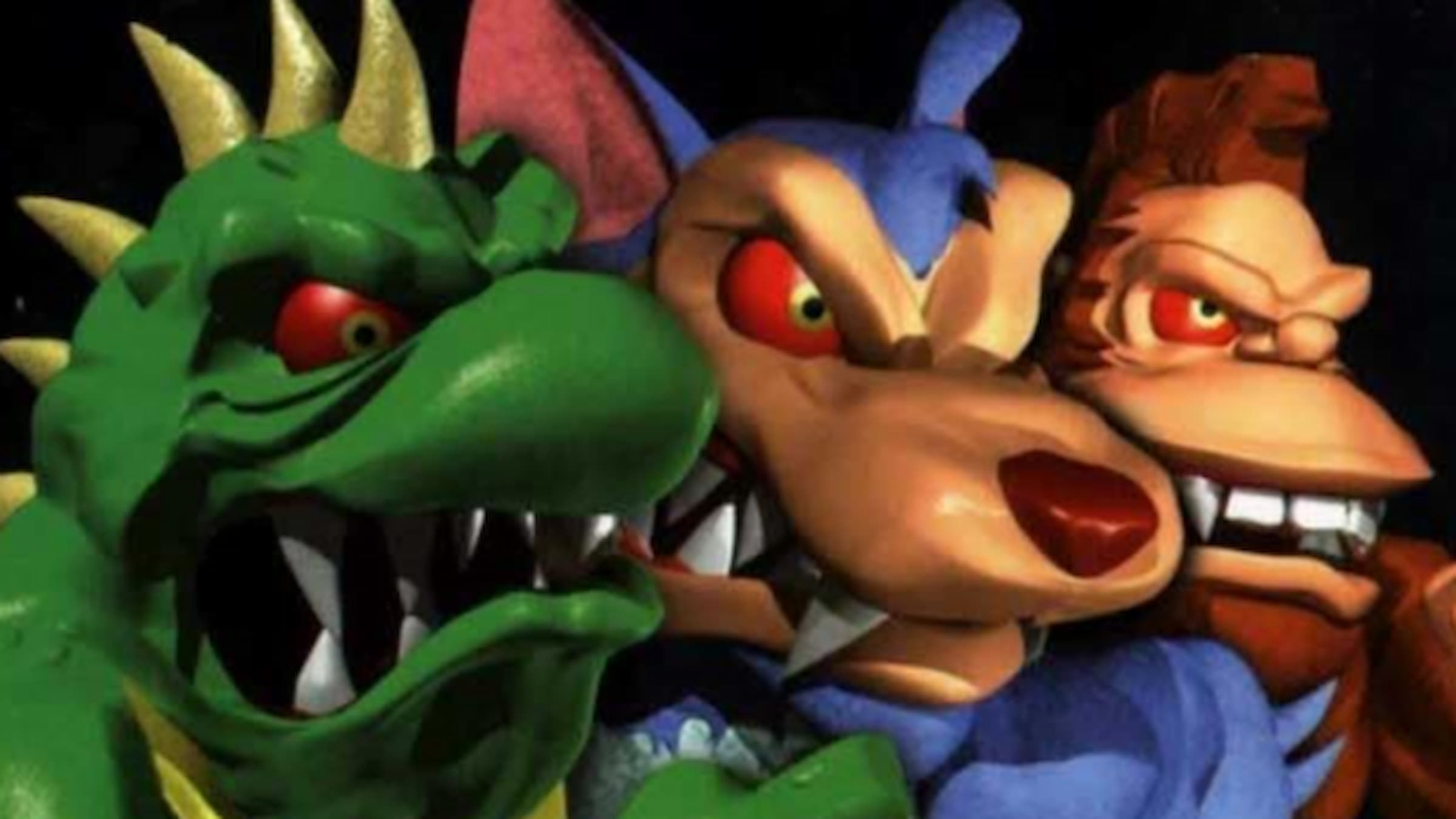
The appeal of Rampage was obvious. Instead of playing the hero trying to save a city, players became the threat. George was a giant ape, Lizzie was a giant lizard, and Ralph was a giant werewolf. The objective was straightforward: destroy the buildings in each city while surviving attacks from the military. Players could climb skyscrapers, punch through walls, eat people, and avoid or destroy the forces trying to stop them.
The connection to classic monster cinema was intentional. Designer Brian Colin has explained that George was inspired by his admiration for stop-motion effects artists Willis O’Brien and Ray Harryhausen, with King Kong serving as a major influence on the character. Lizzie is where the history gets more interesting. Although she is widely viewed as a Godzilla-inspired monster, Colin said her design was actually based on Ymir from Harryhausen’s 1957 film 20 Million Miles to Earth.
That distinction does not diminish the game’s connection to Godzilla. Rampage clearly belonged to the same larger tradition of giant monsters destroying cities, and its visual premise made the comparison inevitable. The developers also had to work within the limitations of 1980s arcade hardware. The monsters needed to be large enough to dominate the screen while remaining practical for the game’s side-scrolling action. The result was a distinctive visual style that borrowed familiar monster-movie ideas without simply reproducing licensed characters.
Rampage Embraced Complete Destruction

What made Rampage special was how completely it committed to destruction. There was no complicated narrative demanding the player’s attention. Buildings were obstacles and targets, and reducing them to rubble was the reward. The game transformed something that was normally a failure state in video games, destroying the environment, into the central objective. In doing so, it allowed players to embody the destructive force seen in monster movies.
The three-player format made that idea even more engaging. George, Lizzie, and Ralph could operate together, allowing multiple people to attack the same city simultaneously. The arcade experience therefore became as much about shared chaos as individual skill. That was particularly effective because the game did not require players to understand elaborate systems before having fun. Pick a monster, climb a building, punch it apart, and keep moving.
There was also a wonderful sense of humor behind the premise as well. The original story explained that the monsters were transformed humans, giving the destruction a deliberately absurd twist. The opening sequence even used photographs of Colin, his wife Rae, and programmer Jeff Nauman as the human characters who became George, Lizzie, and Ralph. That small detail captures the playful attitude behind the project. Rampage was not trying to create a serious monster epic. It was an arcade fantasy built around the simple joy of smashing things and it gathered crowds in arcades everywhere.
From Arcade Classic to Multimedia Franchise
The success of Rampage extended far beyond the arcade, with the game receiving ports for systems including the Nintendo Entertainment System, Sega Master System, Atari 2600, Atari 7800, Commodore 64, and Amiga. The franchise later expanded with Rampage World Tour in 1997, Rampage 2: Universal Tour in 1999, Rampage Through Time in 2000, and Rampage: Total Destruction in 2006. Each entry expanded the monster roster and experimented with the formula while retaining the series’ central appeal of giant creatures destroying cities.
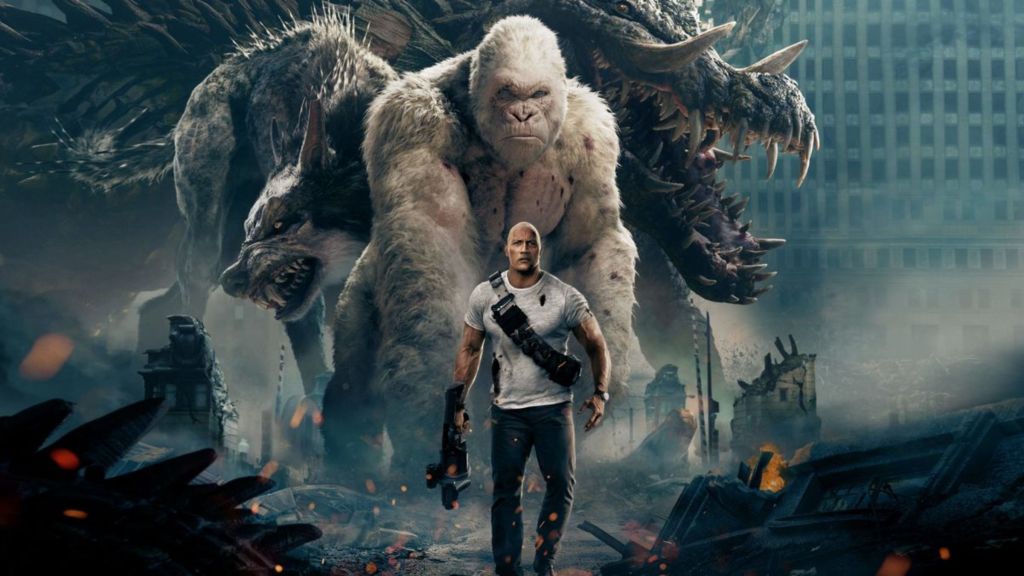
The franchise’s biggest expansion came in 2018 when Rampage became a Hollywood movie starring Dwayne Johnson. The film reworked the original premise, transforming George and other animals into enormous genetically altered creatures. While different from the arcade game, the adaptation demonstrated the enduring appeal of its central concept. What began as an arcade game featuring three monsters climbing buildings had grown into a multimedia franchise spanning arcade machines, home consoles, sequels, and a major theatrical release.
Four decades later, Rampage remains memorable because its premise works on many levels. It combined the timeless appeal of giant monsters with the interactive chaos of an arcade game to create an identity of its own. Plenty of arcade games from 1986 have faded from memory, but the image of a giant ape punching through a skyscraper remains instantly recognizable.