pakistans battery revolution

Pakistan’s ‘battery revolution’ needs market…

Pakistan’s electricity sector is witnessing a quiet revolution. Between January 2024 and June 2026, the country imported more than 6 GWh of lithium-ion batteries, with monthly imports rising to 652 MWh in April 2026, according to the latest commentary by the Policy Research Institute of Market Economy (PRIME). The data confirms what many consumers already know: battery storage is rapidly becoming an integral component of Pakistan’s emerging distributed energy system.

Against this backdrop, the proposal reportedly advanced by the Adviser to the Power Division, Syed Faizan Ali, to introduce Time-of-Use (ToU) net billing with an additional compensation of Rs18–22 per kWh for electricity discharged between 5 pm and 10 pm deserves serious attention. It represents one of the first attempts by policymakers to recognise battery storage as an active participant in the electricity market rather than merely a backup power source.

PRIME has welcomed this initiative in its recent Prime Comment #44, “Turning Pakistan’s Battery Boom into a Grid Asset”, arguing that battery storage can transform millions of privately owned batteries into valuable grid resources capable of reducing evening peak demand and improving overall system efficiency.

The think tank also reminds readers that in its April 2026 Prime Plus edition, PRIME  had advocated accelerated investment in Battery Energy Storage Systems (BESS) as part of Pakistan’s response to regional geopolitical tensions and growing concerns over energy security.

The proposal is intellectually attractive. It recognises a simple economic truth: electricity stored during periods of abundant solar generation becomes considerably more valuable when discharged during the evening peak. Properly designed price signals can therefore encourage consumers to invest in storage while simultaneously reducing pressure on the national grid.

The underlying economics are difficult to dispute. The policy conclusions, however, deserve far closer scrutiny. Pakistan’s electricity crisis has never been merely a shortage of technology. It has always been a crisis of institutions.

For decades, governments have attempted to resolve structural failures through new incentives while leaving untouched the governance failures that created those problems in the first place. Capacity payments, guaranteed returns, fuel subsidies, cross-subsidies, circular debt financing and administratively determined tariffs all originated as seemingly sensible policy responses. Over time, they evolved into a complex web of distortions that now define Pakistan’s power sector.

The battery revolution should not become the latest chapter in this history. The most immediate question concerns the proposed compensation itself. Every additional rupee paid for exported battery electricity ultimately has a source. If the payment is financed through higher consumer tariffs, ordinary electricity users subsidise battery owners. If financed through public resources, taxpayers assume another fiscal obligation.

Unless the proposed payment reflects demonstrable savings through lower capacity utilisation, reduced reliance on expensive peaking generation, avoided transmission investments and lower fuel imports, it risks becoming another subsidy disguised as reform.

The second issue concerns Pakistan’s peculiar electricity economics. The country simultaneously suffers from surplus installed generation capacity and shortages during particular hours of the day.

Consumers continue paying enormous capacity charges even when power plants remain idle. Before introducing payments for battery discharge, policymakers should demonstrate whether distributed storage actually reduces these fixed obligations or merely shifts electricity from one time period to another while capacity payments continue unchanged.

This distinction is fundamental. If batteries merely redistribute electricity without lowering total system costs, consumersmay simply end up paying twice: once for idle generating plants and again for battery incentives.

PRIME’s analysis correctly highlights the dramatic increase in battery imports. Nevertheless, imports alone cannot determine public policy. Customs statistics reveal the volume of batteries entering Pakistan but not how they are ultimately deployed.

Many imported batteries are likely destined for residential solar systems, telecommunications infrastructure, commercial backup systems, electric vehicles and industrial facilities rather than grid-support applications.

Policy requires greater precision. Residential battery storage serving a single household differs fundamentally from utility-scale storage capable of providing ancillary grid services. The regulatory treatment, compensation mechanisms and operational obligations cannot be identical. Perhaps the most important omission concerns the electricity market itself.

Time-of-Use pricing presupposes the existence of a reasonably competitive electricity market where prices reflect actual system conditions. Pakistan, however, continues to operate largely through administratively determined tariffs, long-term power purchase agreements and regulatory pricing decisions.

Introducing another administratively determined premium without competitive price discovery risks creating fresh opportunities for regulatory arbitrage instead of improving market efficiency. The proposal also raises important questions of distributive justice.

Battery storage remains concentrated among relatively affluent households and commercial consumers who have already invested in rooftop solar systems. Additional payments for exported electricity may transfer resources from ordinary grid-dependent consumers to wealthier “prosumers” capable of producing electricity themselves.

A sound public policy must ask not only whether incentives improve efficiency but also who ultimately pays for them. Fiscal sustainability presents another challenge.

Pakistan’s public finances remain under extraordinary pressure. Circular debt continues to impose significant costs upon the national exchequer while electricity subsidies consume scarce fiscal space. Every new incentive introduced into the power sector should be accompanied by transparent estimates of its medium-term fiscal consequences. Without such analysis, even economically desirable policies may produce unsustainable budgetary commitments. The environmental dimension deserves equal attention.

Large-scale deployment of lithium-ion batteries inevitably raises questions concerning recycling, disposal, fire safety and hazardous waste management. Pakistan presently lacks a comprehensive legal and regulatory framework governing battery end-of-life management. Encouraging rapid battery adoption without simultaneously addressing environmental responsibilities merely postpones another policy problem for the future.

Cybersecurity also enters the equation. As distributed storage becomes increasingly integrated with smart meters, digital communication systems and automated dispatch mechanisms, cybersecurity standards become an essential component of electricity regulation rather than an afterthought. The broader lesson extends beyond batteries.

Pakistan’s remarkable solar revolution demonstrates that citizens and businesses are increasingly solving their own energy problems because the formal electricity system has become prohibitively expensive and unreliable. International observers have correctly described this transformation as one of the world’s most significant examples of consumer-led energy transition rather than state-led planning.

Public policy should seek to complement—not constrain—this transition. However, complementing it requires institutional reform before financial incentives.

Instead of focusing exclusively on battery compensation, policymakers should simultaneously pursue wholesale electricity market reforms, transparent transmission pricing, competitive procurement of ancillary services, financially sustainable distribution companies, rationalisation of cross-subsidies and genuine regulatory independence. Only then can battery storage compete on equal terms with alternative technologies providing flexibility to the electricity system.

PRIME deserves credit for initiating this important conversation. Its emphasis on integrating distributed battery storage into national energy planning reflects the realities of Pakistan’s rapidly changing electricity landscape. The proposal identifies a genuine opportunity that policymakers should not ignore. Nevertheless, technological progress cannot substitute for institutional reform.

Pakistan’s battery boom should become an instrument for building competitive electricity markets rather than another justification for administratively determined incentives.

The challenge is not simply how to reward batteries for discharging electricity between five and ten in the evening. The real challenge is constructing an electricity market in which every source of flexibility—battery storage, demand response, pumped hydro, flexible generation and smart consumption—competes under transparent rules reflecting genuine economic costs. Only then will battery storage become not another subsidy layered upon an unreformed electricity sector but an integral component of a modern, efficient and financially sustainable energy system.

Pakistan’s battery revolution has arrived. The question is whether policymakers will use it to reform the market—or merely add another layer to its existing distortions.

_______________________________________________________________________


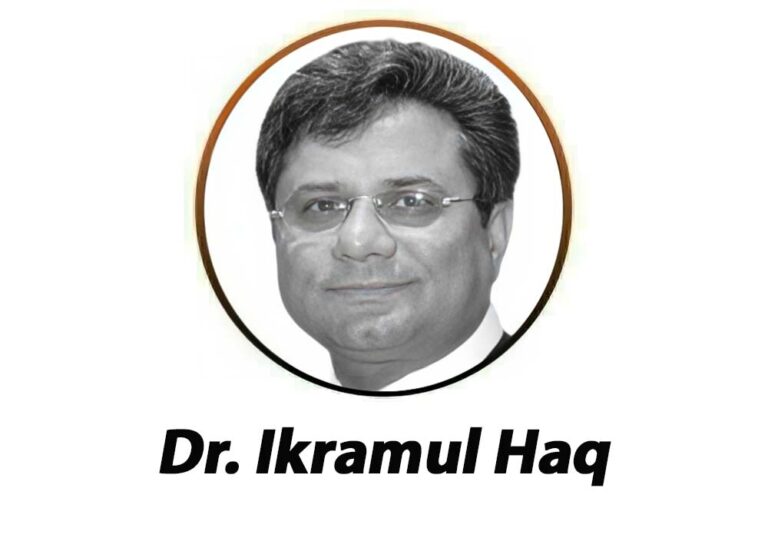
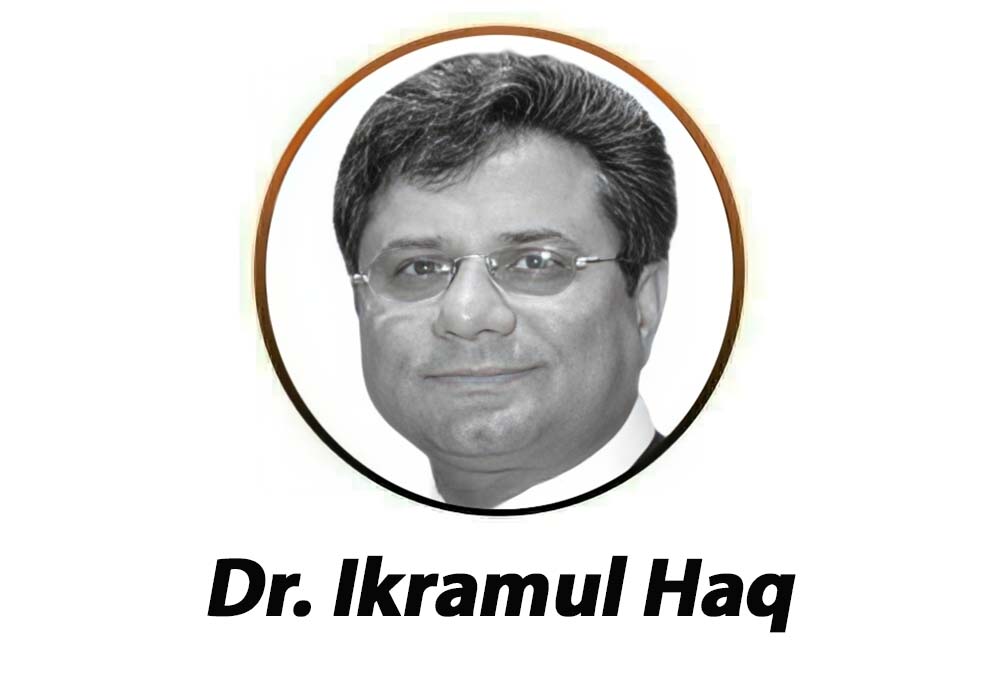
Dr. Ikramul Haq, Advocate Supreme Court, Adjunct Faculty at Lahore University of Management Sciences (LUMS), member Advisory Board and Visiting Senior Fellow of Pakistan Institute of Development Economics (PIDE), holds an LLD in tax laws. He was full-time journalist from 1979 to 1984 with Viewpoint and Dawn. He also served Civil Services of Pakistan from 1984 to 1996.
Similar Posts

  • The Architect of Conscience: Arif Ali Mir and the …

    Reflecting upon the profound vastness of the cosmos and the acute, unyielding solitude of the human condition, the French philosopher and writer Albert Camus once observed that if even a single lamp were to be kindled within the dark, tempestuous ocean of history, the entire fabric of the universe would transform, tearing asunder the merciless veil of night. The annals of history stand as an unshakeable testament to the truth that whenever the fierce gales of material greed, political expediency, and moral decay have threatened to engulf human societies, certain dervish-souled, deeply conscientious, and granite-willed individuals have emerged from the crowd. Swimming resolutely against the powerful, destructive current of their era, these rare souls have stood guard over the invaluable civilizational trusts bequeathed by antiquity. The fertile, history-drenched soil of Gujrat—where the ancient, meandering waves of the Chenab and Jhelum rivers have whispered civilizational sagas for centuries—has long served as the intellectual cradle and practical domain of precisely such a man of extraordinary mettle. Brushing aside the rigidities of legal codes, the demanding, iron-willed disciplinary training of police service, and the glittering, lucrative allure of high-ranking international postings, he made the monumental choice to dedicate his entire terrestrial existence to books, the retrieval of forgotten history, and uncompromised moral dignity. This towering, unyielding personality is none other than Arif Ali Mir, Advocate, whose entire life has stood like an unshakable monolith against the self-serving, shifting winds of his time. Born on December 28, 1949—corresponding precisely to the 8th of Rabi’ al-Awwal, 1369 AH, on a Wednesday—within the historic, time-honored confines of “Mir Manzil” in Mohalla Khyber, nestled deep in the heart of Gujrat’s historic town of Jalalpur Jattan, Arif Ali Mir’s life is far more than a conventional biographical sketch. It is a profound, sweeping narrative capturing the complex post-colonial socio-political contradictions of the Indian subcontinent, an unwavering, almost sacred custodianship of noble familial heritage, and an extraordinary odyssey of letters where every single chapter serves as a luminous metaphor for absolute sincerity, purity of intellectual purpose, and complete self-sufficiency. His esteemed father, Ghazanfar Hussain Mir, was a legendary, fiercely principled, and seasoned lawyer of his generation. His uncommon nobility, profound legal acumen, and distinguished, intellectual circle of acquaintances infused the deepest foundational layers of Arif Ali Mir’s character with a forged-steel morality that would remain his greatest, most unassailable asset throughout his life. Standing gracefully beside him was his mother, Ruqaiya Begum, an affectionate, deeply dignified woman who silently imprinted the enduring values of selfless sacrifice, patience, and unbreakable resilience upon the rearing of her children. Within this vibrant, intellectually charged household comprising four sisters and three brothers, Arif Ali Mir occupies a unique middle vantage: two elder sisters precede him in age, while all other siblings are younger. Driven eventually by the professional demands and expanding horizons of his father’s legal practice, the family made the permanent transition from Jalalpur Jattan to the bustling city of Gujrat, establishing their permanent domestic and intellectual anchor at “Mir Street” on Bhimber Road—a historic domicile that would organically evolve into a cherished sanctuary for scholars, jurists, and discerning bibliophiles alike. A deep, discerning psychological and biographical study of Mr. Arif Ali Mir’s versatile and multifaceted personality reveals that his arrival on December 28, 1949, was far from a mere statistical coincidence. According to the timeless principles of astrological configuration and character alignment, his zodiac sign, Capricorn, functions as a clear mirror to his intrinsic nature. Ruled by Saturn—the planetary archetype of profound gravity, timeless perseverance, and unyielding adherence to principle—these exact traits form the unmistakable, defining hallmark of Mr. Arif’s entire life. While Capricorns are universally recognized across traditions as grounded earth signs marked by relentless, grinding toil, Arif Sahib uniquely channeled this raw elemental energy into cultivating a veritable forest of arts, letters, and historical preservation upon the plains of Gujrat. The crowning virtue of his astrological archetype is structural discipline combined with penetrating foresight—qualities that naturally laid the bedrock of his early success in the legal arena, where he learned to dissect truth from falsehood with microscopic precision. Yet, the most captivating, transcendent facet of his persona is how he decisively transcended the traditional, narrow materialism often associated with his sign through a profound inner spiritual inclination. Operating as a fiercely devoted bibliophile and patron of learning, he redirected the formidable organizational capacity of the Capricorn psyche away from worldly accumulation and entirely toward the preservation of rare texts and the wide propagation of knowledge. Operating with the quiet, unostentatious efficiency characteristic of his sign, his personal dignity, fierce institutional loyalty, and immense intellectual depth render him a towering, sheltering tree on Gujrat’s literary horizon—its roots gripping ancient tradition, its uppermost branches illuminated by the clear light of universal wisdom. Mr. Arif Ali Mir’s educational journey is a rugged, continuous path strewn with dramatic twists, historical upheavals, and personal sacrifices that ultimately refined his character like crucible-tested gold. At the time of his earliest schooling, his father was stationed as the Chief Sanitary Inspector for the Sialkot Municipality, prompting Arif’s first three formative, sensory years of childhood to unfold within the disciplined, historic halls of the Convent of Jesus and Mary in Sialkot. Upon the family’s return to Jalalpur Jattan, he successfully completed his fifth and sixth grades at Islamia Primary School, subsequently transitioning to Islamia High School. When domestic circumstances necessitated a move to Gujrat, where the family initially settled in a rented house near Mohalla Gyanpura / Muslim Abad , he pursued his seventh and eighth grades at Muslim High School on Court Road. This institution was then under the stellar administrative helm of the eminent headmaster Master Ghulam Abbas. For his matriculation, he moved to Public High School No. 1 in Gujrat—administered with strict discipline by Headmaster Mirza Shaukat Ali and school owner Sheikh Shafqatullah—where he successfully passed his Matriculation examination in the watershed year of 1964. Following this, he completed his intermediate education at Sir Syed College on Railway Road, Gujrat, in 1966, before

  • President Jiang Zemin and Modern China Formatting …

    June 24, 1989, Comrade Jiang Zemin assumed the charge of Secretary General of the CPC just after the Tiananmen Square incident. This was orchestrated by ideological rivals, who instigated people with foreign support under the guise of corruption, inflation, political participation, and human resource development for the new economy. No doubt there were challenges, but the government was doing everything it could to control them and bring positive change to people’s lives. It required patience and time. However, the ideological rivals and foreign forces decided to exploit that window of opportunity and bring down the CPC.   Therefore, right after assuming the charge, Secretary General Jiang Zemin had to deal with Western countries’ false propaganda campaign against China. The West was propagating that China used brutal force and undermined human rights. However, it did not shake his determination to restore stability, the cornerstone of CPC policy. CPC is convinced that without stability, the country cannot move forward. After tackling it, he focused on economic reforms, especially after becoming President and paramount leader in 1993. From here, a new phase of reforms started. The CPC, with President Jiang at its core, began to juggle policies and options to sustain growth, ensure stable government revenue, and address people’s problems. Thus, President Jiang Zemin, with the guidance of elders, especially Deng Xiaoping, accelerated the reforms and the introduction of market-oriented policies. He took many innovative decisions to accelerate economic growth, enhance outreach, and strengthen international relations and security. First, he kick-started the first phase of privatization to reduce the burden on the State and spur private sector growth. The number of State-owned enterprises fell from 262,000 to 159,000. Almost 40 million people lost their jobs, but China continued the reform.  However, China’s privatization was led by a wise and smart policy. First, China identified the requirements for the private sector and SOEs to ensure a balance between tax and non-tax revenue. Second, China did not privatize critical industrial sectors or enterprises. Third, China established mechanisms to mitigate the impact on people and keep them engaged, thereby ensuring stability.   Second, President Jiang Zemin led China’s accession to the World Trade Organization (WTO). It was another landmark decision, which revolutionized China’s economic growth and development. After joining the WTO, China grew and developed by leaps and bounds. It also ushered in a new era of global economic linkages, which helped China develop rapidly and curb poverty. China is now the world’s largest trading partner, with over US$6 trillion in 2025, and the second-largest economy. Third, he prohibited the army from taking part in economic ventures.  Third, he introduced a strategy to revitalize the economy through science and education. He launched two landmark initiatives, Project 211 and Project 985, under this strategy. Project 211 was designed to build institutions for the 21st century. It was decided that 100 universities would be prepared for the 21st century.  For that purpose, 115 universities were identified. Project 985 was designed to create world-class universities, and 39 universities were under the project.   On the diplomatic front, he also achieved many successes. First, Hong Kong and Macau were reunited with the mainland. Second, he signed a friendship treaty with Russia and launched the Shanghai Cooperation Organization (SCO) in collaboration with Russia. Now, the SCO is one of the world’s major organizations in a multipolar world. Fourth, he also completed China’s accession to the World Trade Organization (WTO).  However, President Jiang Zemin’s most significant work was his theory of the Three Represents: the development trend of China’s advanced productive forces, the orientation of China’s advanced culture, and the fundamental interests of the overwhelming majority of the Chinese people. The Three Represents theory is a major work of the Party, following Deng Xiaoping’s theory, in building the modern Party. It reflects the CPC’s philosophy and Chinese political culture, which emphasize evolution and reform in line with ground realities. However, the interests of the people must be the paramount guiding principle. President Jiang Zemin started work just after assuming the position of Secretary General, following Tiananmen Square.  The analysis of Three Represents highlights three important things. First, it urges the Party to better serve the people and embrace new classes. Thus, Three Represents opened the Party’s doors to new classes including entrepreneurs, businessmen, and professionals. It was necessary to diversify and give development new impetus by making the Party more inclusive. However, it sparked debate among Party members and other circles. The conservative elements of the Party were not ready to accept the business community and entrepreneurs. However, there was wider support for the inclusion within and outside the Party.  Second, Three Represents encouraged the enhanced role of science, education, and technology in leading the new phase of development. Although the revitalization of the economy through science and education was already underway, there was a need to accelerate the process further.  Third, the Party envisioned that it must strive to modernize culture in accordance with socialist values and norms.  Simultaneously, President Jiang Zemin also encountered some serious problems. First of all, relations with the USA were a constant irritant. The USA continued to interfere in Taiwan and internal affairs. The situation was further complicated by the bombing of the Chinese embassy in Belgrade and the Hainan incident by USA forces. The Hainan incident was a complicated issue that threatened peace. Second, the third Taiwan Strait Crisis appeared during his tenure. On the domestic front, he had to face an intensive debate over the inclusion of business groups and entrepreneurs in the Party. Moreover, privatization, especially after accession to the WTO, generated debate in the country. However, he solved these issues with wisdom and smart policy.   In conclusion, the above discussion indicates that President Jiang Zemin assumed leadership at a critical rather than a difficult time. However, he steered the country with dedication, wisdom, and smart policies. The ultimate objective of his policies was to serve the people and build an inclusive Party in line with new realities. That’s why he is considered one of

  • Cultivating Peace, Instead of Controlling Violence

    Pakistan today stands at a defining moment where acts of intolerance, hate speech, mob violence, sectarian divisions and ideological polarisation are increasingly visible across both physical and digital spaces. While not every expression of intolerance translates into terrorism, history demonstrates that violent extremism rarely appears overnight; it gradually develops through unchecked prejudice, manipulated narratives and the normalisation of hatred. Every incident of mob lynching, religious intolerance, political violence or online radicalisation serves as a reminder that extremism is fundamentally a societal challenge before it becomes a security challenge. This reality demands a fundamental shift in national thinking from merely controlling violent behaviour after it erupts to cultivating a culture of peace, critical thinking, social cohesion and democratic values that prevents extremism from taking root in the first place. The controlling approach has historically dominated Pakistan’s national security doctrine. Following the Army Public School tragedy in December 2014, the National Action Plan (NAP) became the country’s principal counterterrorism framework. Security operations such as Zarb-e-Azb and Radd-ul-Fasaad significantly weakened organised terrorist networks and restored the writ of the state in several conflict-affected regions. These achievements cannot be underestimated. However, extremism is not merely a security problem; it is a social, psychological, educational and communication challenge. Arresting militants may eliminate immediate threats, but it does not necessarily eliminate the narratives, grievances and social environments that produce future extremists. Modern countering violent extremism (CVE) literature increasingly supports prevention over reaction. International experience from countries such as Indonesia, Singapore, Denmark and Morocco demonstrates that sustainable peace emerges through education reforms, community engagement, youth empowerment, digital literacy, responsible religious discourse and economic inclusion. Pakistan itself has gradually begun recognising this shift. The recently approved National Prevention of Violent Extremism (NPVE) Policy reflects an important transition from exclusively kinetic responses towards prevention, rehabilitation and resilience-building. The policy introduces a comprehensive prevention framework emphasising community participation, education, strategic communication, rehabilitation and institutional coordination. At the federal level, the National Counter Terrorism Authority (NACTA) remains Pakistan’s principal coordinating institution for counterterrorism and counter-extremism policies. Established under the NACTA Act 2013, its mandate extends beyond intelligence coordination to include research, policy development, monitoring the National Action Plan, public awareness, strategic communication and prevention of violent extremism. During the past two years, NACTA has expanded partnerships with universities, international organisations and civil society. It has launched the National Prevention of Violent Extremism Policy, strengthened monitoring mechanisms, promoted research through the Pakistan Journal of Terrorism Research, signed academic partnerships and introduced public engagement initiatives such as peace festivals and youth outreach programmes. Despite these encouraging developments, NACTA continues to face structural limitations that reduce its overall effectiveness. Institutional coordination between federal and provincial stakeholders remains inconsistent. Budgetary constraints, staffing shortages and overlapping mandates with provincial Counter Terrorism Departments often weaken implementation. Many of its policy recommendations remain stronger on paper than in practice because execution depends upon provincial governments. Furthermore, public visibility of NACTA remains limited. Most Pakistani citizens know little about its preventive work, despite the fact that ideological resilience requires continuous public engagement rather than bureaucratic coordination alone. Independent researchers have similarly concluded that Pakistan’s transition towards non-kinetic counter-extremism is promising but still constrained by implementation deficits and institutional fragmentation. Punjab has taken a significant institutional step by establishing the Punjab Centre of Excellence on Countering Violent Extremism (CoE-CVE), which recently received autonomous legal status through provincial legislation. The decision reflects an important understanding that violent extremism cannot be addressed solely through policing. The Centre has been designed to function as a policy, research, training and coordination platform supporting prevention, community resilience and strategic communication. Its transformation into an autonomous institution is expected to strengthen institutional continuity, inter-agency coordination and evidence-based policymaking. The Centre represents one of Pakistan’s most important experiments in moving from control towards cultivation. Instead of focusing exclusively on arrests and surveillance, it aims to understand why individuals become vulnerable to extremist narratives in the first place. Universities, educational institutions, media organisations, religious scholars, psychologists and community leaders are increasingly recognised as partners in prevention rather than passive observers. This multidisciplinary philosophy aligns with global best practices, where prevention begins in classrooms, families, workplaces and digital platforms long before security agencies become involved. Nevertheless, the Punjab Centre of Excellence also faces considerable challenges. Being a relatively new institution, measurable outcomes remain limited. Much of its work has concentrated on institutional development, stakeholder engagement and policy formulation rather than long-term behavioural impact. Evaluating prevention programmes presents an inherent methodological challenge because successful prevention often means that negative events never occur. Unlike policing statistics, cultivation outcomes such as increased social cohesion, reduced intolerance or strengthened democratic resilience require longitudinal research and sophisticated impact measurement. Pakistan’s educational system presents another critical weakness. Schools continue to prioritise examination performance while giving limited attention to civic education, media literacy, conflict resolution, emotional intelligence and critical thinking. Extremist organisations thrive where young people lack analytical skills and become vulnerable to simplified narratives dividing society into absolute categories of believers and enemies. A cultivation approach therefore requires curriculum reforms encouraging dialogue, diversity, constitutional values and peaceful disagreement. The digital environment further complicates Pakistan’s counter-extremism landscape. Radicalisation increasingly occurs through encrypted messaging applications, algorithm-driven social media platforms and transnational online networks. Traditional security institutions cannot effectively monitor every digital interaction. Instead, digital resilience must be cultivated among citizens themselves. Media literacy programmes teaching young people to identify misinformation, hate speech, manipulation and extremist propaganda should become integral components of educational policy. Economic marginalisation also deserves attention. Poverty alone does not create terrorists, but unemployment, social exclusion and limited upward mobility increase vulnerability to recruitment by extremist organisations offering identity, purpose and financial incentives. Pakistan’s youth bulge therefore represents both an opportunity and a risk. If properly educated, employed and politically included, young Pakistanis can become the country’s greatest peacebuilders. If neglected, the same demographic may remain susceptible to polarisation and radical narratives. Political polarisation constitutes another growing concern. Public discourse increasingly rewards confrontation over consensus. Television debates, social media campaigns and partisan rhetoric often

  • Economic freedom begins with constitutional govern…

    The recently published PRIME Plus report, An Assessment of the FY2026–27 Federal Budget Through the Lens of Economic Freedom, deserves appreciation for shifting the debate beyond conventional budget arithmetic. Rather than asking merely whether taxes have increased or decreased, it examines whether the budget enlarges or restricts the freedom of individuals and businesses to produce, invest, trade and innovate. That alone makes it a valuable contribution to Pakistan’s policy discourse. The report of Policy Research Institute of Market Economy (PRIME) correctly observes that Pakistan’s formal economy bears a disproportionate tax burden while much of the informal sector remains outside the effective tax net. It questions tax expenditures exceeding Rs 2.35 trillion, highlights the crowding out of private investment by government borrowing, welcomes tariff rationalisation and criticises regulatory uncertainty. These issues deserve much wider public attention. PRIME’s analysis also points towards a deeper weakness in Pakistan’s reform discourse: we discuss economic freedom without first securing constitutional governance. The distinction is fundamental. International indices commonly measure economic freedom through taxation, trade openness, government spending, financial markets and regulatory efficiency. These indicators matter. Lower barriers to enterprise can promote investment, innovation and competition. They answer only part of the question. Why do countries with similar tax rates produce very different economic outcomes? Why do investors accept higher taxation in some jurisdictions while avoiding countries with lighter tax burdens? Why do some economies flourish with relatively large governments while others stagnate despite repeated concessions? The answer lies primarily in institutions. James Buchanan argued that public finance cannot be analysed independently of the constitutional rules under which governments operate. Douglass North demonstrated that long-term development depends upon institutions that reduce uncertainty, enforce contracts and create predictable incentives. Centuries earlier, Ibn Khaldun linked prosperity with justice, moderation in taxation and restraint upon arbitrary power. Excessive intervention, unpredictable fiscal demands and rent-seeking, he observed, ultimately weaken both economic activity and state revenues. These intellectual traditions converge on one central proposition: economic freedom is not created simply by lowering tax rates. It emerges from constitutional governance. Pakistan’s experience illustrates this clearly. Successive governments have offered tax holidays, created special economic zones, reduced customs duties and announced investment facilitation mechanisms. Investment nevertheless remains subdued. Investors do not merely compare tax rates; they compare legal systems. They ask whether contracts will be enforced within a reasonable time, whether regulations will survive political transitions, whether tax liabilities can be altered retrospectively and whether executive discretion outweighs parliamentary certainty. These are questions of constitutional governance rather than fiscal engineering. The same principle applies to taxation. Pakistan’s problem is frequently described as one of high taxation. That diagnosis is incomplete. The deeper problem is unequal taxation. The salaried class in formal sector is fully documented, its tax is deducted before income reaches employees, and its compliance burden continues to rise. Large segments of commerce, services and agriculture operate under very different fiscal realities. The issue is not merely how much tax is collected, but whether equal citizens are governed by equal fiscal rules. A system built around withholding taxes, presumptive taxes, minimum taxes and sector-specific exemptions creates unequal citizenship before the law. It also encourages informality. Businesses do not remain undocumented only because rates are high. Formal participation imposes greater compliance costs while offering few institutional benefits. Documentation without trust becomes compulsion rather than reform. The PRIME report also notes that government borrowing crowds out private investment because banks prefer sovereign lending over commercial risk. This is not simply a banking failure. When governments repeatedly finance deficits through domestic borrowing, banks act rationally by purchasing government securities. Financial markets are responding to distorted fiscal incentives created by public policy. Interest payments and defence together consume nearly 94 percent of net federal revenue, leaving little fiscal space for education, healthcare, scientific research, digital infrastructure, justice administration and productive public investment. The challenge is not merely that government spends too much; it is that public priorities have become distorted. Expenditure that strengthens courts, education, digital infrastructure, research, public health and efficient regulation expands future economic freedom because it reduces uncertainty and lowers transaction costs. Spending absorbed by debt servicing and institutional inefficiency does not. Constitutional Political Economy therefore distinguishes between the size of government and the quality of government. Fiscal federalism is another neglected dimension. The Constitution (Eighteenth Amendment) Act, 2010 reshaped the distribution of fiscal powers. Provincial sales taxes, fragmented administrations and overlapping jurisdictions now influence business decisions daily. Economic freedom cannot be assessed through the federal budget alone. The constitutional structure governing taxation matters as much as the annual Finance Act itself. Pakistan’s economic challenge is consequently larger than budget reform. Markets flourish where laws are predictable, taxation is neutral, contracts are enforceable, property rights are secure and governments remain subject to constitutional restraints. These conditions cannot be created through a single Finance Act. They require a durable commitment to constitutional governance. The value of the PRIME report lies in encouraging this broader conversation. The next step is to recognise that economic freedom rests upon a stronger constitutional foundation. Where constitutional governance is weak, economic reforms remain temporary. Where it is strong, markets can generate prosperity without constant discretionary intervention. Pakistan’s recurring fiscal crises are symptoms rather than the disease. The underlying ailment is institutional. Budgets can redistribute resources, but only constitutional governance can establish equality before law, predictable taxation, secure property rights and meaningful limits on arbitrary state power. Economic freedom, therefore, is neither the starting point of development nor a concession to be distributed through annual Finance Acts. It is the outcome of a constitutional order in which taxation rests on representation, public borrowing is subject to accountability, contracts and property are protected, and executive power remains bounded by law. In a rent-distributing state, freedom is rationed through exemptions, influence and discretion; in a constitutional state, it is secured for all through equal rules. Unless Pakistan reforms the institutions that determine who is taxed, how public money is spent, who bears the cost of debt and how state power is

  • Shocks and Aftershocks

    In the autumn of 2005, the earth rose in wrath against the ancient hills of Kashmir. On the eighth day of October, a violent convulsion of 7.6 magnitude tore through the region, its epicentre lying a mere 19 kms northeast of Muzaffarabad. The tremor was felt far beyond Pakistan’s borders, reverberating through Afghanistan and Tajikistan, across the valleys of India, and even into the remote expanses of Xinjiang. It proved one of the deadliest natural disasters of that decade, claiming thousands of lives and reducing entire villages to rubble. For months the ground refused to rest; careful records later counted no fewer than 497 aftershocks between October and the following March. During such uncertainty a sobering lesson emerged; buildings erected with care and strength stood firm against the repeated tremors, while those raised hastily or without conscience crumbled into dust and despair. A parallel drama of sudden upheaval and lingering aftershocks has unfolded more recently, though this time the forces at work have been those of human conflict rather than nature’s blind fury. Late in February 2026, long-simmering tensions between Iran and USA erupted into open warfare, with Israel joining the fray in decisive fashion. Large-scale aerial and missile assaults struck hundreds of targets across Iran, homing in upon military bases, nuclear facilities, and centres of leadership. The loss of Iran’s Supreme Leader, Ayatollah Ali Khamenei, in the opening strikes sent shockwaves through the region and beyond. Tehran responded with barrages of missiles and swarms of drones that lit the night skies and struck at targets across several countries. For several weeks in March and April the fighting intensified, leaving thousands dead—most of them in Iran and Lebanon—and threatening to engulf wider circles of involvement involving Hezbollah and other actors. Shipping in the Strait of Hormuz, that vital artery of global energy, faced grave peril, and the world watched anxiously as oil supplies trembled on the edge of disruption. A measure of relief arrived around the middle of June when a MOU was concluded between the United States and Iran. The accord promised a halt to major combat operations, the reopening of the strait to peaceful navigation, and the beginning of serious negotiations concerning Iran’s nuclear program. For a brief season hope flickered that reason might yet prevail. Yet by the seventh and eighth of July the ceasefire had fractured. Iranian forces struck at merchant vessels in the Hormuz passage; the United States answered with fresh waves of airstrikes and the reimposition of a naval blockade. Iran, in turn, launched retaliatory attacks upon American and coalition positions in Bahrain, Kuwait, Jordan, and elsewhere. As July draws toward its close, the pattern of nocturnal American strikes and Iranian counterblows continues, holding the Gulf in a state of restless tension. Though the principal theatre of war lies distant from our frontiers, its aftershocks have travelled with merciless swiftness to the streets and bazaars of Pakistan. The initial convulsion in global oil markets followed hard upon the early phase of hostilities. Petrol prices in Pakistan surged to an unprecedented four hundred and fifty-eight rupees and forty-one paise per litre on the third of April—a record born of disrupted supplies and fevered speculation. Diesel climbed still higher, touching five hundred and twenty rupees and thirty-five paise. The consequences touched every corner of national life; transporters raised their fares, farmers faced higher costs for machinery and transport, and ordinary households tightened their belts as inflation rippled outward. For a time, as diplomatic channels—including Pakistan’s own quiet mediation efforts—bore fruit and the strait began to function once more, prices eased and a measure of stability returned. Yet the renewed outbreak of fighting in July has shattered that fragile calm. Oil prices have again become uncontrollable, climbing under the pressure of uncertainty and fresh speculation. The government, its options narrowed by heavy reliance on international loans and a vulnerable economy, has found itself compelled to adjust domestic fuel rates almost daily, basing decisions as much upon forecasts of future trouble as upon present realities. Thus, the nation has endured a great initial shock followed by persistent aftershocks, much like the Kashmir earthquake two decades earlier. Each fresh tremor in the Gulf sends another wave through our foreign exchange reserves, our transport sector, and the fragile purchasing power of the common citizen. Industries dependent upon steady fuel supplies have curtailed operations; the cost of everyday commodities has risen in sympathy; and the burden has fallen most heavily upon those least able to bear it. Pakistan’s economy, long accustomed to navigating external storms while standing upon borrowed foundations, feels these disturbances with particular acuity. Even in these challenging times, the dry wit of everyday Pakistanis remains unshaken. One recalls an incident from the days when the Daily Pakistan newspaper was under the ownership of Akbar Bhatti. A reporter rushed into the newsroom one afternoon declaring that Bhatti Sahib’s car had met with an accident. Before concern could fully form, another veteran journalist remarked with a knowing smile that this surely meant salaries would not arrive on time that month. The quip, though light, spoke volumes about the precariousness of life and livelihood when those at the helm encounter misfortune. Pakistan has passed through many such seasons of trial—political upheavals, economic tempests, and natural calamities alike. Each time the nation has gathered its scattered strength, mended what could be mended, and pressed onward. The present difficulties arising from the conflict in the Gulf, with their daily toll upon fuel prices and economic confidence, constitute yet another test of our collective endurance. The strong institutions and resilient spirit of the people have served as anchors in the past; they remain our surest hope today. God willing, this too shall pass, and Pakistan shall emerge from these aftershocks steadier and more united, its foundations reinforced by hardship and its future secured by the unyielding will of its citizens.

  • Iran’s Nuclear Program: From American Partne…

    By Ali Haider Iran’s nuclear program has been frequently described as defiance of the West. But the history reveals a different picture. It appears paradoxical that the very infrastructure of the nuclear facilities in Iran was built under the patronage of the Americans during the Cold War period. The project, which initially symbolized cooperation between Washington and Tehran, became one of the most dangerous confrontations in international relations. This transformation demonstrates how alliances shift in geopolitics.   The roots of the Iranian nuclear program can be traced back to the Cold War period in which the United States and the USSR were locked in idealogical and geopolitical rivalry. In 1950s, when the two superpowers were trying to increase their sphere of influence on the planet by establishing new alliances, US President Dwight Eisenhower introduced the initiative “Atoms for Peace” in 1953. On surface level, the program was devoted to the peaceful use of nuclear energy, however, it fulfilled the geopolitical interests of Washington as well. Several countries, including Pakistan, India, Japan, South Korea, Turkey, and Iran get benefited from the program. Yet the degree of aid was dependent on the strategic significance of each country. Iran, under the rule of Shah Mohammad Reza Pahlavi, became one of Washington’s closest regional allies. When Mohammad Mossadegh came to power in 1953, he nationalized the Iranian oil industry that ultimately affected British economic interests and aroused American fear that Iran would align with the Soviet Union. In order to save Iran from becoming a Soviet ally, the CIA, along with Britain’s MI6, undertook Operation Ajax, resulting in the ouster of Mossadegh and the restoration of power to the Shah. Such close relations between the United States and Shah Reza Pahlavi facilitated the signing of a civil nuclear cooperation agreement in 1957. The United States helped establish the Tehran Research Reactor, aided Iran with highly-enriched uranium to be used as reactor fuel and provided training to Iranian scientists in American universities. At that time, the nuclear aspirations of Iran did not provoke any concerns in the global community due to the fact that the country was considered a loyal ally of the United States. The technology that is now considered a threat by USA, used to be advertised by Washington itself as a tool of development. The situation changed drastically after the 1979 Islamic Revolution when Shah was overthrown and the Islamic Republic of Iran was created under Ayatollah Ruhollah Khomeini who pursued the agenda of anti-Americanism. Seizure of the US Embassy in Tehran and the resulting hostage crisis broke off diplomatic relations and transformed allies into bitter enemies. Initially, Iranian leadership suspended its nuclear program, and Khomeini showed religious concerns about it. However, soon the Iran-Iraq War changed the perspective of Iranian leaders.In the ensuing years, Iran started rebuilding its nuclear program with the help of Russia and China, while at the same time pursuing the development of uranium enrichment facilities independently. This dramatic reversal transformed Iran’s nuclear program from a symbol of strategic partnership into a source of deep geopolitical mistrust that continues to shape Western policy toward Tehran. Matters came to a head in 2002, when the National Council of Resistance of Iran revealed the existence of two undeclared facilities, Natanz and Arak. Subsequent inspections of the sites by the International Atomic Energy Agency found no evidence of an active nuclear weapons program, but criticized Iran for not reporting certain nuclear activities before. This became the core of the conflict: the West demanded transparency from Iran, while Iran claimed that its rights were enshrined in the Nuclear Non-Proliferation Treaty. Gradually, the situation developed into an international crisis. In 2006, the IAEA referred the case of Iran to the UN Security Council, after which the UN imposed a series of sanctions on Iran for refusing to stop the enrichment program. The US and EU imposed sanctions on Iran and restricted its banking system and oil exports, these sanctions brought Iran’s economy to its knees, causing severe damage to its currency. However, unprecedented economic pressure did not cause Iran to abandon its enrichment program.The Iranian case demonstrates that technological capability alone is rarely the real source of international conflict; rather, it is the absence of trust and transparency that transforms civilian nuclear technology into a geopolitical crisis. In 2015, the Joint Comprehensive Plan of Action was signed which was considered the most important non-proliferation deal in the modern world. Iran was willing to place strict limits on the enrichment of uranium, reduce its enriched uranium stocks, and make changes to its nuclear sites in return for the lifting of the sanctions. This deal proved that effective diplomacy can be used to manage the risk of nuclear proliferation instead of coercion. Nonetheless, this was short-lived. The success of the JCPOA, despite its eventual collapse, illustrated that diplomatic engagement can achieve outcomes that years of sanctions and pressure often fail to deliver. In 2018, President Donald Trump left the Joint Comprehensive Plan of Action saying that the deal overlooked the ballistic missile program, activities in the region, and the sunset clauses. America re-imposed tough sanctions and put maximum pressure on Iran. This move did not make Iran sign another deal but led Iran to abandon all of its commitments step-by-step and expanded uranium enrichment to levels of up to 60%. Indeed, the nuclear question is still relevant today. The program that was developed with the assistance of the US nearly seven decades ago has now become America’s major concern. Iran claims that its nuclear program is purely peaceful, whereas the US and its Western allies believe that increasing enrichment capacity of the country may pave the way for developing nuclear weapons. Sanctions could not prevent Iran from developing its nuclear capacities, whereas the JCPOA demonstrated that negotiation and transparency measures can be far more efficient in preventing proliferation than coercion. The history of Iran’s nuclear program illustrates two important lessons. First, it is not the technology that causes conflict between states, but mistrust. Second,

Leave a Reply

Your email address will not be published. Required fields are marked *